
 Apple Podcasts
 Spotify
 YouTube
 Difficult Leadership Pt. 10
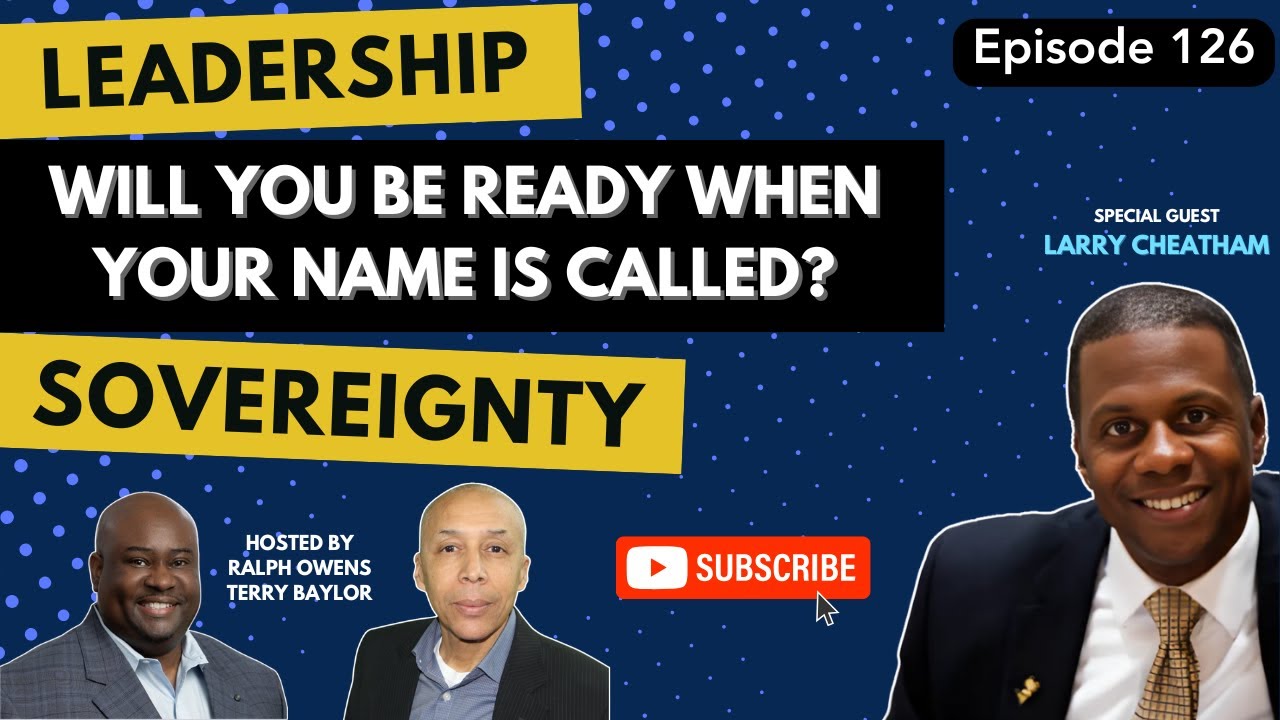
In today's fast-paced world, it's easy to overlook the hidden gems of learning and growth opportunities. Join us as we dive into:
• The power of observation and the art of queuing. Discover how paying attention to the world around you can unlock invaluable insights and propel your success.
• We'll explore the importance of a well-structured professional agenda
• Additionally, we'll discuss the significance of building strong relationships and how they can become your most valuable asset.
Tune in to learn practical tips, inspiring stories, and actionable advice to help you improve your career and personal life.
★ Support this podcast ★Welcome to Leadership Sovereignty, the podcast. I'm your host, Ralph Owens, along with Terry Baylor. In today's episode, we'll touch on topics such as the power of watching and learning from cues, why you need a professional agenda, and why relationships are one of your most valuable assets. Enjoy the show.
Speaker 2:In a situation and you see a feedback or you see something, learn in that moment, learn, see what those cues are that you're getting back. Right. See, see what things cause that leader to be more receptive to what you are suggesting right see the things that are the trigger points right it may not be with you Just see because again, right? This is all a relationship game.
Speaker 1:Yes, sir. That's right. That's right.
Speaker 2:So they're accused of so go ahead. Go ahead, Ralph. No. You're gonna say something. Go ahead.
Speaker 1:I'm just saying Solomon said in all that in all that getting, get wisdom and understanding.
Speaker 2:Yes.
Speaker 1:That that is richest man that ever lived. In all thy getting, get wisdom. I'm in Proverbs right now. So it's just deep
Speaker 2:in me. Yes, In
Speaker 1:all thy getting, get wisdom and understanding.
Speaker 2:No, that's good because there are things we are getting cues and signs and signals. Right. And just note it, you don't you know, Okay, I'm not going to respond to that. Let me know
Speaker 1:this happened.
Speaker 2:Okay. This was the response to that.
Speaker 1:Okay. Yeah,
Speaker 2:absolutely. That's a trigger point. Oh, that's important to the business. Okay. Let me see how can I tie into that?
Speaker 1:That's right. Don't just go to work and be a wrench turner. Get some wisdom and some understanding. It'll change your experience.
Speaker 2:So man, look, we are so happy to have you guys here. I don't know, Ralph, maybe we need to open up some channels for some feedback. Maybe in the next shows links or whatever, I'll put Leadership Sovereignty's email. That's it. Basically it's just LeadershipSovereigntygmail dot com.
Speaker 2:We'd love to hear from you.
Speaker 1:Hey Terry but there was one more point there was one more point I'm
Speaker 2:sorry did I miss it?
Speaker 1:Exploring the other exploring other career opportunities if necessary.
Speaker 2:Oh okay yeah yeah I'm sorry I missed that point I missed that point go ahead I'm sorry yeah go ahead go ahead hit it.
Speaker 1:So we got to, so we've gotten to the point to where we've documented and we see this reoccurring issue and pattern and you're thinking to yourself, man, I don't know if I, if I need to even stay here anymore. Right. It's hard to get up in the morning just to even go to work. So I wanted to share something that Carla Harris, has on a video and hopefully we can include this YouTube link to this video she recorded in our, in our show notes. She talks about what's called the professional agenda and how everyone should have a professional agenda for themselves, which includes the house and the seat.
Speaker 1:So the house is the organization and the seat is your role in the organization. Right? So some of the questions you should ask yourself before you take a new job is does this seat or this role allow you to grow in your career? What kind of skills do you want to get in this? Why are you in this seat?
Speaker 1:What kind of people do you wanna meet? What kind of trajectory can you create, in this seat? And so then you have to ask yourself questions about the house organization. Do I like this organization? Do their values align with mine?
Speaker 1:And do I think there's a per a a potential for a a sponsor candidate for me in these organizations? So these are the kind of roles these are the kind of questions that you ask about yourself, and you wanna think about it in those two different frames. Right? You wanna think about the role, and then you wanna think about the organization as whole. So when you get to that place where things become tough and become hard on you, you go back and you start asking yourself these questions.
Speaker 1:Okay. Did this seat, is this seat allowing me to continue to grow in my career? Okay. Am I getting the kind of skills that I wanted to gain, you know, in this role? Am I meet, am I still meeting the type of people that I like to work with?
Speaker 1:And do I still see trajectory for my career in this role? And then for the and for the house, go back. Do do I still like this organization? Do their values still align with mine? Do I still have a potential sponsor candidate in in in this house, you know, for me?
Speaker 1:And you deduct based on the answers to your question where the problem is. Is it an individual or is it the company? Right. And if it's an individual, what I love her response was now I'm going to challenge you. Have you been building your relationships that show that you can grow laterally and you have movement around the organization instead of being stuck in that one tower.
Speaker 1:Right. You know, so when we talk about career opportunities and necessary, I see so many people who just jump to another career because it or another job because of emotion. That is the last thing that you should be jumping from one job to another for. Right? Because you gotta take into consideration everything that you all the time it took to build the relationship capital that you've built.
Speaker 1:Right? You know, speed of trust comes by, you know, all these relationships that you build and how easily you can get things done. Whereas you go somewhere else, you start off from ground zero again. Right. Do you have a organization that allows you to be flexible with your time?
Speaker 1:And then you go to another organization where you have to be in the office five days a week, you know, nose to the grind all the time. Right. So many different things you have to consider when going to another opportunity. So hopefully that gives some clarity around thinking through that process and we don't jump just out of pure emotion. Right.
Speaker 1:It needs to be a well thought out plan as before you make a decision to jump to another role.
Speaker 2:Yeah. That that's probably Ralph. I would say that's probably the clearest I've ever really heard that described. That's one of the best strategy methods to identify. Because to your point, most people Don't leave jobs.
Speaker 2:They leave bosses.
Speaker 1:That's right. That's right.
Speaker 2:And that is I think that strategy, that tool that you just shared, man, is is man, is that's weighty, that's weighty. Yeah, because it's not only is it good information but the best questions right challenge. So that that is great information.
Speaker 1:Yeah. Hopefully, like I said, we can get that into the show notes and I highly recommend that everybody watch that video. I kind of have it in a playlist for myself in YouTube so that I can go to it, you know, whenever I feel like I'm thinking about leaving a row, it reminds me to go down the checklist. Where's the issue? Is it with the organization as a whole, or is it with a specific person?
Speaker 1:Okay. Am I leveraging my relationships to to be able to move laterally? That's when she came back with the statement that, you know, your opportunity allows you to move up, but your relationship drives your mobility through the organization. Right. You know?
Speaker 1:And are you, are you basically exhausting every resource you have before you, before you try to jump? Because again, when you jump as a leader, everything's built on your credibility. Your credibility goes back down to zero and it takes a lot of work to get it back up.
Speaker 2:Yeah, no, that's a great point. That's a great point. No, Ralph, I love it. And I want to add just one more, one more piece to that too. Right.
Speaker 2:This is something that we talked about a little, a little while ago and even if you are considering leaving, we've heard of people that just walk off because they cannot take it anymore. And there was a podcast I think you you know, we both listened to it. She's seen it before. And it was like, there's another way to think about this thing. Expectation.
Speaker 2:You can walk off and don't have anything or you can be like, you know what, they're paying me to find my next role.
Speaker 1:That's what they said.
Speaker 2:Yeah. But here's the thing, but I love Ralph's. I love that information, right? Because it gives you even well before you get there, you've identified, right? Because sometimes you do have to go.
Speaker 2:I mean, we've moved places because it was just it was timing. It was the right time, the right door, right opportunity open. I wish I would have had that information back then. Not to say that I would have made a different decision, but I believe I would have made a more well informed decision. That's the goal.
Speaker 1:That's the goal, right? Is to give you a tool that tech can help you make a really good, well informed decision. Yeah, it's invaluable. And she even talks about, you know, some other things, in that video too, that we obviously don't have time to get into, but I highly recommend that everyone check it out, especially if you're thinking about changing jobs.
Speaker 2:Ralph, this was an amazing, amazing show. Again, doing all candor, was like, I'm tired of talking about people who cause people problems. But here's the deal. This was really inspiring, just to be a part of it and to know that we're helping change some lives with this information. So I'm really thankful, blessed to be here with you.
Speaker 2:And, this is definitely man, one of the highlights, of, of, of my, of my days, my weeks, of my months, you know, being able to do this with you. So it is a pleasure, sir.
Speaker 1:Yeah. Yeah.
Speaker 2:Mister Owens, everybody. Mister Owens.
Speaker 1:Just a a blessing to be able to help people. Right? Because, again, we we say it all the time. We've been saying this stuff for years, like, and we gotta write a book or something like that. And then you came up with the idea.
Speaker 1:Let's just start a podcast. Let's just start talking about it. Right. And I think we probably have we haven't even touched the surface on the list of topics that we have to share. No.
Speaker 1:No. We probably covered like three or four. Yeah. Right out of about 30.
Speaker 2:Yeah, that's a lot. It's a lot out there.
Speaker 1:It's a
Speaker 2:lot out there. So guys, thank you. Thank you for showing us the love. And so, yeah, we look forward to hearing from you guys. God bless you.
Speaker 2:Thanks for joining.
Speaker 1:God bless. Take care. Bye.
Speaker 3:Thank you for listening to the Leadership Sovereignty Podcast. We hope that you not only enjoy the content, but gain something to help you on your personal leadership journey.
Speaker 1:Feel free to reach
Speaker 3:out to us on X and Instagram under the handles Leadership Sovereignty. Until next time, stay safe, peace, and blessings.