
 Apple Podcasts
 Spotify
 YouTube
 Difficult Leadership Pt. 9
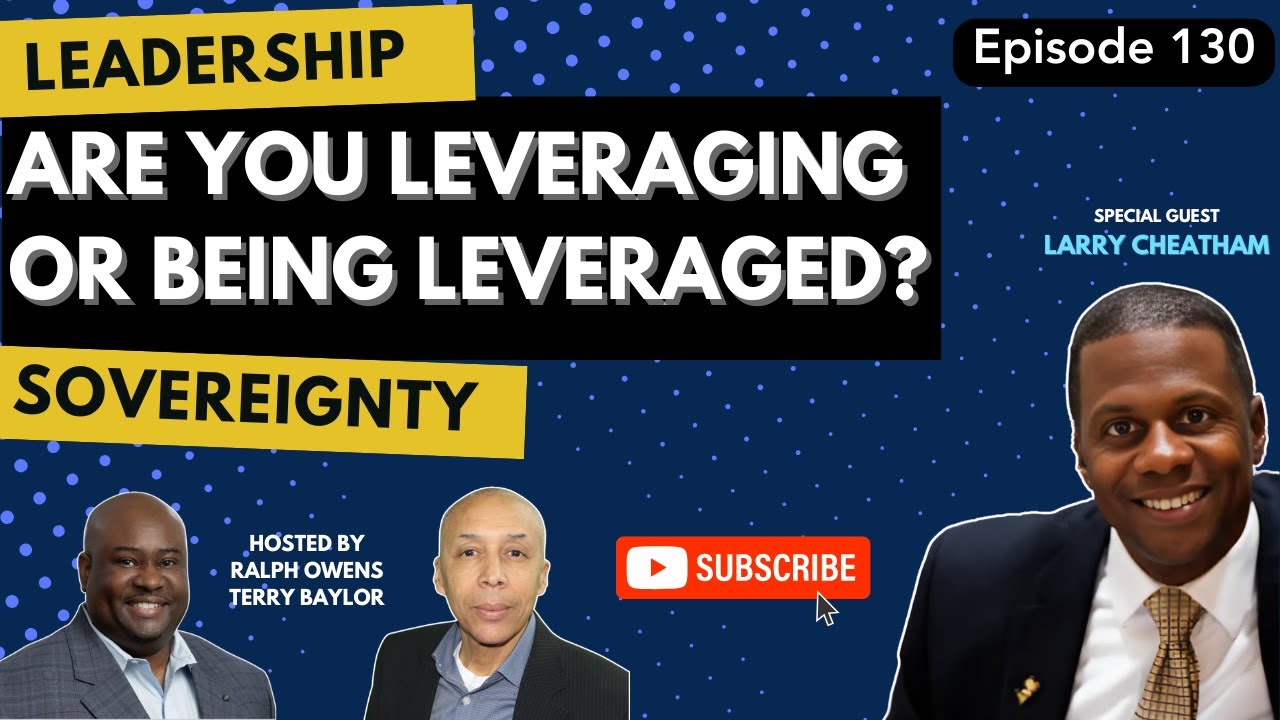
Today we'll discuss how morning routines can significantly aid in tackling daily challenges by providing structure and predictability, setting a positive tone for the day. What's in your toolkit, comprising strategies and resources transforms failures into learning opportunities, fostering resilience and growth. Why owning your happiness involves framing your day with intention and setting clear boundaries, ensuring that you prioritize what matters most to you. Additionally, the power of observation and mindful awareness and how it enables you to make necessary adjustments and improve continuously.
Welcome to Leadership Sovereignty the Podcast. I'm your host Terry Baylor along with Ralph Owens. Today we'll discuss how morning routines help with challenges, What is in your toolkit and failure versus learning, owning your happiness, framing your day and setting boundaries and the power of observation and making adjustments.
Speaker 2:Enjoy the show. And so, so the first area here is stress management, right? We've talked about this before, right? Those routines. Don't know, Ralph, you want to you want to hit on those a little bit?
Speaker 3:Yeah, daily routine is it is it is the game changer for you, Right. You have to have a daily routine, you know, whatever it may be. We talked about it for us in the morning, you know, exercise, spending time, you know, spiritual time, right. Reflection, journaling, declarations, right? Those things you have
Speaker 2:to Thanksgiving.
Speaker 3:Thanksgiving. Yeah. Yeah. Gratitude. Have to have those things in place on a regular basis to help you, deal with these kinds of situations because sometimes you're just going to deal, you're gonna have a, you're gonna, you're gonna have a hot one.
Speaker 3:Right? You you're gonna have that, that leader that's just, you know, buck wild out there just doing whatever. And because of their relationships, they think they're protected and they can do whatever you need. So you have to put these, I mean, that that routine almost becomes like a boundary for you. Right?
Speaker 3:Because it sets your mind in a certain place to deal with whatever it is that Yeah. You have to
Speaker 2:deal place. It's a Yes. And I'll be transparent, right? There are some days or some mornings where life's going on. You got so much.
Speaker 2:You got to run here, go there. Man, those days that I don't get my routine in, I can feel the impact of because of the clarity, the peace that comes from it. And again, we don't want to make it a chore and a task. It should be something that you look forward to. Sometimes you're not always going to want to get up that extra hour.
Speaker 2:It's always worth it.
Speaker 3:So true. Perfect.
Speaker 2:And then we've talked about the growth, right? I think we hit on it really good, really. And, you know, in our in our your check-in, we were talking about what kind of books are you?
Speaker 3:That's
Speaker 2:right. Right. And I'll expand that. You know, what kind of podcast are you listening to? That's right.
Speaker 2:Right. Is it is it all is it all entertainment? No. Or is there some personal growth going on there? I'm just going to share this.
Speaker 2:So so, no, my my son had a golf tournament today and I was listening to. Basically, a YouTube and a guy was just speaking about, you know, you have the right to choose your environment and and and your thought around who you are and and happy. And sometimes we are we're carrying things forward. Sometimes we're taking on the impressions of privacy. Sometimes it could be our parents.
Speaker 2:It could be, you know, certain certain. Relationships that we're in, he was like, y'all calling them relationships, but they bonded. And so what what he was talking about, though, was about your happiness. And so what he was sharing is that if someone can control your happiness, then they also can control your disruption of that happiness. And so what he was talking about is creating this space in these places and relationships with people who respect your boundaries and things of that nature.
Speaker 2:So long story short, Noah finished his round and I asked him, I said, man, how did you, how did the round? He said, daddy was really good. I said, how did the show that we're listening to this one help? He said, dad, it really helped me a lot. And so let me let me let me make it more practical.
Speaker 2:So in golf, the beautiful thing about golf is it is a creator's sport, meaning that you can be 150 yards out. You got five different shots you play because, you know, some guys may want to hit it low and bump and run it. Some guys may want to hit it high, you know, and straight. And some people may curve it left, curve it right. You got all these different things.
Speaker 2:And so what Noah and I have been talking about is playing away from risk and you play towards what was the safest shot. And I loved what he said today. He said, Dad, what I understand is is what's what is high risk for me may not be high risk for someone else. So a shot that I may hit, someone may consider it high risk. But for me, it's not high risk.
Speaker 2:Because he he said and understanding, first of all, in order to make that statement, he had to understand who he was.
Speaker 3:Right.
Speaker 2:You have to understand the golfer that he was. Right. And so and and part of that was the freedom to know that because I'm not helping him. He's playing his own game, that. He had the freedom to choose to play the game that he wanted to play.
Speaker 2:Right. So part of that was on me. So he knows he's not going to get criticism about what he's doing. Right. So because again, right.
Speaker 2:I know that this topic here's the beautiful thing about this topic. This topic extends beyond work.
Speaker 3:That's right.
Speaker 2:This topic extends itself to our lives. So everyone who's listened to this podcast. But I think our age demographic is, you know, 35 and a little older. We're trying to get some of the folks on. But so most of us are in a position of leadership somewhere.
Speaker 2:Is that our families at work? It could be somewhere that we're volunteering. Here's what my main goal that I want us to take away from these kind of sessions, at least for when I'm involved in them as well. I want to make sure that I'm the kind of leader that. That folks can grow under.
Speaker 2:Right. They can develop their skill set and tools. And we have safe boundaries that both entities can operate in. Right. So that's the main goal here.
Speaker 2:Right. We are we know we're helping you deal with someone right and deal with a scenario and a situation. But more than likely, if you're listening to this podcast, you are a leader or you're going to be a leader.
Speaker 3:That's right. That's right. That's right. That's right. Yeah.
Speaker 3:So just to, touch on that one point again though, you have to continue to add tools to your tool belt, right? Whether it be to Terry's point, you know, when no one playing golf or, dealing with people in, in, corporate America or at your job, you have to continue to add tools to the tool belt and you do that by learning.
Speaker 2:Yes.
Speaker 3:It doesn't come any other way. You're not going to get through osmosis. You're not just going wake up and it's just going to be there. You have to be intentional about learning all the tools that we gave you all. We learned those right.
Speaker 3:And we're sharing them with you. And by listening to this podcast, you're trying to get more tools for the tool belt, but you have to be focused on intentionally gaining more tools for the tool belt as you go along the journey so that you can be more successful. It has to be intentional.
Speaker 2:Totally, totally, totally agree, right? Because life is about learning. That's really what it's about, man. We never we never we never stop. And I think, Ralph, one of the things that we established early on is that there is no failure.
Speaker 2:There's just there's just they're just learning,
Speaker 3:just learning. Right.
Speaker 2:And and I share this with, you know, sports is just such a great analogy for all of this. And, you know, whenever my children are finished or young adults now, I guess they're finished doing their activities. The one of the number one questions I've asked ask them is, so what did you learn today?
Speaker 3:That's right.
Speaker 2:Because if you ever learn today,
Speaker 3:you just wasted time.
Speaker 2:It is a waste. It was a it was a waste of time. And, you know, know, just to share another anecdotal story from today, there was one hole and and I'm asking myself, I'm like, Okay, well, how is he going to play this shot? There was a there was a tree in front of him. And he was like, Dad, well, on this particular one, I tried to hit it under the tree, you know, to, you know, to to, you know, get it closer to the green.
Speaker 2:I'm like, Okay, it makes sense then. But we got about three or four holes down and he had another shot somewhat similar. And he said that I'm going take it over the trees. I'm like, Okay, I didn't I didn't understand what the decision point was on it. Now, in my mind, I was thinking, that's risky.
Speaker 2:But I didn't say anything, right, because I didn't want to cross that boundary. Yes, he had already made the decision. And so anyway, and only reason I was close to him, too, because we thought the ball had went in the water. And so I went to go have him find it. Seems like that I'm taking a treat.
Speaker 2:I was like, all right. So I backed off and he hits the shot. And Ralphie was the most rewarding thing for me as a dad. What he said
Speaker 3:was he
Speaker 1:said, I'm a golfer.
Speaker 3:That's great. That's
Speaker 2:all. Right. So he had learned from two or three holes before. I should have taken it on, but I didn't. This particular time he took it on and I told him, I said, Noah, there's no better lesson than that than to be able to learn in the moment.
Speaker 3:Yes.
Speaker 2:And apply apply the feedback.
Speaker 1:Thank you for being with us today on Leadership Sovereignty. Stay connected with us on X formerly known as Twitter and on Instagram by searching for Leadership Sovereignty. And just like this podcast, let's all collectively grow as we go. God bless.