
 Apple Podcasts
 Spotify
 YouTube
 Effective Leadership Pt. 3
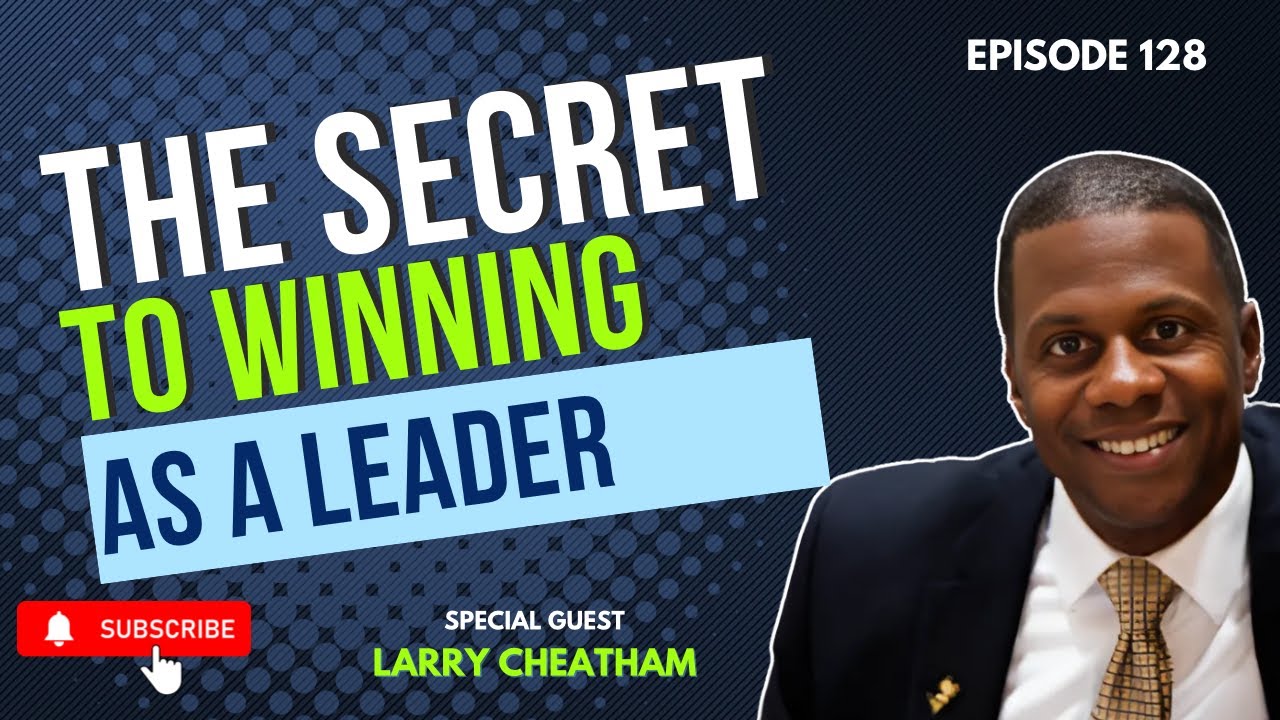
In this episode of Leadership Sovereignty, Ralph Owens and Terry Baylor engage in a deep conversation with guest Larry Cheatham about the importance of personal development, the impact of associations, and the distractions of modern life. They emphasize the necessity of reading, surrounding oneself with the right people, and focusing on personal growth rather than getting lost in social media. The discussion also touches on the principles of feeding the mind with good information, seeking advice from credible sources, and the fundamental concept of seed, time, and harvest in achieving success.
Key Takeaways
- Reading is essential for personal growth.
- Your associations significantly influence your success.
- Social media can distract from personal goals.
- Feeding your mind with good information is crucial.
- Seek advice from those who have proven results.
- Focus can change your direction in life.
- There is no perfection, only continuous improvement.
- The principle of seed, time, and harvest applies to all endeavors.
- You must put in the work to see results.
- Evaluate the sources of your advice carefully.
Chapters
00:00 Feeding Your Mind for Success
06:01 The Pursuit of Improvement Over Perfection
08:22 The Importance of Evidence in Advice
09:52 Understanding Seed, Time, and Harvest
★ Support this podcast ★Much time have you spent reading? Well, I don't read. Well, can't read or you don't read. Because if you don't read, you're really no better off than someone who can't read. Wow.
Speaker 1:And what are you reading? Do you attend any conferences ever? Any seminars ever? Because your associations matter.
Speaker 2:Welcome to the Leadership Sovereignty Podcast. I'm your host, Ralph Owens, along with Terry Baylor. In this powerful episode, Larry dives into why reading is essential to success. He talks about how feeding your mind is the best investment you can make in yourself. And then finally, he talks about the principle of the fruit on the tree.
Speaker 2:Let's go.
Speaker 1:If I take you and I move you from the North to the South, eventually you will speak with a southern accent.
Speaker 3:Yep. Yes.
Speaker 1:You know? And so associations matter.
Speaker 3:Mhmm.
Speaker 1:So who do you spend your time with and around? You ever heard, you know, that if you took a person and I took your five closest friends who you spend most of your time with? And if I knew what their incomes were, I could take it. And you would basically be an average of those five incomes, which that tells you that your associations matter. Yeah.
Speaker 1:Question read you're associated with.
Speaker 3:This is this is critical. This is critical because I think we touched on this in another show, Terry. So watching other people's lives can be a distraction. Oh yeah. Right?
Speaker 3:It can be a distraction, especially now with Instagram, Facebook, right? How many hours do we spend scrolling, watching other people's lives instead of focusing on our own dreams and becoming better at what we were called to do. Right? So it becomes even more of a distraction. So and and again, I'm not against looking at social media.
Speaker 3:You know, I look at social media. You know, it inspires me. The people that I follow inspire. I try to follow people who inspire me to continue on with my own journey. But if you find yourself obsessing with looking at everybody else's life and how good it perceives to be, because we don't know if that's real or not on social media.
Speaker 1:Right.
Speaker 3:You need to ask yourself the question, how much of this time should I have been spending working on my own dream? So that's that's that's good, man. That's
Speaker 1:You know, one of the things I would say, Ralph, is that, you know, if you think about our day to day lives, right, We tend to have our day, we wake up in morning, you know, we may, you know, shower, shave, you know, brush our teeth and we may go down and somewhere throughout the day, we're gonna get something to eat. We're going to feed ourselves. But it is remarkable as I looked over my life, at times in my life where I was going, I was feeding myself with food, but I wasn't feeding my mind with any good information. And you would never think of going an extended period of time without feeding yourself. But yet we often all go extended periods of time without feeding our minds with good information.
Speaker 1:And it is true, it's what you feed. It's not just feeding yourself, but feeding yourself what? You know that old saying garbage in garbage out.
Speaker 3:Yep, yep, sir.
Speaker 1:So we have to feed ourselves with good information. Again, books, audios, live events from people with results, desired results, you know? That's what I heard you basically saying, Ralph, is that you'll plug into information, but not just any information. We always say, do a fruit check. It's really a biblical principle.
Speaker 1:You judge a tree by the fruit that it bears.
Speaker 4:Oh, I love that.
Speaker 1:Yeah. So don't ever take your financial advice from broke folks. Don't ever take your marital advice from someone who's never evidenced a good marriage of their own. Never take your advice on raising children from someone who's never evidenced the raising of great children. Not perfect children, not a perfect, marriage.
Speaker 1:If someone has a perfect marriage, please reach out to me because I would like to see what one of those actually look like. I've never seen one of those. Marriage still requires work. Having said those things though, is that you should accept information from people with results or very minimum, if someone wants to point out to you some great information around any of those things, they should be able to point to where they actually gotten the information from. Because sometimes, know, someone who looks as though they don't have any results in that area, it may be true, but they may be able to point to the source as to where it came from that can evidence, you know, a valid check.
Speaker 4:Because they're on their journey. And one of the things you said, Larry, I wanna tag onto it, right? I wrote it down here. Something that I learned early, early, you know, in kind of my computer journey and programming, right? So you said garbage in, garbage out.
Speaker 4:There's also something called FIFO, first in, first out. Right? So on those eight Fs, right, on that faith, how are you starting your day off? Because the first thing you putting in is gonna be the first thing that you're putting out.
Speaker 1:You know, again, and I don't wanna claim perfection in any of these areas, right? Because that wouldn't be true. But if I sit down and I go, you know what, to be candid, when I do it right, first for me is prayer. First for me would be spending time with my Bible. That would be first.
Speaker 1:To pick it up and read. That's the first book. You can get those things right, then everything else kind of falls in order. And again, I'm gonna tell you that there are many days that I fall short, many days that I fall short. So no such thing as perfection.
Speaker 1:There's only improvement.
Speaker 3:Yes. Yes. I love that. I love that the thing that just came to mind, Larry, when you said that is, there's no such thing as perfection, but there is always focus. Yes.
Speaker 3:Right? You can always be focusing on going in the right direction. Yes. I remember in my Navy days, they would talk about these big aircraft carriers, right? It would take hours, I mean, literally hours to change the direction of that thing, but you can change direct.
Speaker 3:And I learned this from you, Larry. You can change directions in a split second by making a decision to focus in a different direction. That doesn't drive your life instantly. Right? You don't see the results, you know, instantly, but you can change your focus in a split second.
Speaker 3:Right?
Speaker 1:That's right. Yeah. If you would allow me the ability to circle back to something one second, because what I was thinking about something, don't want your viewers to take this the wrong way, right? A moment ago when I was saying, we were talking about accepting advice from someone who's been able to evidence. And so sometimes people think, oh, okay, well you're saying that my advice is wrong just because I don't have kids or just because I don't have a good marriage that, you know, that I'm not giving, I can't give good advice.
Speaker 1:No, want, I want to make a point that I'm not saying that. What I'm saying is that you're not at, you don't, you're not presenting any evidence that you know yet what you're talking about. And so what you're oftentimes trying to You're doing your best to look for evidence that if I do this, this is the results that I'll actually get. It cracks me up a lot of times. I'll see these people write these marriage books that have been divorced a dozen times, and I'm maybe exaggerating a little bit, but a dozen times and they're in their new marriage for six months.
Speaker 1:Well, I'm like, when you've been in your new marriage for about fifteen years and it's a great marriage, call me then. Because until that point, right now, the only thing you've evidenced is that you know how to go through a divorce, not you know how to go through a marriage. Again, it's just the fruit on the tree, right? You're just looking at the evidence.
Speaker 4:No, love that right now. I'll tell you this. One the things that I, you know, I share this with my kids, with my peers, my mentees, mentors. Look, God has not given me a crystal ball. I'm not a prophet, right?
Speaker 4:I know people who can they'll be like, Man, look, I see this. And I'm like, Okay. Again, even when I come across people who do that, I use the fruit because I said, look, God gave me something that will always reveal the outcome. And I'm gonna know it by the fruit it bears. That tree, I said, Look, we all have the benefit.
Speaker 4:Now, the only thing that that's gonna cost me is time.
Speaker 3:-See? -Right. That's it. -Right. That's
Speaker 4:I'm gonna wait. Right? And because here's the deal, right? This principle applies to every single thing that we do in life.
Speaker 1:-That's right.
Speaker 4:Time, and harvest. None of us can skip, go to the head of the line. No. Right. Seed, time, and harvest.
Speaker 4:You trying to get a degree? Seed, time, and harvest. Trying to be a better basketball shooter? Seed, time, and harvest. You trying to be an entrepreneur who's got a multimillion, a multibillion dollar enterprise or company, seed time and harvest.
Speaker 1:I wanna add to what you're saying, Terry. And in my view is seed, and I'm going to have to probably till the soil. In other words, seed work over time That's and right.
Speaker 3:That's right. That's right.
Speaker 1:We're we're gonna put some work in there, you know, along the way. You know? Again, we we don't ultimately get to the result without
Speaker 4:Hey. Hey. In that time, there's a whole
Speaker 2:Thank you for listening to the Leadership Sovereignty cast. If this content blessed or helped you in any kind of way, support us today by subscribing to our YouTube channel, clicking the like button for this episode, and sharing this content with others that you think it will help. Until next time, stay safe, peace, and blessings.

Entrepreneur | Business Leader
Larry Cheatham is the President of Global AO Solutions, where he is dedicated to helping individuals and businesses achieve financial freedom and create a lasting positive impact. With a proven track record in executive leadership and business development, Larry specializes in transforming operational excellence into sustainable growth and long-term success.
Passionate about empowering others, he combines strategic vision, innovative solutions, and hands-on mentorship to drive results across diverse industries. Larry’s commitment to elevating people and organizations reflects his core belief that purposeful leadership can change lives and communities for the better.