
 Apple Podcasts
 Spotify
 YouTube
 Effective Leadership. Pt. 4
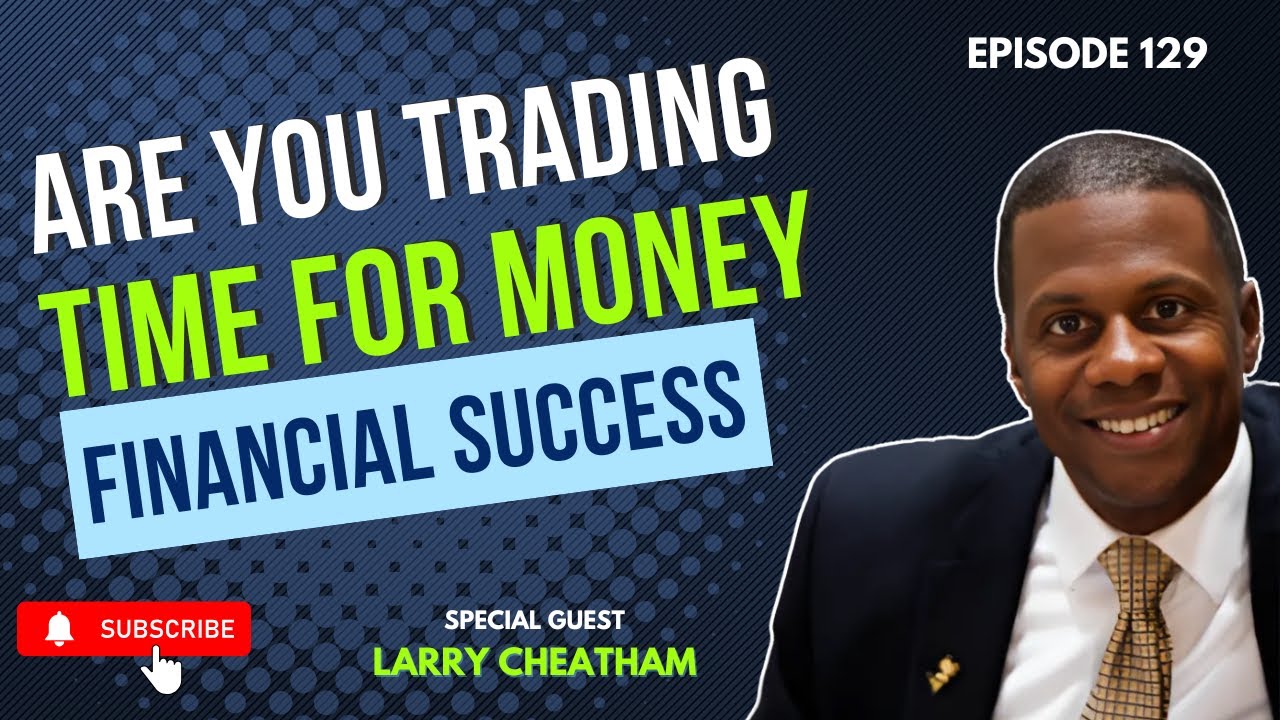
In this conversation, the speakers delve into the importance of planning, adjusting, and understanding financial intelligence. They discuss the journey of personal development, the significance of mentorship, and the stark contrast between the wealth distribution of the 5% and 95% of the population. The discussion transitions into the cashflow quadrant, emphasizing the differences between self-employment and business systems, and how these concepts can lead to economic freedom.Takeaways
- Planning is essential for success.
- Failing is part of the learning process.
- Adjustments should be made early for better outcomes.
- The majority of wealth is controlled by a small percentage of the population.
- Understanding financial intelligence is crucial for economic freedom.
- Self-employment often leads to trading time for money.
- Big businesses focus on developing leaders and systems.
- Mentorship can provide valuable insights for personal growth.
- The cashflow quadrant helps in understanding income sources.
- Making course corrections is vital for achieving goals.
And and I preach that message now all over the country saying, hey. Look. I'm not trying to convince you that you have to do it the way that I did it. Mhmm. But I am going to do my best to help you understand the field that you're playing on
Speaker 2:Mhmm.
Speaker 1:And how you might be able to look to play on a different field and what
Speaker 3:you should look for when looking to play on that other field. Welcome to Leadership Sovereignty with Ralph Owens and Terry Baylor. Today, Larry Cheatham discusses the significance of planning and execution in achieving financial success. He describes the disparities in wealth in America and the concept of financial intelligence and economic freedom.
Speaker 1:In other words, it's work
Speaker 2:over time and harvest.
Speaker 1:Right. That's right. We're gonna put some work in there along the way. Again, we don't ultimately get to the results without Hey,
Speaker 3:in that time,
Speaker 1:there's a whole
Speaker 2:A whole lot of things happening.
Speaker 3:It's a whole lot. You gotta start slicing that thing up. It's a lot of details at that time. It's reading. It's reading.
Speaker 3:It's getting mentored. It's, hey. Hey. It's failing and learning.
Speaker 2:That's right.
Speaker 3:Right. Failing is a part of the journey.
Speaker 1:And what I do, we we use the term plan, do, check, adjust.
Speaker 2:Mhmm.
Speaker 1:Plan, do, check, adjust. You go into things with a plan.
Speaker 3:Mhmm.
Speaker 1:You know? And then, you know, oftentimes throughout people's lives, they first of all, many people never start with a plan.
Speaker 2:That's the
Speaker 1:first challenge. Mhmm. You know? And they just go do. Mhmm.
Speaker 1:And but if you begin with a plan and then go do the plan that you actually and and that's the other challenge that sometimes people come up with the best laid plans and never take any action. And so we go plan then we do. But then of those few people that do that, then they oftentimes will not check.
Speaker 3:Mhmm.
Speaker 1:Okay. Let's look at the results.
Speaker 2:That's right.
Speaker 1:You know, you we've all heard saying the definition of insanity is doing the same thing over and over again and expecting a different result. Mhmm. I've always wondered who said that. You know? I know who was credited with it.
Speaker 1:I believe Albert Einstein was credited with it, but there's no real evidence that he ever said it. Mhmm. You know? And I think the first real publication, I believe, is Alcoholics Anonymous that actually put that in for anyway, that's a rabbit trail, though. So anyway, check, our results and then what adjustments need to be made.
Speaker 1:Plan to check, adjust, and make those adjustments as you make the adjustments, go do Mhmm. And then check. Are there other because, you know, fine tune adjustments just two degrees off, and you know this. Y'all haven't been to the Navy. Can you imagine being two degrees off the direction on all that water that you wanna go?
Speaker 2:You can completely miss your destination.
Speaker 1:Yeah.
Speaker 2:You completely miss your destination completely. Yeah. Right. Yeah.
Speaker 1:That's exactly right.
Speaker 3:That's exactly But but if you catch it early. Right? Oh man, I love this. If you catch it early, the adjustment is much smaller.
Speaker 2:That's right. That's right. Actually, I heard a story about how that principle was implemented into cars. Now think about it, right? A car has a computer, it's reading certain parameters.
Speaker 2:It has to have a feedback mechanism so it knows how to adjust itself to get maximum performance. Right. You just basically saying the same thing, you know, with ourselves and you're so true. That's so true. What you said, Larry, a lot of people do, but they never take the time to check.
Speaker 2:They never take the time to compare their results against the goal and okay, what adjustments do I need to make? Sometimes those adjustments comes in the form of mentors, right? Who are actually can look from the outside in and say, I see you doing this, but you may need to tweak that. Right. So bringing that, you know, we'll talk about that a little bit.
Speaker 1:Yeah. Well, you know what? Here's the thing. I want to give you a life example that I talk about all the time, you know, with people that I'm working with trying to help them find their way out. Now I'll elaborate on what that means.
Speaker 1:But we watched our, at least for me, I watched my parents go get what was quote unquote a good job, right? And they worked for years and then retired and lived on a very tight, and still do live on a very tight fixed income. Mhmm. I watched all of my friends, you know, their parents, same thing. Some of them went to school, got really good educations, you know, and retire and live on a fixed income.
Speaker 1:I even know some that to this day in their seventies and eighties still going to a job. And we come along and when I say we, it's first my generation and I'm generation X, you know, But then you have generations after me, you got this, so I guess I lose all the letters y and gen z, e, and and we're watching those who've come before. And so my generation, some of them are getting closer and closer now to retirement Mhmm. And can't. That's the definition of insanity Mhmm.
Speaker 1:That we're watching and we're doing the same thing that those before us have done. Yep. And we're not making any course corrections. We were talking about this before that total wealth in The United States is about just over $198,000,000,000,000. Just over 198,000,000,000,000.
Speaker 1:And out of $198,000,000,000,000, if you look, 55% of the population controls the majority of that. If you take 95 of the population of that $198,000,000,000,000 to wealth, they only control about 9,920,000,000,000.00.
Speaker 2:Wow. Wow.
Speaker 1:That's insane. And that 95% that only controls 9,920,000,000,000.00, I'm a tell you the data shows that they all are check they all work jobs. Their employees, they receive a w two. Mhmm. Or they run s type businesses.
Speaker 1:So in my view,
Speaker 3:in my I'm sorry, Larry, can you define what S type businesses are? Okay, self employed.
Speaker 1:And I stole that from Robert Kiyosaki, the author of Rich Dad Poor Dad, right? But in my view, my view, Terry, my view, Ralph, that if I'm looking and I see that 95% of the people in this country only control 5% of the wealth. Yeah. And I see that they all do the same thing. I'm asking.
Speaker 1:Yes. What does the 5% do?
Speaker 2:That's right.
Speaker 1:They control 95% of the wealth. And can I do what they do? Yeah. If that's what 95% of the wealth is, why in the world would I continue to do what the 95% have been doing?
Speaker 2:Right.
Speaker 1:And and I preach that message now all over the country saying, hey, look, I'm not trying to convince you that you have to do it the way that I did
Speaker 3:it. Mhmm.
Speaker 1:But I am going to do my best to help you understand the field that you're playing on. And how you might be able to look to play on a different field and what
Speaker 3:you should look for when looking to play on that other field.
Speaker 2:Yeah. Yeah. Let's let's let's and that's a perfect transition into the new topic, which is financial intelligence and economic freedom. So Larry, you introduced me to this concept. This concept completely changed my life.
Speaker 2:It changed the trajectory because like you, after understanding this principle, I had to ask myself, okay, what am I doing and where am I going and where do I wanna go? So I had to change some things. But talk to us about ESBI and the cash flow quadrant because I think what you're talking about kind of ties directly into that.
Speaker 1:Yeah. Yeah. And so Robert Kiyosaki, what he what he authored in his book, see, in in as far as I know, I believe Robert Kiyosaki had three books on the New York Times bestsellers list at the same time at number one, two, and three, which is absolutely brilliant if that's in in fact accurate. I'm not 100% certain of that. I'm but I'm pretty confident.
Speaker 1:But anyway, my opinion is best book was the cash flow quadrant. And one of the things he points out in that book is that there are four ways that people make money. Either you make your money on the left side of that quadrant as an employee or someone who is self employed, where we've been trained to trade our time for money and it's neither good or bad, it's just the way that it works. You know, most people go to work and they don't work for an hour and their employer say, you know what, just because I like you, I'm a pay you for twenty hours. I know
Speaker 3:you only worked an hour,
Speaker 1:but I'll pay you for twenty. Usually, it doesn't work that way.
Speaker 3:Mhmm. You
Speaker 1:know? And so, we we have an agreement. And if your employer says, I'm not gonna pay you, you usually say, well, I'm not coming.
Speaker 3:Mhmm.
Speaker 1:And it's the other way around too. If you say I'm not coming, they say, well, I'm not paying you.
Speaker 2:Right.
Speaker 1:You know? But self employed is really not any different, right? If you talk to your small business owners, your private practice physicians, your private practice attorney, what they usually would tell you is that they're usually the first ones to show up to their businesses. Restaurant owner, usually the first one to show up to their business. Usually, the the last one to leave and may in in many instances, probably the last one to get paid.
Speaker 1:You know? So it's it's still a trading of the time for money. Now on that other side, you have what's called Kiyosaki referred to it as b type businesses in the I quadrant, investor quadrant. And, again, I laugh oftentimes because people say, ah, that's me. I'm in the investor quadrant.
Speaker 1:You are in the investor quadrant if you are in fact a multimillionaire. If you in fact can lose a half $1,000,000 and you're not insolvent. If that is you, congratulations, you are in the I quadrant, but most people are not. And most of the people who make it to the I quadrant, most of them come from the B quadrant, the B type business, big business, business systems. And here's the big difference.
Speaker 1:The big difference between the B type business and the S type business is the B type business focus is the development of leaders and the leveraging of systems. And it's a massive difference in the
Entrepreneur | Business Leader
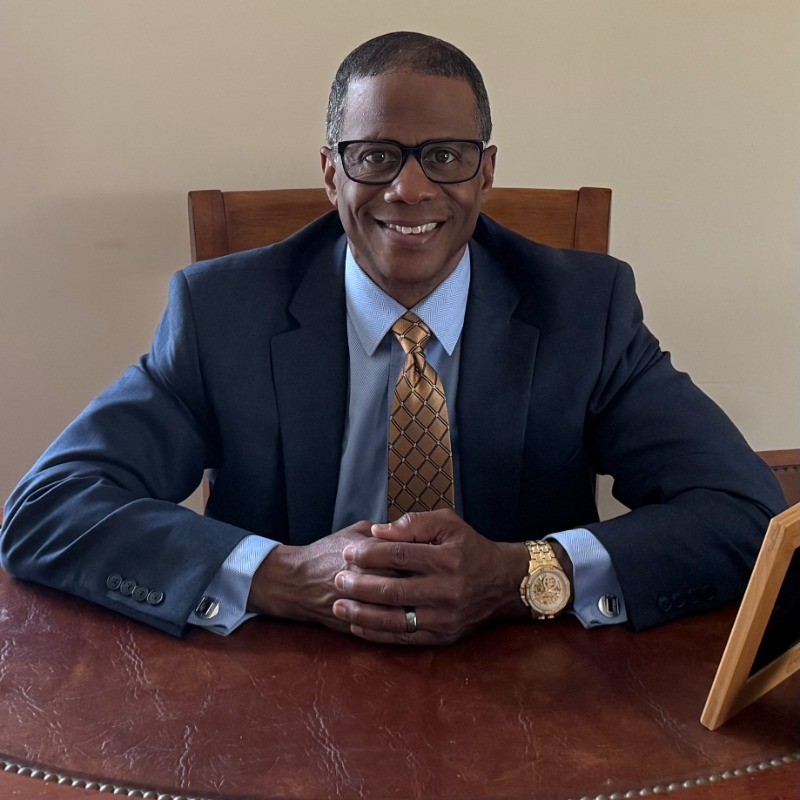
Larry Cheatham is the President of Global AO Solutions, where he is dedicated to helping individuals and businesses achieve financial freedom and create a lasting positive impact. With a proven track record in executive leadership and business development, Larry specializes in transforming operational excellence into sustainable growth and long-term success.
Passionate about empowering others, he combines strategic vision, innovative solutions, and hands-on mentorship to drive results across diverse industries. Larry’s commitment to elevating people and organizations reflects his core belief that purposeful leadership can change lives and communities for the better.