


 Apple Podcasts
 Spotify
 YouTube
 Effective Leadership Pt. 5
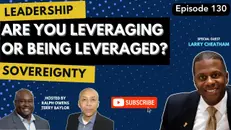
In this episode of Leadership Sovereignty, Ralph Owens and Terry Baylor engage in a deep conversation with guest Larry Cheatham about the importance of understanding business models, the significance of problem-solving in entrepreneurship, and the role of leadership in guiding others towards financial success. They explore the metaphor of the 'pipeline' versus 'buckets' to illustrate different approaches to business and income generation, emphasizing the need for systems that create ongoing income. The discussion also touches on the moral implications of wealth and the responsibility of leaders to use their resources for the benefit of others.
Takeaways
- The show is on the road, highlighting the excitement of live episodes.
- The parable of the pipeline illustrates different business models.
- Most people are trained to be 'bucket carriers' instead of system builders.
- Focusing on systems rather than products leads to ongoing income.
- Identifying and solving significant problems is key to business success.
- Wealth should be pursued not just for personal gain, but to benefit others.
- Leadership involves guiding others from one point to another in their journey.
- Money can address social issues, allowing for greater impact.
- The credit card industry exemplifies a dark financial system.
- True leadership is about serving a greater purpose beyond oneself.
Chapters
00:00 Financial Intelligence and Economic Freedom
00:45 The Cashflow Quadrant Explained
04:06 The Pipeline vs. Bucket Carrying Mindset
08:32 The Dark Side of Debt and Profit
10:09 Leadership and Financial Literacy
★ Support this podcast ★Welcome to the Leadership Sovereignty Podcast. I'm your host, Ralph Owens, along with Terry Baylor. In Effective Leadership Part five, Larry Cheatham dives into the story of the pipeline. He talks about the system of the financial matrix, and then he dives into the power of identifying a big problem, providing a solution, and the reward.
Speaker 2:And let me say this really quick to make sure that people kind of understand how you move through. And I often take liberties with Kiyosaki's story, but he gives this great example in the book, right? He called it the parable of the pipeline. And in the book, there was a village where the well had gone dry with all their water miles away from the well was a fresh body of water and everyone is in the in the village is told, well, we'll pay you to bring water to the well. Most people show up to a company, they're handed two buckets, one for each hand.
Speaker 2:They fill the buckets up, carry it over to the well and they go back and forth eight hours a day, five days a week, fifty weeks a year for about forty five years, twenties to sixties. And then they retire on one half to two thirds of what they hadn't been bragging about at the top of the pay scale in their profession. And thus traded time for money. Yes. The S type business owner in the book would have said, Hey, you know what?
Speaker 2:I know where there's water, I can go buy buckets. I'm gonna go buy my own buckets and I'm gonna pay other people to carry the water except some days people don't show up, you know, to pick up the buckets. The person has their spouse bust the tables and and work the register. Right? You know?
Speaker 2:Sometimes people wreck
Speaker 1:We need
Speaker 3:to have more kids. Yeah. They're right.
Speaker 2:They wreck the equipment. Right? They tear up the buckets. You know? In other words, they drop the plates, the glasses, they tear up piece of equipment in the kitchen.
Speaker 2:You know? And and sometimes, like I said, it's just they don't care about the business the same way the person who bought the buckets and hired them to carry the bucket. So it doesn't run the same when the owner of the bucket carrying company isn't there. And we go we're trained to go get educations right so that we can become senior bucket carrier in charge of the agency. I'm just senior bucket carrier.
Speaker 2:Hey. I got
Speaker 1:a platinum bucket, but it's still a bucket.
Speaker 2:Still a bucket. But in the book, he talks about how these people built a pipeline from the source of water over to the well. Now, most of the people in the village didn't know how to do it, but there was 5% of the people who did know how to do it. And they said, I'll train you how to do it. And so let's say I go, Oh, you know what?
Speaker 2:I'm going to pay for an education. You're to need some equipment. What do I need? Oh, you're to need maybe a back hole to dig a trench and you're going to need some rivets and pipes and back to, you know, seed, right? And toiling and working.
Speaker 2:And so you're six months in the building this pipeline and it's not delivering water, the village isn't paying you. They don't pay you to build a pipeline. They pay you to deliver water.
Speaker 1:That's
Speaker 2:good. Once the pipeline is complete, listen, go lay down, turn the water on to your tub and leave it running and see if that water doesn't overflow. It will flow whether you're sleeping, whether you're on vacation. If you die laying in your bed, that water will continue to flow. And thus think in that scenario, the product is water in each case.
Speaker 2:The employee and self employed focused on the product. Oh, I got the best food in the world. I got the
Speaker 1:best
Speaker 2:water. Oh, you know what? I'm good at carrying water. Look at me. I can carry three buckets at a time,
Speaker 3:I have lighter buckets.
Speaker 2:I have lighter buckets.
Speaker 1:Made on a different material. That's it. Yeah.
Speaker 2:But the B type business owner, the difference for them is they're, they never focused on a product. They focused on the system.
Speaker 1:The system.
Speaker 2:The pipeline is the system. And so the system delivered that water. And once you have systems in place, now you have ongoing income because the village, remember, they pay you not to carry buckets. They pay you to deliver water. Yeah.
Speaker 2:So they don't care that you're not carrying the buckets as long as that water is showing up to the well. Yeah. Yeah. So we gotta focus on-
Speaker 3:Hey, hey, I remember when I heard that story, I was like, I'm putting my buckets down, bro. Because I was a great bucket carrier. Oh my gosh.
Speaker 1:We've been trained our whole lives to be great bucket carriers. Right? Let me tell you the biggest revelation I got out of that when Larry first talked that to me, I swear to you, this is exactly how it came to me. I said, either you are leveraging a system or you're being leveraged by a system. Everybody who's listening to this right now, you are either leveraging a system or you are being leveraged by a system.
Speaker 1:There is no way you can get away from it.
Speaker 2:Right. So watch this. So understand, right, all if if if that's all true, that means that we all should be focused on doing something that is B type business in nature. Because remember, most of the people who make it to the I quadrant, most of them come from the B quadrant, right? And so we should be focused on some type of B type business.
Speaker 2:And unfortunately, most people get it confused and they think they're doing something that's B type and they're in fact, nothing more than a glorified S type business on them when they made that track. And understand this, whatever you're doing, all business, I don't care what it is, all business is nothing more than solving a problem. The bigger the problem you solve, the greater the opportunity lies before you. Right? And I want to give you an example, right?
Speaker 2:Over a hundred years ago, there were some people who identified a problem, right? They had one side of here where their current financial position, then they had another place over here, which is where they want it to be, you know? And let's say where they wanted to be, they wanted to be someone who had time and money. You know, they wanted to be someone who spent time with family, who were able to travel, who was able to leave a legacy, you know? And they weren't living the life that they wanted to live.
Speaker 2:And so they said, okay, we've identified a problem that will allow us to move from our current financial position to where we wanna be. And the problem they identified, and this is a true story, this part of it is true story. The problem they identified over a hundred years ago is there were people who would leave, get far enough away from where they lived, they couldn't sleep in their own beds. And they just like, Oh, we could live the life we've always wanted if we just solve that problem, can we create a place for them to actually sleep overnight? If we could, they pay us for that and we can live our dream we can create systems around this.
Speaker 2:A hundred years ago that happened. There are two that come to mind. Today, one of them is called Marriott. The other one's called Hilton. They both got their start over a hundred years ago, solving that problem.
Speaker 2:I tell people, I said, you're gonna have to find a problem to solve, a big one to solve. So listen, for me, that's what somebody did for me. When I talk about helping today people find their way out. I just was blessed enough to actually come across a massive problem and a way of solving that problem. And that problem revolved around debt, inflation, taxes, fees.
Speaker 2:And it is the one thing today that has become so massive of a problem. And many people have not been able to figure out as they try and get from their current financial position. I'm talking about people who make good money. I'm talking about people who make a 6 figure income. Many of them, you know, some of them make, earn 50,000 a year, 60,000 a year.
Speaker 2:That's probably the majority of the people out there. And there's some who are even making a solid 6 figure income and they have run into a brick wall of debt, inflation, taxes and fees. Inflation hits everyone. I don't care who you are. Who could have ever convinced me a dozen eggs would be $10 today for a dozen eggs?
Speaker 2:And so we figured out a way to get around that problem and solve it. And I'll say this one thing to the problem. Do you realize, Ralph and Terry, do you realize that last year the credit card industry made 30 I'm sorry, not 3,300,000,000,000 on $1,200,000,000,000 at almost twenty five percent interest? Wow. You understand that $300,000,000,000 is more profit?
Speaker 2:That was their profits. That is more in profits than the entire profits collected by the NFL. Wow. Matter of fact, it's more profits than collected by the NFL, the NBA, and the National Hockey League combined.
Speaker 3:Wow. Wow.
Speaker 2:It's a massive
Speaker 3:systems. Hey. It's it's a system.
Speaker 2:It's a system.
Speaker 1:It's a system.
Speaker 2:Yeah, it is
Speaker 1:a system. So it's a lyric.
Speaker 2:It's a very dark one, in my opinion. It's a dark, insidious system.
Speaker 1:Talk talk talk. I'm sorry, go ahead.
Speaker 3:I'm sorry, Ralph. Can I ask so I just wanna kinda tie this all in into the leadership conversation, right? Because here's the thing I'm hearing, Leaders ultimately, right? A true leader, their ultimate goal is to help someone get from A to B to C to D, right? Through their journey, right, of life, right?
Speaker 3:And so I just wanna connect all this together, right? The Bible says something about finances and its ability to solve. It says that money answereth how many things?
Speaker 1:All.
Speaker 2:All things.
Speaker 3:So this is why this conversation is so important. It's not a matter of you being rich, but it's a matter of you as an individual. God has given us all these God given dreams. Right? And I would say at the core, Larry, I've gotten the chance to speak with you and you've mentored me through some scenarios and just provided some great information.
Speaker 3:Ralph, you know, everyone knows our journey together. And ultimately, what I've learned about you guys is your pursuit for wealth is not to benefit you. It's really to benefit others. It's to benefit the kingdom. Right?
Speaker 3:There's a bigger mission behind why you want to build this business system. And so with that being said, I'm sorry, go ahead Larry.
Speaker 2:No, you go ahead.
Speaker 3:No, and I was saying with that being said, in order for us to solve those issues, Jesus was a great example of that when he fed the 5,000, right? It's simple, let me deal with your social issue then I can get to your spiritual issue. And money is gonna be the mechanism that allows us to deal with humanity's social issues, right, to impact the kingdom, right, to get people's lives on the right track, thinking on the right track, families on the right track, thinking on the right track. So I just wanna kinda make sure that folks see the tie and the connection.
Speaker 1:Thank you for listening to the Leadership Sovereignty Podcast. If this content blessed or helped you in any kind of way, support us today by subscribing to our YouTube channel, clicking the like button for this episode, and sharing this content with others that you think it will help. Until next time, stay safe, peace, and blessings.
Entrepreneur | Business Leader
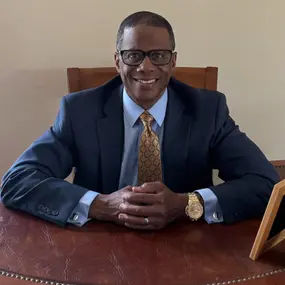
Larry Cheatham is the President of Global AO Solutions, where he is dedicated to helping individuals and businesses achieve financial freedom and create a lasting positive impact. With a proven track record in executive leadership and business development, Larry specializes in transforming operational excellence into sustainable growth and long-term success.
Passionate about empowering others, he combines strategic vision, innovative solutions, and hands-on mentorship to drive results across diverse industries. Larry’s commitment to elevating people and organizations reflects his core belief that purposeful leadership can change lives and communities for the better.