
 Apple Podcasts
 Spotify
 YouTube
 How Emotional Intelligence Can Transform Your Leadership (Part. 1)
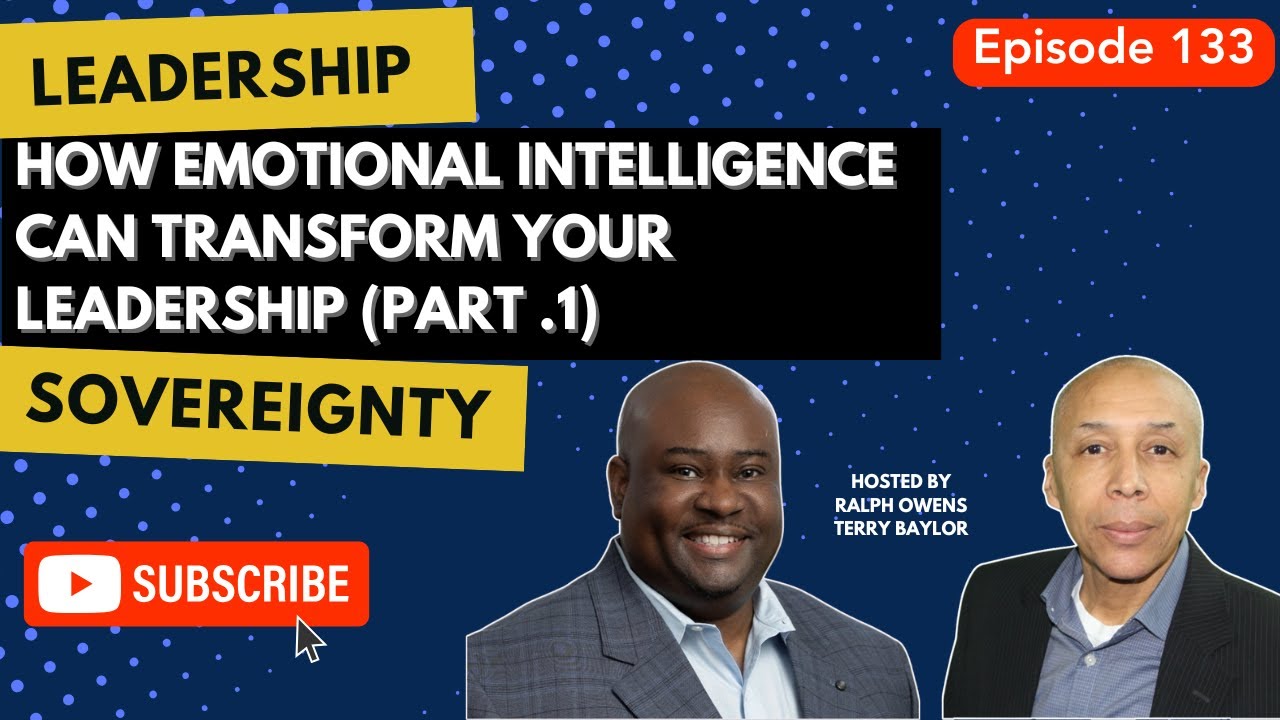
In this conversation, Ralph Owens and Terry Baylor explore the transformative power of emotional intelligence (EQ) in leadership. They discuss the key components of EQ, including self-awareness, self-regulation, motivation, empathy, and social awareness. The hosts emphasize the importance of understanding one's emotions and their impact on others, as well as the role of empathy in fostering strong relationships. Through personal anecdotes and practical insights, they illustrate how EQ can enhance both personal and professional interactions, ultimately leading to more effective leadership.
Takeaways
- Empathy is crucial for effective leadership.
- Emotional intelligence can transform your leadership style.
- Self-awareness is the foundation of emotional intelligence.
- Understanding your emotions helps in managing them better.
- Motivation plays a key role in relationship management.
- Social awareness is essential for understanding others' perspectives.
- Building trust takes time and effort.
- Effective communication is rooted in empathy and understanding.
- Personal growth is linked to emotional intelligence development.
- The impact of your actions can extend beyond the immediate moment.
Chapters
00:00 Introduction to Emotional Intelligence in Leadership
04:20 Understanding Emotional Intelligence
07:05 Key Components of Emotional Intelligence
10:26 Self-Awareness and Its Importance
13:05 Self-Regulation and Boundaries
16:13 Social Awareness and Reading the Room
19:01 Relationship Management and Motivation
22:12 Empathy in Leadership
25:21 Conclusion and Future Topics
29:40 The Essence of Empathy in Emotional Intelligence
32:52 Leading with Perspective and Understanding
35:36 Navigating Emotions for Positive Outcomes
It's not always the smartest people who have the ability to influence or persuade or to move the needle, right, that's gonna impact the masses. Welcome to Leadership Sovereignty. I'm your host, Terry Baylor, Baylor along with Ralph Owens and today we revisit a favorite topic EQ. We discuss self awareness, self regulation, social awareness, motivation and relationship management and empathy. Enjoy the show.
Speaker 2:And we are live. Hello, world.
Speaker 1:Good morning. Good morning.
Speaker 2:Right. Back with another exciting show. Ralph and Terry here with you this week. We decided to go back to a topic that we visited once already, but it's so powerful, and it has been so powerful in our lives and in our journeys that we felt like it was worth revisiting again. And the title of this show is gonna be How Emotional Intelligence can transform your leadership.
Speaker 2:Right? So we've we've we've dug into the purpose of leadership, why leadership is important. So I think everyone who follows us already is aware of that. However, what are some of these tools that can enable you to be that transformational leader? And emotional intelligence is one of the top, you know, on my list.
Speaker 2:But, Terry, what do you think?
Speaker 1:Yeah. Most people think you gotta be smart. And, being smart is important. But what we've recognized and noticed, in our careers as well as just outside of our careers, we're you know, we've looked at, you know, let's just use the president for instance. Right?
Speaker 1:It's not always the smartest people who have the ability to influence or persuade or to move the needle, right, that's gonna impact the masses. Right? You know, typically typically the person with the IQ, you know, will have the ability to impact, you know, that person that's in front of them, right, or that situation, right, that's directly in front of them. But how do you how do you influence, over generations even? Right?
Speaker 1:Mean, that's that's a whole another concept. Is what you're doing impacting just right now in your moment? Or does it have the ability to transcend where you are today? Most leaders who have that ability have VQ. Now you know, this is early in the show.
Speaker 1:It's early in the show, but I I gotta reference the person who's impacted millennial. Right? Mhmm. And, you know, years, thousands of years, hundreds of years, and that's Jesus Christ. Right?
Speaker 1:He had an amazing level of EQ. Right? Most guys with great EQ can tell great stories because they're able to say something that's relational to where you are. Right? You know, they call them parables.
Speaker 1:That's just a great story. Right? So I don't wanna get too deep into it, but man, this EQ thing is is huge and it will impact every relationship in your life. Every single one.
Speaker 2:Absolutely. Absolutely. We we Terry and I have, over the years, have been so, impressed with the power of EQ that, you know, we we are the generation of Star Wars and the Jedi. Right? And everybody remembers Luke Skywalker, the Jedi, and he just kinda wave his hand, and then he'll make a person do something.
Speaker 2:They don't even know why they're doing it. We've called EQ the the the the Jedi. Right? It's it's the it's the Jedi power, right, when it comes to relationships because EQ will go hand in hand with human nature and the way that people normally, you know, naturally respond to things. Let's dig into it.
Speaker 2:So what is emotional intelligence? Emotional intelligence is the ability to understand, manage, utilize emotions effectively. It's more than just feeling emotions, but it's about recognizing and responding to them in a constructive way. Terry, what comes to mind for you when you hear that definition?
Speaker 1:I'll say, right, being able to manage yourself in the moment. Right? Most times, EQ you will first receive the greatest benefit from EQ is when you're in a situation that has to be highly managed,
Speaker 2:right,
Speaker 1:where there may and be let's say even extreme excitement even. There still needs to be a level of EQ. Most times people relegate EQ to when there is stress or trauma or difficulty. It's any level of excitement, any level of input or influence where you know, it's gonna impact more than just you. Now, ultimately, I'll say this, the first signs of EQ are gonna happen when you're by yourself.
Speaker 1:Right? You know, there may be a situation and you may, you know, recognize, man, in the past, I would, you know, feel fear or I would feel anxiety or or I wouldn't know how to handle even how to handle praise. EQ will help you effectively say, thank you. I appreciate that.
Speaker 2:That's right.
Speaker 1:Versus saying, oh, no, it was nothing.
Speaker 2:Right.
Speaker 1:It was not so because, you know, when you when you exercise a certain skill or ability or some subject matter expert, level of, you know, giving or or serving, people want to give you back praise about that, right? And so EQ will effectively allow you to say, Thank you, and still say, I'm willing to give more. Right? I'm not boasting about it, but, Hey, thank you.
Speaker 2:Mhmm. Mhmm.
Speaker 1:Right? So it's it covers it covers a wide range of things.
Speaker 2:Absolutely. No. Absolutely. I I know what comes to mind for me is so so we're talking about how this can improve your leadership. Right?
Speaker 2:This is all about emotional management. This is about all about emotional management. And I don't know if people out there were like I was when I first learned this and that you kind of know that you kind of need to manage your emotions, but you don't, until you start talking about it, you really don't understand the power of being able to manage your emotions in the moment. Right? I'm just gonna read the definition again.
Speaker 2:Emotional intelligence is the ability to understand, to manage and utilize emotions effectively. Right? It's more than just the feeling of the emotions. It's about recognizing them, number one, and then responding to them in a constructive way. Right?
Speaker 2:So let's dive into some of the key components of emotional intelligence. Terry, you wanna take us there?
Speaker 1:Sure. So I love this. Right? I love this. So there are five key components.
Speaker 1:Right? There's self awareness, self regulation, motivation, empathy, and social skills. So let's deal with the first one. Self awareness. Recognizing your own emotions and their impact.
Speaker 2:-Right. -That's powerful. That that's powerful. You can stop right there.
Speaker 1:We can stop right. What are you do first of all, what are you doing to yourself with your emotions?
Speaker 2:Yes. Yes. Yes. Yes. What are what are you what are your emotions what are your emotions doing to you?
Speaker 2:And then what are your emotions doing to other people?
Speaker 1:Oh, man.
Speaker 2:So so so I I heard this guy say this, if if your wife burned the bacon, you know and you pick that bacon up and you say, what was you thinking? I don't want this old burnt bacon, you know, and she just trying her best because she don't know how to cook, you know, versus, you know what, baby? I I appreciate you doing the best that you can. Yep. Right?
Speaker 2:We're gonna grow together. That is a moment right there where you still have the same thought, the same emotion came up, but how you choose to handle it, you know, makes a tremendous impact on the person that's in front of you. Yes. Right? You know, it's and we go through these we go through these these opportunities thousands of times a day in our mind.
Speaker 1:Yes.
Speaker 2:Something will happen. You know, how many times have we heard somebody say, well, you made me do it. You made me upset. No. You had an emotion and you chose to respond to that emotion in a certain way.
Speaker 1:Yep.
Speaker 2:But what we're doing is trying to bring some awareness, some self awareness to, you know what? These are my emotions. I gotta own it. This is how I feel in this moment.
Speaker 1:Yep.
Speaker 2:Right? You know? And then understanding your strengths and weaknesses. That's an amazing statement because there are certain emotional strengths that I have, then there are certain emotional weaknesses that I have. And being able to label them and recognize them helped me to manage myself in the moment better.
Speaker 2:Right? So now that's that's fantastic.
Speaker 1:I think it's huge. No. I think I think it's huge. Right? Because here's here's here's the truth of the matter.
Speaker 1:Most emotions and things that we are experiencing internally, they are a result of past interactions. Right?
Speaker 2:That's right.
Speaker 1:Right. Ralph, I remember you shared something with me years ago, and I really I try my best to, keep this top of mind when I'm dealing with my intimate relationships. And then, of course, it it does, you know, bubble out from there. But you have to understand, there is a piece of yarn. And when you pull that yarn and you start pulling it up, man, sometimes that piece of yarn is attached to some things you have no you have no idea
Speaker 2:Yes. Yes.
Speaker 1:What's on the other end of that piece of yarn. Right? Because, right, we are complex. Right? Human beings are complex.
Speaker 1:And that's why you can you can say let's use the bacon example. You can say something about how that meal was cooked. Right, you have no idea really what's attached to that bacon.
Speaker 2:That's right. That's right. That's
Speaker 1:right. What experience that that person had that maybe their mom had that maybe was transferred to them because of some experience. Right? And it's not to say that we're gonna walk around on eggshells. That's not what we're saying.
Speaker 1:We're not saying that we're not gonna be ourselves. Right? But what we are saying is that we're going to we're we're we're be cognizant to the fact that, okay, I can communicate in a way that's truthful. Right? Because at the at the at the core of it all, there has to be truth.
Speaker 1:Right? But I can communicate with you in a truthful manner, but in a kind manner. In a clear manner, in a manner that recognizes, okay, this may be an area of difficulty or an area of stress or anxiety that I don't necessarily want to provoke in you, but what I want to do is we still talk about it, but it creates an atmosphere of ease where now you know at the end of the day, and we say this all the time, this is a safe place. Right? And so I believe what EQ does, first off, is it creates a safe place.
Speaker 1:And I'm gonna say this, right? It's very important. I was doing a devotion a few weeks ago and I loved the topic. And the topic was basically, you know what? Give yourself a break.
Speaker 1:Right? That was the gist of it. Give yourself we know high performers, we struggle with this. High performers struggle with giving yourself a break. Meaning that perfection, man, and you've been pursuing it and every possible thing that you do, man, you know, from tying your shoes, right, the knots gotta be perfect.
Speaker 1:Right? You know? All the way to, hey, you got this business deal going, and you wanna make sure that all the, you know, i's are dotted and t's are crossed.
Speaker 2:Right.
Speaker 1:And there's nothing missed in there. At the end of the day, right? Life is a journey. Learn from that journey. Give yourself a break to say, Hey, you know what?
Speaker 1:I don't know everything. Some things I am gonna learn in the moment. And when you recognize it, that self awareness, Okay, this is an opportunity for me to grow. That, in my opinion, is one of the greatest measures of EQ. Let me give myself an opportunity to grow in this moment.
Speaker 1:I'm not saying that it's okay what happened, but you know what I'm gonna do? I'm not gonna beat myself up over it.
Speaker 2:What I
Speaker 1:am gonna do is I'm gonna learn from that. These are levels of EQ. Because here's what you have to understand. It's critical critical to understand this. You are not gonna treat anybody else better than you treat yourself.
Speaker 2:Amen. Amen.
Speaker 1:Hey. Hey. It's just you're not gonna treat anybody better than how you treat yourself. So if you if you can exercise EQ with yourself Mhmm. First, and then things will blossom outside of, you know, outside of that.
Speaker 1:So so, Ralph, what do you think about that?
Speaker 2:Yeah. No. No. Self awareness is the key. Right?
Speaker 2:It is the the initial piece of all of this. If you don't understand how you're responding to your own emotions, you can't manage them. You can't regulate them. You don't know how it's impacting anybody else. Right?
Speaker 2:It is the foundational key of emotional intelligence. Right? And I I love the part about the emotional strengths, weaknesses, and triggers. Right? Understanding when somebody says something, it triggers you.
Speaker 2:Acknowledging that, having self awareness around that gives you the ability to respond better. But when you don't even know it and you just react instead of respond, right, you you could be just leaving a trail of damage in in broken relationships your whole life.
Speaker 1:It's just it's it's just IEDs all over the
Speaker 2:place. It's just all all over the place. Land mines all over the place. Somebody say something to you about the bacon. Yeah.
Speaker 2:You sound like my mama. Yeah. And, you know, that kind of stuff. You don't even realize that, you know, that's an emotional trigger. So self awareness is the beginning, you know, the foundational beginning of EQ.
Speaker 2:And and then, you know, let's go to the next step, self regulation. They build on top of each other. Right? Once you're aware, then you can regulate. You can't regulate anything that you're not aware of.
Speaker 2:Right? We talk about you can't manage what you don't, you know, what you don't expect. Right? You can't you can't regulate anything that you're not aware of. So being able to manage your emotions effectively, especially in stressful situations, that and that's where it's really the the most beneficial.
Speaker 2:Right? Is when you get into a really stressful situation because now I'm aware that I'm in these emotions. I'm upset. You know, my my heart is racing. You know, I'm now taking inventory of my emotions in this moment.
Speaker 2:What am I gonna do about it? What am I gonna I about
Speaker 1:I love that, Ralph. What I hear, the first word that came to my mind, and this is, you know, kinda goes back to one of the books that we referenced a while ago, but I hear, in order to self regulate, you gotta have some boundaries.
Speaker 2:Yes.
Speaker 1:You see what I'm saying? So you know, okay, bacon, let me put a let me put a boundary around bacon.
Speaker 2:That's right.
Speaker 1:So you know what? And again, so let me make this clear, right? Let's say that there is a trigger. Right? And I'm just using bacon.
Speaker 1:You know? It's a funny thing. Right? So what I'm gonna say is no matter what the boundary that I have around bacon is, I'm going to always put it in a sandwich. Mhmm.
Speaker 1:Right? Because if I don't it'll cover it up. Let me mix it with the eggs. Let me put some mustard on it. What what I'm saying is that create a framework.
Speaker 1:Right? If you understand that there is a trigger, have a strategy and a framework that says, okay. When I walk into this situation right? And let's just let's let's let's bring it home. Right?
Speaker 1:There's a there's a there's a difficult relationship that you have to, deal with. You can avoid it. -Mm -Right? You can avoid it. Right?
Speaker 1:It could be in your home, it could be at work, it could be at the gym, whatever. Right? It's just a difficult exchange for whatever reason. Well, go into that situation with a strategy. Okay.
Speaker 1:When person A does this, I'm going to not smile. Thank you. Have a great day. Whatever. Right?
Speaker 1:Have a strategy. That's great. Be genuine. Be genuine with it. Right?
Speaker 1:Because the ideal is that we're trying to create a connect. Now granted, that connect could know, let's say on a scale of one to 10. You know, in reality, you know, you know so I'll I'll say this. This this this this may help with this. Right?
Speaker 1:There are basically five type of relationships that you know? And I didn't coin this. I heard that I'm a give a shout out to, gosh, I can't remember the, the pastors at Grace over in Humble. Oh. The the Jones.
Speaker 1:The Jones. Jones. Jones Brothers. Right? So he basically said this.
Speaker 1:Right? And so understanding that not every relationship is gonna be at the maximum level.
Speaker 2:Mhmm.
Speaker 1:Right? So he said there are contacts. Those are just high and bi, right? There are associates, right? Those are people that, okay, you got something in common with, hey man, let's go grab a sandwich.
Speaker 1:You have partners, those are your ride or die. Hey, I got you. So now, you go to lunch and you forget your wallet. You know what they'll say? I got it.
Speaker 1:And they won't expect you to pay it back.
Speaker 2:Right? They got Yeah, yeah.
Speaker 1:And now if you notice, we're we're just each of these relationships keeps getting more intimate. Then you have mentors. Those are the people that, you know, who are willing to invest in you. They're gonna give up their time, their information, things that they've learned. Right?
Speaker 1:And then lastly, you have mentees. That's when you're giving it back. So understand where in these relationships because at the at the at the core of EQ is relationships.
Speaker 2:Mhmm.
Speaker 1:That's that's really it's that's that's at the core.
Speaker 2:That's right.
Speaker 1:Again right. Starting with the relationship with yourself.
Speaker 2:That's right. Start with yourself first. Yep.
Speaker 1:Right. And so so understanding that. Right? And so just circling back around to those strategies, understand where that person is, you know, in those, you know, five levels of relationship.
Speaker 2:And
Speaker 1:every person in your life, family members fall into that. Everybody falls into one of those areas. And so you, you know, create a strategy and boundaries on how you're gonna manage those relationships to be most successful.
Speaker 2:Mhmm. Yep. Yep. Yep. Yep.
Speaker 2:Yep. So the next, to to keep it moving forward, the next, point was, I believe, was social awareness. Is that right? Yep. Yep.
Speaker 2:Yep. Yep. So think about the progression there. Self awareness, first, you realize, you know, you become aware of your own emotions. Number two is self regulation.
Speaker 2:Now you are regulating those emotions that you are now aware of. And then there's social awareness, which is understanding the emotions, perspectives, and needs of others. So this is how is what I'm doing impacting you. Right? You know, so you start with your own awareness, your own regulation, and now you are aware of how what you do impacts somebody else.
Speaker 2:I noticed when I say this like that, that person backs up away from me. Okay, I got bad breath or am I being a little bit too forceful? Right? I noticed that when I get passionate, my voice gets really loud and people start to not talk. Understanding what's happening in the space around you as a result of how you are regulating your emotions causes you to regulate your emotions differently.
Speaker 2:Right? And this is a very, very big key because let's take it back to leadership. If you're trying to lead anybody, you have to understand how you come across to them because you want to influence them to go into a certain direction. It's not that, oh, I'm just gonna be whatever I'm gonna be, and you just gonna have to follow me. No.
Speaker 2:People are not gonna follow you. They may follow you because of your role, your title. Right? But they're gonna undermine you every second that they can. Right?
Speaker 2:Because people want to follow those who they really believe in and who they connect with, which is why emotional intelligence is so important. But, I mean, what what comes to mind for you, Terry, on social awareness?
Speaker 1:Man, you just gotta read the room. You know? And I'm I'm gonna take it back to them, you know, those who know me, at least at least my my my my past. Right? And and Ralph, they they know this about you.
Speaker 1:You know, we spend a lot of time doing music.
Speaker 2:Mhmm.
Speaker 1:Right? And you start playing a song and you're like, man, this is flat. We're like, hey, take this to the bridge. Let's
Speaker 2:just hey, let's move on to the next one.
Speaker 1:Yeah. Yeah. That's right. You gotta better read the room. Right?
Speaker 2:Yeah. Yeah.
Speaker 1:Absolutely. Is what you're doing impacting the room in a positive way Mhmm. In a negative way? Is it neutral? Is it neutral?
Speaker 1:Right? Sometimes people are just neutral, and that's that's okay if that's what you're shooting for. But you gotta be able to read the room, you know, what's your motivation, you know, why are why are you doing what you're doing? And I'm getting a little little ahead, but, yeah, you got you got to read the room, man.
Speaker 2:Yeah.
Speaker 1:It's as simple as that. Right? When you when you walk in the room, what does the room do? You haven't said anything, and the room is doing something.
Speaker 2:That's right. That's right. That's right. That's right. So the next point is the relationship management, the motivation.
Speaker 2:Terry, talk about that a little bit.
Speaker 1:Yeah. So here's the deal. Right? Why are you doing what you're doing? Right?
Speaker 1:Why why are you why are you what is your what is your goal? Right? Who are you who are you trying to influence? Why? What kind of energy are you are you are you coming into this relationship with?
Speaker 1:-Mm Right? All those things matter, you know? Yeah. Are you persistent?
Speaker 2:Mhmm.
Speaker 1:Do you do you engage one day and then the next day you you you you aren't engaged? Mhmm. Right? Do you you know, if you're if you're leading a team, you know, are you really, you know, engaged with your team? And it's only is it only here's it's just things start running through my mind.
Speaker 1:Is it only because you want an outcome that's gonna benefit you? Mhmm. Then once the outcome is achieved, you you you know, everybody on the team is pretty much ghost ghosted.
Speaker 2:Mhmm.
Speaker 1:Right? But we see these high levels of engagement when there's a big need or a big, you know, big a big carrot, something on the other end. Mhmm. Right? What's your motivation?
Speaker 1:And I I think that's key. Right? Because in order to maintain that relationship, build it in a positive way and and ultimately and, Ralph, I love you. You know, You say this all the time. Trust is built by what?
Speaker 2:Oh, trust is built by the by the by the drop drop.
Speaker 1:Exactly. But but but but it's lost by the what?
Speaker 2:About a bucket full. Yeah. Yeah. Yeah. 100%.
Speaker 1:Trust is is is a is a slow trickle, man.
Speaker 2:It's a very slow trickle.
Speaker 1:Trust is a slow trickle, but you can lose that trust in an instant.
Speaker 2:Yep. Absolutely. Absolutely. What what is your motivation? Because again, EQ is all about building relationships.
Speaker 2:Right?
Speaker 1:Yes.
Speaker 2:It just so happens that you start to build this relationship by starting with yourself first. Right?
Speaker 1:What is your motivation?
Speaker 2:What is your motivation in this relationship? Is it to build an effective communication with a person? Is it to lead them? Is it to help them? Right?
Speaker 2:Understanding your your your motivation for this relationship is key. And then finally, the last characteristic is the empathy. Right? Now leading with, empathy towards other situations, you know, without your
Speaker 1:Ralph, do you mind a story just came back to mind for me, and I shared this with you maybe about two months ago. So and this and this is out this is about the motivation aspect of it. Right? Just real quick. So Shamika and I go out to lunch, and, I'm sitting in this restaurant.
Speaker 1:And I look across the restaurant, I see this young lady, and I'm like, man, she looks familiar. Where do I know her from? And I'm like, was it softball? You know, because with, you know, with the kids, you know, with Liz, been in a lot of softball games, met a lot of parents, met a lot of players. And I'm like, I know this person from somewhere.
Speaker 1:Well, this individual makes their their way over to me and they go, did you used to work at so and so? I'm like, yes. And she went into this story. She said, you may not remember this, but you gave me a book. And I told you I was studying for my PMP and you said, I have a book that may help you.
Speaker 1:She said, You gave me that book. I went on to get my certification, and I'm doing so and so today. She said, I still have that book. Thank you so much. Now she was she was fairly new into the you know, into corporate America at the time.
Speaker 1:And I just remember thinking to myself, I want to invest in this young person. She's hungry. You know, she's she's eager. And that exchange could have you know, could have went 10 different ways. Right?
Speaker 1:I could have used the relationship to, you know, whatever, benefit myself or, try to get the person to do work for me or whatever it was. But my motivation was, how can I help you get to where you want to be? And this is probably, you know, eight, nine years ago now. That seed that was sown into that person's life, you have no idea, right? Going back to one of the first points, which was, is what you're doing impacting only today, this moment, or does it go beyond you?
Speaker 1:I don't man, that that seed of of of encouragement and and and information, it's it's it's probably it I'm sure it has generational impact because she had her son with her. I met her husband. Right? You see what I'm saying? So if our motivations, you know, our desire to facilitate and manage these re re re relationships are not necessarily based on what we can get, but about getting others to where they wanna get, man, the payback is far more worth than what you can get.
Speaker 2:You
Speaker 1:gotta you gotta think bigger. Absolutely. Absolutely. So I just wanted to share that story.
Speaker 2:No. That's good. That's good. That that that is great. That is great.
Speaker 2:So the the last key component of emotional intelligence is empathy, which is the ability to relate to other situation without judgment. Terry, you wanna talk about, you know, what what why is that so important? Why is that such a key component?
Speaker 1:Look. It goes back to that piece of, yarn or thread. We just don't know all of what has driven a a person to do or say what they've done. Right? Now that does not mean that there's a lack of accountability.
Speaker 1:That does not mean that. What it simply means is that I'm gonna look at this outside of what I believe, you know, isn't necessarily a a right or wrong kinda kinda scenario. Right? And what we wanna do is help a person grow. Empathy says, yeah, there may have been, a shortcoming or may have been, let's just say, a a project that didn't execute the way it should have.
Speaker 1:What can I do and what information can I give in a way that's gonna help you grow? Right? Because at the end of the day, our goal as leaders is to move a person beyond where they think they are. Right? Sometimes, again, right, because of how people see themselves, and then and I'm sure there are tons of stories.
Speaker 1:Heard this is funny. Right? I heard a story the other day. Jimmy Jam, right, was explaining how, and again, I don't wanna offend anybody here, but Prince was like, bro, okay, you're playing the music, but I need you dancing. I need you singing.
Speaker 1:I need you doing all this stuff. Right? And here's the simply thing what he said, Prince saw me greater than what I saw myself. It's just it's just that simple. Right?
Speaker 1:We've all been in those situations Mhmm. Right, where folks have challenged me and said, Terry, you're doing great here, but I believe there's you can do more. But the way that's carried out is what's important. To your point, Ralph, and we say this all the time when it comes to leadership, you can push a person, you can pull a person, you can drag them, or you can lead them. And I believe one of the key elements of empathy is leading a person to that next version or that improved version of themselves while recognizing, okay, hey, there's some opportunity for growth.
Speaker 1:Right? We wanna be you know, we've heard this, sir, before, clear is kind. Let's be clear, Right? But the goal is not to have you walk away from this exchange feeling worse. Right?
Speaker 1:Walk away from this exchange feeling better. We're gonna, you know, point out there's opportunity. Right? And so and and, Rafa and and I'll kind of tee this up because I wanna hear what you have to say about this, but there's a book that you referenced, that when I was working on a team with you, the the the effective manager, and there were some tools that they used in there to help a person clearly see this is where we are, this is where we need to get, but we wanna do it in a constructive way. And I think empathy allows for that.
Speaker 1:So what do you am I on track, off track? What do you think?
Speaker 2:No. I think you're on track. I think, you know, for me, when I think about empathy, what comes to mind in the context of emotional intelligence is, okay. I'm aware of my emotions now. I am regulating my emotions now.
Speaker 2:I'm aware of how my re how I respond to my emotions impact those around me. I know what my motivation is for this relationship. So now I'm gonna lead with your perspective before mine.
Speaker 1:Right. I love that.
Speaker 2:I love So empathy is not just responding based on how you feel, but taking into account how they feel and and and responding in like kind. So in other words, and and it's it's so true. No matter how many times we go through this, human nature is to only respond to our perspective only. Yep. 90% of people always felt like they're a victim.
Speaker 2:You know, you always, well, why they do that to me? Okay. I'm driving down the road. Somebody, somebody cut me off. Oh man.
Speaker 2:They cut me off. They cut me off. I'm the victim. Right? I remember, Terry, this real life story.
Speaker 2:You and I were living in St. Louis. I was at WashU. You called me and told me that somebody cut you off on the highway. Remember that?
Speaker 2:The guy had a stroke or a heart attack or something. Right? And and wind up don't know. Don't know. You remember that?
Speaker 1:Yeah. I do. Yes. Yeah. Right?
Speaker 1:Yeah.
Speaker 2:You know, so you you can be mad, you know, at the fact that somebody did something or you could be like, man, I wonder if that person's okay. Yes.
Speaker 1:Yeah. Yeah. Oh, man.
Speaker 2:He took
Speaker 1:me back. That that person almost killed me.
Speaker 2:Yes.
Speaker 1:Yes. I man, I will and just to kinda you know, it it turned out okay, but, man, the person sideswiped me, and all I could remember was saying, Jesus, and I'm fighting this car, and I stopped perpendicular or I stopped parallel weather to the to the to the concrete barrier. And to your point, Ralph, my initial emotion was, what in the world? And then when I went back to look, that person was hanging out of the car unconscious. Come to find out they had some they had an issue.
Speaker 1:You know? But to your point, I think that's a great, great point. Yeah.
Speaker 2:Right. You know, so taking the time to, you know, take a step back, don't leave with your initial emotion, figure out what's going on with that that individual first, and then make a a thoughtful response that benefits you both in the right direction. That that is that is to me what empathy means in this context.
Speaker 1:Yeah. No. I think that's great.
Speaker 2:Too many times when we're not aware of our emotions, we just pop off on the first thing that comes to mind. Right? We don't regulate it. We don't have any idea of how it's gonna affect those socially around us. We're not even taking into account what type of relationship we're trying to cultivate.
Speaker 2:What's our motivation in the moment. Therefore, we don't have any empathy. Right? But if you do those other things and then you you you understand the other person's perspective before you respond, now you can effectively impact somebody's life, if that makes sense.
Speaker 1:Oh, no. I think that is great. I think that is great because, again, right, you don't know what's at the other end of that PCR. Yeah. And ultimately, right, you wanna move them forward in a positive way.
Speaker 1:So what's going on? What's why why why is you know, can I help? What help me understand.
Speaker 2:Help me understand. That's that's my favorite term I like to do, especially when I'm in a place where my emotions are telling me something else. I'll like, okay. Well, help me help me understand what I want help me to see what I'm not seeing right now. Right?
Speaker 2:Because then that'll help me to lead with empathy. Right? That'll help me to self regulate my emotions in the moment. I can't tell you how many times developing EQ has saved me when I was wrong. Right?
Speaker 2:Your initial reaction is to fire back off at somebody because you thought they did something unfair to you. But because I took the time to okay. Let me calm myself down because I'm getting a little bit emotional. Okay. Let me make sure I speak calmly to this person and not raise my voice.
Speaker 2:Right? That's social awareness. Self regulation. Okay. This is a person that I know that I want I wanna build this relationship with.
Speaker 2:I need to influence them. That's my motivation. Okay. So help me understand what I'm missing here because this is what I'm seeing right now. And then they say something and it's like, oh, man.
Speaker 2:I didn't even see that. I had no idea. Right? And now I'm able to manage that moment to a positive outcome. Whereas if I had just fired off of my initial response, I could have created an enemy.
Speaker 2:Right? Built a wall instead of a bridge. Right? And you're always trying to you're always trying to build bridges when you're trying to influence people, not build walls.
Speaker 1:Yeah. You you didn't bless me right there. Thank you.
Speaker 2:Absolutely. Thank
Speaker 1:you. That's good stuff.
Speaker 2:So this is this is a great place for us to, to to end today. And, next, episode, we'll be talking about the importance of emotional intelligence in your professional life and in your personal life and some of the outcomes that come along with that. So until next time, be good, be blessed, be safe, and we will see you, on the next one. Thank you for listening to the Leadership Sovereignty Podcast. If this content blessed or helped you in any kind of way, support us today by subscribing to our YouTube channel, clicking the like button for this episode, and sharing this