
 Apple Podcasts
 Spotify
 YouTube
 How Emotional Intelligence Can Transform Your Leadership (Part. 2)
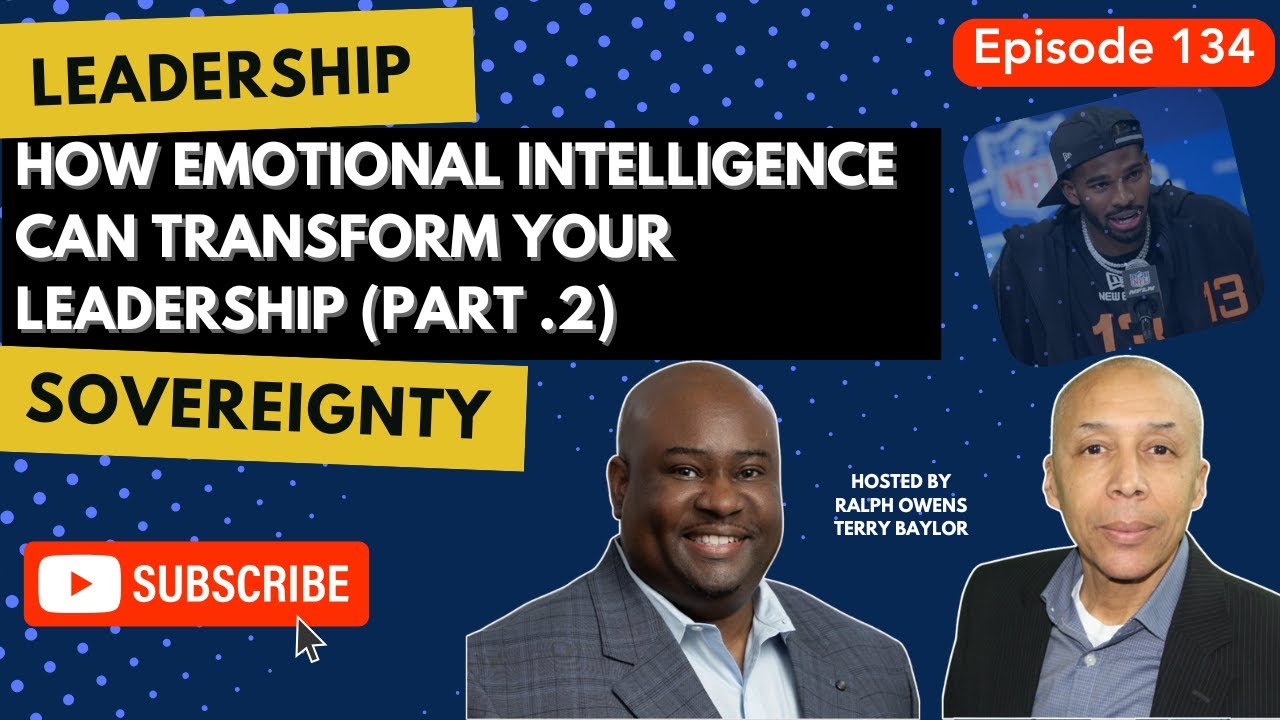
In this episode, Terry Baylor and Ralph Owens delve into the significance of emotional intelligence (EQ) in both personal and professional realms. They explore how EQ enhances relationships, well-being, and resilience, while also emphasizing the importance of self-awareness and effective communication. The discussion highlights practical applications of EQ, including decision-making and conflict resolution, and contrasts it with traditional intelligence (IQ). The hosts share personal anecdotes and insights, encouraging listeners to cultivate their emotional intelligence for improved leadership and interpersonal connections.
Takeaways
- Emotional intelligence is crucial for effective leadership.
- Improving relationships starts with self-awareness.
- Managing emotions leads to better decision-making.
- Emotional intelligence enhances well-being and resilience.
- Conflict resolution requires emotional regulation.
- You can choose how to respond to your emotions.
- Empathy is key to building strong connections.
- Understanding EQ can lead to personal growth.
- Practicing emotional intelligence is a daily commitment.
- Self-mastery is essential for personal and professional success.
Chapters
00:00 Introduction to Emotional Intelligence
03:36 The Impact of Emotional Intelligence on Personal Relationships
06:43 Enhancing Well-Being through Emotional Intelligence
09:40 Building Resilience and Coping with Challenges
12:58 Navigating Difficult Relationships
15:34 The Power of Empathy and Understanding
18:43 Conclusion and Key Takeaways
20:11 Navigating Difficult Emotions
25:32 The Power of Emotional Control
30:12 Emotional Intelligence in Professional Life
33:40 Understanding Anger and Its Management
37:18 Balancing EQ and IQ in Leadership
Love that exercise of naming it because when you name it, you now detach it from yourself. Yes. That's not me. That's that. Right?
Speaker 1:Right? When you when you say anxiety, I will not bow to you today, you've now detached that from you and called it its own entity. And now you can, like you said, you can deal with it.
Speaker 2:Welcome to Leadership Sovereignty, the podcast. I'm your host, Terry Baylor, along with Ralph Owens. And today on part two of emotional intelligence, we're gonna discuss the importance on your personal and professional life. Enjoy the show.
Speaker 1:And we are live. Hello, world. Welcome back to another episode of Leadership Sovereignty. We are excited to be here with you. Terry, how are feeling today?
Speaker 2:I'm feeling extremely excited, man, just to be able to sow into the world, man. I mean, that's what we were created to do, right? Sow into the world. So let's get at it.
Speaker 1:Awesome. Well, let's jump back in. Again, we are studying or reviewing EQ, emotional intelligence, for effective leadership and how we could transform your leadership. So this is episode two. So we're gonna jump into the importance of emotional intelligence in your personal and your professional life.
Speaker 1:So let's start with the personal life first. The first note that we took was that it improves relationships, meaning better understanding and managing emotions leads to stronger connections with others. What comes to mind for you, Terry, when you hear that?
Speaker 2:First and foremost, man, it's the people that I spend the most time with. Right?
Speaker 1:That's good.
Speaker 2:If I exercise emotional intelligence, that means, you know what, I'm gonna pretty be good father, right? I'm gonna be a pretty good husband and we have more than enough opportunity to exercise EQ.
Speaker 1:Every day.
Speaker 2:You it's funny, my wife and I were really talking about this, right, we've been at it, gosh, is it, man, 20 plus, I'll say that, like 25 plus, right?
Speaker 1:Yes, sir.
Speaker 2:And I tease her all the time, I'm like, babe, I didn't really start to get the hang of this till about year 20, for real. Feel like I'm starting to understand. And part of that really honestly is about not, really honestly just not getting your way. Right? It's not about that.
Speaker 2:And, when we, when we grow and understand that, right, we have to do it together, you know, I just, I just think it makes it better. So I, I think, again, right, it's gonna improve those relationships. You're gonna be a great son, right? You're gonna be a great friend. All those things are gonna just, you know, it's gonna promote growth and just well healthy, you know, healthy built relationships.
Speaker 1:Yeah. In that point that we just talked about, it says that it facilitates and leads to stronger connections with others. Right? It will you know, so just to recap, once we are we are self aware of our emotions and then we are now regulating them and we are aware of how they impact other people socially, right, and then we keep it in mind our motivation for the relationship and then leading with empathy, now you can make a much better connection with a person because you are responding to emotions that have been managed, regulated, and custom fit to help facilitate a connection with the other person versus just popping off on the first thing that comes to mind. Mean, think about how powerful that is.
Speaker 1:Just think about how powerful that is. I mean, most people who have never heard emotional intelligence, they just respond to the first thing that comes to mind. But now we're talking about going through this whole evolution of the emotional management process. And on the other end of that, it's something that facilitates a much better connection to Terry's point, with your spouse, with your girlfriend, with Yeah. Your
Speaker 2:So let me throw something in there, Ralph. So I went back to some of my notes, and I remember telling this story, right? So one of the books that I dug into around this topic was Daniel Goldman's basically book, Emotional Quotient, right? EQ. And he deals with a concept, basically your rational mind, let me find it here.
Speaker 2:Yeah, your rational mind versus your emotional mind. Right? And so he told a story in this book where, and it was a pretty tough story, but basically there was an individual who had, you know, he'd been incarcerated and he had decided I'm not doing what put me there anymore. And he had made a rational decision on, what he was gonna do going forward with his life. But he had gotten on hard times and he somehow convinced himself one more time.
Speaker 2:Right? This is the last time. Right? And so let me just be very clear here. Whenever you negotiate with yourself below your standards, it is a place where we are not, we, all of us, right, we are not exercising emotional quotient, right?
Speaker 2:Because this scenario, this situation, we've now started to bargain with ourselves below the standard that we've set for ourselves. And when you do that, that door opens, then that negotiation, we don't know where it stops. In this scenario, in this case, this individual had went into a place, people were there, he wasn't expecting that. And it escalated upon escalation, upon escalation to where at the end of it, man, this guy wasn't gonna see the day of light and people were drastically impacted by it. So I don't wanna get too deep into that story in terms of the details.
Speaker 2:But again, when we start to negotiate below the standard that we've set for ourselves, then we are operating well outside EQ. Because again, we're operating from our emotional mind versus our rational mind. Now what does that mean, our rational mind? That's your identity. Who are you?
Speaker 2:Who are you saying you're gonna be? Right? I'm gonna be a great person first of all. Right? I'm gonna be a great husband, I'm gonna be a great father, I'm going to be a mentor, right?
Speaker 2:And so when we start doing things that fall outside of that, then we have to analyze, okay, what's driving those actions?
Speaker 1:That's good. That's good. That's good. And that all leads to that stronger connection with the people, right? Fantastic.
Speaker 1:So second point, how emotional intelligence impacts your personal life. Enhance well-being, Right? Emotional intelligence can help you manage stress and anxiety and depression. Man, talk about that, Terry. I mean, that is epidemic in our world today.
Speaker 2:Yeah. I believe, you know, I've been studying, you know, this particular idea around operating in our identity versus operating in our emotions. And so the principle is this, when we stand firm on who we are and decide I'm gonna operate from that standpoint, then we're going to get up, we're gonna move, we're going to take action on who we've decided we're gonna be versus, right? And I'm not saying to deny them or to say it's not happening and create a placebo type situation because there are going to be some mornings, man, where you get up and you just don't feel like it. Right.
Speaker 1:There are
Speaker 2:going be some mornings where you get up and that energy that you want to operate in isn't present. But here's the thing, right? Because I'm going to operate in my identity and although I may feel a certain way, and here's the thing, right? Let's name that thing. Okay.
Speaker 2:Anxiety. Okay. I feel a little of that today. Then you tell it, Hey, anxiety, I am not gonna obey you today. It's a real thing.
Speaker 2:But there's something that amazingly happens when you take action on something that you've declared for yourself. It's an empowering thing, right? So now your subconscious, right, and your soul start to react to the fact that, you know what? I am going to be who I said I'm gonna be. And it's empowering when you take those actions.
Speaker 2:And now your subconscious now can feel good about, Hey, I've pressed beyond that. So just try it, man. I guarantee you, you will feel fulfilled at the end of it. Right? Because we all feel that, right?
Speaker 2:Ralph, let's just be totally out. And Monday morning comes around, sometimes I'm like, Dude, I don't feel like going into work today.
Speaker 1:Sunday you know night. Feel like can do the next day.
Speaker 2:Exactly. But when you take that action and you tell yourself, okay, I recognize that aspect of how I feel. And here's a big thing, right? When you accept that and name it, you can kinda step back and look at it from an objective standpoint and say, okay, now I get to choose. And that's really where the power is.
Speaker 2:That's where the power is.
Speaker 1:It really is. Yeah. It really is. That's good. I love that I love that exercise of naming it because when you name it, you now detach it from yourself.
Speaker 1:Yes. That's not me. That's that. Right? Right?
Speaker 1:When you when you say anxiety, I will not bow to you today, you've now detached that from you and called it its own entity. And now you can, like you say, you can deal with it, but when you just think it's all you all the time, then you feel like you're powerless and you don't have any way to deal with it.
Speaker 2:I'm a be honest. We can stop right now. Get the offering plates right there. Right? We don't have to go any further.
Speaker 2:Guys, there's so much power in naming that emotion. Right? Because here's the thing, they're very real. Here's the thing about that emotion though, is that we don't want it predicting what the day is gonna look like, what the day is gonna feel like.
Speaker 1:That's right. That's right. That's right. That's right. You wanna have some power in that.
Speaker 1:You wanna be able to say that my day is gonna be great and anxiety, I'm not gonna let you overwhelm me today.
Speaker 2:I love that. I got to go to the Bible. I got to say, this is the day that the Lord has made and what I will rejoice and be glad in it. So guys, this is look, man, these concepts, you know, these spiritual concepts, bro, they work regardless of who you are, where you're at, how religious or non religious you are, look, there's certain things in the universe just work.
Speaker 1:That's right.
Speaker 2:Right?
Speaker 1:That's right. Absolutely. Absolutely. So you wanna talk about enhanced well-being. Start putting some of these things in practice on a daily basis, to help your mind and your emotions.
Speaker 1:And then the third point was increased resilience, The ability to cope with challenges and setbacks and strengths and being strengthened. So think about that for a second. If you're now managing your emotions effectively, how much more can you deal with adversity, challenges and setbacks? I just had this conversation with two different people in the last seven days, two people who don't even know each other, and they both talked about how they were dealing with a difficult person and how they wanted to remove themselves from the situation. It's our natural response.
Speaker 1:And I said the exact same thing to both of them. The issue is not the person. The issue is your ability to deal with difficult people. That's the problem. We don't wanna hear that because we wanna be the victim.
Speaker 1:We want, well, this person's like this and this person's like that, and they said this like this to me, they said this like that to me. Let me tell you something. You can remove that person out of this picture and put anybody else in there, you still don't have the same problem.
Speaker 2:Yes.
Speaker 1:Right? You have to become better at dealing with difficult people, and emotional intelligence is one of the best tools out there. Right? Because think about it. If going back to the same scenario, if the person never leaves, what are you gonna do?
Speaker 1:You gonna leave? Every time you get into a situation where somebody's difficult, you're just gonna leave? No. What if you get better and you can overcome that person? Now you can go to a whole another level.
Speaker 1:So the issue is not the person. The issue is how you deal with difficult people, and that is a skill that has to be developed. Right? And that's what we're talking about today.
Speaker 2:Yeah, for sure. So what that brings to mind for me, right, I love my son's one of my son's first coaches when he started playing basketball in high school. And I wanna give a shout out to coach DJ. Coach DJ, man, you're in my thoughts. Man, you've just poured into our family in such an amazing way.
Speaker 2:And there are some sayings that he said while coaching, I'm like, wow, that is a true life gem. And here's one of the things that he shared, with the team. He said, look, guys, understand. You're the same guy at home as the same guys on the court. I'm like, So where is he going with this?
Speaker 2:He said, So if you're not taking care of your room and you're not taking care of homework and all that, that, all those responsibilities there, you're gonna be the same guy on the court who misses responsibilities on the court.
Speaker 1:-So good.
Speaker 2:-He said, You're the same person wherever you go. I was like.
Speaker 1:-Oh, light bulb, right?
Speaker 2:-So, Raph, -That's to your point, to your point, if there's somebody difficult in the home, you probably not having that really, like Again, it goes back to what I said earlier. It's not about getting your way, but it's about walking together, right? How do we do this together? -How do you grow and I grow? Matter of fact, how do Look, my whole purpose is how do I help you to grow?
Speaker 1:-RODNEY: -RODNEY:
Speaker 2:That really is the crux of what my role is in this. Right? How do I help you be the best version of yourself that you can be? Because here's the truth of the matter. If you're being the very best and I'm helping you to get there, what reciprocal impact is that gonna have on my life?
Speaker 2:-Yes. -What reciprocal impact is that gonna have on, if we have children, their lives? How do they see conflict resolution?
Speaker 1:-Yeah. Yeah.
Speaker 2:Conflict resolution is not giving in and bowing in. You know what conflict resolution is really all about? Extreme dialogue. Ralph, you said something on the last show is help me to understand what I'm not seeing. You know how powerful that is?
Speaker 1:Changed my life. And here's thing,
Speaker 2:let me help you. Don't say it like this. Alright, so help me understand.
Speaker 1:That's right. Yeah, don't get sarcastic with it. Alright. You wanna be empathetic with it.
Speaker 2:Look, look, it's gonna look something like this, let me model it for you. It's gonna look something like this, look, look, from the I mean this from the bottom of my heart because I'm missing it. Help me understand because my goal look, I don't want any space between us. Now, tonight Mhmm. We we hold it look, no space, if you get what I'm saying, married folks.
Speaker 2:Don't want That's any right.
Speaker 1:That's right. That's right. That's right. That's right. It's I think it comes to a it comes with a level of maturity in your own emotional management.
Speaker 1:Right? To say, feel like a victim right now, but could there be something that I'm missing? Correct. That could change all of this? Correct.
Speaker 1:Right? And giving yourself, giving that other person the ability to show you what you're missing. No, that's good, man. This Yeah, go ahead.
Speaker 2:Yeah, no, man, look, I think you're hitting it on the head, right? Because I think when we look at life, and when we look at situations, it boils down to one thing. Why are you doing this to me?
Speaker 1:-That's right.
Speaker 2:-That's right. If we could move outside of that
Speaker 1:That's right.
Speaker 2:And to your point, see the other perspective, and really live it from that standpoint, man, we're gonna see the value in everything that we do skyrocket. And Ralph, I'm gonna ping on something, right? You shared something yesterday on LinkedIn, man, and I was like, oh my gosh, that is so good. Where the, I forget the gentleman's name, but he was basically talking about how you treat people. And again, right, this is a universal law.
Speaker 2:He said, if you treat the people who work for you the right way, they will there's nothing they won't do. Really what he was saying is if you love people, there's nothing they won't do.
Speaker 1:-: Yeah. -:
Speaker 2:Right? And it was such a powerful you know, and he went into it a little deeper, really, upon his personal growth and, and and and, you know, just a little bit deeper. But ultimately he said, I learned how to love people and treat them right. And he said, Because of that, I have a billion dollar enterprises, multiple. He's built multiple on So, that man, that was so rich.
Speaker 2:So thank for that.
Speaker 1:No, no, yeah, no problem, man. And it's not mine. I'm just resharing what came across my path. Anybody who understands who TruA Cathy is, TruA Cathy was the founder Chick fil A. That whole, how may I serve you?
Speaker 1:He built a billion dollar empire on serving his employees so that they can serve his customers. Mean, think about it. They can be over six days a week. They still kill Right? Because people value connection.
Speaker 1:They value emotional intelligence. They value good service. Right? The chicken sandwich is okay, it's okay, but so many people go for the experience. Right?
Speaker 2:Yes, Yeah.
Speaker 1:I don't wanna go down rabbit hole now, but, yeah, no, that's good. That's good. Another thing that emotional intelligence help with in your personal life is that increased resilience. Right? No.
Speaker 1:No. We talked about that one. Increased resilience, coping with challenges and setbacks and strengths. So again, being able to process your emotions in a way that helps you to deal with resistance and difficult people. Right?
Speaker 1:Again, one of your greatest tools. You're never gonna get away from difficult people. You're gonna have them no matter where you go. You can go to 15, a 100, a thousand different jobs. There are always gonna be difficult people.
Speaker 1:The question is, are you gonna develop the way that you handle them? That's what's gonna help you get to the next level. And then a greater self awareness. Understanding one's emotions can lead to personal growth and fulfillment. Think about how great you will feel about yourself the moment that you realize, you know what?
Speaker 1:I took a step back. I measured my emotions. I knew I was a little bit upset. I calmed myself down. I reached out with empathy because I wanted to build a relationship, and it re it came out to a positive outcome.
Speaker 1:Imagine how better you're gonna feel about yourself and your own personal growth when you can start doing that. Let me take you Yeah. Through with
Speaker 2:Yeah. Yeah. Here's the thing. Right? And I'm looking back on some of the notes I took on this, you know, previously when we talked about this.
Speaker 2:Do you understand when you have an emotion that's based in fear and, you know, that level of anxiety, you know, and this, you know, this study, again, this is from Daniel Gohman's book, and that those kind of emotions create a, fight or flight kind of scenario. And do you understand that, and this, this goes directly into what you were saying, Ralph, blood actually rushes to your hands and feet because you're either gonna run or you're gonna fight.
Speaker 1:-That's right.
Speaker 2:-Right. This is physiological, truth or proof or study that's been done. Right? But here's the other thing. Right?
Speaker 2:When you have increased happiness, right? Do you know that, blood doesn't flow to your hands and your feet, but it flows to your brain. -Yeah. -Right? So just even the pure exercise of saying, You know what?
Speaker 2:Let's stay in a place calm. Let's stay in a place of, you know, I'm gonna be optimistic about this outcome. -Right?
Speaker 1:-Mm
Speaker 2:And so it will automatically give you more of a cerebral advantage and edge in those scenarios versus thinking, all right, here I go. I got enough fight on my hands.
Speaker 1:Exactly. Exactly. So, yeah, so many people out there right now feel like their emotions are like the ocean in the wind. They're just 100% out of control, and you don't know what your day is gonna be from moment to moment. What we're trying to relay to you is that you have the power to manage those emotions and have a better outcome than what you've been experiencing today.
Speaker 1:Once you understand that you have the power to take a step back, to analyze your emotions, right, realize, okay, you know, I'm a little worked up right now, you know, these kind of things. Calm yourself down, respond the right way, in alignment with, you know, your motivation for the relationship and leading with empathy. You now get the control back, right, instead of uncontrollable emotions just completely wrecking your day and controlling you. You have 100% the power to be able to do that, and I think it's very empowering once you understand that, right, that you don't have to be a victim to your emotions anymore. Correct.
Speaker 2:I'm telling you, I agree with you, Ralph. And here's the thing too I wanna emphasize. It says that you have increased brain activity, which inhibits negative feelings. Right? When we when we don't allow that fight or flight, to your point, Ralph, because to your point, if you're all over the place, man, fight or flight, we, we don't know what's coming next.
Speaker 1:Yeah. That's right. That's right. I mean, Terry and I have worked with some people who are like that. Right?
Speaker 1:Who you could tell their emotional health is very unstable. You don't know what you're gonna get from minute to minute. And that's because they allow their emotions to completely run and ruin their lives instead of taking control of them and managing them. Now, we're not saying that, or even implying that this happens with a light switch.
Speaker 2:You've been this way
Speaker 1:for fifty three years and you're just gonna turn it off. No, it don't work that way. But to Terry's point, it's practice is muscle memory. The more you do it, the better you become at it. Right?
Speaker 1:So what you wanna do is just choose. You just wanna choose your moments. Right? Hey, you know, in this moment, I'm gonna take the time to work through this process of managing this emotion better, so I can get a better outcome. And then you're gonna start to build trust in yourself again.
Speaker 1:Your own self is gonna start to trust you again and say, Oh, we can manage these emotions. Right? And that just builds on top of each other until your self trust is great again in your own self and ability to manage your emotions.
Speaker 2:Oh, that's great, man.
Speaker 1:Yeah, thank Thank
Speaker 2:you for that.
Speaker 1:Yeah, it's really good. It's really good. So let's talk about the benefits of emotional intelligence in your professional life. Well, it definitely 100% is gonna infect cause you to be a more effective leader. So emotional intelligence is essential for inspiring and motivating teams.
Speaker 1:So think about that. And you get to this place where you are now effectively managing your emotions, you can now lead others. You can't lead anybody until you can first lead yourself. I just wanna say that again. You can't lead anybody until you can first effectively lead yourself, and that comes with managing your emotions.
Speaker 1:Terry, what comes to mind for you when you hear
Speaker 2:Yeah, Ralph, I don't think there's anything I really need to add to that other than self mastery. If you have self mastery, which is essentially managing your emotions, there is no scenario or situation that you're in for the most part that you won't feel overwhelmed in, right? We're talking, these are your everyday interactions. We're not saying you've walked into a scenario that is just foreign to you. Right?
Speaker 2:We're talking, these are everyday, normal interactions. And you'll be surprised when you do come upon that, I never thought I'd be in this place before, you're gonna surprise yourself how you respond. Because again, you know, it's just like the basketball player or the baseball player who makes the phenomenal play. What I've heard those great athletes say is I practice the basics every day. And those basics are the foundation for what allows me to be extraordinary.
Speaker 2:They don't practice extraordinary, they practice free throws. There's something called every days in baseball where someone's in front of you and they're just throwing the ball and you put your glove in a certain position to catch these ground balls. I mean, it looks like you're training, you know, tee ballers, but they call them every days. Why do you do that? It's because you don't wanna have to think about it when you're in the highest of heights, right?
Speaker 2:The greatest of games. And so that's what allows great players to make great, plays in the highest of moments. And I've also heard people say, it's not those plays that make me great, it's doing the routine things. So when you go back to leadership, right, and you see a steady leader, that's routine.
Speaker 1:That's right.
Speaker 2:Operations is what? Routine. So man, mastery is about the routine. What are we practicing every day? So I'll just put that little note on it.
Speaker 1:That's good. That's good. I've heard it said that the goal in life should be the mastery of oneself. Right? Because if you do that, then you can experience all the good that life has along with it.
Speaker 1:Another point in the professional life that's impacted by emotional intelligence is improved decision making. Understanding emotions can help you make more informed choices. Oh, I can't speak enough about this one. Because when you start to go through that process of analyzing your emotions and you know, not being reactive and, you know, leading with empathy, you tend to make much better leadership decisions. Right?
Speaker 1:Because you're not responding directly only to your emotions now. Typically, when you start to do that, you start to have more wins, and then wins stack on top of each other, and now you're building a brand. Terry, comes to mind for you for that?
Speaker 2:You know, man, look, don't let your message get lost in your method.
Speaker 1:That's good. That's good. You know?
Speaker 2:I mean, Ralph, I mean, you were hitting perfectly on these points, man. And, you know, again, I would just lean back on the fact that, look, choose, choose, make draw a line in the sand and determine today is gonna be the day that I invest in myself to grow in this area. Because it, it, it's gonna impact everything you do, every relationship, every interaction. Right? And you'll, you'll see the benefits immediately, Right?
Speaker 2:Even of the smallest of steps. Right? Smallest of actions, you're gonna see the benefit immediately.
Speaker 1:Absolutely. Absolutely. Another thing that it will help with your in your professional life is stronger communication. Empathy and effective communication skills are crucial for building relationships. So this EQ thing is not just a minor.
Speaker 1:Anybody who's trying to get ahead in their career or to grow in their lives, in general, this is something that they really want to incorporate into their daily walk. Another thing that EQ really helps with is conflict resolution. So emotional intelligence can help navigate conflicts peacefully and productively. I think that's really important to focus on the peacefully and productively, right? Because the peacefully speaks to you being able to tone down your emotions, which helps to tone down the emotions of the other person as well, right?
Speaker 1:And then once your emotions are toned down, you can come to a productive conclusion. It's very hard to come to a productive conclusion when there's no peace. Right?
Speaker 2:Look, look, Ralph, we talked about this too, right? There's a certain level, appropriate level of anger, right? And the Bible deals with it, right? I'm always gonna refer back to that because that's I'm a principle based person and that's, that's a foundation for me, right? You know, and it talks about, man, be angry but sin not.
Speaker 2:So can I be upset about something? Sure. Right? Absolutely.
Speaker 1:It's an emotion. He gave it to us.
Speaker 2:You know what? But we tell anger, anger. I'm not gonna bae you today. That's right. Not today, anger.
Speaker 1:Not today. That's right. That's right. And you know what? I think that's really important, Terry, that you touched on that, is that some people think that, you know, woah, I just don't need to be angry.
Speaker 1:No. We're not saying that because God gave you that emotion for a reason. But the reason is not to hurt others, and you have to understand that. The reason is to let you know that something is wrong. That's the reason for anger, to let you know that something is wrong.
Speaker 1:But I love the fact that he tied that piece on it to sin not because sin deals with the action. Anger deals with the emotion. Right? Oh.
Speaker 2:Hold on. Say that again, please. Say that again.
Speaker 1:So so the the scripture says, be ye be angry. It's okay to be angry, but sin not. Being angry deals with how you feel. Sin not deals with your action. So it's okay to have the feeling, but don't hurt people.
Speaker 1:Is not an excuse to hurt people.
Speaker 2:Right? That's good.
Speaker 1:Yeah. Yeah. No. Yeah. Yeah.
Speaker 1:That that ministered to me.
Speaker 2:That's good, man. That is real good. I
Speaker 1:tell people in these in relationships all the time, including my own, bad behavior is never acceptable. Never. I don't care what the situation is. I don't care how upset you are. Right?
Speaker 1:Again, you can be angry. Totally good. That's to let you know that something is wrong. But sin not, that means you do not have permission because of your anger to go hurt somebody. So bad behavior is never acceptable.
Speaker 1:Right? If I say I love you, then I will never try to hurt you just because I'm angry. Right? Yeah. Yeah.
Speaker 1:And it's important. It's important.
Speaker 2:That's good, man.
Speaker 1:That's a good one.
Speaker 2:Is super good. Hey, you know, guys, hey, take a note right there.
Speaker 1:Yeah. True on that.
Speaker 2:That's a life lesson right there, for sure.
Speaker 1:Yeah, I definitely tell myself that all the time. And the last point of how emotional intelligence can impact your professional life is understanding the difference between EQ and IQ. Terry, you wanna talk about that one?
Speaker 2:So you know what? Now, I don't know if we have any football fans here, and we'll probably find a clip or something to help emphasize this, but one of the greatest levels of EQ that I'm seeing here in the, in, you know, like today in, in, in pop culture is with, Shadora Sanders. And, And so I do wanna reference the, Daniel Go Goldman's book again, and he talked about, capacity versus character. And so it's huge to understand that in relationship to IQ and EQ, because capacity is IQ, right? How great are you in the domain that you're in?
Speaker 2:Right? So he's cited, you know, leaders, presidents have great capacity, but low character. And he says, when you have that imbalance, right, you are executing at a high level, but morally, you just You know, we can go through the last ten, twenty years of leaders who fall into that category. And if you guys get the book, he cites some of those. But then you can also flip flop it, right?
Speaker 2:If you have high character but low capacity, now you don't have the performance that you need. And you're too much on the end of how people are, you know, they may feel great at the job, but, you know, you guys are just losing money, you know, just, you know, the business is not flourishing, right? Or your home is not doing, what it should be doing. So we have to balance those two. And so in pop culture today, man, I saw an interview with Shadora Sanders and I just felt, man, this young man was executing at a high level of EQ.
Speaker 2:And those of you who are not familiar with the scenario, his Deion Sanders' son, he's a football player, and he was expected to go pretty high in the draft. Last I heard, I don't believe he had been drafted yet. And so the interview that I saw him hold spoke to a few of the things that we talked about. Number one is he first dealt with his identity. He basically says, Guys, look, I know who I am.
Speaker 2:Right? I've excelled at every level of this game. I'm a stew I'm a student of it. I'm a steward of it. And so, first off and he also addressed the fact that, look, this game at the level that I'm playing it, it's not about my physicality and what I can do.
Speaker 2:He says the greatest of guys who've done this job, it's their mental that they hold and value and nurture at highest level. He said, So, I'm not moved by necessarily I haven't been drafted yet. Because here's the thing, right? He cited history. The greatest in the game didn't go until the sixth round.
Speaker 2:The greatest of us all. So he says, Look, I understand this system works a certain way, but this is where the EQ really tied into it. He said, But you know what? At some point, there's gonna be a team that sees value in me. And when they choose me, they are going to get a phenomenal resource because I'm gonna come in to be a part of the team.
Speaker 2:And so there was so much encapsulated in that, right? He knew who he was. He understood the process and was like, You know what? I'm not gonna complain about the process. We understand, right?
Speaker 2:Here's the thing. He said, We under I understand that there's a lot that comes along with the Sanders' name, and I get that. And you know what? I'm okay with that. I'm gonna let the process, you know, carry through, right?
Speaker 2:And then I'm gonna be in position to be the best version of myself that I can be. And so, man, I just I thought he exercised a great level of EQ, you know, just doing that press conference because, of course, the whole world has, you know, tons of things to say. And again, this is not about, you know, football for us. This is about how was he handling the moment? -Yes.
Speaker 2:-You know, how was he handling his emotions? Right? What noise is he letting in and not letting in? It's very clear to me that he's, controlling, the atmosphere and the environment, around him. Yeah.
Speaker 2:And supportive he has environment around him as well. That's allowing him to exercise the EQ that he is exercising, right? Because he's been trained over the years, right? Who are you son? Right?
Speaker 2:I saw old videos. He was a young boy. His dad was like, Hey, do you think you want to play this game at the highest level? He said, Well, sign your name here. Don't sign my name, sign your name.
Speaker 2:So he was being prepared, right? Taught along the way. Right? Son, do you think you're good? No, dad, I don't think I'm good.
Speaker 2:I think I'm great. Right? So there's an ideology that he's got about himself, but then when he articulates about himself, he's saying, look, I'm gonna let the process be the process. So the reason I bring this out is how are you? Who are you when you know and believe that what's being divvied out to you is not fair?
Speaker 2:You believe it's not fair.
Speaker 1:You know, I think I think it'll be helpful if you kinda explain some of the negative things that are coming to him and how he could respond versus how he's chosen to respond.
Speaker 2:Yeah. I mean, at the end of the day, man, granted, right, he could, you know, he could be lashing out, right, he could be doing that. He could be throwing out, you know, my stats. He could be throwing out, right, you know, at every level, you know, You guys have been doubting me or You guys don't like my dad. Right?
Speaker 2:And I'm just gonna, let me just, let me just, I'm just gonna hit I'm gonna let the elephant, in the room or the gorilla in the room talk, right? There are sometimes, man, people don't like, I'm just being honest, they don't like a very confident African American male. I mean, that's a very true thing, right? And we know that to be true. We've seen that played out in, in different scenarios.
Speaker 2:And I think the last time we talked about this topic, Ralph, I talked about President Barack Obama and his level of EQ, where the level of disrespect he was being shown, but he did not lash back out. And I see the same thing here with, Shadoor and Dion and how they're handling, these moments. And I've said this before, right? I'm gonna, I'm gonna get a little bit on the soapbox a little bit here, but I believe for the African American male, to be honest, I believe Dion is operating man in a different realm. Dion has been able to yield economics.
Speaker 2:And when you can yield economics, there's a certain level of influence and, and, and power that comes along with that. The way he's managing it though, and building up those young men who are around him is phenomenal. Right? People see the swag, but they but they're missing the message. And I'm gonna say this.
Speaker 2:Right? I have a firsthand testimony because I have one of my best friend's sons played with Dion in high school. And Dion wanted the young man to come play with him at, you know, when he first went to Jackson State. The young man decided to take a different path in his life, but I heard the messages. I saw how he dealt with this young man.
Speaker 2:So when I see his son and knowing what he sowed into this other young man, I can only imagine how he's prepared his son for this moment. Right? And so I think we see it played out, right? The way he's articulating and not At the end of the day, Ralph, you say this all the time, he's not seeing himself as the victim. So he's not operating out of that position.
Speaker 2:At the end of the day, he's not operating from a, Why are you doing this to me? Woe is me. No. He's like, Dude, I know who I am. I'm Shadua Sanders.
Speaker 2:I have all these Big 12 records. I have I did this in high school. I did this in Pop Warner. Right? I mean, he's got the credentials.
Speaker 2:Again, though, but that doesn't he's not using that as a tool, right, to your point, Ralph. He's not using that as a tool to hurt people. -ROGER: Yeah. Right? So I just think it's a great level of, exercise of EQ on a national level, man.
Speaker 2:Most of us will never be able to say that we've communicated on a national level or regional level, but definitely some good example on how to do it. Yeah.
Speaker 1:Good. Good. Good. Good. Alright.
Speaker 1:So we've come to the end of this show. So hopefully, you've taken some nuggets that'll help you along your journey. And then the next episode, we'll we'll talk a little bit more about understanding your emotions and building empathy and connection so we can dive a little bit deeper to into that. So until the next time, be blessed. Stay stay safe, and we will talk to you now.
Speaker 1:We'll talk to you later. Thank you for listening to the Leadership Sovereignty Podcast. If this content blessed or helped you in any kind of way, support us today by subscribing to our YouTube channel, clicking the like button for this episode, and sharing this content with others that you think it will help. Until next time, stay safe, peace, and blessings.