
 Apple Podcasts

 Spotify

 YouTube
How Emotional Intelligence Can Transform Your Leadership (Part 3)
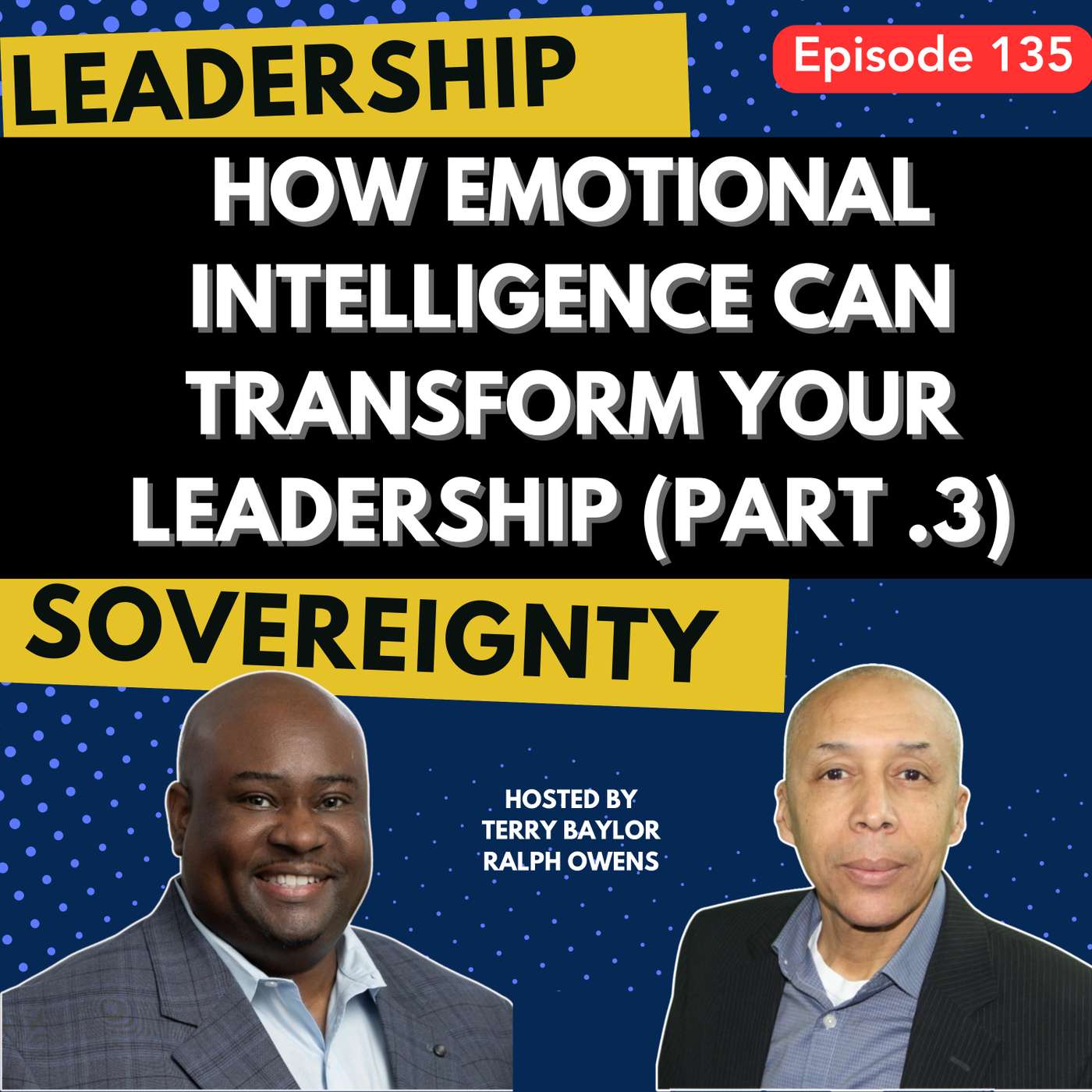
In this episode, Ralph Owens and Terry Baylor explore the transformative power of emotional intelligence in leadership, focusing on the importance of empathy. They discuss the differences between cognitive and emotional empathy, the significance of active listening, and the role of mindfulness in developing empathy. The conversation also covers how empathy can strengthen relationships and improve conflict resolution through effective communication strategies.
Key Takeaways
- Empathy is about understanding the other person's perspective.
- Cognitive empathy involves mentally placing yourself in someone else's shoes.
- Emotional empathy requires drawing from personal experiences.
- Active listening is crucial for developing empathy.
- Mindfulness helps in emotional regulation and connection.
- Building strong relationships is essential for effective leadership.
- Conflict resolution starts with acknowledging relationships over issues.
- Empathy can be shown by both leaders and team members.
- Finding common ground fosters better communication.
- Understanding feelings is key to moving forward together.
Chapters
00:00 Understanding Empathy in Leadership
02:56 Cognitive vs. Emotional Empathy
05:53 Developing Empathy Through Active Listening
08:56 Mindfulness and Emotional Regulation
11:52 Building Strong Relationships with Empathy
15:05 Conflict Resolution and Communication Strategies
★ Support this podcast ★0:00 I don't think there's a there could be said enough about your ability to listen right when you really actively listen. And to to your point, Terry, you're not just waiting for your, your, your moment to respond, right? When you actively listen, you could ask very thoughtful questions to acknowledge the person that you're listening to. And I think that's a basic need that we all have is to be heard, you know? So when you take the time to actively listening, you actually satisfying a deep need that the other person has across the table from you, right? So that helps to foster a even deeper connection just by being able to take the time to really listen to what a person has to say, see in their perspective. To Leadership Sovereignty, the podcast, I'm your host Terry Baylor, along with Ralph Owens on this third installment of emotional intelligence, will dev into empathy and how to build stronger relationships.
0:56 Enjoy the show. Hello and welcome to another episode of Leadership Sovereignty. Terry, how you feeling this morning? Man, excited to be here with everyone. Thank you guys for the feedback and hope you're getting something that's helping. Awesome, awesome. Well, let's let's jump right into it. So we're in episode 3 of our series on how emotional intelligence can transform your leadership. So today we're going to talk about building empathy and connection. So what, what is empathy? What, what, what, what, what comes to mind for you when you hear that? Terry?
1:38 What is empathy? Basically, man, it's, it's really kind of not just focusing on yourself, right? Seeing it from the other person's perspective, even at times feeling it from the other person's perspective and really drawing maybe from a life experience that will help connect the why. I think that's really the, the main thrust of empathy, right? Understanding the why and moving forward in a way that's productive for both. Yeah, yeah, I, I agree. I agree. It is really about the other person and understanding them better, right. You know, so, so that you both can move forward together. So let's jump into it then.
2:27 Cognitive empathy versus emotional empathy, right. I think, I think you had read a pretty good definition on that, Terry. You know, can you touch on that a little bit? Yeah, really, you know, cognitive is really, you know, cognitive is exactly what it says, right? Mentally putting yourself in that person's place, right, Trying to understand, right, the logic, right? That's, that's really, you know, what that deals with. And then in terms of, you know, the emotional empathy, you know, I believe we have a opportunity to do that. And I would say the easiest way for us to do that is to draw back on a previous emotion that we had, right? That was something rough.
3:10 We, we talked about this morning. And you know, how do we touch on that in a way? Because the emotional empathy part can be pretty heavy, I'll say, depending on what the emotional issue is, right? So just be, I'm be really candid here. Some things I don't want to experience emotionally, right? Because I'm not equipped to, you know, facilitate that. And I'll just give a quick story, right. In a previous life, you know, I would deal with youth and there were certain stories that I had to deal with that were quite heavy. And when those things went beyond my training, then I would bring someone else into that situation. And, and that happened, you know, you know, plenty of times as you as you deal with youth and, and then ultimately it turns into, excuse me, it turns into a lot of times a family, you know, discussion.
4:04 And I had to bring someone in because emotionally I wasn't at a place where I could, I could facilitate that. So anyway, just want to kind of lay that groundwork. But if you have a life experience that you can tie to, I think that's very helpful. And in the emotional space, what do you think? Now that you spot on, I mean, that's helped me many, many, many times it just in life in general, right? Just being able to take a step back and say, OK, what are they feeling, right? You know, in my mind, let me put myself in your shoes. And instead of it being you against me across the table, let me come around to the other side of the table and get on your side and try to understand, you know, mentally why you feel the way that you do. And then to your point, you know, once you tap into that, you know, can you dig deep enough to find or remember a situation in which you felt the same way, right? You know, because by connecting with that, you can connect with that person better, right, instead of, you know, only looking at your own perspective on right. And you know that, and that kind of goes to the benefits of empathy and relationships.
5:11 You just get better connection, man. You connect with people so much better when you understand where they're coming from and what's driving them so that you don't have to be in opposition, you know, with each other. I think that is the, the, the main benefit overall of, of empathy. I mean, what, what do you think about that here? Yeah, here's the thing, right? When you're not on an island, right? Because the person you're talking to could feel on an island, right? But if you guys are on that island together now, you know, we've heard it said many times, 2 heads are better than one, right? So, you know, Ralph, I was speaking with someone this week and they were, you know, dealing with some challenges.
5:53 And I said, you know what, I'm going to share something with you that one of my best friends, we've been in a lot of scenarios together. And when we're in these scenarios where we have to figure out, find a resolution, we start with one premise. And that premise is there is an answer. There is an answer yes when. You can agree on that. If you can get someone to agree that there is an answer, I believe that's a great bridge to empathy, right? I believe that's a great bris. You know, I haven't had haven't necessarily used it in that form or in that in that scenario, right?
6:35 Typically we've used it when we're troubleshooting, right? And some we just don't know what in the world is going on. Yeah, yeah, yeah. Say there is an answer, and here's the thing that that does. When you come to that agreement within yourself and then you come into that agreement with the person you're working with, that automatically builds a connection and a common path forward that you guys are agreeing that the end is going to be an outcome that's favorable. That's right. That's right. Absolutely, absolutely, absolutely. So so how do you develop empathy? One of the ways you do that is through active listening and perspective taking, right?
7:21 Being willing to not be the one that's talking and be the one that's listening. I heard somebody say, and I, I believe it's my wife who was previous educator for 25 years. She would say that the person who's talking the most is learning the least, right? It's the person who is listening the most who's learning the most, right? So to develop empathy, sometimes the first thing you have to do is be willing to not be the one talk and to be the one listening and, and, and asking questions so that you can get a better perspective on exactly where the other person is. Because again, once you understand their perspective, then you can kind of understand why they're doing what they're doing, which, which builds that connection.
8:08 But but what what comes to to to mind for you Terry when you we talk about how to develop empathy? Man, I, I love that saying, right? The person who's listening as learning, wow, that is a pretty amazing concept. And if you know, I remember being at A at an event and I was speaking with a gentleman. It was a technology event and for the first time, man, I had actually saw listening as an action. This guy was listening so intent to what I was saying and so engaged. I thought to myself, I need to start practicing listening, like really being engaged.
8:59 And you know, from that moment forth, that was one of the, you know, personal growth areas that I even today I continue to work on, right? I want to actively listen, meaning that I'm not listening to give a response. I'm not listening to, you know, I'm not listening, dissecting what you're saying, right, right. I'm, I'm listening to absorb, right, to, to take it in. And, and I believe it's a, it's a skill that you have to practice. And so it's not just how he was listening, but it, it was what he said after, you know, I, I finished speaking because it was, it wasn't a response, right? But it was really an acknowledgement, I guess is the is the best way I could say it.
9:56 And yeah, that it was a conversation that changed my life because of how intently he was listening. It was, it was a, you know, pretty impactful moment for me in life. That's actually that's, that's a fantastic point. I don't think there's a, there could be said enough about your ability to listen, right? When you really actively listen and to, to your point, Terry, you're not just waiting for your, your, your moment to respond, right? When you actively listen, you could ask very thoughtful questions to acknowledge the person that you're listening to. And I think that's a basic need that we all have is to be heard, right?
10:38 You know, So when you take the time to actively listening, you actually satisfying a deep need that the other person has across the table from you, right? So that helps to foster a even deeper connection just by being able to take the time to really listen to what a person has to say, see in their perspective, right? And moving forward from there. Another way to develop empathy is just having practicing mindfulness and meditation for emotional regulation, right? You know, going into situations already prepared with your mind already in a certain state can help you, you know, be more empathetic into to make a deeper connection.
11:20 But Terry, what comes to mind for you for that? Yeah, I, I agree, right. Being balanced yourself, right. You know, we've all been in situations where you got to go in the next day, right? And there's carryover or you have something going on in your in your personal life, right? And so at the end of the day, we all have an emotional bucket. And how are we managing that bucket, right? Is it near the brim, right? How, how do you get to a place of self regulation in your emotions, right? And it's been, it's been, it's been. And I remember listening to an NPR episode a few years back, and they were talking about the power of prayer.
12:07 And in this scenario, they were, you know, they went through all different, you know, there wasn't any particular religion that they were focusing and on, but they went through and talked to many of the people who were in disciplines where meditation or prayer was highly utilized. And it was, you know, basically the study said that man, though those persons were able to really navigate life and, and keep things, you know, in perspective, right, Because they were able to, you know, look inner inside, right, and, and kind of, you know, see where they were. And then also too, they were relying on a, you know, there was a spiritual element to their lives, right? And Ralph, we've talked about this, right? There are four elements that we have to manage in order to behold, right?
13:00 There's physical, emotional, relational and spiritual, right? You know, we are spirit beings. You know, I know there's, you know, again, there, there could be some different, you know, beliefs out there around that, but we are designed to want to connect. And that part of us that wants to connect is that is that soul spirit area of, of who we are. And if we're doing things to help manage that area, right, Meditation, you know, going out on a walk and just being quiet and still, right? And just, you know, being, you know, taking deep breaths, right, taking a moment to, you know, not take in right, with all the things that we have at our disposal, right, all the media, all the, you know, connectedness from a digital standpoint, right?
13:56 So that's, that's kind of what comes to mind for me. That's. Great. That's great. That's great. And then the, the, the, the last point is building strong relationships, you know, with empathy. So we can use emotional intelligence to also build our interpersonal skills, right? Because once you become more aware of your emotions and you're building empathy with the other person, you're going to by default build a stronger connection and have better interpersonal relationships, right? With people. I think another one is conflict resolution and communication strategies, right? You know, I remember reading a book on conflict resolution years ago and it talks about when you have a conflict and you want to deal with, there's a couple things you want to do. You first want to acknowledge the relationship that you have with the other person.
14:44 That's empathy, right? You start off with who you are and what you mean to me. I'm going to put aside what our what our conflict is 1st and I'm just going to acknowledge the relationship and that that relationship is more important than this situation, right? And then I'm going to sit back and I'm going to listen to your side. Everything we just talked about. Have empathy, right? And try to see from your perspective what I'm not seeing. And then I'm going to find a place of agreement so that we can move forward together. Right. You know, all of this is tied into empathy and emotional intelligence. And it could be a very, very good tool for a conflict resolution. Any any thoughts on that too? Yeah, Rafael, I love the the the point that you brought out about this relationships means more to me than the actual issue. And, you know, I believe that is something that could be better communicated or more often communicated. You know, I don't believe outside of my personal relationships, I don't believe I've really ever heard that communicated, right.
15:52 Can you imagine what that would sound like or feel like or what kind of productivity that would bring if in the workplace, a leader? Well, you know, provided that kind of feedback, look, First off, the value that you have to this organization is more important than the scenario that we're having to talk through today. Yeah, right. I've, I've used it. I used it multiple times. I'm sorry. Go ahead. No, go ahead. No, no, no. Go ahead, please. I've used it multiple times in, in, in, in my career in that, you know, sometimes when you have a conflict, you, you, you lose sight of the fact that you both want the same thing, right?
16:35 You know, so, so let's establish that we both want the same thing for the organization. We want things to move forward and our customers to be happy. There's a very powerful thing. And this goes back to your point area of establishing agreement, because when you establish agreement, you got to put some of your Shields down, right, in order to hold hands, right? When you establish agreement, you know, you make progress in the right direction. But as long as there is only conflict and there is no agreement, right? So you got to find somewhere where you can agree. And we both agree that we're trying to go in the in the same direction, right? You know, So let's establish that we both have the same interest in mind.
17:16 Now let me step take the step back and listen to you so I can understand your perspective, right? I heard this guy say this, He was talking about marriage and and marriage issues, but I think it still applies. And I love this, this, this, this saying, he said. He said sometimes one of you have to have enough grace up for the both of you. Yes, I know who you're talking about. Oh, Jimmy. I mean, just, oh man, you know, and, and what are you saying is you can both be at war with each other, but one of you has to have enough emotional intelligence to have enough grace for the both of you to move you forward.
17:58 Because at the end of the day, you both want to move forward, right? So it's, it's important. And then you know that last thing is that assertive communication and avoiding passive aggressive behavior, right? Once I think once you, once you truly have empathy with emotional intelligence and you understand the other person's point of view, right? You've, you've connected with the emotional feeling that they're feeling. You can have good, precise assertive communication. What I mean by that is we all know what it's like to be passive aggressive. I ain't saying nothing to them. I'm not going to do what I would normally do. But you don't have to do that because now you understand how they feel and you can have assertive communication that actually talks to the issue, right, in order to be able to resolve the conflict in the movie forward. But I mean, any thoughts on that too? Yeah, I mean, you know, as they say, man, you gotta get out of your feelings.
18:53 Yeah, but here's the. Deal right? That is a, that is not a small, it's not a small task, right? And you know when you when you do come to a place of agreement, right, Ralph? This is another thing that we would say it's hard to argue with somebody disagreeing with you. Oh, absolutely. That's a good one, you know. It is hard to argue with someone. So let's say that the person on the other side of the table is not there yet, right? And Ralph, we've talked about this technique. Well, you know what, let's give a concession, right? Because in any scenario, right, I would say that there's, there's always some give and take, right?
19:40 There's something that I could have done differently. There's something the other person could have done differently that has impacted the situation. So find an area where you can say, you know what, I agree with you there. I agree with you. I, I believe there is some room for improvement there or I believe that there can have been a different outcome as a result, right? Find that place of agreement and start building from there. Because here's the deal. Sometimes you're going to have to manage up to get to that place because the man, the person leading you may not have the emotional intelligence that you have, right? They're not listening to leadership sovereignty, right?
20:21 Not that we are the be all end all, our whole goal. Is to give you a reference point and then you take it from there, right? We just want to see the idea, right? We, you know, Ralph and I are huge fans of Inception. You're going to be like, where did I get that idea? Where did that come from? Yeah. Yeah, Yeah, yeah, we. Just want to plant the idea, man, and then let you see where it lands, you know, in your life and and you, you're the one who, you know, who's measuring, right, who has a measuring stick to say, hey, yeah, there's some room for me there, so. I, I think another point too, I just want to add is that in that conflict resolution, just like you said, Terry, you know, acknowledge the pieces that you, that you can agree on that you could have did better, but you also have to acknowledge the way that they feel, right? I understand why you feel that.
21:12 Way that's good. I could see why you feel that way based on what I did. Yeah. Empathy, Right? I'm on the other side of the table now. I'm sitting next. I'm not sitting across from you. Yes. They, you know, validate their feelings, right? Because they feel it a certain way. Because something happened that also builds a stronger connection and helps to come together in Unity so that you can move forward. But. Yeah, yeah, Ralph, I think, I think that's a great point. That's a great point. And I just want to add this last little piece to it, right. A lot of times when we're thinking about showing empathy, we're thinking about the person who is the leader, right? The person who has on sort on, you know, so to speak, the upper hand empathy can be shown whether you're the leader or whether you're the person being LED right in order to get to that place of agreement.
21:57 So Ralph, I think that's a great, that's an excellent point. Awesome. Awesome, awesome, awesome. This has been a great show. We're looking forward to the next show next week. So hope that you tune in then and then till then, have a great week and we'll talk to you next time. God bless. Thank you for listening to the Leadership Sovereignty Podcast. If this content blessed or helped you in any kind of way, support us today by subscribing to our YouTube channel, clicking the like button for this episode, and sharing this content with others that you think it will help. Until next time, stay safe, peace and blessings.