
 Apple Podcasts

 Spotify

 YouTube
How Emotional Intelligence Can Transform Your Leadership (Part 4)
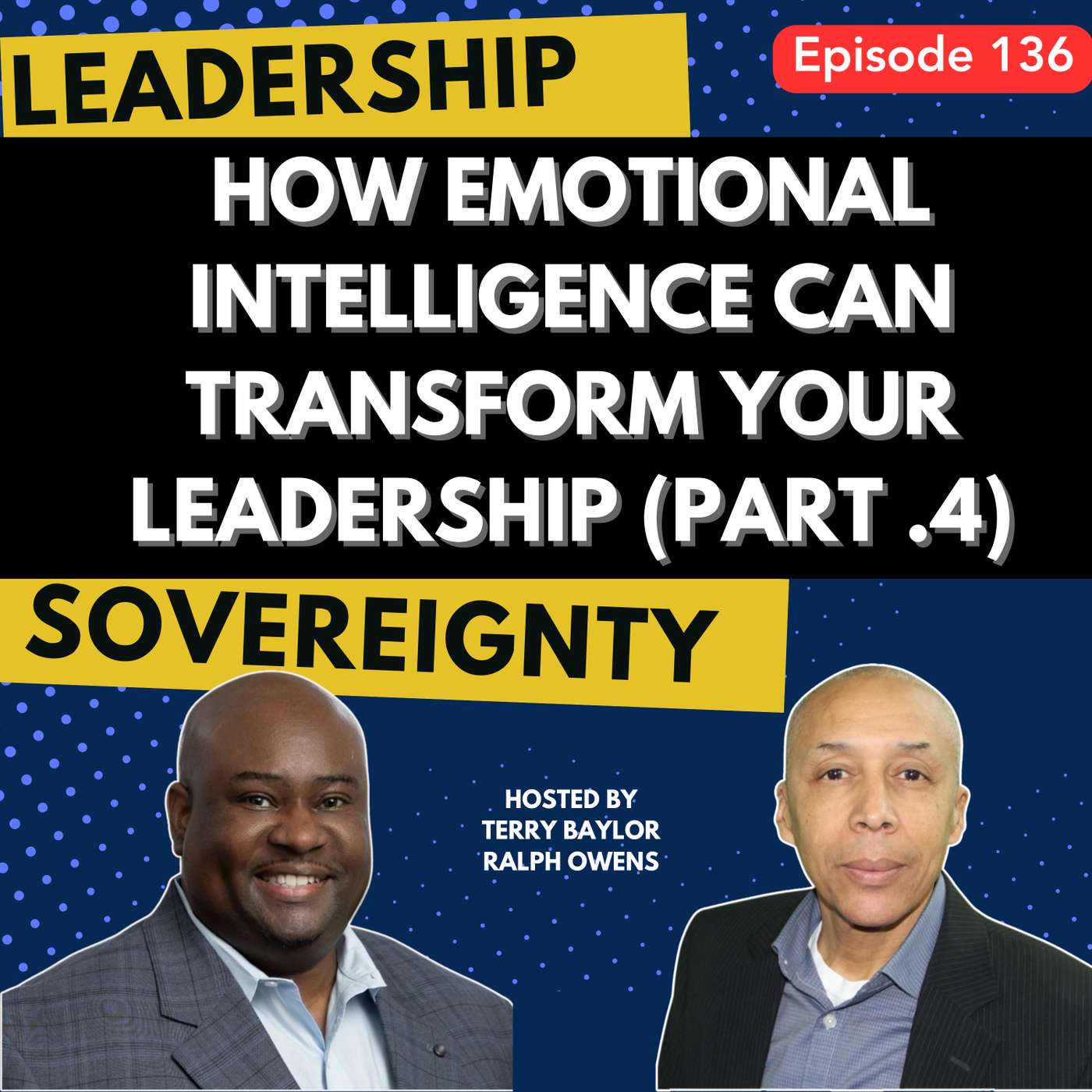
In this episode, Terry Baylor and Ralph Owens discuss the critical role of emotional intelligence (EQ) in leadership, teamwork, and career success. They explore how EQ can foster a positive workplace culture, build trust and collaboration within teams, and aid in conflict resolution. The conversation emphasizes the importance of self-awareness and understanding one's triggers to enhance job performance and personal growth. The hosts also recommend key resources for developing emotional intelligence.Takeaways-Emotional intelligence is essential for effective leadership.-Leaders should aim to be a thermostat, setting the tone for their teams.-Creating a positive work culture is fundamental to team success.-Trust is built gradually but can be lost quickly.-Conflict resolution is enhanced through emotional intelligence.-Character and capacity must be balanced for effective leadership.-Emotional intelligence contributes to job fulfillment and performance.-Life experiences shape our emotional responses and interactions.-Understanding personal triggers is crucial for effective communication.-Continuous assessment and development of emotional intelligence are vital. Chapters00:00 The Role of Emotional Intelligence in Leadership06:10 Building Trust and Collaboration through EQ12:59 Assessing and Developing Emotional Intelligence
★ Support this podcast ★0:00 I didn't come up with it, but you can be a thermostat or a barometer, right? That's. A good. One, yeah. So what I prefer to be is the thermostat, right. As a leader, I don't necessarily want to tell the temperature. I want to be the one setting the temperature. And I think we have a lot of opportunity to talk about that. Welcome to leadership Sovereignty. I'm your host, Terry Baylor, along with Ralph Owens. On today's show, we'll discuss how EQ Emotional Quotient can impact your leadership, teamwork and career success. Enjoy the show. And we are live.
0:48 Hello world. Welcome to another episode of Leadership Sovereignty. Terry, how you feeling today? Good morning everybody. Let's get to it all. Right, all right, we are in episode 4 of How emotional intelligence Can Transform Your Leadership. In this episode, we're going to talk about emotional intelligence in the workplace. So our first topic is emotional intelligence and leadership. So when we talk about leadership, you can't miss the the importance of emotional intelligence for leaders. You know, one of the things that come to mind for me is it's essential to lead the people that you are that you are leading, right, in order for you to be a good leader. As your emotional intelligence develops, you connect better with them.
1:35 I mean, what what comes to mind for you, Terry on that? I'll say this, right, There's a, there's a saying that I like to use. I didn't come up with it, but you can be a thermostat or a barometer, right? That's. A good one. Yeah. So what I prefer to be is the thermostat, right? As a leader, I don't necessarily want to tell the temperature. I want to be the one setting the temperature. And I think we have a lot of opportunity to talk about that in terms of where we are today, where culture is, all the influences that we have, right?
2:16 There's so many things vying for our attention. And are we basically a letting, allowing those things to set our barometer right? You know what, how did you start your morning right? There's so many. It's, it's, it's a lot in there. It's a lot in there. Yeah, that's good. That's really good, really good. So, so how do we create a positive and supportive work environment, you know, with EQ? I mean, what comes to mind for you there too when you get there? Again, right, it's about the culture, right? What, what, what culture are are you trying to foster? Right. We've seen and heard, you know, there are cultures built on fear.
2:59 There are cultures built on teamwork. There are cultures built on the mission, right? So, yeah, I, I think it, it all, it all boils down to what kind of culture are you trying to build? And, and, and fundamentally, right. We yeah, I've said this before in previous in a previous episode, who you are in your room is who you are everywhere, essentially right now. You may dial it down outside of your room, but believe me, there's bleed. Yeah. Absolutely, yeah. So you can't you're, you're not a totally different person. You can fake it so so long, but. Let the right. Situation arise, right? That's a real you.
3:42 Right people. All the time I did, I didn't. I didn't. I couldn't believe I did that. Yes, you just. Yeah, it was always there. Yeah, it was always there. That's good. That's good. That's good. I think to, you know, better understanding those who report to you make it easier for you to create their culture, right? You know, when you leave with empathy and you get on the other side of the table and you understand where they're coming from, it helps you to create a culture that is more impactful to them. No, that's, that's, that's excellent, man. That's good stuff. What about emotional intelligence with teamwork? You know, talk about how EQ builds trust to collaboration. You know what comes to mind for you for that.
4:22 You know, team is big for me, right? People often refer to me as a coach, right? I have, you know, of course you guys know, you know, my kids play sports and do all these things and you know, kids call, you know, my kids are like, hey, Liz T, is your dad practicing today? There's a reason why they want to be in those environments. The reason why they want to be in an environment because it's one that's building them and challenging them, right? I, you know, when, when, when we're out there, it's about getting better. And if there is a, if there is an opportunity or a space that needs improvement, we call that out. But there's a way to call it out, right?
5:04 There's a way that you can do it that in that in that inspires someone to be the best version of themselves. So that's what comes to mind for me. That's good, that's great, that's excellent. I know, you know, the things that come to mind for me is, you know, as we continue to, you know, leave with empathy, again, get on the other side of the table. It just builds building block foundations of trust, right? You know, and collaboration is built on that. You know, you're not going to collaborate with people that you don't trust. You know, we talked about that earlier in the show, Terry. You can build trust by the droplet, but you lose about a bucket full, right? Each moment that you have and each opportunity that you have that you employ EQ to reach people, you build, you know, the foundation of trust in that relationship, which is needed in the workplace, especially for collaboration, right?
5:56 Because trust always leads to collaboration. But what about resolving conflicts? You know, we talked a little bit about, you know, conflict resolution and, and, and EQ's ability to help assist with that. Any anything come to mind for you, Terry? Yeah, so and and I think we hit on this a little bit before, right. So, you know, a lot of times people want to lean on their they want to be built, build on their intellect, right? So in the book emotional intelligence, he called it your capacity, right? So we typically want to lean on our capacity. The question is, how much character though, are we trying to lean on, right?
6:42 So that's what that's what comes to mind for me, right? So and, and, and, and in the book, Daniel Goldman basically said that those who have high capacity but low character, there is an imbalance, right? So, yeah, on the capacity side, they're amazing. But on the character side, that's where we start to get the misuse of power, the the mistreating of people, the the writing of unjust policies, right? And things of that nature. But here's the here's here's the, here's the. Here's the. Here's the key to that, though.
7:22 Those who are of high capacity and those who have high character and low capacity, their ability to to run their domains suffer. So we can't have an unbalanced aspect of capacity and character. We want to develop both, right? Both we want to, we want to operate at a high level in both of those areas, capacity and character, character and capacity. That's funny. That's excellent. That is excellent. That's excellent. So, you know, as we look at the EQ and career success, I mean, that ties directly into that, right character and capacity and EQ, using EQ to build that. So as we talk about the impact of emotional intelligence on job performance, I mean, one of the things that that comes to mind for me is that EQ will help you feel more fulfilled in your job, right?
8:26 Because you make more meaningful connections with the people that you're actually working with. Instead of you always trying to figure out or be in opposition with people, Now that you're being able to make connections with them, you can actually lead them, right? You can actually influence. We talked about what is the leadership? Leadership is influenced. You can actually influence them. But you know what? What comes to mind for you to when you talk about emotional intelligence specific to job performance? Yeah, I think I love this area, right? A lot of times the first day that came to mind for me was Game of Thrones, right? We going to work like in Game of Thrones, right?
9:06 We speak, we we go into we go into work like it's Big Brother, right alliances and you know, all the things that happen, they're right. And we understand that anytime you have people in a scenario, right, you're going to have the politics of life, right. There's you can't get around that. Is that our main goal and focus though, right. So I want to introduce another book and we'll talk about this in the past too, right. So Bill George, I love his story. Look, look him up. He was the CEO.
9:47 Well, I want to say Mantronics if I'm if I'm calling the right corporation, but he did some amazing stuff with it, right? A ticket from a four billion company to $8 billion company anyway. And then I also want to because these guys kind of have a very similar approach, the owner of Starbucks, right? And so basically what they're what they're talking about is your life influences are going to impact how you say the world. So, so how does, how did that tie into, you know, my career success?
10:28 It, it, it means everything because basically what they're saying is your core drivers come from your life experiences. So what I want, what I want to encourage everyone to do is look back at your look back at your story, right? And how you see yourself in your story is how your story plays out is how you engage, right? It's how you interact, right? So if you, and, and it's not to say that any of our backgrounds are better than the other or any of our experiences are better than the other, it's to understand.
11:09 And Ralph, you say this all the time, you got to understand your triggers. Absolutely. Yeah. So important. So, so let's let's, let's let's be real candid. If you in a situation that wasn't very trusting, then that means you're going to have to pay a little bit more attention to how you interact, you know, with folks. Me and my wife was just having a conversation the other day and we were, we were discussing in a person and, and, and my wife was like, I just, it was something about the person that I just couldn't put my finger on it. And I told that I said, I already know. I said from the moment I met this person, they reminded me of this individual and I'm not going to call the name out. And when I, when I said that to my wife, she was like, yes, because all the words sound right, but they're disconnected from the person because it just seems like they are like, it's like AI.
12:05 It's like someone fed them the information in and then they just regurgitated it back out, right. You know, we've all used AI. You know, sometimes you put a prompt in AI and it just comes back with this thorough answer. No personality, right? No character, no, no feel or, or human that, you know, human nature. And so my wife basically said, that's what I get from that person. I say, yeah, I've got it from the very first time we met. And I was denying what I felt because I didn't want first, the experience I had with that other individual wasn't so pleasant, right? And just because of how they would would carry out things, you know, we we succeeded. But it was just, it was just, it was just, dude, it was pushing the boulder up the hill because you had to decipher and figure out and, and you know how it is when you have to make up for somebody's shortcomings, right all the time. Now it's OK.
13:02 Some of the. Time. Some of the time, right? Yeah, yeah. Yeah. So anyway, that's that's what comes to mind for me. That's good, man. That, that is really good. That's really good. So that the context isn't until our, our final point for the show, which is, you know, emotional intelligence assessments and development by, you know, just how critical it is for you to constantly be assessing your emotional intelligence level and ability, right? And the, and the importance of putting, you know, focused time into developing it. Right. Terry, I mean, you, you gave some roots, some excellent recommendations on books. You want to you want to just touch on what those were again because those are the things that resources that we can use to develop ourselves.
13:44 Yes, so there was emotional intelligence and I I mentioned Mr. Daniel who who wrote that book. And then there is True North by Bill, Bill George. Yeah, just just just just great books. You know, I would also, I'd be remiss, Ralph, if I'm looking at my notes here, I'd be remiss if we didn't mention, you know, how to win friends and influence people. I mean, that's and I, you know that, you know, you, you recommended me that book. Yeah. That started it. That started it all. That is a legendary. You know, it's, it's great to start there. Yeah, yeah, that's great.
14:28 That's great. That's great. I also would add how to have power and influence when dealing with people. The the author's name escapes me right now, but it was it was another great book that'll help you develop your emotional intelligence. But yeah, no, this is good, This is good, This is great. Episode 4 and we are looking forward to our final episode in this series, episode 5, but we'll talk about emotional intelligence for Personal group. Until next time, thank you for tuning in and God bless and we will see you on the net. Alright, Ralph. Hey man, you did a great job on the road, bro. I love it. I love it. Technology at its best.
15:09 At its best. Talk next week, Bye. Thank you for listening to the Leadership Sovereignty Podcast. If this content blessed or helped you in any kind of way, support us today by subscribing to our YouTube channel, clicking the like button for this episode, and sharing this content with others that you think it will help. Until next time, stay safe, peace and blessings.