

 Apple Podcasts
 Spotify
 YouTube
 How we are always selling. Pt. 6
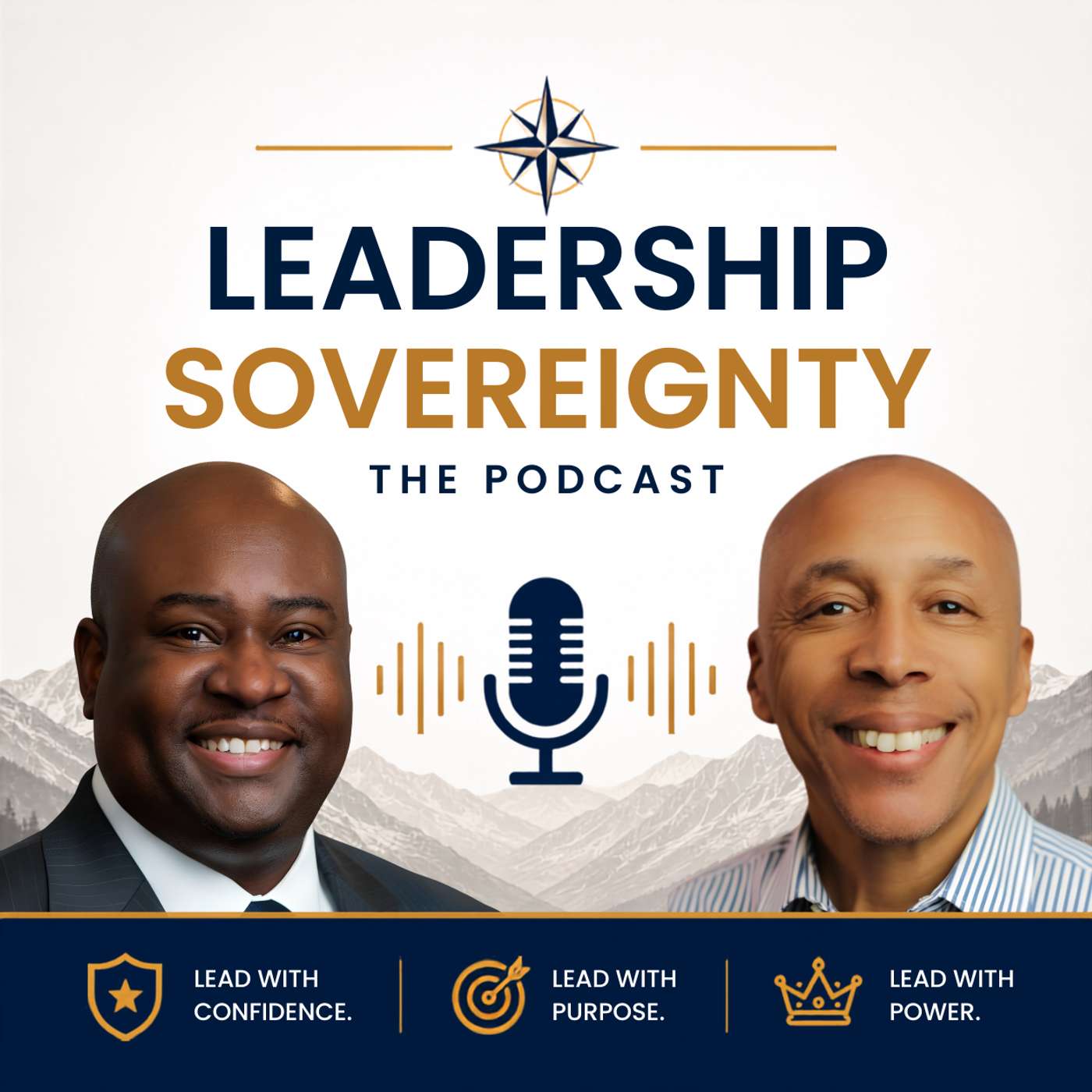
In this episode, we explore the power of asking the right questions. Learn how to go beyond surface-level discussions and uncover the root causes of problems. We'll discuss the importance of shifting your focus from selling to serving, and how this customer-centric approach can lead to long-lasting relationships. Finally, we'll delve into the art of active listening and how it can transform your interactions with others.
Tune in to discover practical tips and strategies to enhance your communication skills and build stronger connections.
★ Support this podcast ★Welcome to the Leadership Sovereignty Podcast. I'm your host, Ralph Owens, along with Terry Baylor. In today's episode, we'll touch on topics such as using questions to get past
Speaker 2:the initial layers to get to the root of a problem,
Speaker 1:how serving your customers more than selling, and how effective communication involves listening
Speaker 2:more than talking. Enjoy the show. I I'd be remiss if I didn't mention the fact that this also works in personal relationships. Right? When a lot of times your kids, you know, they upset.
Speaker 2:That's the first layer of the onion. That's probably not the root. You gotta ask questions to figure out, you know, what's driving that behavior to get to the root of the issue so that you can actually help them. Right? You know, so again, even though he this gentleman learned his lesson in selling, it's these are universal principles that work across, you know, all types of different interactions, especially relationships and also your business, your employment interactions as well.
Speaker 3:Totally agree. Totally agree with that Ralph. And I just wanna encourage everyone, right? And I'm guilty of this. There are times where we put so much focus on what the issue is, that one issue.
Speaker 3:And we wanna solve for that one issue but we're not driving and asking the questions to drive down to the bigger problem in our relationships. We're dealing with the outcome of this one moment. That moment is not gonna drive you to the big problem. So now you're just on layer two of the unknown. Yeah.
Speaker 2:I heard a My wife and I went to a couple's game night not too long ago and there was a couple there celebrating. I wanna say it was forty eight years of marriage. Wow. So I'm talking I'm talking to them. I'm like, you know
Speaker 3:You gotta get in of them. I gotta get in front
Speaker 2:of them. I I asked them, you know, so what's what's the secret? I'm like, I know everybody asks you guys this, you know, what's the secret to a long lasting successful marriage. And, the the the the husband, he said a lot of great things, because they do marriage ministry as well. And, one thing he said to me, man, that really caught, that's really stuck with me and it ties back to what you just said.
Speaker 2:He said, at any given point in a marriage, one of you has to have enough grace for the both of you. So what he meant by that was, if I'm in a funk right now and I'm not being the best version of myself, my wife may have to have enough grace for me and for her because if she stops at the first layer of the onion and just only, you know, gets offended by, you know, because I'm not speaking right or, you know, I roll my eyes or something like that. If you get stuck at that very first layer, you never get down to the root issue. Right? And I thought about myself in that and, you know, just conversations are, you know, everybody has disagreements, in their relationships.
Speaker 2:And did I stop right at the first layer, Right? And just get, you know, what am I trying to say? Get offended, you know, because of something that I saw at the first layer. And instead of having enough grace to overcome that and dig deeper into the deeper layers so that I could figure out what the root cause was, I got caught up in my own emotions at first. I was like, wow.
Speaker 2:Good. That is so good.
Speaker 3:Because again, Ralph to your point, we are always selling man. What are we, again, so I think one of the things that we haven't hit on, right? Because this gets me So on the coaching call I was on, person asked me, Terry, what is the purpose of the sales call? And it's one simple thing, One simple thing to serve your customer. Now most times people think the purpose of the sales call is to drive to a sale so I can make that money.
Speaker 3:You may not be the right vendor for this customer.
Speaker 2:That's right.
Speaker 3:And if you're going to serve them, right? Selling is not about winning the contract. Selling is about serving your customer and serving your gift to the very best of your ability to them. Serving your gift may be, you know what, I may not be the perfect fit for this, but I know someone who is.
Speaker 2:That's right.
Speaker 3:Now, what have you gained in that? Hopefully you get 10% too. Hopefully you get 10%. Hopefully the person you were fired up to gonna be like, hey, man, on this renewal, you go get 10%. So hope But again, your goal is to service them, to put them in the very best position, right?
Speaker 3:To be successful. What you're gonna gain out of that is you're gonna get trust out of that customer. Well, the same way, if you're serving your gift as a brother, as a husband, a father, the best you can to Ralph's point, right? Are we stopping at layer one, layer two? Are we getting down to the big problem?
Speaker 3:Because ultimately what you're doing when you are selling, right? Which is serving, right? Selling is really synonymous with serving. If you do it the right way.
Speaker 2:Yeah, that's right, if you do it the right way. Yeah.
Speaker 3:Right, so what I want to do is serve my gift to you, Right. The very best that I can. And sometimes, you know, I could be the right fit. Sometimes I may not be the right fit in terms of our relationships. There are gonna be times where we have to, to Ralph's point and that amazing couple's point, serve up greater level of grace to cover both.
Speaker 3:I see that as the same way as, hey, I may have to walk away from you as a vendor but I'll make sure you get the right vendor. That's serving up the proper level of grace. You can take the sale and it just not be a perfect match. You're frustrated because they're not happy. They're frustrated because their desired outcome isn't really being You know what I'm saying?
Speaker 3:But no, think that's a great point, man. I think that is a great, great, great point. And again, tools are transferable.
Speaker 2:Yeah. Yeah. So the next point that we have from the reading was built to Terry's point, building relationships and trust. So starting with active listening, right? So you effective communication involves listening more than talking.
Speaker 2:I think that bears repeating again. Effective communication involves listening more than talking. You demonstrate empathy, understanding and respect by actually actively listening to your customers. Right? Again, if you can get your customer to start talking, you should be taking notes and listening.
Speaker 2:Right? And it's still it transfers to relationships. Right? If you I've I've heard that, the person who is talking the most is learning the least. Right?
Speaker 2:You know, you have to be focused and intentional on listening to whoever that person is that's on the other side of the table. We say customer, to Terry's point, internal customer. It could be a sales customer. It could be someone that you have a relationship with, a brother or a sister or a wife or a husband. Right?
Speaker 2:You have to take the time to actively engage in listening and understanding that effective communication involves listening more than it does talking. Right? If you find yourself talking more than you're listening, then you're not learning. That's a very very powerful statement that I heard someone say to me that changed my life because I try to catch myself when I noticed that. I mean, I've just been rambling on for like the last three I never asked that person one question.
Speaker 2:All I wanna do is get them to see what I think. I'm not trying to understand what they think. Right? So, I mean, what comes to your mind when you hear that quote here?
Speaker 3:I hear the technology will help you. All of these tools we have today, you can go and look and see, they monitor, okay, who was talking the most.
Speaker 1:Yeah, that's true.
Speaker 3:So if you're not that aware of it and you have to go back and take a look at it, any of these note taking tools that, AI tools that tie into meetings, right? They'll even give you the sentiment back on the enthusiasm part of it. It's monitoring where you engaged or not.
Speaker 2:Very true.
Speaker 3:So again, if it's something that you're just not aware of, right? And you're new to it, this is a new idea, right? For you to understand because we used to believe that the more we spoke that meant the customer was engaged. That that's that's not the case. That's not the case.
Speaker 3:That's not the case because we can't peel the onion unless we're listening.
Speaker 1:Thank you for listening to the Leadership Sovereignty Podcast. We hope that you not only enjoyed the content, but gained something to help
Speaker 2:you on your personal leadership journey. Feel free
Speaker 1:to reach out to us on x and Instagram under the handles Leadership Sovereignty. Until next time, stay safe, peace, and blessings.