
 Apple Podcasts
 Spotify
 YouTube
 Ruthless Priorities: How to Get Promoted by Focusing on High-Impact Work
Key Takeaways
- True career advancement hinges on productivity and strategic impact, not merely putting in long hours.
- Multitasking is a common pitfall that reduces effectiveness; embrace single-tasking for deeper focus and better results.
- The 'subtraction model' helps identify and eliminate non-essential tasks, reducing stress and freeing up time for critical initiatives.
- Distinguishing between activity and meaningful output is essential for making high-impact decisions that lead to promotion.
- Prioritizing strategic focus is paramount for achieving your career aspirations and ensuring recognition.
Are you working hard and still not getting promoted? The problem may not be your effort — it may be your focus.
In this episode of the Leadership Sovereignty Podcast, host Ralph E. Owens II and co-host Terry Baylor sit down with Rob Zelinka, accomplished CIO, to challenge one of the most dangerous myths in professional life: that hard work alone is enough to advance your career.
Rob introduces the concept of ruthless priorities — the high-impact tasks that move the needle for your organization and your career, no matter what. He and Ralph unpack the difference between being busy and being productive, why multitasking is the foundation of burnout, and how professionals at every level can identify the work that actually builds promotability.
Ralph shares a candid story about letting his entire calendar get hijacked by others — and the moment a mentor told him, "If you don't dictate your time, everybody else will." Rob draws powerful parallels from professional baseball and the boardroom, revealing how adapting your approach is what separates the director level from the VP level and beyond.
If you are ready to stop performing busyness and start building a career with measurable, visible impact — this episode is for you.
What Ralph E. Owens II and Terry Baylor cover in this episode of The Leadership Sovereignty Podcast:
- Why multitasking creates the illusion of productivity and accelerates burnout
- How to identify high-impact work that builds your promotability
- The subtraction model — how eliminating low-value tasks creates strategic focus
- What ruthless priorities are and why elite professionals protect them at all cost
- How to position your contributions at the level of the boardroom, not the bullpen
- Why hard work alone is never enough — and what to pair it with
This episode is for you if:
- You are working hard but not moving up
- You are seeking career advancement and promotion strategies
- You lead a team and want to model high-impact, strategic thinking
- You are navigating the transition from individual contributor to executive leader
- You want to align your daily work with the metrics that matter most to your organization
👤 View Rob Zelinka’s guest profile, resources, and contact information
🧾 Chapters
- (00:09) - Introduction to Leadership Sovereignty Podcast
- (00:59) - Focus at Work Without Burning Out
- (11:14) - Getting Promoted by Focusing on the Right Work
- (16:52) - Hard Work Alone Is Not Enough
***********************************
📺 Watch This Episode on YouTube
Click here to watch the full video of this episode.
***********************************
🌐 Visit the Leadership Sovereignty Hub
Everything you need to lead with clarity, confidence, and strategy — in one place.
https://www.leadershipsovereignty.com
- Listen to or watch our full episode library
- Download free leadership frameworks, guides, and tools
- Read in-depth show notes and guest takeaways
- Submit your leadership questions or episode topic suggestions
***********************************
📩 Get Every Episode Delivered to Your Inbox
Join the Leadership Sovereignty newsletter and get new episodes, leadership insights, and exclusive resources — plus get instant access to our free AI Toolkit: the practical guide smart professionals use to think clearer, communicate better, and make smarter decisions at work.
https://www.leadershipsovereignty.com/newsletter
***********************************
⭐ Help a Leader Find This Show
If this episode added value to your leadership journey, take 60 seconds to leave a rating or review. Every review puts this content in front of another professional who needs it.
🟣 Leave a Review on Apple Podcasts → https://www.leadershipsovereignty.com/apple
🟢 Leave a Rating on Spotify → https://www.leadershipsovereignty.com/spotify
✍️ Leave a written review → https://www.leadershipsovereignty.com/reviews/new/
***********************************
🔁 Know Someone Who Needs to Hear This?
Share this episode with a colleague, mentor, or team member who would benefit from this conversation. Leadership grows when we invest in the people around us.
***********************************
📲 Follow the Conversation
Stay connected and join the leadership conversation on social media.
▶️ YouTube → https://www.youtube.com/@LeadershipSovereignty
🔗 LinkedIn → https://www.linkedin.com/company/the-leadership-sovereignty-podcast/
📸 Instagram → https://www.instagram.com/leadershipsovereignty
🎵 TikTok → https://www.tiktok.com/@leadershipsovereignty
🧵 Threads → https://www.threads.net/@leadershipsovereignty
🐦 X → https://www.x.com/LdrSovereignty
📘 Facebook → https://www.facebook.com/profile.php?id=61573573740079
***********************************
🎤 Work With Ralph & Terry
Looking for dynamic speakers for your next event or leadership summit? Ralph and Terry bring executive-level insight, real-world leadership strategy, and an engaging presence that moves audiences to action.
https://www.leadershipsovereignty.com/speaking-engagement-request/
***********************************
💰 Support Independent Leadership Media
This show is independently produced to keep the content unfiltered and audience-first. If these conversations are helping you lead better, your support directly funds the next conversation.
★ Support this podcast ★
***********************************
📄 Full Episode Transcript
Click here to view the episode transcript.
Frequently Asked Questions
Why is hard work alone not enough for a promotion?
While hard work is important, it's often the impact and strategic value of that work that get you noticed. Focusing on the right tasks and being productive is more critical for career advancement than simply being busy.
What is the 'subtraction model' for work?
The 'subtraction model' involves actively identifying and eliminating non-essential tasks from your workload. This strategy helps relieve stress, combat burnout, and allows you to concentrate on high-impact activities.
How can I be more productive at work?
To increase productivity, avoid multitasking and focus on single-tasking to improve concentration. Ruthlessly eliminate low-value activities and prioritize tasks that directly contribute to organizational success and your career goals.
What's the difference between being busy and being effective?
Being busy means engaging in many activities, often without a clear strategic outcome. Being effective means completing tasks that deliver significant value and contribute to important goals, leading to measurable results and recognition.
Rob Zelinka:
One of the harshest, realities I had to face was it finally resonated with me that hard work alone is not enough.
Ralph Owens:
If you wanna get promoted, you have to be productive. That comes with impact.
Ralph Owens:
Welcome to the Leadership Sovereignty Podcast, where professionals learn to navigate challenges at work through the power of leadership principles. I'm Ralph Owens, Chief Information Officer in the financial services industry alongside my cohost, Terry Baylor, the CEO of a healthcare tech startup. Together, we've spent decades building teams, transforming organizations and coaching individuals through the moments that define their careers. We unpack the mindset, strategies, and habits that help you lead with confidence, expand your influence, get promoted, and increase your income. Now let's dive into today's episode.
Ralph Owens:
Terry, you wanna go ahead and take us to the next point?
Terry Baylor:
Yes, sir. Yes, sir. So how to focus at work without burning out. To focus at work. Now granted, Rob, I'm listening closely, man, because I face this every day.
Terry Baylor:
Because, you know, like this morning, my morning started at 04:30. I'm like, you know what? Take a look at that problem, I'm up. Oh, so I'm listening, I'm listening, bro, I'm listening, I'm listening.
Ralph Owens:
So Rob, why does multitasking typically undermine advancement, right? Because everybody feels like the better you are, the more you can do at the same time, but talk to us about that a little bit.
Rob Zelinka:
Yeah, well, at a basic level, I would distill it down to this. I think multitasking creates an illusion of productivity that scatters attention, and it's ultimately the foundation of why we burn out in the first place. I think back to, you might recall years ago, the the I'll leave the the person's name out of it, but the person was the CEO of Yahoo at the time, and they prided themselves on working twenty hours a day. I used to be there, by the way. Present company, to say, I thought that the more I work, the harder I work, the more valuable I'd be.
Rob Zelinka:
I learned quickly that we aren't machines, even though we might want to believe we are. And so I want to go back to something I talked about a little earlier about treating everything as a firefighting mission. When you're always in the heat of the battle, and you're always putting fires out, and you're not working to prevent fires, it's cyclical in nature, it's repetitive in nature. I think we have to go back and ask ourselves, what are the things that we're doing that aren't bringing value? And I call it the subtraction model.
Rob Zelinka:
Let's subtract those things. Even if it's one thing that you can subtract a day that reduces the demand, the pressure, the stress.
Ralph Owens:
And
Rob Zelinka:
you have to look at it. If you're subtracting something that isn't materially making a difference one way or another to those KPIs that I mentioned earlier, get rid of it. Reduce the number of things that you have to do.
Ralph Owens:
Yeah, absolutely. Absolutely. I think was one of those also who thought that the more you can do it one time, the more productive you were, and that is not scientifically it has been stated that the mind can only focus on one thing at a time. We never truly multitask. We switch, we task switch really fast, right?
Ralph Owens:
But the mind can only focus on one thing at a time, and if you're spread between too many different things, right, you're not getting any one thing done well. And to your point, Rob, there are some things that are gonna give you greater value if you complete them first versus other things, right? And if we are honest, we tend to gravitate toward the least path of resistance, the things that are easy, right? Talk about that, Rob. I mean, because at some point you have to, in your career, come to grips with yourself to say, Hey, I need to go get these hard things done.
Rob Zelinka:
Yeah. Right? Yeah. Yeah, it's interesting, Ralph. So I learned this lesson a couple times through life.
Rob Zelinka:
I guess the best analogy is when you go to the gym and you're lifting weights. If you've ever lifted weights before, there's this anxiety that sets in. You know? If you throw too much weight on the dumbbell or the barbell, then worst case scenario, you're gonna drop it. Gonna feel foolish.
Rob Zelinka:
People are gonna look around because they'll hear a loud noise, or you'll injure yourself. You'll drop it on yourself. Part of growing and learning is accepting failure, and learning from the failure. So when I was in the gym, like Terry had said, I was one of those guys up at 04:30 in the morning, and I did my best work at 04:30 in the morning, and it was at the gym because I was thinking about my day and all the things that I need to do, and I was pushing myself to lift more weights, to have good form. And I learned from others that were around me.
Rob Zelinka:
You might be surprised at how few people are in a gym at 04:30 in the morning, but that's where the real work gets done. And so what I often learned during those times was the only way I'm going get stronger, the only way I'm going to get faster, the only way I'm going to become more efficient is to push myself and have others push me, people that believe in me, people that trust me from myself. I mentioned that a little earlier. Those are some of the dynamics that I learned, you know, from the the from the gym. Now let me let me add one other dynamic.
Rob Zelinka:
You know, most people who know me know that I I spent a fair amount of time on firing professional baseball, which was just a wonderfully enriching experience, and what learned on the baseball diamond translates to the boardroom. And so one of the struggles that I'd had, year after year, the professional athletes were in their 20s, but I was not. I was in my 30s, then I was in my 40s, and all of a sudden when 50s are knocking at the door, how do you compete at that highest level with people that are, by design, faster, perhaps even smarter than you? You have to change your approach. You have to change your game.
Rob Zelinka:
You have to humble yourself and learn that these years of experience that you've amassed can be applied, but you have to apply it differently, because what worked for you yesterday is not often gonna work for you today.
Ralph Owens:
That's so good. That's so good. Terrible, you gonna jump in?
Terry Baylor:
Man, no, he got me at baseball. You know, that's my game, man. Oh man, I'd love to hear some of those stories one day. So Rob, I'm just letting you know, I'm inviting myself over now, so there's two reasons why I'm coming over. But no, I think what you shared is really great and I think for some of our listeners who are in that 45, 55, whatever age range, I think that piece of information is invaluable, right?
Terry Baylor:
Because everyone has to at some point sit back and realize that the bar is moving, especially with AI, right? Bar So is how do you I don't even wanna say compete, I wanna say how do you continue to drive towards your passion? Although you may see the game changing a little?
Rob Zelinka:
Yeah. Gosh, Terry, that's such a profound question, and I struggle with it, with baseball in particular, you know, and you and I will absolutely share our passion for that game. But if we stay with baseball, and then I'll translate it into the business realm. In fact, I did I made a post about this on LinkedIn recently. You know, when you're in your fifties, and maybe you have decades, thirty years of experience in an industry, or maybe even with the same company, it can be shocking and polarizing.
Rob Zelinka:
You process all these emotions when all of a sudden you're in a transition because something has changed. Look, the one constant in our lives has changed, and we have to get comfortable with the uncomfortable. Going back to the baseball analogy, you know, I had to quickly adapt my approach to the game. In today's realm, the game is very different than it was when I was a part of the professional game. Small things, like the bases are a different size.
Rob Zelinka:
There's speed up rules, and those those rules are are designed to enhance the fan experience. In business, that's the user experience. So so what you and Ralph are keen to is we're perpetually tweaking the experience. You know, in in Ralph's realm, the member experience is the north star. We must ensure that we are ahead of the curve because the member of a credit union is younger, just like the baseball player is younger.
Rob Zelinka:
They are looking for and demanding a specific experience that is different from a member that is twenty years older, thirty years older.
Ralph Owens:
So true. Yeah. So true. So true. Oh, that's so good.
Ralph Owens:
That's so good. That's so good. So, you know, it kind of goes back to that whole protecting your ability to have really deep, productive type work, versus being distracted by the urgency, right, versus what's really important, right? And then understanding how to protect that, right? You know, I remember a time where Terry and I were working together at an energy company here in Houston, and I would allow everybody else to fill up my calendar all day.
Ralph Owens:
Right? They would fill up my calendar all day. I'd be in meetings from the time I get there till 05:00, and then after they all leave is when I do my work, right? So now I'm there till 08:00 at night, you know? We were catching the Metro bus back then, and the Metro bus would stop running after a certain time.
Ralph Owens:
I'm still there
Terry Baylor:
Hey, at that was that 08:50. Gotta get that 08:50 bus.
Ralph Owens:
That's right, you gotta catch the last one, right? And hit me that, you know what? And Alita told me this, she told me, she was like, If you don't dictate your time, everybody else will. Right? And I learned to protect the time that I need to do the most important work, right, so that I can be successful.
Ralph Owens:
So, you know, I think fantastic. That's fantastic. So let's move on to the next point, how to get promoted by focusing on the right work, which kind of ties directly into what we've been talking about, right? You know, we're kind of alluding to impact versus activity, right? There is a difference.
Ralph Owens:
There's a huge difference, you know, and having measurable outcomes and visible contribution. So Rob, how do professionals identify the high impact work, right? Because that's what we're talking about. We're talking about you getting thrown a thousand things at you, how do you identify which one of those things are the things that's going to have the most impact?
Rob Zelinka:
Yeah, Ralph, that's such a spectacular question, and it harkens me back to a book that someone handed me, wow, twenty five years ago now, and it's a funny title. The title of the book is Get Out of IT While You Can, And there is a picture of a man sweating. His tie is loosened around his neck. He has a computer monitor. Remember the days when we had these big bulky NEC monitors?
Rob Zelinka:
They weighed a ton. He had this under his one arm. He had a keyboard over under this arm. He had a cord that was dangling down his arm, and he's running into a meeting, and and that's the pic the the cover of the book. Now here's what that book was really saying.
Rob Zelinka:
That person for the first time was invited to what I call the adult table at Thanksgiving. In other words, the boardroom. He was the executive representing technology with his peers, the CFO, the COO, the head of sales, the head of HR, and he made the mistake that most of us make early on. We go into that meeting, and we're excited to share with them all of the things we're doing in technology, how we're patching all these servers. I am going back to what Terry said about patching.
Rob Zelinka:
That's all important stuff, but it doesn't move the needle for the company. So to your question, we have to identify the high impact work, the things that our company, our board, our clients are expecting from us. These are tasks that increase our strategic exposure, that bring us closer to the value proposition that puts us where we are today. That is what separates, and Terry alluded to this earlier, the director level from the VP level and ultimately the C level. Going back to baseball, Terry, because I know you have such a love for it.
Rob Zelinka:
In baseball, there's the major leagues. That is the elite level of ballplay. Underneath the major leagues are the minor leagues, and there's several different levels. There is triple a. There's double a.
Rob Zelinka:
There's single a. There's even rookie ball. Double a is often referred to as the the ladder. You're either going up or you're going down. And in baseball, if you're going down, it's time for you to consider another profession.
Ralph Owens:
That's so good. That is so That is heavy. That is heavy.
Rob Zelinka:
It is heavy, but that's life, Terry.
Terry Baylor:
Yeah. And that takes me back, Ralph, remember, I maybe shared this on a few episodes back, Rob, I was in the midst of making a transition. I was actually on my way down to Houston, and I had the pleasure of being mentored by a gentleman, and he just, he totally surprised me. You know, we were having a conversation one day and he shared with me, he said, Terry, you know, and he shared with me his experience, right? And he was, you know, on the, I guess, in AA, but not going up, kind of going the opposite direction.
Terry Baylor:
And he shared with me, he said, Terry, I just stayed there too long. He said, I stayed there too long. Granted, did great to help them transition, but it was at his demise. And he just said, I stayed too long.
Ralph Owens:
Yeah, yeah, yeah. It kinda reminds me of the conversation around being productive, you know, versus being busy, right, and understanding the difference between the two. I remember, I'm laughing, I remember when I was a desktop support guy, and I sat in this little bullpen with two other guys, right? And this one guy, I won't say his name, but he would purposely have all of these PC parts all over the place. Now, I'm naturally a clean person, everything has to be in this position, so my desk is pristine.
Ralph Owens:
His is just like a complete train wreck. And every time the boss would come back there, he would say, Hey, what are you doing? And he'd be like, You see all this stuff over here? I got all this stuff going on. And then the boss would be like, and then he would leave him alone, right?
Ralph Owens:
He used that as a technique to just show that he was busy, right? But if you want to get promoted, you have to be productive. That comes with impact, right? Because, you know, that focus contribution builds promotability, right? It builds promotable evidence for that leader that, okay, you're not just focusing on doing tasks, you're focusing on doing tasks that's actually moving the needle, to Rob's point, that's impacting the metrics, that even understand the metrics.
Ralph Owens:
A whole another show by itself, right? You know, just to be able to understand the metrics of the work that you actually impact and how it moves the company forward.
Rob Zelinka:
One of the harshest realities I had to face early in my leadership career was it finally resonated with me that hard work alone is not enough. And know, my
Terry Baylor:
Rob, Rob, I'm sorry, Rob. Can you say that one more time? Yeah. That is so critical.
Rob Zelinka:
Hard work alone is not enough. My father instilled in me at a young age to be the first kid on the baseball field to practice and be the last kid to leave. And I was always hardworking. In fact, in almost every company I've been at, no one well, I shouldn't say no one. Seldom will someone question my work ethic.
Ralph Owens:
Mhmm. Mhmm.
Rob Zelinka:
But that's not enough. We have to not only work, be the first in the office and the last to leave. Like you had talked about By the way, I took the Metro bus too when I first moved to Houston, and I was anxious of if I missed that bus, I was calling my wife and saying, I need you to pick me up, or I was calling an Uber. Either case, there was there was impact. Right?
Rob Zelinka:
The the reality though is we have to work smarter. We have to be more efficient. We have to understand how to prioritize the work that I learned from a mentor that is what we call our we refer to them in the business sense as our strategic imperatives. But the way this woman who had mentored me referred to them is these were the tasks that no matter what, we were going to get done. If we were sick, if someone was out sick, if we were on vacation.
Rob Zelinka:
These were the priorities that we protected, the ones that we saw move the needle, as you said, Ralph, that brought the most amount of value. Those she referred to as ruthless priorities, meaning we protect them at all cost.
Ralph Owens:
Love that. I love
Rob Zelinka:
that. Wow.
Terry Baylor:
Ruthless priorities. Oh, boy.
Ralph Owens:
Thank you for listening to
Ralph Owens:
the Leadership Sovereignty Podcast. If today's conversation helped you grow in your leadership, influence or your career, take a moment to visit leadershipsovereignty.com. There you'll find exclusive resources, free guides and ways to stay connected to our community of leaders who are building purpose and success. Don't forget to rate, review and share this episode with someone who's on the rise in their career. Until next time, lead boldly, lead with purpose, and continue to walk in sovereignty.
Ralph Owens:
Take care.
CIO/ Husband/ Father
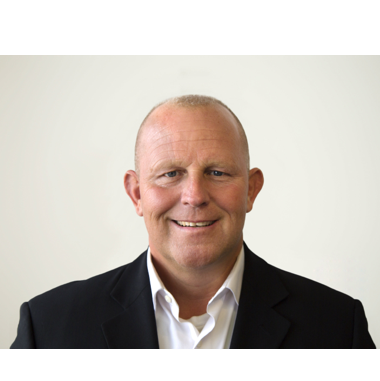
Rob Zelinka is a transformational CIO and senior technology executive with over three decades of experience leading enterprise-wide digital, cloud, and operational strategies.
Most recently, he served as Vice President & Chief Information Officer at Jack Henry, where he oversaw technology strategy and operations at one of Forbes’ Best Places to Work. His career also includes transformative leadership roles at TechnipFMC and PROS, where he
drove operational rigor, digital innovation, and large-scale technology transformations across global organizations.
Recognized as a three-time Orbie CIO finalist and active member of the WSJ CIO Council and CNBC Technology Executive Council, Rob is a trusted voice in the future of leadership and technology. He serves on multiple advisory boards, guiding executives and organizations through disruption, growth, and cultural reinvention.
Today, Rob channels his experience into advisory services, thought leadership, and leadership development. Through his Leadership, Life & Legacy platform—including his YouTube channel—he shares practical insights, personal reflections, and lessons learned from both the boardroom, the baseball field, and beyond. A former professional umpire,Rob uses sports metaphors and storytelling to illuminate the human side of leadership, helping others lead with clarity, courage, and connection.
At the core of Rob’s work is a belief that transformation begins not with technology, but with people. His approach blends strategic insight with relational intelligence, empowering … Read More
