
 Apple Podcasts

 Spotify

 YouTube
When You Know There Is More: How Brenda Battle Learned to Read the Seasons of Her Career
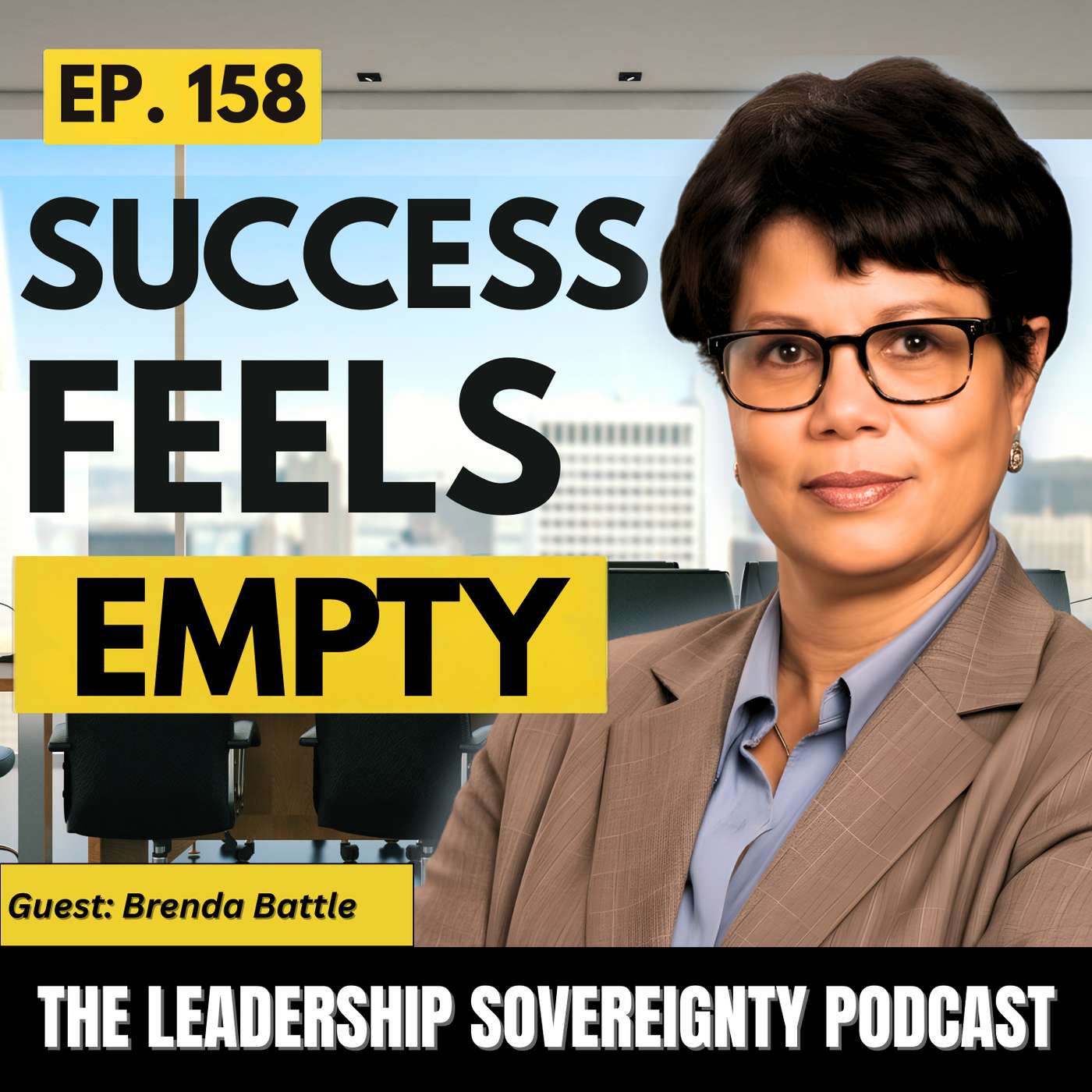
There is a quiet whisper that every leader hears eventually. I'm good at what I'm doing. But should I be doing more?
In this episode of the Leadership Sovereignty Podcast, host Ralph Owens and co-host Terry Baylor welcome Brenda Battle — national health equity leader, C-suite executive, global speaker, and the first woman to appear as a guest on the show. This is Part 1 of 5.
Brenda opens with a story about telling a friend one year in advance that she would not be at her organization — with no plan, no job lined up, and no explanation other than a feeling in her spirit. She breaks down the stacking model of leadership growth, why every new leadership role is a new job, and what it truly means to let go of the expertise that got you here so you can grow into where you are going.
What you will learn in this episode:
- How to recognize when a season of your career is closing before you miss it
- Why what got you to your current role will not be enough to keep you there
- The stacking model — how every role builds on the last without depending on it
- How consistency in relationships becomes the currency that opens unexpected doors
- Why imposter syndrome hits hardest at the highest levels — and how faith anchors you through it
This episode is for you if:
- You are succeeding but feel like something more is waiting for you
- You have been in your current role long enough to wonder if your season is ending
- You are navigating a major leadership transition and want a framework for moving forward
- You are the only one in the room who looks like you and want to hear from someone who has been there
👤 View Brenda Battle's guest profile, resources, and contact information
🧾 Chapters
***********************************
📺 Watch This Episode on YouTube
Click here to watch the full video of this episode.
***********************************
🌐 Visit the Leadership Sovereignty Hub
Everything you need to lead with clarity, confidence, and strategy — in one place.
https://www.leadershipsovereignty.com
- Listen to or watch our full episode library
- Download free leadership frameworks, guides, and tools
- Read in-depth show notes and guest takeaways
- Submit your leadership questions or episode topic suggestions
***********************************
📩 Get Every Episode Delivered to Your Inbox
Join the Leadership Sovereignty newsletter and get new episodes, leadership insights, and exclusive resources — plus get instant access to our free AI Toolkit: the practical guide smart professionals use to think clearer, communicate better, and make smarter decisions at work.
***********************************
⭐ Help a Leader Find This Show
If this episode added value to your leadership journey, take 60 seconds to leave a rating or review. Every review puts this content in front of another professional who needs it.
🟣 Leave a Review on Apple Podcasts
🟢 Leave a Rating on Spotify
✍️ Leave a written Review
***********************************
🔁 Know Someone Who Needs to Hear This?
Share this episode with a colleague, mentor, or team member who would benefit from this conversation. Leadership grows when we invest in the people around us.
***********************************
📲 Follow the Conversation
Stay connected and join the leadership conversation on social media.
▶️ YouTube
🔗 LinkedIn
📸 Instagram
🎵 TikTok
🧵 Threads
🐦 X
📘 Facebook
***********************************
🎤 Work With Ralph & Terry
Looking for dynamic speakers for your next event or leadership summit? Ralph and Terry bring executive-level insight, real-world leadership strategy, and an engaging presence that moves audiences to action.
*Connect with us*
***********************************
💰 Support Independent Leadership Media
This show is independently produced to keep the content unfiltered and audience-first. If these conversations are helping you lead better, your support directly funds the next conversation.
★ Support this podcast ★
***********************************
📄 Full Episode Transcript
Click here to view the episode transcript.
0:00 In your last role, you were able to learn new things. You were able to make new, build new relationships, gain new wisdom, and all of that. But in that new leadership role, there are new things that I have to learn, new relationships that I have to build, new wisdoms that I have to gain. So what you have to let go of is this idea that you are the expert, you bring in some expertise, but the reason you're in the new role is that they need you to apply that expertise to the new stuff. And so you can't go in with the arrogance of I'm the expert. Yeah, you are subject matter expert. Yes, that got you there. But that's not what's going to keep you there because you came to a new bigger role that you better get bigger and newer with or else you're not going to keep in the expert.
0:48 What happens when success stops? Being enough. When the title, the respect, the achievements still leave you wondering, is this all there is? In this episode, Brenda Battle reveals how to recognize that whisper, the one that tells you it's time to let go of what got you here so you can grow into what's next. Hello everybody, thank you for joining us today. We are super duper excited about today's podcast because I don't know about anybody else, but I'm looking for my life to be changed.
1:39 This is a monumental moment for us. Brenda, I don't know if you know this or not, but you are the first woman to be a guest on leadership sovereignty. And just let me just set the let me just set the, let me set the foundation for that, right? When Ralph and I first set out to this, right, You know, in the rooms that we're in, we realized they're not a lot of guys that look like us in these rooms. And we stumbled, ran in the brick walls, ran in the glass doors that we didn't. Glass ceilings. All these things, right? And so our goal was, hey, you know, we've been talking for years, let's write a book. And then we were just out getting coffee one day and we were like, hey, let's, let's do a podcast.
2:21 And so we were like, hey, let's talk to the brothers and let's share with them our experiences. Well, on this journey, our audience started to expand and we started to get feedback and really what we learned and you know, this leadership is for everybody, right? Regardless of who you're targeting. Look, when it's it's a universal language and the principles apply to everyone. And so you know, we've got great feedback. So thank you for being our guest today. Happy to be the inaugural female on the show. Happy to be on the show. So it's not the first time I was the inaugural female. You're not looking full of color. History repeats itself.
3:05 History repeats itself. I heard someone say that and this really touched me and I'm sure we'll we'll expound on this. But he said, he said he doesn't repeat itself, but it does rhyme. I'm like, oh, that is. Great. Yes, it sure does. And so we want to make sure that the way we're rhyming, right and flowing is going to help, you know, help us help others and, you know, just movement society along, right? So we can be better. We can be better. I'm just going to say that. And so that topic today, though, is I love this and the book that we're going to be talking about. I've referenced it before because I'm like my mentor. That's another thing that makes this special, right? Brenda mentored me, still mentors me and where I am today is attributed to a lot of what she shared with me. Some, you know, a mentor is going to give you some hard lessons, man, you got to have got to have to have some, you know, get those emotions off those sleeves. Right.
4:03 Right, and I appreciated that, right? Because when someone talks to you in love, yes, it will, It will, it can be received and it will change you. So again, what we want to talk about today though, is today what when you get to that point, right? When you hear that quiet whisper that says can do more, there's more for you to do. That's the topic of discussion today. That inner voice where you are like I'm, I'm good at what I'm doing now, but should I be doing something different? Should I be doing more? Am I comfortable? So, so Brenda, I guess the you know, for you, how does that you know, when you hear that, you know, what does that do or what, how did you get to that point?
4:47 Right? What was it for you that when you realized, and I got a story around that too, right? Because there's so many intersections here I can't wait to share. But how did you you know? How did How did that happen for you? Yeah, You know, like all my career at least. And I and I would say some part aspects of just life in general, the need to do more was always kind of this inner feeling. Sometimes I got to where I felt like I did as much as I could do in certain places and it was time to move on. You know, sometimes I got invited by people to come and do other things, but sometimes it was just an auction in my spirit and, and, and and in that I didn't always know what the more was all that had to be revealed in some way or the other, some way or the other, But I always felt it in my spirit.
5:36 I always felt I always knew when the chapter was closing. A friend of mine few years ago. We worked together several years ago before I, I came to use University of Chicago said to me, reminded me that a year before I left that organization, I told her in another year I'm not going to be here now. I had nothing planned to do. I wasn't looking for a job. And I don't even know at the moment why I said that. I just felt in my spirit that I wasn't going to be there, that I was getting to a point that I just needed more that that that it was time to move on. And sure enough, almost a year to the date, I was invited to come to University of Chicago Medicine to do the more there. So it's always been kind of an auction that it's time to move on, that you did you, you finished the chapter, you close the book, it's time to go on and do the next thing. Sure, sure that is.
6:31 And so I don't I don't want to skip this, right. So Brenda, you are an amazing person on so many levels and just want to give the audience, you know, just a few of the things that you've done. You know, of course, see sweeter, right National HealthEquity leader, man, I, I love this part here, right, because we all know that the Bible says money answered with all things over 200 million raised for community health initiatives. Now listen to I want to say this too. We reference the Bible here, right? So if if, if you know that we don't separate, you know, good. That's the only way I operate because that is by my faith that I've been able to do what God has allowed me to do.
7:13 That's awesome and then great and that leads us to man lifetime achievement award man, an advisor, a global speaker. We just we want to dig into all of that and understand how those experiences have changed you, how being in those rooms speaking, you know, with man, I'm sure you've been in a room and you look and go. That's so and so, yes. And I'm and I'm right there with them, yeah. Right. And I got nervous for the moment and then prayed my security, saying, Lord, help me to do what you sent me here to do. Yes, that is this amazing. That is amazing. So let's, let's dig, let's dig a little bit into the next level, right?
7:55 Scott Evelyn, he's he's the author of that book and he says that leaders must let go of what got them there. Kind of kind of dig into that, right? Because you had done, especially after you've accomplished things, right? How do you, what do you let go? What do you hold on to? What do you, you know, how do you revisit those stories, right? To build a platform to move you to the next level, kind of share with that, because I'm sure we have. And, and here's what makes this this session amazing as well, right? Because you know, we want you to speak to the person who is, you know, they've been an executive leader for 10-15 years, right? And you know, they're, you know, you get, I don't want to say comfortable, but you know what you're doing, right? You're the expert, right?
8:44 How do you ask this question? How do you deal with yourself when you know you're the expert? Yeah. Well, so in leadership, every new leadership responsibility is a new job. It's a new responsibility. So what happens is in your last role, you were able to learn new things, you were able to make new, build new relationships, gain new wisdom and all of that. It becomes like a stacking. And that's how I've seen it all my career, that these things stacked up for me so that I can take them into the next leadership role, but not rely on them completely.
9:30 Because in that new leadership role, there are new things that I have to learn, new relationships that I have to build, new wisdoms that I have to gain. And I can leverage the stacking of what I learned before. But I better be ready to realize that it's not that that you have to depend on you have to depend on being ready for the new things that you have to do in that new role. So what you have to let go of is this idea that you are the expert, You're the expert. You bring in some expertise, but the reason you're in the new role is that they need you to apply that expertise to the new stuff. So you can do new stuff and be grain new ex greater expertise.
10:10 And so you can't go in with the arrogance of I'm the expert. You are subject matter expert, Yes, that got you there. But that's not what's going to keep you there because you came to a new bigger role that you better get bigger and newer with or else you're not going to keep in the expert. So that's. Got to let go of. Yeah. You got to make sure you cut. Cut that one man. You got to get bigger and better. Yeah, yeah, absolutely, absolutely. Follow up question on that. At what point in your career did you was the aha moment that what got me here is not going to make me successful in this role and that I have to go into this looking for the things that I need to learn and accelerate my learning so that I can compete at the highest level? You know, like God has always placed me into these new roles that I didn't do before.
11:00 Like I didn't do that before when I when I went over to a Barnes Church hospital in Saint Louis, I have not done. I went over there to stand up there center focusing on reducing health disparities and creating creating a more diverse and inclusive. I'd never done that. Now I'd never done it formally. You did some of that as a leader. You know, you're you're advocating for others, you're advocating for marginalized populations. You're doing all of that, but you hadn't done it formally. So I'd never done that job before. So I think, OK, Lord, I've got some skills I'm going to take in here, but I never did this job, didn't do this job before actually formally. So I had to learn to do that job.
11:41 And So what was humbling about that experience is I had to go and learn how to do that specific work from folks that weren't in the industry that I was in, who had been doing it longer than me, and bring it in with the experience that I had in the healthcare industry and shape that for that industry. Then I left there and came to you Chicago Medicine, and took over Michelle Obama's role. And guess what? I hadn't done that either, not fully. I've done aspects of it, but not all of it. And then I had to like, and this is where, you know, raising money and and all of that. I hadn't done that. God had to like plant me in places. It's very humbling when he does this where you don't know, oh, you don't have all the skills that it takes to do the job.
12:30 You have some skills. How the way can we? Can we just let's focus there for a little bit because I think as and that and I want to, I want to kind of get really specific on that. I believe we have a double whammy when it comes to that as being African American leaders. And so can we just dig into that a little bit because you always have that little thing saying, do they really? Do they trust me? Yeah, You know, do I trust you have? A little bit of sleep pastor syndrome, too. Yeah. Wondering is am I really the one, You know, you start sometimes questioning yourself, am I the one that ought to be doing this? Which is I'm so glad that I I'm a person of faith because you know what?
13:12 When I asked myself that God answers that for me, I sent you there. Yeah, you're the one. Quit asking that. You know, of course. What? I'm glad you said that, right? So I told Shamika Ralph, I said, Shamika, we need to do, we need to do us because I walk with Shamika in the mornings. So we'll talk. I'm like, honey, we, you know, we may have to start broadcasting. I'll walk and talk because she said, because we were talking, right? And I said, you know, over these last 10 years that I've been in Houston, the only thing that doesn't change are our principles, but our practices and our preferences are minimal. Absolutely adaptable. You have to be able to. It's adaptable. That's a better word. Yeah, yeah.
13:55 That's good, that's good, that's good. You got to have some wisdom and you have to have some experience. And I'm going to harp on the word humility. You've got to have some humility because sometimes the wisdom doesn't come from you and your experience. It has to come from other folks, mentors and other people who don't know. And so your ability to adapt sometimes has to, you know, makes you have to go out and find somebody and listen and learn and then adapt. Interesting. That's that's good. That's good. So so I love the the piece that you talked about moving into spaces that you may not have already had the familiarity with, but there's a reason why you know, outside of God opening the door, right? There's a reason why people are attracted to you and make you or make you available, or we want you to be available for these opportunities, right?
14:43 Can you talk a little bit about the human connection that you have to really develop as a as a leader that could open up those doors like that? Yeah, yeah. You know, this thing about not burning bridges is a real deal. Doesn't mean that you don't stand up. You know, if somebody is like being unjust, it doesn't mean you don't correct when people are not right. It doesn't mean you do that. But you can do that in relationship with people. And so this this what what happens is people get a tract it to your consistency in the relationship and that consistency that you display, regardless of how you know what you have to do in that relationship. That's what tracks people to you. That's what says that's the person who I want to come and do this because the one thing that person is is consistent. I know I can trust that person and I know that person is experienced and skilled and can do these things. It doesn't matter they they can't do everything. They know you're able.
15:42 You have enough in your in your in your toolkit to be able to execute on what it is that they have asked you to come for. But you've got to be a relationship through consistency and trust. That's good. That's the problem, that is. So, so let me, let me, let me just throw a story on there, right? And this, I can't make this up. I cannot make this up. So we had been living here in Houston maybe three years maybe. And so we get a new neighbor, right? And so they have a couple daughters. So my daughter's excited about it because we're like, all right, girls in the neighborhood. So of course we go down and introduce ourselves and the young lady was like, yeah, I moved.
16:23 I moved from Chicago. I'm like, really. I'm like, okay, I got, I said my mentor lives in Chicago and I said, I said she works at the University of, you know, Chicago missing. She was like, I worked there. I'm like, really? I said, do you know Brenda Battle? She was like, yes, I love Brenda. She is. So I'm like, OK, I can't make this up. So you're consistently it it travel travel to Houston. Thank. You for that, yes. Yeah, that is. So important. That's a real story, guys. Like, I'm not kidding. That's a real story. That's awesome. That's awesome. That's awesome. Was there, was there a question? Was there ever a moment for you, even in success, that you felt like, you know what I I have just done everything I need to do here, right?
17:06 I always talk about seasons, right? A season has a beginning and a season has an end. And the ability to understand the difference between the two is what defines a person being successful because it's, you know, it's I won't say it's sad, but it's heartbreaking to see. And Terry and I have worked with people in this position where, you know, that they've passed their season. They should have left a long time ago. And now they're in an element that doesn't even make sense for them anymore. Can you just kind of talk about that, that inner sensing of knowing, OK, this is the beginning. It's time to go hard. OK, I think it's it's time for me to, you know, to to hand the reins over to somebody else because the seasons is in. You know, interesting, when I made the decision to retire, that was one of the things that that actually was a, a, a deciding factor for me. I felt like I had done all that I could do. I felt like there was another level for the organization to go to and I didn't have the energy or desire to do it. My season was up.
18:09 Thank you for listening to the Leadership Sovereignty Podcast. If this content blessed or helped you in any kind of way, support us today by subscribing to our YouTube channel, clicking the like button for this episode, and sharing this content with others that you think it will help. Until next time, stay safe, peace and blessings.

Retired
Brenda A. Battle, MBA, BSN, Retired C-Suite Executive | Board Member | Advisor and Consultant
Ms. Battle is a C-Suite executive with expertise in strategic planning, program development and innovative program design. Ms. Battle has designed and executed health care system strategies to foster innovation in care delivery and improve health care outcomes. She has a national reputation as a leader in health equity. She is a national speaker with several publications, and has authored several textbook chapters on improving health outcomes and health equity.
Ms. Battle’s career spanned multiple sectors of health care including health systems, government affairs, managed care, and post-acute care. Throughout her career, Ms. Battle led community health transformation, fostered innovation in care delivery systems, implemented new models of care and facilitated integration of care between the hospitals, health systems and community. Most recently, she led the University of Chicago Medicine’s Urban Health Initiative - the community and public health division focused on eliminating health disparities, promoting health equity, and improving health and access to quality care. Her work is published in several peer reviewed journals. Ms. Battle raised over $200 million from private and public philanthropy to support programming to support the health and wellbeing of residents of Chicago.
Ms. Battle has served on several not-for- profit boards since 1997. She currently serves as board member, Treasurer, and Finance Committee chair for Cara Collective Chicago, … Read More