
 Apple Podcasts
 Spotify
 YouTube
 Mentorship, Sponsorship and Leadership Pt. 4
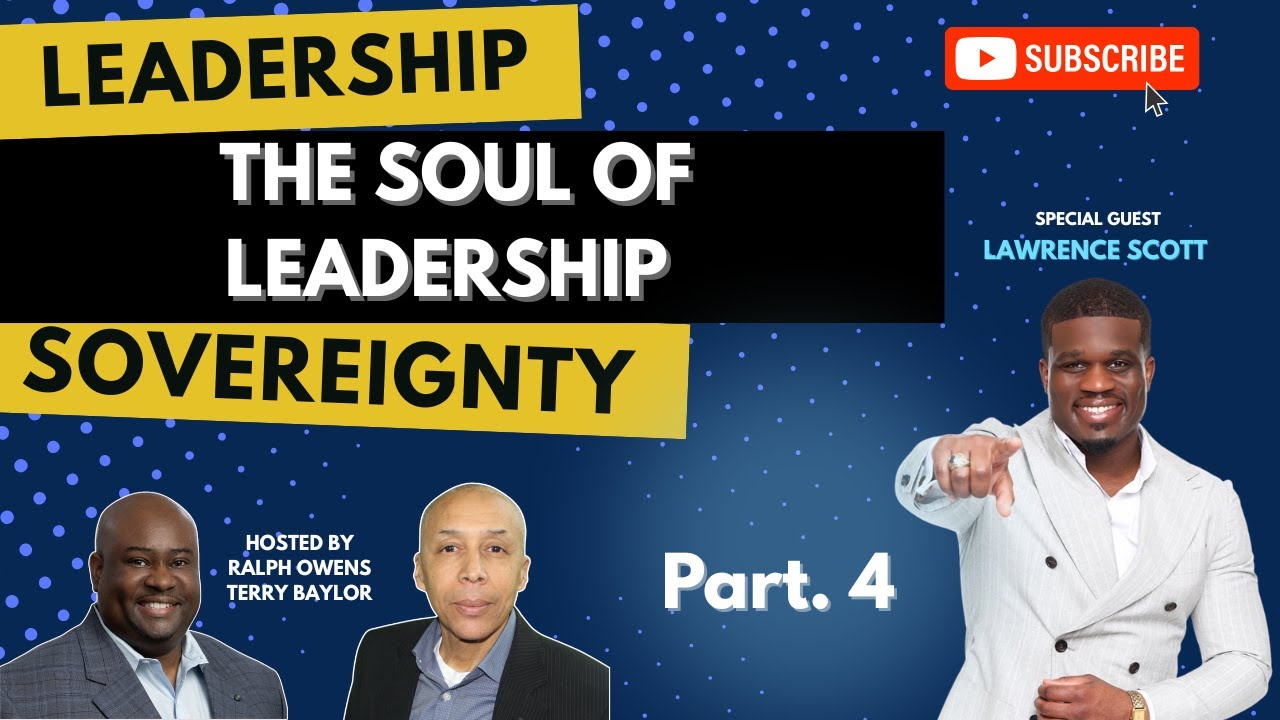
In this episode of Leadership Sovereignty, the hosts discuss the importance of understanding core competencies, particularly in troubleshooting, and how personal experiences shape career paths. They delve into the significance of mentorship and sponsorship in professional growth, emphasizing the distinct roles each plays in navigating career challenges and opportunities.
Takeaways
- Knowing your core competencies is crucial for career success.
- Troubleshooting can be a driving force in one's career.
- It's important to pivot and reinvent yourself when necessary.
- Mentorship provides guidance, while sponsorship opens doors.
- A sponsor advocates for you in critical situations.
- Building relationships is key to gaining sponsorship.
- Understanding the difference between mentor and sponsor is vital.
- Personal experiences shape our understanding of our career paths.
- Being honest with yourself about your goals is essential.
- Having a mentor can ease the path to success.
Welcome to Leadership Sovereignty the Podcast. I'm your host Terri Baylor along with Ralph Owens. Today we dive into why it's important to pivot and reinvent yourself, how mentorship provides guidance while sponsorship opens doors, and how asking for feedback can help develop valuable connections. Enjoy.
Speaker 2:Yeah. You know, I I would say I would say the the true answer to that is just comes down to knowing what your core competencies are. I think I mentioned earlier, troubleshooting is the one thing that I've found that has always been exciting and interesting to me. And for me, I always thought it was interesting to everyone the same exact way, but for me, it's really what kind of pushes me. So as it relates to what it is that I've done and how I've gotten where I've been, I would say that troubleshooting has always been at the crux of it.
Speaker 2:And so leaning in on the things that I know I truly enjoy has kind of helped me understand that some of the other changes don't really matter. You know, spoke a little bit about fact, you know, obviously I was raised in Houston, but you know, I went to college as a biology major, you know. I was actually pre med. Realistically speaking, I was looking to become a biomedical engineer, you know. And so, you know, at the time there wasn't really a degree path that was set up for a biologytechnical hybrid.
Speaker 2:You know, it basically just came down to two undergrad degrees. Well, you know, being arrogant as I was as a kid, I figured I can do both of them. After year one, was like, you know what? I don't need to do both of them because it just meant, okay, you're gonna do six to eight years for two undergrad degrees, let's just get the one to be done. So I started down the biology path.
Speaker 2:I finished that simply because, you know, I had already started going down the path. But at the crux of it, was still doing a lot of technical work on the side. I was still doing things that kind of challenged my, or not necessarily challenged, but fed into my desire to want to troubleshoot. And so for me, I started to take just even getting through college as another troubleshooting task. It's one of those, okay, you started on this path, but now your goal instead of ending with these two degrees, let's just see what we can do in four years of wishing path, and how do we get there?
Speaker 2:And that has kind of moved me from a science, a biological science role to more of a technical science role. Getting into the career, mindset. I, you know, graduated college, still not certain. I still wasn't 100% certain of the fact that I wasn't ready for medicine. Granted, I didn't do well enough on the MCAT to do anything to get into med school, but it was still one of those things that was in my head that perfectionist.
Speaker 2:I set a goal that I wanted to do this one thing without actually understanding is this one thing really for me. And as I've gotten older and started realizing you know, you're pursuing this goal and it's not really even a goal that you want. You're doing it just because you've already said and hey, it's okay. You don't have to finish it. You've only made this commitment to yourself.
Speaker 2:No one is pushing you in this direction. So why are you pushing yourself so hard on a task that you're not really interested in? And I think there have been a few milestones in my life that I've kind of had those same questions that I've had to ask myself. Just as you point out, why am I doing this? What is this for?
Speaker 2:Are you doing this because you want to do this? Or are you doing this just because in some twisted format you've given yourself a challenge and the internal side of you is saying, hey, I want to fix this puzzle. I want to solve this puzzle. I want to understand this challenge. So it comes to a point where you just realize that you do have to be honest with yourself.
Speaker 2:To me, that's back to the whole why I also think having a mentor at certain points in my life probably would have helped me, you know, make it less of a secure this path to get to where I am, but at the same point, I learned a lot getting this way. I had a lot of experiences that I wouldn't ordinarily have. I want to say I answered that question, but I'm now thinking do I?
Speaker 1:No, you did, yeah. And I think I love the fact that you hit on the fact that the experiences that you wouldn't have normally had, And I think, yeah, I believe that all of those things have made you who you are today have allowed Here's what I'm hearing is, it's okay to pivot. It's okay to reinvent yourself. That's what I'm hearing, right?
Speaker 2:100%.
Speaker 1:And yeah, you know what? I'm sure there are some things that you've learned in biology, right? Because here's the thing, right? There's the organic nature of what biology is and granted, man, look, I left after I got through biology in that lab, I'm like, let me get away from here. But I'm sure there are some concepts that are in nature and the things that you've learned, I'm sure that have been transferable skills, transferable concepts in what you're doing today.
Speaker 1:I just have to believe that, that somewhere on your path you've like, Oh, that's like this theory.
Speaker 2:Yeah, definitely. I mean, look, I've always Even when I was, you know, just a quick pivot back to undergrad, that was the same mindset. To me, the human body was just a biological computer. Basically cause and effect. Certain things cause other things.
Speaker 2:And so for me it wasn't that different from what I was already used to from a computing technology, you know, troubleshooting standpoint. So it made sense to stick with it because there were similarities just as pointed out. But ultimately, my interest wasn't there. And that's and I think it was through those experiences, it helped me to at least get down to the core piece that I was interested in. Because truth be told, I didn't know what it was that was drawing me to all of these various tasks.
Speaker 2:You know, in hindsight, I can say what it was because I, you know, I've had time to think about it. But at the time, I still didn't know what my path was. I didn't know why there were certain things I was drawn to. So you know, getting to know yourself, knowing to trust yourself and knowing that hey, know, as long as you are staying true to yourself, you can pivot wherever you need to. You can make those changes and understanding what's core to you probably will help you in most other areas you're going into because you now know, hey, I now know what it is that keeps me active, keeps me engaged, and how I'm going to continue to move on regardless of the industry I'm in.
Speaker 2:That's good.
Speaker 3:That's really good. It's really good. So let's move on to the next topic. So the differences between mentoring and sponsorship and the need for both, you know, so we've dived pretty well into the mentor conversation, you know, what it looks like, you know, why we need one, the impact of it, the value of it. But let's talk about sponsorship.
Speaker 3:And I think that's something, Akbar, you you brought up earlier in in the conversation about the role that it plays and the need for it. Mean, are your thoughts on that?
Speaker 2:You know, it's funny. I tend to think of things more of a visual format. And the way I look at a mentorship is basically you have someone that's a mentor that is essentially kind of your advocate, your essentially the person in your ear who's giving you advice. But I think the sponsor is the individual that's actually standing in front of you with the shield to kind of basically announce, hey, Akbar is coming in the room. He's gonna be doing this.
Speaker 2:This is the person that's kinda speaking for you. So you have an in in my my visual, you know Mhmm. Mhmm. Comparison here, you have your advice individuals, which are kind of your mentors behind you. You have your sponsors that are in front of you, kind of helping to pave the way for you.
Speaker 2:Because sometimes knowing the information is not enough. Sometimes you need introductions. You need to be invited into the room to begin with. And that's where the sponsors come into play. A mentor can give you advice, can tell you where to pivot here and there.
Speaker 2:But again, their primary focus, at least in my understanding of it, is just to kind of help you navigate that. But in some environments, there are areas where, you know, let's be honest, you're not going do it by yourself. There's hard I'm not going to say there's no one, but I'm pretty certain that most individuals just didn't get where they are just through sheer luck. Always someone who is there being your shield, speaking for you, helping to introduce you to the areas you need to be in. So, know, both of those can exist.
Speaker 2:Sometimes your mentor can be your sponsor, that does happen as well. Understanding those roles aren't really what you're trying to make sure that you can fulfill for yourself because those are the things that will get you to the next level.
Speaker 3:Yeah, yeah. Big time, big time. I've heard it said that the sponsor is the one who are in the room, like you said, that you can't be in speaking on your behalf, right? Willing to spend their own credibility to make sure that you have an opportunity that you wouldn't normally have. Because we all know that there are those conversations that happen behind closed doors that impact us that we just don't have access to.
Speaker 3:And that sponsor is someone who's willing to spend their own personal capital, their own credibility, right? On your behalf to, as someone said, pound the table to get you what you deserve. Definitely a newer concept for me over the last ten years. I didn't really understand the difference between the mentor and the sponsor until it happened for me. But Terry, I mean, what are your thoughts on that?
Speaker 3:Because we talk about this a lot.
Speaker 1:I love the analogy of the individual with the shield, right? Because here's the deal, I've heard it said this way, anytime there is an opportunity, there's gonna be opposition. Anytime there is opposition, there's opportunity. So don't think that your sponsor is the only one in the room sponsoring. I think it's a very adequate visual, right?
Speaker 1:Because as this person is saying, I believe Akhtar or I believe Ralph or I believe Terry, somebody in that room was going, I don't know. I remember when this happened. And then the person with the shield can say, yes, you are exactly right. But they took total ownership and look how they resolved it. Look how they brought the teams together.
Speaker 1:Look how they went to the business. Look at the end result of it. That what you call a failure was actually a great opportunity for them to show how they handle conflict, how they handle when there is an outcome that wasn't expected. So I love the analogy of the person with the shield. And I'm just gonna add a little bit to it.
Speaker 1:They got a sword too. So they're chopping, they're cutting through some of the minutiae. So I think it is very valuable to have a sponsor And it takes some work to get a sponsor, right? Part of having someone sponsor you deals with your ability to execute. It deals with how are you nurturing relationships, Because we're executing, but we're not nurturing relationships.
Speaker 1:So I would like to turn it a little bit to say, okay, this is what you need to do, or here's some a pathway to actually develop a relationship to get that sponsor. Maybe ask fifteen minutes out with someone of influence in your organization. And I've heard it given this way, ask them out for fifteen minutes of a coffee and ask them, what are you doing that they like? What are you doing that could take some improvement? And what don't I know you think I should know?
Speaker 1:And just listen, get your And say, look, the only thing here are the ground rules. The only thing I can do is ask qualifying questions. And that's how you start to develop that kind of relationship with the sponsor and do this maybe once a quarter, right? Someone outside of your business unit that you have a relationship with or that you'd like to seek a relationship with, And I'll tell you, that's something that I did and the information that you're gonna get back is gonna surprise you because it's out of your lane. It's not what you're expecting.
Speaker 1:It's not the people that you speak with every day. Because they're gonna see the business, they're gonna see what you do from a totally different angle in life. So that's how you start to develop a relationship with someone of influence. And it's great, right? Because they all say, man, this person asks great questions.
Speaker 1:They're a great listener. They're looking to grow and change.
Speaker 3:Terry, I think a real world scenario, and you mentioned this on another podcast before, so it's nothing private, but you talked about how Stephanie was a sponsor for you.
Speaker 1:Yes, she was a sponsor for me. And yeah, so this is now I'll keep this short as well. So an opportunity arose and matter of fact, was a spot that Ralph had vacated because he was off, man. He was chasing, was chasing them big technical giants. I'm just saying he was chasing big technical giants.
Speaker 1:So I'm like, this may be an opportunity for me. So long story short is, I went over and I had a little capital, right? I had some social capital because I would always help this department out and because I was a lead in the area that I was serving in. And long story short, when I went to my current leader, because it was still under the same umbrella, but there were multiple IT departments. I was like, Hey, I'm leaving for this other opportunity.
Speaker 1:And so it had leaped out what my salary was gonna be. And the leader was like, No, you can't pay him that. Stephanie was like, Yes, I can. It changed that moment, I'll say this, that moment changed my life in terms of how I see leadership. Because up until that point, I had never had someone at that level, right at the VP level stand up and say, he's worth What we're giving him, we see the value in him.
Speaker 1:I didn't know it was a sponsor at the time. I really didn't know what to call. But years down the road, as I began down my journey of leadership and growth, to your point, Ralph, I'm like, man, Stephanie was a Yeah, she was a sponsor for me. And there wasn't anything that I wouldn't do. There wasn't any man, we'd run through brick wall because when someone stands up for you, it changes your You don't see yourself just as a cog anymore, as a lever, as a knob.
Speaker 1:So when you become humanized like that, it changes everything. Everything. So thank you for joining Leadership Sovereignty the Podcast. We hope you obtain something of value as you walk out your journey. Connect and grow with the community of LS pioneers on X, Instagram and LinkedIn under the handle Leadership Sovereignty.
Speaker 1:Thank you and God bless.