

 Apple Podcasts
 Spotify
 YouTube
 Mentorship, Sponsorship, and Leadership Pt. 5
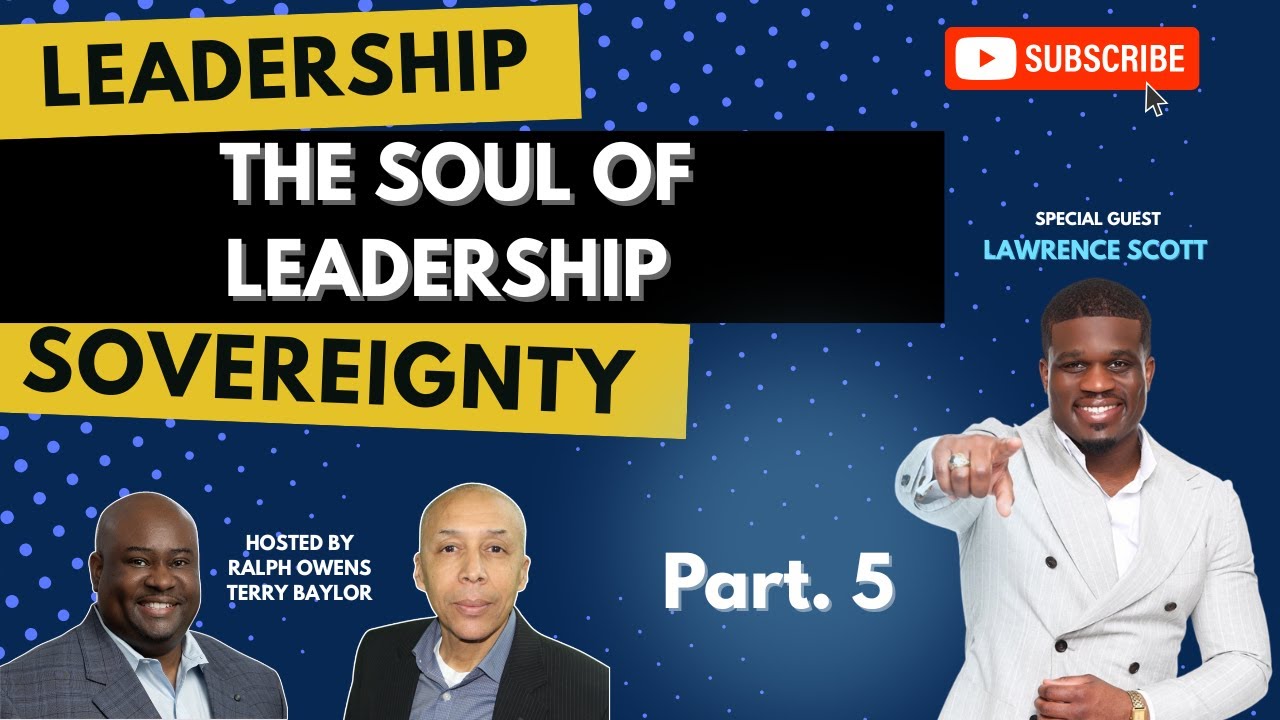
In this episode of Leadership Sovereignty, Ralph, Terry and Okpara discuss the importance of sponsorship in leadership, the perceptions leaders face, and the art of communication. They emphasize that effective leadership requires understanding human dynamics and balancing assertiveness with empathy. The conversation highlights the significance of social capital and the subjective nature of decision-making in organizations, particularly for African-American leaders navigating complex environments.
Key Takeaways
- Sponsorship is crucial for accessing opportunities.
- Perception can influence leadership effectiveness.
- Leaders must balance assertiveness and empathy.
- Effective communication is an art form.
- Social capital should be spent wisely.
- Subjectivity in decision-making affects leaders.
- Modeling behavior is key to leadership.
- Understanding human dynamics is essential.
- Leadership requires navigating perceptions.
- Collaboration is vital for successful outcomes.
Welcome to Leadership Sovereignty Podcast. I'm your host Ralph Owens along with Terry Baylor. In today's episode, we'll touch on topics such as the responsibility of being a sponsor, the power of perception and how to handle it, and the science and art of leadership. Let's go.
Speaker 2:So yeah, for sure.
Speaker 1:I think that sponsorship is a powerful concept, not only in getting one, but being one. I heard it say it this way that when you have that credibility and you have that social capital, that you need to spend it. You need to spend it on people who are worth it, who need an opportunity because at the end of the day, and I think this is the most important thing about sponsorship that I've learned personally, is that your opportunities to make moves, to make big moves are determined in rooms that you cannot get in. And the decisions that are made are completely subjective. They're not objective based on your how hard you worked or the numbers you produced.
Speaker 1:Whenever you have a human element that's involved in a decision making process, there will be a certain amount of subjectivity to it. Right. Which is why the importance of a sponsor is enormous when it comes to the ability to be able to make moves in an organization. Because if you don't have someone in that room pounding the table on your behalf, right? Like Stephanie did for Terry you will miss out on opportunities because subjective decisions are being made on opportunities that arise in an organization.
Speaker 1:And that's been in every organization that I've ever been in. I've never seen any different. Right? So now that's good. That's good.
Speaker 1:And I know that's gonna help some people out there. So that's awesome.
Speaker 2:Hey, Ralph, I just wanna add one thing to that. I used to have a friend I used to do some music with. You know what he would say? People are people first.
Speaker 1:Always. Remember that.
Speaker 2:People are people first. Yes. That's why you need sponsorship.
Speaker 1:That's good. That's good. That's good. That is good. So let's just go turn into the topic of leadership itself.
Speaker 1:I know in our pre meeting, we came up with some really, really good points. Akbar, you talked about how sometimes in your experience you've seen as it pertains to you being a leader at perception of either being aggressive or being weak and having to balance that perception. Like, talk about that a little bit.
Speaker 3:Honestly, I'm thinking of just even the conversations we've had today and some of what we've experienced since we had the pre call. It's perception, right? If I'm gonna talk back to what we spoke at the beginning of this, comes down to, as a leader, are you doing the right thing? So if you are doing the right thing, perception of aggressive or weak really doesn't matter. Mhmm.
Speaker 3:People are gonna take you the way they want to. Just literally just a comment on what you just said. People are people first. So and and so everyone's gonna have their opinion. If you spend a lot of your time worried about the, the way people are receiving you, you're gonna find yourself focusing heavily on the wrong parts of leadership.
Speaker 3:For me, my thing in that as far as aggressive work versus, you know, being being aggressive versus being we also comes into just, really just modeling my my behavior for my, my my team. If we're talking leadership, that's where my leadership is gonna have to shine. It's gonna have to shine for my team. And, really, it's gonna shine through example. It's gonna shine through ways that I can show how I'm providing value for them.
Speaker 3:Because at the end of the day, that's my goal. I'm there to serve them. I'm there to be a leader to help them get where they're going as it relates to how that works from not just my staff, but the to the organization, meaning leadership a leadership example moving up, it's the same way. It's one of those items that there are gonna be many times I'm on the island by myself. But if it is an idea that I'm committed to and I believe in, then there is no point in me trying to diminish that, in any way.
Speaker 3:And so, or, you know, the the perception is there because that that where it may not tie really into the leadership piece, it does tie into what we were just discussing about sponsorship, about how you're being being received. Yes. You can't go into rooms just kicking down, you know, chairs and flipping over tables. What?
Speaker 2:Oh, man. I love
Speaker 3:I love
Speaker 2:doing that.
Speaker 3:You could do that, but you are definitely going to severely limit your options in some places. Maybe, you know, there there's gonna be some some environments where maybe it is encouraged to do that, but for the most part, you do have a a balance that you have to kind of obtain. So there there is and look, I found like I'm contradicting myself here, but I I would say yes, that there is I wouldn't harp heavily on it, but you do have to be you can't be oblivious to it either. Right?
Speaker 1:Right. Right.
Speaker 3:There there are there there is a social stake that you have to understand with that. But, but to me, those are the extremes. Being determined and being aggressive are, are extreme. The extreme, I'm assuming aggressiveness is really more on the extreme, just as a compliance or a complete weaknesses on the other end. But if you are determined, you are, you are still within a wide, gray area that you can work with with And, and, know, the, the, the perception is gonna be there.
Speaker 3:Can really do very little about perception for people that already have made up their minds because everyone is in different stages of understanding how they're inter engaging with others. So, so to spend your time and to spend your wheels trying to focus on how it's being received Mhmm. Is probably a small percentage of the message you're trying to communicate, and it's not necessarily worth devoting a majority of your attention to such a minor piece to what you're trying to do.
Speaker 1:Gotcha.
Speaker 3:That that that makes some sense. Yeah. Sounds like I'm saying yes, do it, but don't do it. It's, it's, it's a little bit of both, but, it it's, it's, it's a, it's a dance, it's an art, right? There's, there's a lot that's happening in just simple communication.
Speaker 3:With humans. I mean, that's how we operate. That's
Speaker 1:good. I can definitely speak from my experience. Yes. It's something you have to be cognizant of, but you cannot allow to limit you, right? I'm thinking of a scenario right now where I'm dealing with a difficult situation and I'm dealing with two different parties that I have to bring together to come up, come to a positive outcome with.
Speaker 1:And they're both in opposition with each other. Right? Whereas I cannot come in and not be aggressive enough to move it forward. Right? But I can't be so aggressive that I am not eliciting participation in partnership.
Speaker 1:Right? So it's not a science. It's an art. Right? And being able to balance the two, I think, for us as African American leaders in the positions that we are, is something that you really have to pay attention to.
Speaker 1:We talk about using EQ and things of that nature in our communications and how we deal with things to be able to balance and come up with a creative balance there. Right. And I think that's just for anybody, but specifically for us, but yeah, no, I agree a 100%. It's something that I deal with every day. Right.
Speaker 1:And to Terry's point in some rooms, may not get the, oh, that's just him. That's just how he is, type of response. If I come the wrong way, it's like, oh, okay. This is the way this person is. And there's a judgment there, right?
Speaker 1:Not forgiveness, that kind of stuff. So an art. It's a balance that we definitely have to do. But Teri, I think I saw you write something else. I forget something you wanted to say.
Speaker 2:Yeah. So I love what Aparsha said in terms of the range. Right? And so this is the beauty of being human. Right?
Speaker 2:We get the opportunity to allow that lever to swing, right? So now I'm going to swing the lever a little towards, okay, I'm going to have to push on this one, right? I'm going to push you, right? And now here's the thing though, right? This is where Ralph, we just love aspect of it.
Speaker 2:This is where the art of leadership comes in and that how do I push you? Right? We are Ralph. We know the number one way to push somebody is. Let me ask you some questions.
Speaker 2:Yep. I'm a ask you questions that lead you to the destination, That's where the, you know, so some of those questions could be extreme challenging questions. Then some of those questions could be in a manner where we're finding some common ground, some commonality, right? And I believe that is the art and the EQ and the dance. So I drew a little picture.
Speaker 2:I drew an arc with arrows on both ends and and then I wrote dance and art and communication. Right under this arc. So I'm dancing, I'm communicating, I'm fluid. I'm thinking like Michael Jackson. That's who I'm thinking.
Speaker 2:I'm thinking, man, I'm pop locking and I got the moonwalk going on. But not only that, I got 50 guys behind me all doing the same dance. How does that happen? Right? It happens through spending time together.
Speaker 2:That happens through communication. Right? That happens through let me share the plan beforehand. Right? So when you show up, it's not brand new, right?
Speaker 2:So the art, the dance, the communication, and again, I love the range that we get to speak to and exercise as human beings because we're not all rigid, right? We're all the time and we're not always flexible.
Speaker 1:Content, but gain something to help you on your leadership journey. Feel free to reach out to us on X, Instagram, and LinkedIn under the handles Leadership Sovereignty. And until next time, stay safe, peace and blessings.