
 Apple Podcasts

 Spotify

 YouTube
The new glass ceiling (Part. 1)
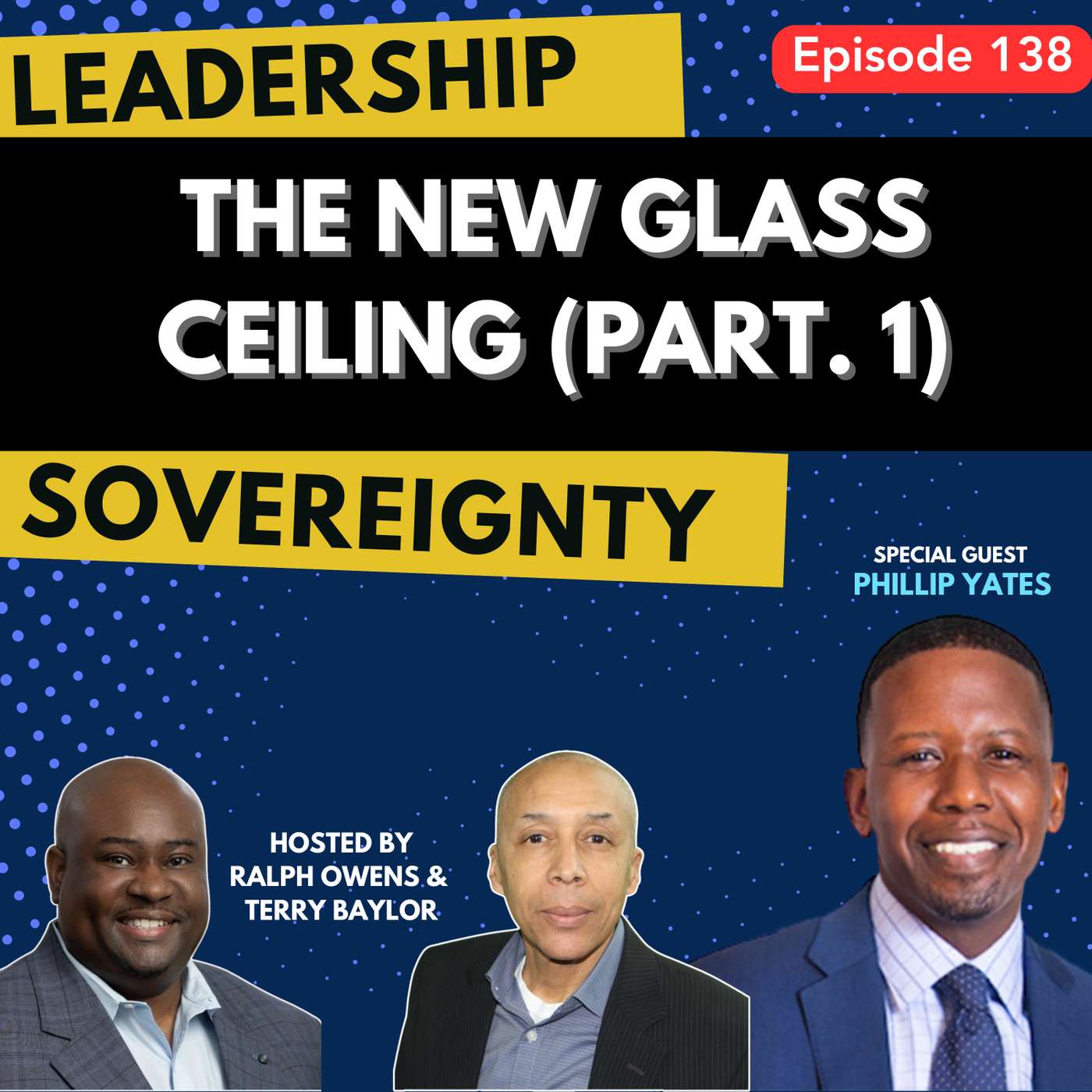
In this episode of Leadership Sovereignty, Ralph Owens and Terry Baylor engage in a thought-provoking conversation with Philip Yates about the evolving landscape of leadership and career paths in corporate America. They discuss the concept of the 'new glass ceiling' and how the current generation faces unique challenges in navigating their careers. The discussion also touches on the importance of mentorship, discovering individual passions, and providing guidance to younger generations. The episode emphasizes the need for proactive career management and the role of parents in nurturing their children's aspirations.
Takeaways
- Leadership in this generation is not a choice; it's a necessity.
- The traditional career trajectory is no longer viable for many.
- Young people must take proactive steps in their career paths.
- Parents should help discover their children's unique talents.
- The digital age offers new opportunities for career advancement.
- Mentorship plays a crucial role in personal and professional growth.
- Economic development is essential for underserved communities.
- The importance of creativity in shaping one's career path.
- Children should be encouraged to explore their passions freely.
- The seed of greatness exists in every individual.
Chapters
- 00:00 Introduction to Leadership Sovereignty
- 02:00 The New Glass Ceiling in Corporate America
- 07:02 Navigating Career Paths in a Changing Economy
- 12:06 Parenting and Guiding the Next Generation
0:00 Went to College in 2099, two thousand. I entered the workforce roughly around 2003. 2005 you had a choice. You can still try to pursue corporate America or be an entrepreneur. I think in 2025, you don't have that choice. You may have a luxury depending on what family you were born in, what zip code you were born in or what school you went to. And so now you have to have a thought process in terms of when you're going to school and when you're getting training, when you're getting experience where the internal externship, what are you going to do with that information to really secure, financially secure your home and your future? Welcome to the Leadership Sovereignty podcast. I'm your host Ralph Owens along with Terry Baylor.
0:40 In today's episode of The New Glass Ceiling Part 1, Philip Yates challenges us to rethink how opportunity is distributed in today's economy. He also exposes how outdated career expectations collide with modern economic survival. And we are live. Hello world. Welcome to another exciting episode of Leadership Sovereignty. We have a very, very special guest with us today. Terry, how you feeling? You know, man, this today, oh boy, we're going to change some lives. I'm I'm pretty sure we're going to change some lives today. Do I want to introduce Mr.
1:27 Phillip Yates? Welcome to the show Sir, once you tell the people a little bit about yourself. Hey, good day gentlemen. Thank you for the invitation and I'm just happy to be a part of the leadership sovereignty and looking forward to our conversation after those who have not been fortunate enough to meet. My name is Philip Yates, attorney by trade. So you know, my background in corporate law, bankruptcy law, but my passion is economic development, community work. And I'm also the Co founder of equal Liberty, which is a fintech startup. That's that doesn't no, a lot of work around convening capital inside of our communities and really underserved targeted communities that just quite frankly don't get the investments they deserve.
2:11 And so outside of that, I'm a dad of of two and a husband for going on 10 years this year. Congratulations, congratulations. Yeah, we we haven't talked about today. So we're going to talk about that the new glass ceiling in corporate America. I know that's going to peak a few years and interest. I know it it, it peaked mine. So how about let's just start talk about leadership in this generation field. I mean, what comes to mind for you when we talk, when we bring up that time? Yeah, you know, when I'm, when we talk about the glass ceiling, I, I just, I think about my dad honestly. And I, and I grew up with a mom and dad for majority of my childhood, you know, but most like, much like a lot of our, our, our colleagues, you know, eventually my mom and dad went through their separate ways.
2:56 But growing up, I remember seeing my dad, you know, enter corporate America and having to work his way up and try to send as far as he could. And that was his whole goal. Like there was never like, you know, there was no thought of entrepreneurship. There was, they didn't have the risk appetite to do something like that. And so when you talk about leadership in this generation, I think it's not a choice. I think when we were entering the workforce, you know, for me it was, you know, I went to College in 2099, two thousand and to the workforce roughly around 2000 and three, 2005 you had a choice. You can still try to pursue corporate America or be an entrepreneur. I think in 2025 you don't have that choice. You may have a luxury depending on what family you were born in, with zip code you were born in or what school you went to. And so now you have to have a thought process in terms of when you're going to school and when you're getting training, when you're getting experience, whether internal externship, what are you going to do with that information to really secure, financially secure your home and your future. And so that, that thing, that's where we're at, gentlemen with this generation, they don't have a choice. And now they're having to use the this digital age or information technology to kind of hack that process. I, I, I have this conversation very often actually in that, you know, when again our parents generation, they, they had a specific trajectory.
4:19 They wanted to get into a company long term, right. Do do do their time get their pension. You know, my dad, you know, great, you know, he was, he was fortunate enough to be able to retire think within two years ago now and he he still had a pension, but he's like probably the last one, right, You know that and he was like 40 years in on on the job. That does not exist anymore. It it it just absolutely. No, you, you, you. You'll be lucky if the company is around 40 years from now. Exactly. That's right. And my dad had a he had a different landing, right.
4:59 So it's, you know, so he, he entered the, the workforce and my dad was in banking. So he moved from Pittsburgh. And if you, you guys are familiar with the Northeast or some people call that Midwest, a lot of that was around the steel industry. And so a lot of those factory and obviously with technology, those jobs start to go away in the late 70s, early 80s. So he migrated to Texas, got into corporate America, ascended all the way to like senior leadership where he was one of the more successful, especially African American bankers in the city of Houston. But to Ralph's, you know, landing of his dad, my dad had a different landing where the times have changed, demographic change, and so the demand change of the job. And it wasn't, you know, it wasn't what it wasn't his the way he would have wrote the script in terms of when he retired, but he is retired now. I'm doing very well.
5:46 But I just remember him going through that transition. But it's to this conversation that generation wasn't prepared what that landing looked like, because the landing looked like, you know, like we said, the, the gold watch, the retirement party, the pension and everybody throw you a party. And so they, we love you. No, now they're kicking you out the door because they're trying to save money or they're trying to ease their consumers or the community. Especially young people all the time, because I, you know, my, I have four children and they're in between the ages of 23 and 28, right? So they're all fresh in the workforce. Hey, good. Brother, I thought. You had kids. You get something right because I have my friends started young.
6:26 They still don't look as good as you. That melanin. Is rocking. Yes, Sir. Yes, Sir, you have. To understand that your career is your responsibility. It is not your employers, right? If you're expecting your employer to put you in a situation where you're going to get to the end destination of where your career goal is, you're making a mistake, right? You have to approach this from a proactive perspective of this is where I want to go, this is where I want to end up, and this is the path that I'm going to take to get it there right into your point field. It is not what the previous generations actually went through, so they have to take a different approach with Terry. What your thoughts on that? Man, I, so I got a 21 year old and so she's home for a few weeks from school and I'm like, hey, let's do a daddy daughter day, right?
7:21 So I think was Chick-fil-A. So we went and sat at Chick-fil-A. So we're just talking, I'm like, you know, what's, you know, what's this final year going to look like? And she was like, dad, you know, to be honest, I'm just, I'm still trying to figure it out. I'm like, it's OK. It's, it's OK that you're still figuring it out because that's really what college is about it. You know, it's not about you leaving out with a fully flushed out plan the way they want you to craft your box, right? They want to have you be a cog in a system that perpetuates their success. And So what I explained to her, look, that's your box. You are an amazingly creative individual. If you want to put dirt in that box and plant a garden, then do that.
8:08 If you want to put wheels on that box and create the next electric car, do that. If you want to, you know inside of the profession that you are studying, intersect that with your creativity, your art, your music, your coaching. Make that box as fluid and creative and spontaneous and exciting as you are as a person. The institution is just giving you a framework, right? They don't know you. They don't know what inspires you, what drives you. So make the box whatever you want it it's your. Box, I love that. I hope when you guys share this with the audience, that's a clip in itself.
8:54 And I have a question for you gentlemen just based off of that. I know we had some talks backstage before we started. Given the fact that your kids are older and experience, you guys have leaders and your communities, your households and the workforce. I'm even what you're doing here on this platform. I think you guys said you're at one, one third, 1:30 or over in episodes. My kid, my daughter's turning 8 this week. So I told you guys have a birthday party to celebrate. My son graduated from kindergarten. He's going to lower elementary or first grade. What advice do you have for parents? Because when we talk about the glass ceiling, a lot of it is, you know, not only setting realistic expectations, expectations for ourselves as leaders, but in my home, I wonder now, what do I tell my daughter and my son when they say, hey, what do you want to be on a group? I want to be this bad or officer, a police officer, a lawyer, a doctor, engineer.
9:40 What advice would you give to parents who have younger children regarding conversation? I'm. Gonna let Ralph take this first because I'm I'll take the tips from you, bro. You you got, you got four of them out the house. Let me listen. Let me listen. Let me get my notebook right now. I think the first thing then is and, and just let me, let me preface this by, you know, reminding our audience that we always look at everything from a spiritual lens here, right? Our job as parents is to find a seed of greatness that's in our children. Sometimes we want to mold it for them. Or you're going to, you know, because like in the Jewish community, oh, you're going to be a doctor, you're going to be a lawyer, right? And they literally tell their kids. Matter of fact, I saw an interview. I thought it was really interesting. They talk about how they introduce their kids when their kids are young.
10:31 This is Sarah. He's she's going, she's going to be a future doctor. So they start indoctrinating their minds with what what it is they they're supposed to be. But I believe, you know, me and my wife believe that God has already put a seed of greatness in each one of your children. We've all seen families where all of them can be raised in the exact same home and they all go in three different directions, right? That's because they all have their own individual seed of greatness inside of our job is to discover and develop, right? We have to take the time to figure out what naturally comes easy for them, what they're naturally attracted to, and then develop that because that's the thing that they're going to be the greatest that in life.
11:14 And there's always a positive way of doing anything, right? So that it, you know, if I had to go back and do it all over again, spend more time discovering and developing, you will see that their natural passions will kick in and they will just take off, right? If they are doing the thing that they were already naturally created to do. And we spend enough time with our kids, what we know, right? You know, so like one of my daughter's Raven, she, when she was coming up, she just loved it, right? Her teachers would always say, but is she, her writing is off the charts. And it wasn't something that she like, OK, I'm, I'm going to be the best writer in this class. It was like, oh, I just love to do it, right? Well, today she's, she's a journalist, right? And it's working out perfectly right.
11:56 You know, that, that, that sort of thing. So that would be the, that would be the best advice that I can give, man. Don't try to force them into a mold that we think is best, but discover the seed that God put in them and cultivate it right, so that when they get ready to get out there, they can they can take it further. Yeah, Terry, I mean your thoughts on that? Yeah, so, Ralph, I love that. I think that is so true. Matter of fact, I was journaling yesterday and you know, I basically wrote that. I wrote that very thing. God, thank you for the God-given dream, right? Because it's in there. It's in there.
12:38 And so, and so as you, as you were stating that, of course, I was thinking about myself. And one of the things that I've always done, I've always done this no matter where I've been in life. And I'm, I'm actually doing it now. And, and I'll just tell this story. So I was 15 and one of my older brothers started a baseball team and I said, hey, man, you know, I'll help you coach that team. Now I'm playing baseball myself, right? Because baseball was my passion. Anyway, he had one of those jobs where, and man, I thought about this. I'm like, I think I'm going to call him and give him a hard time because you work for rent-a-center. I'm like, that job was just tormented people. That was a that was a terrible model for folks who had to go to Rent-a-center.
13:25 I'm thinking you paying 20 years for a couch. What is what is going on here anyway? Anyway? That's and that kind of goes back into really this conversation really about just being a cog in a system. But so the job that he was working, he could not commit to the team. So I'm 15, right? I'm coaching the team like I'm the head coach. I'm coaching guys that are 13. Here's what what's interesting about that. As I thought about, I actually thought about this story in relationship to our conversation today. What about those 13 year olds gave them confidence to follow a 15 year old? Because in in between the games, I'm not playing with them. Just like we just saw kids.
14:12 At that point I realized the seed that God has placed in me is leadership, it is mentorship, it is building. I've done that from the and so that team, what was so amazing about that team, man, we went all the way to state. We came in second place. A 15 year old coaching some 13 year olds took second in state. So to your point, Ralph, I didn't realize it, but that that coaching and that nurturing and that development of people, the love of people, God placed that in me. And I'm looking at what we're doing today. It's it's essentially the same thing. Thank you for listening to the Leadership Sovereignty Podcast. If this content blessed or helped you in any kind of way, support us today by subscribing to our YouTube channel, clicking the like button for this episode, and sharing this content with others that you think it will help. Until next time, stay safe, peace and blessings.

Attorney / Entrepreneur /Community Leader
Phillip Yates is an accomplished attorney, entrepreneur, and community leader dedicated to expanding economic opportunities for underserved communities. He is the founder and CEO of Equiliberty, an innovative fintech platform focused on increasing access to credit, capital, and wealth-building resources for underrepresented individuals.
Beyond Equiliberty, Phillip co-founded Diversity Fund Houston, a $3 million seed fund that invests in Black and Hispanic tech founders, and launched initiatives such as Black Entrepreneurs Week and Latino Entrepreneurs Week to spotlight and support minority business owners.
He also serves as Chairman of Impact Hub Houston, where he helps drive social innovation and entrepreneurship across the region. Recognized as an Ecosystem Builder of the Year, Phillip is passionate about using technology, mentorship, and strategic partnerships to close the racial wealth gap and empower people to achieve financial freedom.
With a background in corporate and bankruptcy law and a strong track record supporting thousands of entrepreneurs, Phillip is on a mission to create lasting, systemic change that helps communities thrive.