
 Apple Podcasts
 Spotify
 YouTube
 The new glass ceiling (Part. 2)
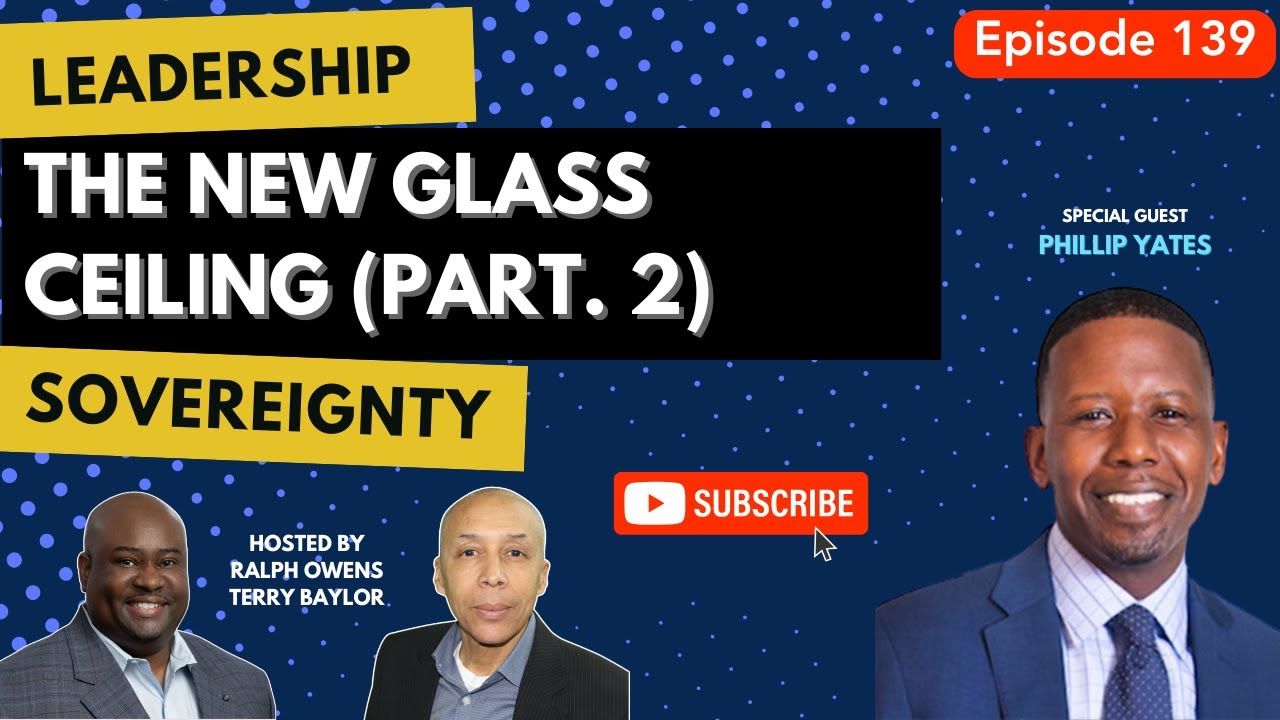
In this powerful conversation, Terry Baylor, Ralph Owens, and Phillip Yates explore the intersection of faith, entrepreneurship, and generational leadership. From the pressure to be "10 times better" to the importance of letting our kids fail forward, the discussion offers honest insights into parenting, purpose, and personal growth. Rooted in scripture yet grounded in real-life experiences, this episode unpacks how to discover, develop, and invest in the next generation — and why starting with the end in mind can change everything.
★ Support this podcast ★You're gonna allow life to buff you a little bit, how life to train you, how to be consistent, how to be resilient, how to stick you know, get some stick to itiveness. That's one of the things I wish, if I could do it over again, I wouldn't exercise perfection in the language that I use. I would exercise growth in the language that I use. You're gonna go through this? Welcome to Leadership Sovereignty, the podcast.
Speaker 1:I'm your host, Terry Baylor, along with Ralph Owens. And today, along with Philip Yates, we unpack the power of failing forward, the spiritual blueprint for entrepreneurship and what it really means to develop the next generation of leaders. It's about faith, resilience, and the freedom to grow. Enjoy the show. God placed that in me, and I'm looking at what we're doing today.
Speaker 1:It's it's essentially the same thing. Right? Yeah. And so, to that to that end, though, the one thing, Phil, I would add to that is, you know, in our communities, right, and I'm sure you've heard this before, and I'm gonna try to frame this the best possible way, because I do wanna be authentic to our message and our story and who we are. I'm just gonna make this statement and you're gonna know what I mean.
Speaker 1:You gotta be 10 times better. Yeah. Because of what you wanna do, because of where you're going. Right? Phil, I'm sure you've heard that.
Speaker 1:Especially in what you're doing, you gotta be 10 times better. Absolutely. Right? And so I believe I would probably not use that message because what I believe that message does is it doesn't give us as parents and our kids the ability to fall forward, to fail and learn. And so, Ralph, to your point, right, we lead with scripture, man, and I've been just on Psalm 37, like, every day.
Speaker 1:It's it's just been so rich on so many levels. Right? Because, Phil, to your point, in that in that, text, it really talks about being an entrepreneur because it talks about you're gonna lend freely to people. So that means if I'm lending freely, I'm I'm not work I'm pretty sure I'm not working for somebody else. If I'm lending freely, right, to to people to help them out, that means I gotta I Man, my source has got to be large if I'm lending freely to people.
Speaker 1:The other aspect of what that text talks about is that you may stumble, but you won't fall. Right? So that means I may hit some hiccups in the road. And and so, visually, when I, see that in my head and feel you're kinda there, right? You're walking with your with your daughter holding her hand.
Speaker 1:When she trips, you know how we would kinda let them stumble a little bit, we're like, oh, no. You're not gonna you're not gonna hit the ground, though. That's how I see I'm gonna let you live out life. I'm gonna you're gonna, allow life to buff you a little bit, how life to train you, how to how to be consistent, how to how to be resilient, how to stick you know, get some stick to itiveness. So I that's one of the things I wish if I could do it over again, I wouldn't exercise I perfection in the language that I use.
Speaker 1:I would exercise growth in the language that I use. You're gonna go through this, you know? You're gonna experience this. So my oldest son just graduated last night, and that essentially thank you, I appreciate it. So he's on his way to Houston Christian here in town.
Speaker 1:So I'm super excited about that for him. And God blessed him. He put in the work, right? So he's got an academic scholarship there, so super excited. But I wish I would have allowed them to fail freely a little more, without the expectation of, You get that one bad grade, and you know, man, we coming down.
Speaker 1:You know how to know? And and because here's the Exactly. You know how it is. Exactly. So what happens, but to your earlier point, I believe what that does is it limits their appetite for risk.
Speaker 1:Because if we want them to be entrepreneurs, you have to be okay. Got be okay with the no. And I just had a conversation with Ralph yesterday. Ralph, I'm getting through my 100 no's so I can get my 20
Speaker 2:That's right. That's right. That's right. And you know what? Let me add this one point onto that too.
Speaker 3:So when,
Speaker 2:and this is no indictment on our parents' generation, right? Most of us economically, they were not in a place to try to develop that gift. Yes. Right. You know what I'm saying?
Speaker 2:They, they, yeah, they didn't have the capacity to do it. Right. They were just focused on trying to get by, you know, day by day and get a little bit better. Right. I think we are in our generation, we're in a unique position where we have the capacity to not only to discover and to develop, but to get them off into adulthood in their purpose, right.
Speaker 2:So that they can take it and take it to a whole nother level. Most of us have had to, once we got out into the workforce rediscover, you know, in ourselves, you know, what is our passion? Like what were we created? Like, I I'll give you a quick example For me, when I was a kid, VCRs were just coming out. Nobody in my family could figure out how to put these VCRs together.
Speaker 2:Right. You know, how to connect them and stuff. I was the one I was a kid. They were like, Hey, can you, can you bring him over so he can connect this up? My mind just automatically just understood how to, how that stuff worked.
Speaker 2:I had a computer at 13 writing code. Right. You know, people don't even know what this stuff is at this point. My mind just automatically figured it out. Right.
Speaker 2:So I go to the Navy after high school, you know, to serve, I'm a welder. I absolutely hate it. I'm like, I gotta get back to technology. That's what I like to do. Had computer parts all over the place in the house, trying to figure out how to put computers together.
Speaker 2:Right. Cause that's just what I was passionate about. Fast forward now, twenty seven years, I'm the CIO of a bank. Right. You know, and, and it, it all tied back to what my original passion was.
Speaker 2:Right. So if you can understand, if you can, if you can figure out what it is that they're naturally passionate about and then develop it and get them on the right track, man, they'll take off in life.
Speaker 3:That's a lot to unpack. I want you to know you you guys just kind of broke down at least two or three more episodes. I think of our greatest responsibility, one is to be a good human. The other one is to raise good humans. You guys kind of laid out a blueprint for that.
Speaker 3:And we talked about discover, development. And obviously I think scripture is universal, right? There's some people, even if they're agnostic or they don't believe in anybody.
Speaker 1:Yeah.
Speaker 3:Even then they still have a code in terms of how to be
Speaker 1:a good
Speaker 3:human being.
Speaker 1:Yes.
Speaker 2:Yes. My
Speaker 3:household is similar to y'alls. And I thank God that I found my wife because she makes sure that I maintain my responsibility as a man and her as a woman, as mother and father. The piece, I kind of want to summarize that last piece because it goes into our conversation as our leadership development is invest, right? Discover, develop, and invest. As I always tell people, you know, growing up, one, to your point, I did look at my brother and my sister and it's like, they did great things and my brother, he transitioned but my sister's doing well And there's not big gaps and deficits, but in terms of my journey in life, I was invested in and say, Hey, you're going to be a leader.
Speaker 3:Hey, you're to be a leader. Hey, you can do this. And even to this day, because of what was invested in me, I'm still, you know, ascending in in in my journey and thankful to my village and obviously to God for that. But you also had this scarcity mindset.
Speaker 2:Yes. Yes.
Speaker 3:And so, you know, obviously, we talked about our parents' generation where they had to work. They wanted to keep our us safe and they want to keep food on the table and get you. Right. That's what was like. They want to just get you out of high school and go to college.
Speaker 3:Right. That was the finish line. Go to
Speaker 1:Yes, right, right.
Speaker 3:Military. It was one
Speaker 2:of those
Speaker 3:things, but don't go to jail, don't sell drugs, don't die. Exactly.
Speaker 1:And no kids.
Speaker 3:And no kids.
Speaker 2:Yeah, no kids. That's right. Yeah. And
Speaker 3:that's not the case today because of this new economy. It's like you do have to discover what somebody's skill set is. You do have to develop it. And I love you say allow them to fail early because it's almost like And I told you guys, my kids are in Montessori. I love the fact that they do it in three year blocks.
Speaker 3:If you guys are familiar with the Montessori system. So like pre K is three years or in kindergarten three years and then they go to lower L. So my kid, he's just graduated from kindergarten. Now he's going to be with third graders. And so you talk about your story of leading younger kids to a state championship.
Speaker 3:That's what they're teaching automatically. I love the fact that my daughter, she's already going to her third year in the lower L, but I remember how scared and frightened she was as a first grader, but they're teaching her how to follow the second grader. And the graders learn how to lead the second and first grade. So by the time my daughter's in third grade, she now knows how to be a leader. And I think that's invaluable.
Speaker 3:I don't think you can only learn at monastery. You can learn at church, learn at home. Yeah.
Speaker 1:Your people.
Speaker 3:And so this conversation is so crucial because of which just the platform, obviously, one, scripture is still the playbook. It's in there.
Speaker 2:Yes. I mean, I tell Yeah, That's right.
Speaker 3:What's your favorite book? Say, book of James. They'd be what do mean? Like, no, go to the book of James. It's about five pages and it teaches you how to be an ideal human being all the way from being an entrepreneur, to being a good steward, to following god.
Speaker 3:I say, Jesus' brother wrote it. So, I'm a little biased.
Speaker 2:Yeah, yeah, there you go. Okay.
Speaker 3:But I I think that's what we have to do when we talk about breaking through the new glass ceiling. It's not about entering into an institution and then following their instruction because they changed the rules and it's their right Now, because it's their as Terry stated about the box, you create your own rules for your environment. If you just happen to go to the military, go to college, join a job, Do it on your own terms and you have to have a playbook. But us as leaders of our house or our community or our jobs, we have to give the tools and resources for those people to actually develop into what God's purpose for them. So I love the gentlemen.
Speaker 3:I just thank God that that's a lot to impact. And I just want to summarize and thank you for that advice because I'm telling my wife about it later and we'll
Speaker 2:pull it
Speaker 3:off and roll.
Speaker 1:Perfect. So I want to add one thing, James, to what you said. Was in a leadership conversation, and I was amazed to hear this. I believe it was Jeff Bezos, if I'm not mistaken. And just so, you know, we you know, again, to your point or Ralph, to your point, know, we use scripture as a basis.
Speaker 1:Right? But we also believe that these concepts are universal, human, just people concepts that it's it's like math. Right? Mhmm. It works in the universe.
Speaker 1:No matter what you think about algebra, bruh, algebra is gonna get you through the universe. It's just how it works. In so many different disciplines, algebra applies. The Bible is the same way. So just to emphasize that, I believe it was Jeff Bezos.
Speaker 1:And they said, what Jeff Bezos does is he he doesn't create his yearly plan based on, from from a to z. He basically starts at the end. Right? What does the end look like? Now, this is gonna sound like somebody who works your He works your life from the end.
Speaker 1:Right? He creates from the end result. So Jeff Bezos creates from the end result, and then he says, This is what I want it to look like. And then he goes back to the beginning and says, Okay, these are all the things that have to happen in order for it to look like what I designed it to be. Right?
Speaker 1:That's a godly principle.
Speaker 2:That's right. Start with the end in mind.
Speaker 1:And start with the end in mind. So anyway, so if anybody who was like, oh, man, I don't know. These guys, they just they just bible lovers. Yeah. We are.
Speaker 1:But we have look, look, I've heard millionaires, billionaires who basically say, Hey, I'm gonna give 10% to this. And they do it as a principle. They're not doing it from a biblical standpoint, but it's a principle, and because they exercise that principle, they are receiving a blessing because, again, it's just one of those things that's universal, man, in the in the universe.
Speaker 2:Thank you for listening to the Leadership Sovereignty Podcast. If this content blessed or helped you in any kind of way, support us today by subscribing to our YouTube channel, clicking the like button for this episode, and sharing this content with others that you think it will help. Until next time, stay safe, peace, and blessings.
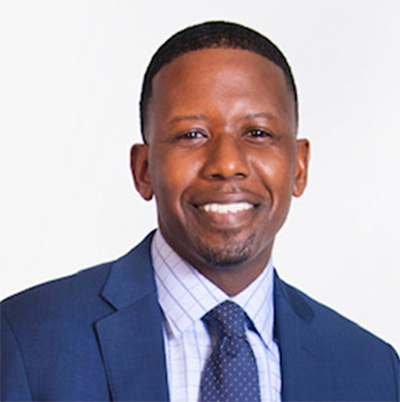
Attorney / Entrepreneur /Community Leader
Phillip Yates is an accomplished attorney, entrepreneur, and community leader dedicated to expanding economic opportunities for underserved communities. He is the founder and CEO of Equiliberty, an innovative fintech platform focused on increasing access to credit, capital, and wealth-building resources for underrepresented individuals.
Beyond Equiliberty, Phillip co-founded Diversity Fund Houston, a $3 million seed fund that invests in Black and Hispanic tech founders, and launched initiatives such as Black Entrepreneurs Week and Latino Entrepreneurs Week to spotlight and support minority business owners.
He also serves as Chairman of Impact Hub Houston, where he helps drive social innovation and entrepreneurship across the region. Recognized as an Ecosystem Builder of the Year, Phillip is passionate about using technology, mentorship, and strategic partnerships to close the racial wealth gap and empower people to achieve financial freedom.
With a background in corporate and bankruptcy law and a strong track record supporting thousands of entrepreneurs, Phillip is on a mission to create lasting, systemic change that helps communities thrive.