
 Apple Podcasts
 Spotify
 YouTube
 The new glass ceiling (Part. 3)
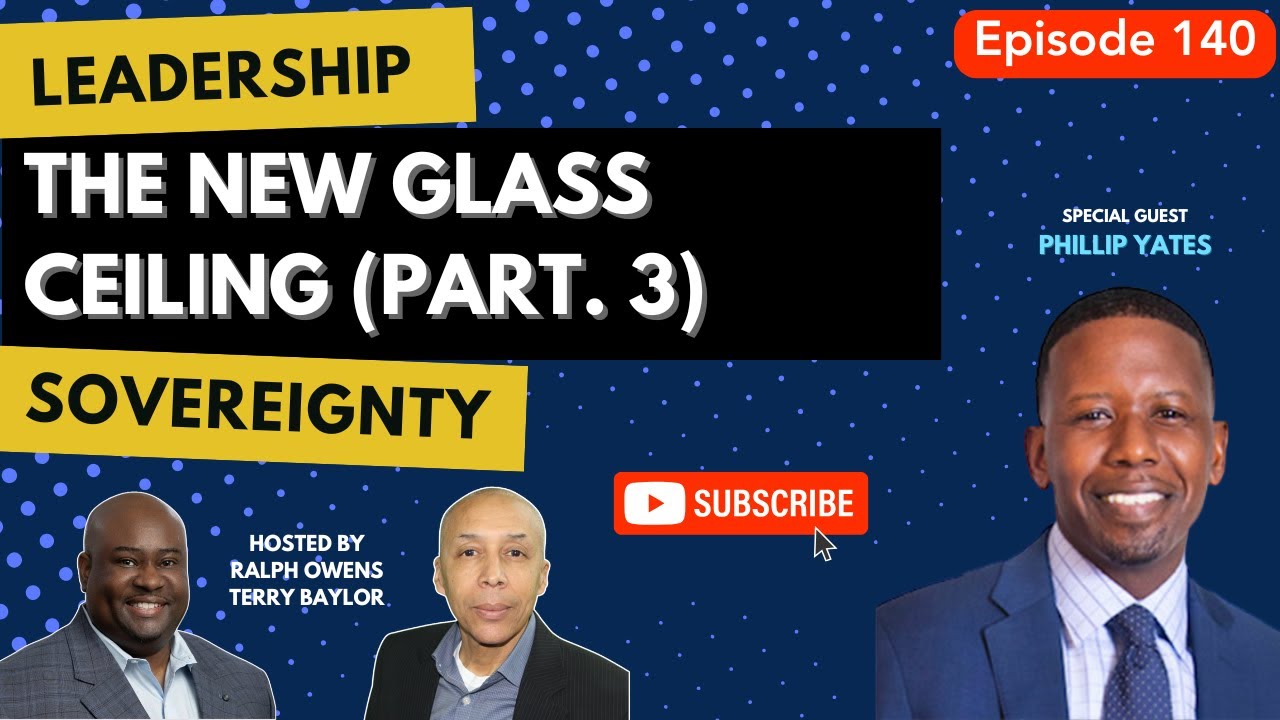
In this episode of Leadership Sovereignty, Ralph Owens and Terry Baylor engage with Philip Yates to discuss the importance of risk management in entrepreneurship, the evolving workforce landscape influenced by technology, and the significance of leaving a legacy for future generations. They emphasize the need for a mindset shift from scarcity to opportunity, the role of personal investment in one's career, and the responsibility of seasoned professionals to guide emerging leaders in navigating the current economic environment.
Takeaways
- Don't ever fear risk, manage risk.
- You don't win playing it safe.
- You have to take the risk to ascend.
- If you don't take the risk, you'll get left behind.
- You are a corporation unto yourself.
- Invest in yourself, grow it, and prepare for the exit.
- We prioritize entertaining ourselves over investing in ourselves.
- I want to leave something behind that can live on.
Chapters
00:00 The Mindset of Risk Management
04:49 Viewing Yourself as a Corporation
06:47 The Changing Workforce Landscape
10:45 Leaving a Legacy for Future Generations
16:48 The Importance of Shared Responsibility
That that's applicable to the journey of life. Right? I mean, you talk about whether you're an entrepreneur or entrepreneur. Right? There's everybody's not meant to be, you know, in a business owner.
Speaker 1:But even if you're working for an institutional organization, you still have to have that level of risk to ascend to be a chief information officer. Right? Because it just doesn't happen. Like, nobody's gonna just hand you that opportunity.
Speaker 2:Welcome to the Leadership Sovereignty Podcast. I'm your host, Ralph Owens, along with Terry Baylor. In today's episode, Philip Yates talks about the scarcity mindset. He talks about the concept of taking risks and he also talks about why investing in yourself could be your superpower in today's economy. Enjoy the show.
Speaker 2:I wanted to at least touch on one one thing too, Phil. You talked about you said that back in the day we had a mindset of scarcity, right? I sit at a different table now in my career, right? I'm exposed to a lot of other things that I've never been exposed to before. If there was something else that I know now that I can go back, I would teach my kids don't ever fear risk, manage risk.
Speaker 2:We're taught to avoid risk. And it comes through education, public education. You don't wanna fail. You don't wanna fail the test. You don't wanna fail.
Speaker 2:You don't wanna fail. That is the elimination of risk. Wealthy entrepreneurs, they manage risk because you have to take risk in order to get big gains. You don't win playing it safe, Right. But you gotta know when to play it long and when not to.
Speaker 2:So having the mindset of managing risk and not avoiding risk could be the determination between you being successful as an entrepreneur and barely getting by.
Speaker 1:Yeah. I mean Oh,
Speaker 3:that's good.
Speaker 1:Yeah. I mean, man, that's that that's applicable to the journey of life. Right? I mean, if you talk about whether you're an entrepreneur or entrepreneur. Right?
Speaker 1:There's everybody's not meant to be, you know, a business owner. But even if you're working for an institutional organization, you still have to have that level of risk to ascend to be a chief information officer. Right? Because it just doesn't happen. Like, nobody's gonna just hand you that opportunity.
Speaker 1:Yes. You can work hard and you may or may not be noticed, and that's the risk you take. It but if you say, hey. I'm gonna go build a relationship with the person who can give me the opportunity. Gonna get another certification to make sure I get that opportunity.
Speaker 1:I'm going to use general you know, generative AI to make sure that I understand all the new trends and information so that when I come in, I can speak intelligibly about a subject matter. Like, you have to have that risk appetite in order to ascend. If if not, I mean, you will get left behind. And and it's not even
Speaker 2:Right.
Speaker 1:You know, we talk about the scarcity mindset. That was a luxury in the eighties and nineties. And and I'll say even the 20 tens, you don't have that luxury anymore because Mm-mm. Robots are being built. AI is here.
Speaker 1:And so if you don't take that risk, the the federal government, I mean, no matter how you feel about, you know, the current president, the current administration, and the way they're doing, it was going to happen under, Democrat or Republican because that's where technology was taking us. They're just a little bit more crude in the the way they rolled out policy.
Speaker 3:The execution.
Speaker 1:Yeah. Execute exactly. And they were unapologetic, and it's like, no. We're human beings. And we're like, man.
Speaker 1:Wait. Wait. We pay taxes. You we we it's public schools. Like, we're we're we're the we are the welfare country where we're making sure everybody's okay.
Speaker 1:Yeah. It's still there. But the reality is if you don't take the risk, somebody else or something because of inference technology is going to replace you. And, again, don't worry about the glass ceiling, you gotta worry about the floor.
Speaker 2:Sure, sure, sure.
Speaker 3:And just to add to that too, Phil, I think one of the concepts that we like to teach around, if you are in a job, right, you are a corporation unto yourself. Right? That that's not a concept that the box or the box creators are going to teach you. Right? They they their their their their philosophy is to create although you are, sovereign, right?
Speaker 3:That's one of the reasons why we chose that that topic or chose that label for the, show is that they want you to feel dependent. Right? But you are a corporation unto yourself. Right? So, you know, as as you, alluded to earlier in in the backstage conversation is you're you're still a contractor whether you're a w two exempt or not.
Speaker 3:You need to see yourself as a contractor. Right? I'm a entity unto myself, and I'm just providing service for you. Mhmm.
Speaker 1:That that should be clipped. I want you guys I'm hey. I'm over there throwing stuff out there. That needs to be clipped. And, you know, one of the fortunate things about my journey is that I had that mindset early on.
Speaker 1:Two things, my mom, she and my dad oh, it was my mom, actually. She gave me the book Rich Dad Poor Dad. So that taught me the different mindsets of, you know, rich dad. You know, most people are familiar with that book, Robert Kiyosaki, and then poor dad. The second one was why should, white guys have all the fun?
Speaker 1:Mhmm. Reginald Lewis. And he's the first African American to have a billion corporation. He went to, HBCU, got his MBA, and then went on to Harvard Law, practice law, went on to Wall Street, and then started private equity firm and was able to do some some great things the community. So look them up, anybody, who who's listening, who doesn't who's not familiar with me, has a phenomenal story, especially for men and I'll say even men of color in terms of his his journey.
Speaker 1:But I I say that to say that it taught me that mindset of thinking of as a corporation. And so I've never I mean, I've been in corporate America before. I've had a franchise before. Obviously, I practice law, but everything was always about, okay, you only have so much time on this earth. Just like a business, there's a, you know, there's an infancy stage, there's a startup stage, there's a growth stage, the harvest stage, and exit.
Speaker 1:And I always looked at, okay. Eventually, you're gonna have to exit. What do you want that exit to look like? And you guys talked about that's it's a biblical principle, man. We we go to, you know, the end of the bible, alpha and omega, and and where we know what the end's gonna be in mind, and that governs how we're supposed to live day to day.
Speaker 1:But that's how it should be when you're your wealth building journey and your leadership journey. At this age of my life, I not only have so many years where I can sprint, be a general counselor for some corporations, have a startup that's gonna hope to do some amazing things, doing amazing things already in the community, and time my kids, time my wife. And so independent sovereignty that you speak of and God speaks of it multiple times. I don't care if you read the holy bible, the Quran, and the Torah, and all the other books that are all very similar. That's what it's all about.
Speaker 1:And so you have to invest in that time because that is the only resource that is is finite. It's gonna run out. And so much like a company, invest in yourself, grow it and prepare for the exit.
Speaker 2:Yeah. Yeah. Yeah. We could tie that in so many different directions. Right?
Speaker 2:Because we talked about that. Right? Are you investing or are you entertaining?
Speaker 3:Yes. Yes.
Speaker 2:We prioritize entertaining ourselves and we deprioritize investment in ourselves.
Speaker 1:On that phone, just
Speaker 2:All day. Yep. All day. Yep. Yep.
Speaker 2:Yep. Yep. So let's talk about workforce in itself and how it's shrinking and how it's changing as compared to even when we first entered the workforce. I like you had some interesting comments on that.
Speaker 1:Yeah, I mean, I think if, you know, And and and by no mean, I'm in my economist, but, obviously, someone who's in the workforce, I've kinda followed, and I do try to stay abreast of things that come down federal and state government. But if you look at, I think, was the Clinton administration. That was when you start seeing certain public, or I'll just say certain sectors, you know, basically being privatized, giving independently wealthy people an ability to go in there and say, hey, we're going to create a company, government you pay us, and it's no longer governed by tax dollars, which means it has, you know, no red tape, or has some bureaucracy, I'm sorry, bureaucracy, you know, in order to make sure they're doing they're doing. I bring that up because when you have somebody who's independently wealthy, whose only job is to increase the amount of wealth of their shareholders, even if it's them individually or they have a collective group of investors, they make decisions based off of the bottom line. They make decisions on profitability.
Speaker 1:And so once we get that understanding, and obviously, we know what's happening now, all you do is turn on TV, they they they're trying to get rid of departments that are responsible for the growth and development of taxpayers. Maybe it's right, maybe it's wrong. Like we talked about backstage and we alluded to earlier, it's execution of what they're doing. We don't know what it looks like, and that's the fear. But as individuals and family members and people in the workforce, we have to take that in consideration about the shrinkage because as people, take over certain sectors that generally stood up on their own and had frontline workers, middle management, senior workers, executives, board board owners mean, board board directors and shareholders, you now have technology coming in and saying, hey, we can do this faster.
Speaker 1:We can do it more efficiently. We're gonna remove human error. By the way, we're gonna save you money. You're gonna make more money. So now it's changing.
Speaker 1:We don't need to hire some of those frontline workers. The jobs when I when we came out of college or came out of the military or entered the workforce, it's like, hey. You get two years of experience. We'll give you a job. By the way, we'll give you an internship.
Speaker 1:You know somebody? Come on. I got you a job.
Speaker 2:Yeah.
Speaker 1:I'm not taking that risk out. Like, I mean, I I still get internships in my law firm, but the reality is I can use chat GPT, pay $20,120 dollars an hour. It's better than most clerks. It's definitely gonna be better than any intern or any, you know, three year, college student because they're pulling information. And so no matter if you're gonna be a lawyer, a doctor, an engineer, you know, logistics, a chef, whatever, you know, I can go to all the industries, you now have to know that the owner of the company, the shareholder, the CEO, the person who started it, is making decisions based off their family, based off their show shareholders, and you're not gonna be considered.
Speaker 1:And there's it's gonna be hard to enter because there's something called technology that has more information experienced than you and is cheaper. Mhmm. Mhmm. And it's not in that person's interest to invest in you. And so Yes.
Speaker 1:What do you do now? Because that glass ceiling that my dad was working for, hey. He was proud to be sitting next to the market leader of that bank. He was proud to be with the national CEO on that stage or meeting presidents. Mhmm.
Speaker 1:Why would they put you up there if they can use AI to replace you?
Speaker 2:Right.
Speaker 1:That's a serious conversation that we have to have at our age because we often replace, but certainly with up and coming leaders are people who are emerging leaders who may not have as much experience that we have, which may give us a little bit more security of the economy.
Speaker 2:Yeah, absolutely. No, I think that's fantastic, man. I hear a lot in that. I hear, we as those who have become senior in our professions, right. We have a responsibility to teach the younger folks who are entering the workforce, the blueprint now as it is today and not what it was when we came in.
Speaker 2:Right. So many times we get, I've seen those who get stuck on, well, I had to do it this way. So you gotta do it that way. Well, if you do it the way I did it, it's gonna, you're not gonna get to where you're trying to go. I've seen the market change.
Speaker 2:I love this analogy. And I think it was Bishop Jakes who said this, it was that a man has to look at himself as almost like a football game. You got four quarters in life. I'm in third quarter of my life. I'm 51.
Speaker 2:I'm in the third quarter of my life right now. Right? I have to get a certain amount accomplished in this third quarter before I reach the fourth quarter. Well, in this third quarter, thanks to god, I'm able to be in a senior role in my career And I see how things are coming together to your point, right? With AI in the introduction of technology, because technology changes careers.
Speaker 2:If I'm coaching someone, if I'm telling them something about how to be successful in their career, I have to give the sound advice based on what the current landscape is today. Right. Not based on what I had to go through, because yeah, I took my licks. You gotta take your licks. No, no, it's it's not like that.
Speaker 2:You have to have a better strategy. Right? But, Terry, can't wait to hear your comments on this.
Speaker 3:So so I think there's a there's a there's a natural element to this, and there is a from a spiritual context and then of course from a natural. So basically the Bible talks about a good father leaves an inheritance. So the crux of everything that we're doing is about setting up the next generation on a natural level, a spiritual level, a social level, an economic level. And there are also, Ralph, we've talked about this, there are five levels of relationship. Right?
Speaker 3:There are contacts, hey, hi, bye. There are associates, hey, let's go get a cup of coffee, right? Something you guys have in common. There are people who are partnering with you, hey, we call it the ride or die, Right? And then you have mentors and mentees.
Speaker 3:When you get into that partner, mentor, mentee area of people relationship in your lives, there's a level of responsibility because of the proximity that those people have in our lives. So I see myself as a father, right, in a sense, I am leaving you an inheritance, Right? This information is an inheritance. One of the main reasons one of the main reasons so to your point, Ralph, I'm in the third quarter too. And, Max, I'm I'm like, it's it's about seven minutes in the third quarter.
Speaker 3:I got seven minutes left in the fourth quarter. I gotta score. I gotta get I gotta get a score. Right?
Speaker 2:Right.
Speaker 1:I don't know, man. I'm thinking about my life. I'm like, oh, man. Time out. Time out.
Speaker 1:Right? Exactly. Exactly.
Speaker 3:I need to throw a flag. I
Speaker 1:need a challenge.
Speaker 3:Something. Right? But what's what's super critical about that is this. Right? A few years ago, Ralph, and you'll remember this.
Speaker 3:So Ralph, our lives intertwine on so many different levels.
Speaker 1:A few
Speaker 3:years ago, I was listening to NPR and it was Johnny Cash's daughter and she had a list, I think I've told this story before, but he gave her a list of a 100 songs that every American artist should do because these are American classics. So he didn't limit it. Right? If you rock, if you're pop, if you're rap, these are a 100 songs that every American artist should do because they culminate the American story. Right?
Speaker 3:So of course she was on her own journey. She didn't want to have anything to do with it. Well, after her father passed, she got the list. And then the list became an endearment to her. Right?
Speaker 3:So she, of course, she went and created several albums. After listening to that, I thought to myself, I gotta leave something. I want my kids and the people who are most important to me understand what I value. Ralph, that that was the birth of Praises to the King, that record we did.
Speaker 2:Oh, wow.
Speaker 3:But out of that, I start looking at my life through that lens. I need to leave something behind
Speaker 2:that
Speaker 3:those who are dear to me can grab hold to as a legacy, right? Because I want my intellectual knowledge to live as well. So now when you get the economics that we're leaving, now you can understand why I did what I did. So leadership sovereignty is a part of that legacy. This information will live on.
Speaker 2:Thank you for listening to the Leadership Sovereignty Podcast. If this content blessed or helped you in any kind of way, support us today by subscribing to our YouTube channel, clicking the like button for this episode, and sharing this content with others that you think it will help. Until next time, stay safe, peace, and blessings.
Attorney / Entrepreneur /Community Leader
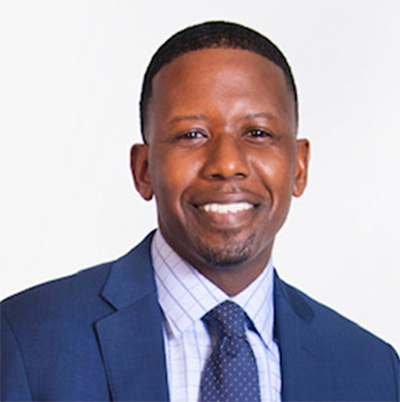
Phillip Yates is an accomplished attorney, entrepreneur, and community leader dedicated to expanding economic opportunities for underserved communities. He is the founder and CEO of Equiliberty, an innovative fintech platform focused on increasing access to credit, capital, and wealth-building resources for underrepresented individuals.
Beyond Equiliberty, Phillip co-founded Diversity Fund Houston, a $3 million seed fund that invests in Black and Hispanic tech founders, and launched initiatives such as Black Entrepreneurs Week and Latino Entrepreneurs Week to spotlight and support minority business owners.
He also serves as Chairman of Impact Hub Houston, where he helps drive social innovation and entrepreneurship across the region. Recognized as an Ecosystem Builder of the Year, Phillip is passionate about using technology, mentorship, and strategic partnerships to close the racial wealth gap and empower people to achieve financial freedom.
With a background in corporate and bankruptcy law and a strong track record supporting thousands of entrepreneurs, Phillip is on a mission to create lasting, systemic change that helps communities thrive.