
 Apple Podcasts
 Spotify
 YouTube
 The new glass ceiling (Part. 4)
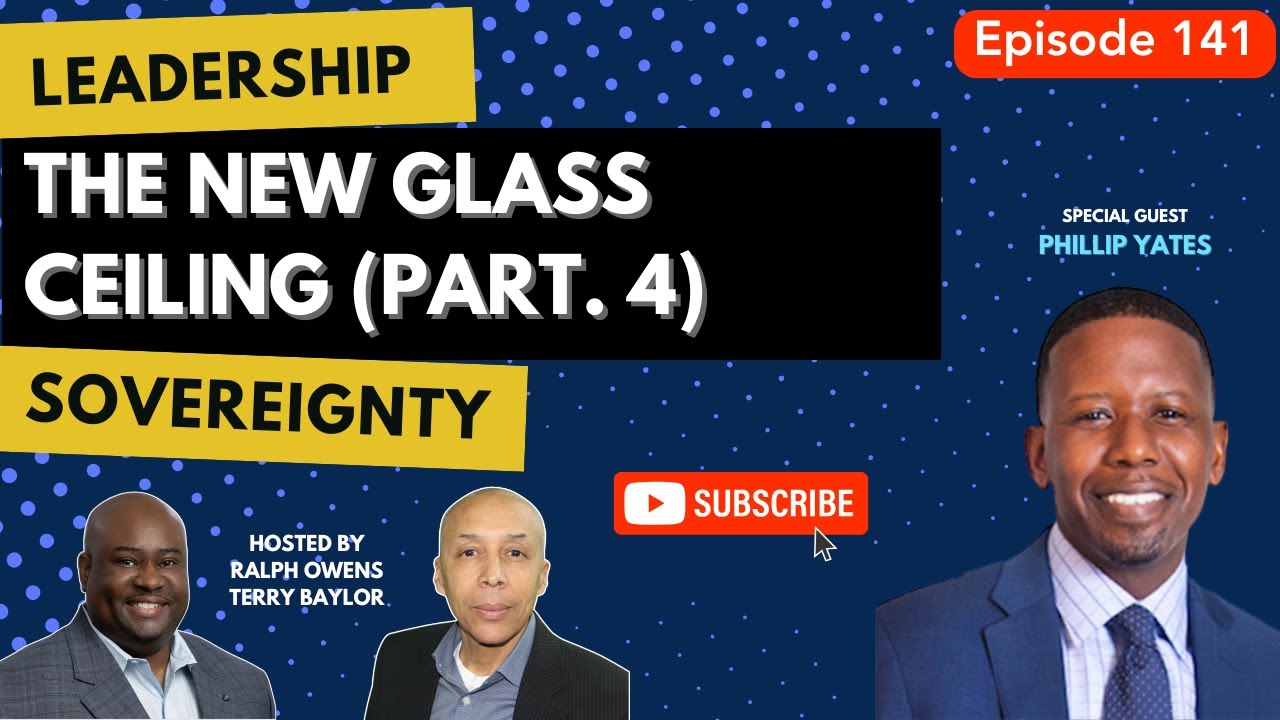
In this episode of Leadership Sovereignty, Ralph Owens and Terry Baylor engage with Philip Yates to discuss the intersection of community, legacy, and technology in wealth building. They emphasize the importance of investing in people as a pathway to lasting leadership and economic empowerment. The conversation explores the role of technology in creating opportunities, overcoming barriers, and fostering entrepreneurship, while also addressing the need for a new blueprint for future leaders.
Takeaways
- Investing in people is essential for lasting leadership.
- Community and legacy play a crucial role in wealth building.
- Technology can bridge gaps in economic empowerment.
- Creating opportunities requires overcoming systemic barriers.
- The importance of experiential capital in wealth creation.
- Binary economics emphasizes ownership for productivity.
- Access to information is vital for entrepreneurial success.
- A new blueprint is needed for future leaders.
- Wealth building should be inclusive and accessible.
- Exposure to opportunities can change lives.
- Empowering Communities Through Wealth Building
- The Intersection of Technology and Economic Empowerment
- "You don't have to stay where you are."
- "You are the CEO of your life."
- "It's an exposure game."
Chapters
00:00 Leaving a Legacy for Future Generations
00:35 The Importance of Shared Responsibility
05:26 The Role of Technology in Education
08:01 Creating Pathways to Wealth
★ Support this podcast ★In this episode of Leadership Sovereignty, Ralph and I continue our conversation with Philip Yates to explore how community, legacy, and technology intersect in the pursuit of wealth building and why investing in people is the true path to lasting leadership and economic empowerment. Enjoy the show.
Speaker 2:Absolutely.
Speaker 1:This information will live on forever. And
Speaker 3:That's right.
Speaker 1:The the hope is that folks who are in our proximity, right, and the reality is this, Because of our village, the folks who are in our proximity are probably gonna be the folks that are, had the same struggles that we had, had the same struggles that our fathers and our mothers and our aunts and uncles and Pookie. Right? The you know? But now we can we can teach them, you don't have to stay where you are. You see these guys say, did you hear did you hear about this guy, Phil Yates?
Speaker 1:Man, because I can't wait to get to the fintech side of this. Right? I got to hear that story. How what was the launch? What happened?
Speaker 1:What drove you to do that? What how did you overcome the risk barrier? Right? What obstacles? Who were the gatekeepers trying to keep you up?
Speaker 1:Because I know they're there. They're always there.
Speaker 3:Hey. You know, I I feel like I talked to you guys for a while in which it goes back to what you just said, like mine, like upbringing, obviously like similar experiences. So kudos to you guys for creating this platform because you're right, people who are one, two degree separation, people in close proximity are gonna benefit from this, and this is a part of your legacy. And I think that's where it comes down to, you know, we talked about every, your audience and us as individuals looking at our life as being business owners. Are the Well, I think we're a little bit past that, we're the shareholder.
Speaker 3:And so in law, there's a shareholder responsibility. In fact, we've seen it even govern or at least dictate the economic and political climate that we have here in The United States and really globally. Some people in the world that say, Hey, more people should have access to as many resources and I'm gonna get my wealth or force companies to do what they will. Other people say be more conservative, wanna make sure that those who are independently wealthy, they get the experience. And so that's what the shareholder responsibility is.
Speaker 3:But as of your life, you're talking about as a leader, you have a shareholder responsibility to make sure obviously you're doing well, but then you start talking about that inheritance. And I'm gonna get to the FinTech about this because the first thing for me was, okay, let me set myself up to make sure I have the foundation. So that's where I got experience, either working in corporate America, I got experience working at the Urban League, and then I went to law school. I was fortunate enough to do some great things on my own farm. And then I got picked up as a general counsel, which to your point, Ralph, of solidified my profession.
Speaker 3:And I don't know if I'm in the end of the second quarter or starting the third quarter, but I'm about to I'm about to call a replay instant replay with garlic. Garlic. But this film, I think I need to listen to fifty more years. But the reality is it was a company called Direct Digital Holdings. And so they are the ninth company in the history of the stock exchange that are all black are majority Black owned to go public.
Speaker 3:Was their general counsel here, they're here in Houston, Texas. They have a subsidiary in California, a subsidiary in Georgia, and we did business all across the world. And it was a phenomenal experience while I was with them. So I had that as a foundation to say, hey, you've done what you're supposed to do in law. And I still do great things in law in the federal state, from helping somebody I feel like they need a voice in criminal court to saving people's assets and bankruptcy and still help people grow their corporations.
Speaker 3:But we start talking about that shared responsibility and investing in people and that inheritance. And like you said, this platform is something you know is gonna be a part of your legacy. While I look at the community, I said, you did this thing in law and you see there's gaps and deficiencies in people who have similar experiences as you. Then the work I did at the Urban League, created a program alongside Judson Robinson, obviously shout out to the Robinson family and amazing things they've done here in Houston, Texas. Eric Goody, who's the senior director and director at the Urban League here in Houston.
Speaker 3:I was able to start a program called Small Business University and Entrepreneurship Center. And so you see these, you see people who develop these dreams and aspirations and they go to this program, they're doing everything from, you know, coming to class, they're doing everything you tell them to do, pitch competitions, the whole nine yards, things you see on the internet, but they're still The not living out their way Terry spoke about his dreams, way Rob was speaking about his dreams, the way I'm passionate about things I've been able to do with law. And that's a problem for me because in our Bible, it does say we have a responsibility. He gives you the care, he gives you the curse. You gotta decide which one you're gonna beat for his people.
Speaker 3:And you talked about Psalms earlier. I think if you read Psalms and Book of James, you can be a hell of a human being. Excuse my language. But those are the perfect books. Like, you don't, I mean, just read them, you'll be okay.
Speaker 3:And so that's where Equal Liberty was born. There's a guy by the name of Lewis Kelso. He's an economist. And so he was a lawyer and economist. He created the, employee share ownership plan.
Speaker 3:And so what I learned from him was binary economics. And binary economics, essentially what he said was when he created that ESOP is that for people to be productive and to live inside corporations, you have to give them ownership you have to invest in them and then that would increase their productivity. Right now you have everybody being consumer, so they're consuming stuff that you give to them. And that kind of goes back to the analogy that Terry had with the bots and what public school sometimes does. And no discredit to public school because I'm a proud graduate of public school and I'm doing some great things, but sometimes every kid needs something different and sometimes they don't have the luxury in public schools to invest or develop, like you said, Ralph, and invest into those kids.
Speaker 3:And so I say with Equal Liberty, let's create let's use technology to create that box. Let's, you know, we're talking about targeted, you know, people are familiar with geofencing, which I'm sure both of you guys are, and I know, obviously, Rob, your background in technology, so geofencing technology using geocoding. So, matching up, you know, federal data, state data, local data, also, but using generative AI, which we have a partnership with Amazon, we have partnership with Plaid and using the financial data to say, hey, everybody has to be independently wealthy in this new economy. And so let's go into the areas where there's the most deficit using true data, bring in our partners. When I talk about being a convener, we have a partner with JPMorgan Chase, and who's the number one financial institution in the world and many other banks and other nonprofits and say, how do we speed up this process?
Speaker 3:So going back to binary economics, here you are, you have people or consumers, and we talk about race, which is not just a race thing, it's an America, it's a people thing. Blacks, you know, we spend trillions of dollars, whether it's through credit or it's just through money of our own, but they talk about the dollar that we invest in our communities. Unlike some of our other, our counterparts, I think it leaves our community some, like I said, a couple minutes, an hour, I forgot the actual stat, but we all know that we're not independently wealthy. And you look at the Hispanic community, they have similar daunting numbers in terms of trillions of dollars that are leaving, but it's not being invested. We know what the end of that looks like.
Speaker 3:We talked about the extra strategy. So we can't, we've had equal liberty to say, let's go in there. Let's help people, whether they're an entrepreneur or entrepreneur, create their own pathway to building wealth using AI and using machine learning, and let's speed that process up. So let's speed it up because there's no problem with the economy. There's no problem with banks.
Speaker 3:There's no problem with investors. There's no problem with our workforce. It's the, it's the fact that, like you guys said, you have to create a new blueprint, a new book for these up and coming leaders in the community, in their household, give them the new rules then allow them to play the game, give them some experiential capital. Because I'll leave, I'll leave, I'll leave with this point because I know you guys may have a question about equal liberty or just things, and let's talk about this conversation. Say, if you're a teacher, you may have a, you know, internship.
Speaker 3:You're a lawyer, you're a clerkship, you're in med school, you know, you have to, you know, do externship. I mean, every practice you have to get experience except for building wealth. So without getting into race, gender experiences of people in American workforce in terms of that process, there is no playbook. And so why is that? I don't know.
Speaker 3:But that's what equal liberty said. Let's figure out a way to create capital, lower the barrier to capital markets, get people that experience. And what you said earlier was allow them to fail, Terry. People are gonna fail. So you have to increase the risk for people traditionally don't have capital, but the numbers are going to numbers.
Speaker 3:You said something earlier, you said, a 100 nos, 20 yeses. When I had my franchise in insurance, that's what we talked about, sales and, you know, it's a numbers game. That's what it is for all entrepreneurs. So if you give people you give Pookie a chance, Pookie's gonna make it. Pookie's gonna Pookie
Speaker 1:Because but here's what we know. Pookie go get that hustle game on. Don't worry about it.
Speaker 3:He just did this amazing. Successful for three years before he gets caught. So let's think if he didn't have to sell drugs and he decided to create a food truck. Now we got 10 food trucks that are 10 drug dealers on the block risking the rest of his life. Yes.
Speaker 3:Yes. Yes. Yes. That's good.
Speaker 1:I really I really appreciate what you're saying too. Right? Because it's one of those classic situations where the information is I don't wanna say you know, I wanna be very I'm not saying that it's being hidden, but what I will say is it's not freely available, that playbook. And so there are you know, I'm you know, because of my kids and their experiences and exposures, I'm being exposed. Right?
Speaker 1:I'm being exposed to a new set of people because of places and things that doors that have been opened for them based on their talent and skills and and and ability to communicate. And I'm like, Wow. Man, I I can't buy them a future yet, but these people can go buy futures. And so you start to see that right, and so you're like, oh. So now you start having dialogue and conversations, and you're like, oh, okay.
Speaker 1:Okay. That's that's how that's done. Well, we're just not ex it's an exposure game. Right? And unless you get in the right to Ralph, to your point, you say you're learning things now about outside of IT because of the seat you're sitting in.
Speaker 2:Thank you for listening to the Leadership Sovereignty Podcast. If this content blessed or helped you in any kind of way, support us today by subscribing to our YouTube channel, clicking the like button for this episode, and sharing this content with others that you think it will help. Until next time, stay safe, peace, and blessings.
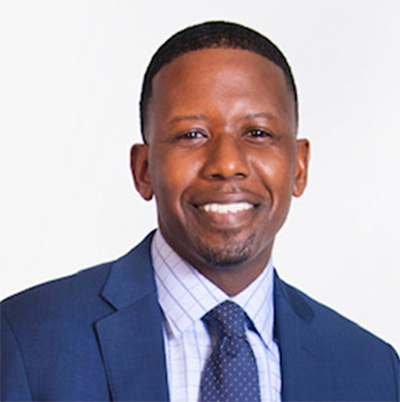
Attorney / Entrepreneur /Community Leader
Phillip Yates is an accomplished attorney, entrepreneur, and community leader dedicated to expanding economic opportunities for underserved communities. He is the founder and CEO of Equiliberty, an innovative fintech platform focused on increasing access to credit, capital, and wealth-building resources for underrepresented individuals.
Beyond Equiliberty, Phillip co-founded Diversity Fund Houston, a $3 million seed fund that invests in Black and Hispanic tech founders, and launched initiatives such as Black Entrepreneurs Week and Latino Entrepreneurs Week to spotlight and support minority business owners.
He also serves as Chairman of Impact Hub Houston, where he helps drive social innovation and entrepreneurship across the region. Recognized as an Ecosystem Builder of the Year, Phillip is passionate about using technology, mentorship, and strategic partnerships to close the racial wealth gap and empower people to achieve financial freedom.
With a background in corporate and bankruptcy law and a strong track record supporting thousands of entrepreneurs, Phillip is on a mission to create lasting, systemic change that helps communities thrive.