


 Apple Podcasts
 Spotify
 YouTube
 The Soul of Leadership Part. 3
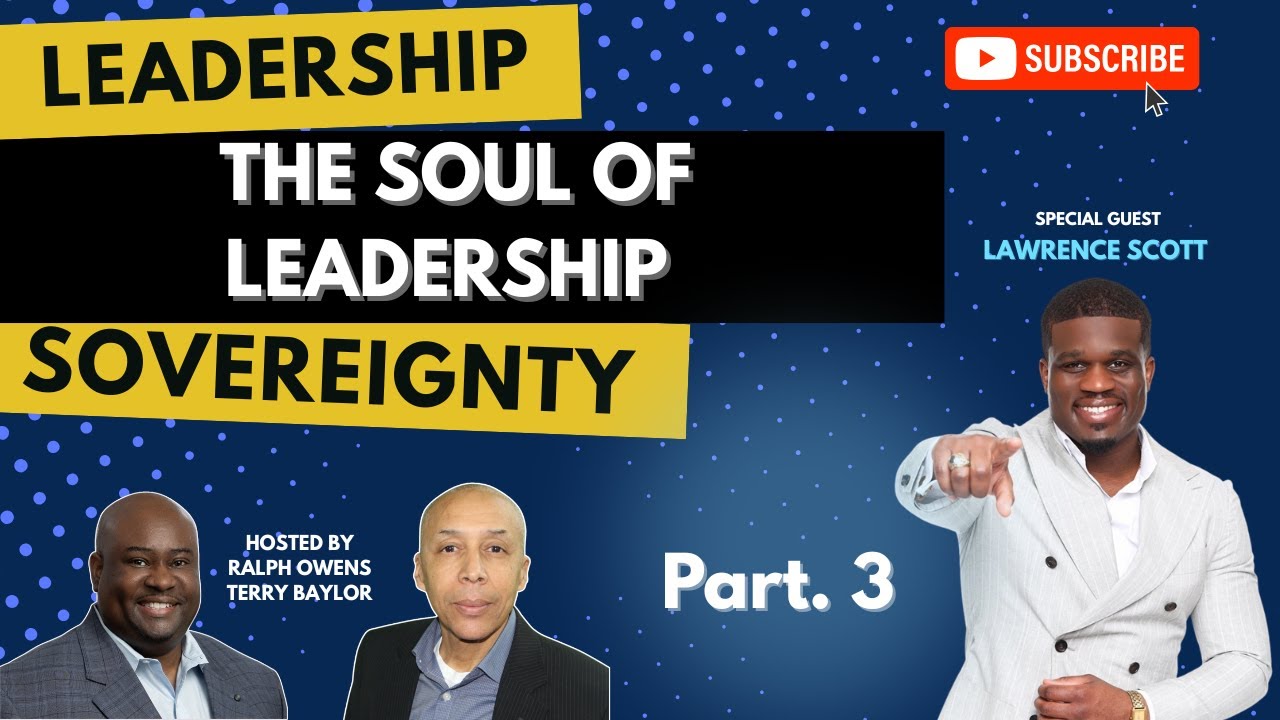
In this engaging conversation, Ralph Owens, Terry Baylor, and Lawrence "LoSco" Scott explore the significance of affirmation in leadership, the importance of self-awareness, and the dynamics of influence. They discuss how leaders can empower their teams by recognizing strengths and fostering a supportive environment, while also emphasizing the need for personal growth and humility in navigating professional relationships.
Key Takeaways
- The environment we grow up in shapes our perception of affirmation.
- Leaders should affirm strengths to enhance productivity.
- Acknowledging strengths can lead to greater personal development.
- Words of affirmation are essential in leadership roles.
- Self-awareness is crucial for effective leadership.
- Humility requires a deep understanding of oneself.
- Recognizing the humanity in leaders helps in navigating influence.
- Everyone has a giant within them that needs recognition.
- Intentionality in leadership fosters a positive environment.
- Awareness of one's value is key to personal growth.
Speaker 1:
The way that somebody sees you determines the way that they receive from you. Mhmm. If I see you as someone who's supposed to help make me better Mhmm. Then I'm going to receive everything you say. As if it's supposed to help me get better.
Speaker 1:
If you wield that influence in a way that degrades me, that puts me down, I internalize that just as or it or even more strongly. So our words, man, as leaders in these spaces are so important to those that we lead.
Speaker 2:
Welcome to the Leadership Sovereignty Podcast. I'm your host, Ralph Owens, along with Terry Biller. In today's episode, Lawrence touches on the power of a leader's ability to affirm those that they lead. The power of a leader's words and the impact that they have, and how giants may be big, but they are not gods.
Speaker 1:
I think for me, I hadn't necessarily, and we could talk about this, like growing up in the environment I grew up in, it wasn't necessarily an environment where you got a whole lot in the way of affirmation about like, yo, you know, you, you gotta, you, it was always like a, you gotta do better, you know? Right. It was always that. So I think what that moment showed me was the power of like, of a leader's ability to affirm those that they lead in such a way that increased productivity. So it's like, I'm not gonna lie to you and say you're good at something you're not.
Speaker 2:
Right.
Speaker 1:
But I am going to affirm those things you are good at so you get even better at that. It's this idea that if I only point out your weakness, you're only focused on your weakness. But if I point out your strength, you can get even stronger in that area. Right? I can out if if I'm in an organization where, I have the resources or or or the avail I I call it the, the resource of availability, right?
Speaker 1:
Where you have people, right? You just have personnel. I might not have everybody that I'm paying whatever, but I if I can, like, move things around, move tasks around, I can delegate your weakness to somebody else.
Speaker 2:
That's right. That's right.
Speaker 1:
But I want you to get even better at the thing that you're strong at because you become even more of an asset. Right?
Speaker 2:
That's
Speaker 1:
right. So, it really spoke to me about like our abilities to, leaders, especially in positions of influence, because again, I looked at that freshman English professor as someone who's a subject matter expert, someone who is looking at this raw material that I'm bringing into the room to help cultivate it into an even better communicator through writing, reading and writing. I'm thinking that that's what he's going to do for me. And he's looking at me saying, I will not do that for him. But I don't know what's in his heart.
Speaker 1:
So I go into it trusting that that's what they, that's what he's gonna do. And then just grateful to God for this, that the next year I had a professor who was actually willing to do that and to point out those things. So it's like the way that somebody sees you determines the way that they receive from you. If I see you as someone who's supposed to help make me better, then I'm going to receive everything you say as if it's supposed to help me get better. But if you wield that influence in a way that degrades me, that puts me down, I internalize that just as, or it, or even more strongly.
Speaker 1:
So our words, man, as leaders in these spaces are so important to those that we lead, man. That's why a simple thank you is always important. It's not suggested, it's necessary. A simple good job. And I remember I took an assessment and I scored very low in enablement.
Speaker 1:
I'm just not like, my brain is always thinking about the task at hand. Like what do we have to get done? What's where are the gaps? I'm always problem solving.
Speaker 3:
Right.
Speaker 1:
Right. But that wasn't a, that was an awareness thing for me where I had to learn, oh no, no, no, no, This isn't just something that's nice. It's necessary. So I have to be intentional about that. When I go and I look at my teams, spaces I'm leading, I have to go and make sure that I let them know that I trust them.
Speaker 1:
I have to let them know that they're good enough. I have to let them you know what mean? Like, I have
Speaker 2:
to use
Speaker 1:
that because they're looking at me for that. Right.
Speaker 3:
You know what's funny? I just had that conversation with Raf the other day, and you were helping unravel that ball of yarn for me or peel that onion because I told Ralph just this week, Man, I have to be very conscious because I'm so looking at what I got to get done or what we have to do. And I think that goes back to that background of you always have to be getting better or doing more to either show your value or prove to yourself that you're worthy of what it is you're doing. So in essence, around you is now working at 110 like you.
Speaker 1:
And
Speaker 3:
then that self awareness is very critical. So Lawrence, let me ask you this. And I got some ideas about it, but the person who is in that role of being influenced, what are some tools and methodologies and just points of awareness that they can exercise or some kind of checklist or anything to help evaluate, okay, what type of leader is this? Because again, we're in vulnerable situations where we're trying to navigate how much and I'm going say this, Your dad would tell me this all the time. He'd say, T.
Speaker 3:
And you know what he told me? He said, Your great grand and I'm going get into this. He said, Your great grandfather would say this, You gotta take the meat. I'm sure you've heard this, right? And throw away the bones.
Speaker 3:
How do we do that in a situation like that? What are some methodologies? Now that you've been there, right? Because again, the environments that we came out of, and here's the other difference too, the environments, although they were very what's the word I wanna use? Regimented, I'll say.
Speaker 3:
That's probably one word we can use. They meant well. The idea wasn't to tear you down to leave you down. Was to
Speaker 2:
try
Speaker 3:
to build you you know, get some calluses on your hands, so to speak. Right? You know what I'm saying? Yep. Ultimately, to make you stronger.
Speaker 3:
But in this scenario, right, it's feeling like the same thing because it's challenging, challenging, challenging, but there's never a, hey, I see you. I see it. It's coming. You're doing better. So how did yeah.
Speaker 3:
Anyway, that's so how do you well, how do you answer that?
Speaker 1:
Yeah. So the first thing that I would suggest is to always remember and bring to the forefront of your mind that giants are just giants. They're they're not gods. That's the first thing. Remember that.
Speaker 1:
Right? Giants are just giants. They might be big. They might be important. Right?
Speaker 1:
But at the end of the day, they're still human. Right? There's, there's, there's no extra or supernatural thing that they have outside of the fact that they're just bigger right now. I think that's important because sometimes we look at giants or important people, people of influence as if they have something that we don't.
Speaker 3:
And
Speaker 1:
it doesn't mean that we don't honor or reverence or just like have respect for them and for the work that they've done and for the positions that they've attained. But it is important to remember that they're fallible. So you, the way that you receive something like, you know, and I don't know, I don't know how your listeners, like the makeup of your listeners. But I know for me, I believe in God. Mhmm.
Speaker 1:
And the way that I might say something to God in prayer or like receive something from God is different than I would from a human being. I don't assume, I might not agree with everything, but I don't, like when it comes to God, I assume even if I disagree that I'm wrong and God's right. Right. Right. Not not so.
Speaker 1:
With the giant. With the with the giant. Right? Yeah. Because because giants fall.
Speaker 1:
They make mistakes that right? So it's so I think that's the first part. But then I think the second part too is to remember that, there's a giant in you. I think it's important for people to recognize their own sense of significance and importance. Not self inflation, but self importance.
Speaker 1:
Right. It's like, don't elevate myself higher than I should do that. Right. I don't assume that I have something that I don't have and I have to work at my own awareness. It's funny.
Speaker 1:
I always tell people that, humility actually requires awareness.
Speaker 2:
That's good. That is good.
Speaker 1:
Because how could I be Mhmm. If I wasn't first aware of myself? Yes. At whatever level I'm at in life.
Speaker 2:
That's right.
Speaker 1:
That's right. Can we dig in right there a little bit? Humility. Oh, man. That's good.
Speaker 1:
And and so humility requires awareness. Mhmm. But awareness is not arrogance.
Speaker 2:
Correct. Yes.
Speaker 1:
Right? Yes. So because I'm aware of myself, it does not mean that I'm arrogant. Right. I'm just aware.
Speaker 1:
Right? It's it's the difference between the guy who's been a carpenter for forty five years, who charges you $10,000 to carve a table, and the one who's been a carpenter for forty five days, who charges you a 100 to carve the same table. You're looking at the one who's charging you all of this money saying, You must be out of your mind. You're arrogant. You're prideful.
Speaker 1:
Like, why do you think that it's worth it? And he's like, Hey, listen, I'm aware that the amount of craftsmanship that I'm bringing, the amount of experience that I'm bringing, it's worth what I'm charging. I'm aware of my value. Now watch this. The one who's been the carpenter for forty five days is also aware.
Speaker 1:
Mhmm. That's why he's only charging you a $100.
Speaker 2:
That's right. That's right. That's it. Yes.
Speaker 1:
He's aware. He's like, I'm not at that level yet. One day I will should should I remain faithful to the craft and continue to get better? Both gentlemen are aware. Mhmm.
Speaker 1:
One is not humble because he charges you a $100. And the other one is not humble or arrogant because he charges you 10,000. Right? Mhmm. They're both aware.
Speaker 1:
Mhmm. Awareness sits between understanding your value, but not considering yourself to be above anyone else in terms of, like, internal human value because I'm aware of my value.
Speaker 2:
Thank you for listening to the Leadership Sovereignty Podcast. We hope that you not only enjoy the content, but gain something to help you on your leadership journey. Feel free to reach out to us on X, Instagram, and LinkedIn under the handles Leadership Sovereignty. And until next time, stay safe, peace, and blessings.