

 Apple Podcasts
 Spotify
 YouTube
 The Soul of Leadership Part. 4
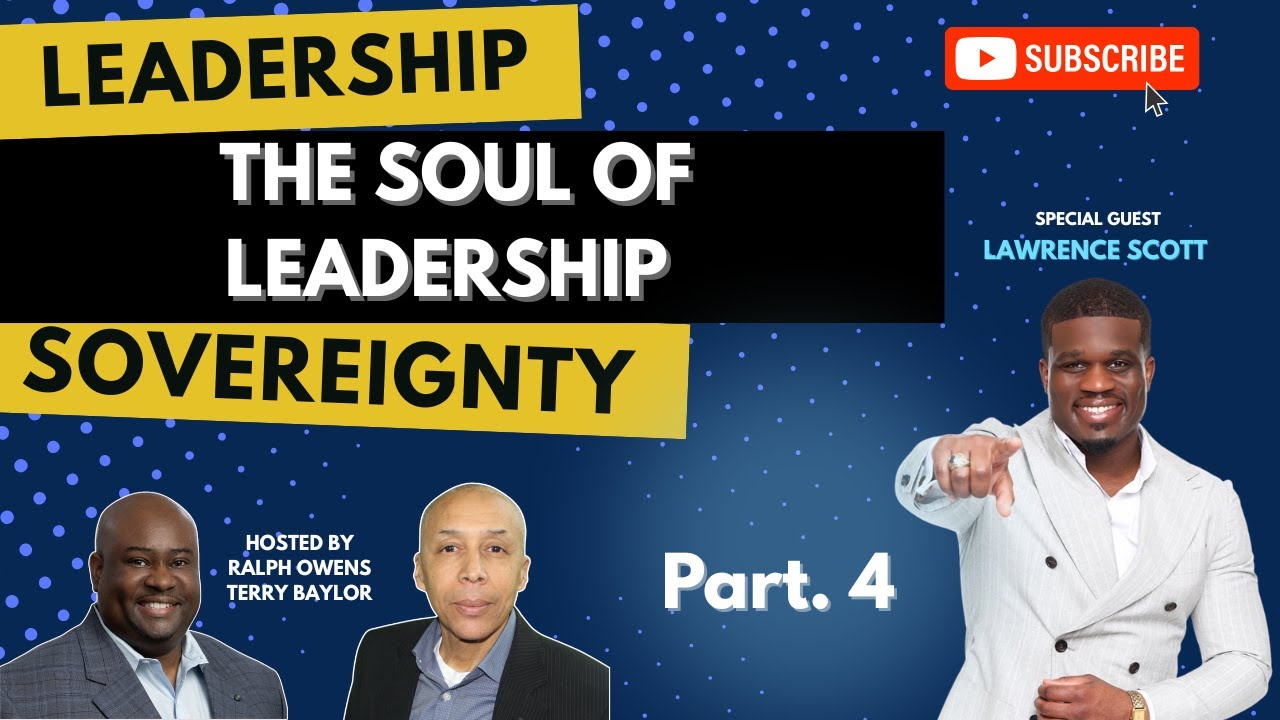
In this conversation, Ralph Owens, Terry Baylor, and Lawrence "LoSco" Scott delve into the nuances of leadership, emphasizing the importance of awareness, humility, and the ability to influence those in higher positions. They discuss the significance of responding to adversity with integrity and the impact of betrayal on emotional needs, advocating for a proactive approach to personal growth and leadership.
- Awareness is crucial for humility and avoiding arrogance.
- Everyone is both an influencer and influenced in their roles.
- Leaders must adapt to changes in their environment.
- Trust is built through competence and character.
- Responding to adversity defines true leadership.
- It's essential to understand what motivates your leader.
- The story you tell yourself can keep you stuck.
- Betrayal fractures basic emotional needs like security and acceptance.
- You must process your experiences but not dwell on them.
- Moving forward is key to personal and professional growth.
Speaker 1:
Hey, listen, man. I don't get it, if I'm honest with you. He's he's he's very techy. I was like, I I don't understand it. I don't even know that this is gonna work,
Speaker 2:
but I trust you. Like And I know that something like this, you've done the research on. I've seen you do that. So because of that, I told him, go for it.
Speaker 3:
Welcome to Leadership Sovereignty, the podcast. Today, we discuss with Lauren Scott the importance of awareness and humility in leadership. How all have the dual role as both influencers and the influence and responding to adversity with integrity fostering personal growth.
Speaker 2:
Awareness sits between understanding your value but not considering yourself to be above anyone else in terms of, like, internal human value because I'm aware of my value. Right? Right. That's sitting at that center. So you have to be aware of yourself.
Speaker 4:
That's good.
Speaker 2:
Now, I say this to everyone who's in those positions of influence and everyone who's in positions of being influenced, because the truth of the matter is we're always both. We're always both. You Even if you are the the janitorial service provider at a hotel
Speaker 4:
-Mm
Speaker 2:
you are in a position where you are both influencing and being influenced. -Mm -And it's important that you recognize that you're always sitting in those seats at both at the same time. The moment that you believe that you're beyond being influenced, that's when you stepped into arrogance. So you have to remain aware, right?
Speaker 4:
That's good.
Speaker 2:
So awareness is required for humility. But awareness is not arrogance. I would I would tell people to know that. And the reason that I would say them tell them to know that is because when you collide those two things, though, like, put them at the forefront of your mind in these interactions, remember, this might be a giant, but this giant is not God. And there's also a giant in me.
Speaker 2:
Yes. When you go into those when you go into those situations and those conversations, it helps increase discernment a bit to say, hey, there might be certain things that they tell me that are right. But there might be some other things that I have to filter through their own bias or limitations.
Speaker 4:
That's right.
Speaker 2:
Because there might be some things that they might be very knowledgeable about in their space, But maybe their exposure is limited. And this is and this is huge. This is something that I've seen with a lot of leaders who've been in their space for a very long time. The world around them is changing, and they are ignorant of it.
Speaker 3:
Yes.
Speaker 2:
Yes. They've not been exposed to it.
Speaker 3:
-Mm sometimes you helping me right now. You helping -So me right
Speaker 2:
sometimes, this is and so this is this is actually what happened to me when I was in the army. I had a battalion commander, and he was like he was just he just did not get it. Like, he was he was so aloof, like, and he was anyway, what ends up happening is you get you get so focused into your space that you don't recognize the way that the world is is changing around you and
Speaker 4:
you
Speaker 2:
fail to adapt. Not only do you fail to adapt technically, right, but you fail to adapt, what one of my professors at Princeton called adaptively, right? Technical change is the is when things have to change. Adaptive change is when people do. And sometimes technical change requires adaptive change.
Speaker 2:
You Just because the button on the device shifted, it doesn't mean that someone's mind about the device didn't have to. Certain things feel like it's small, but it's really huge. This is why even the smallest technical changes, right? So why do why do people stick with certain operating, systems for their cell phones? Because they don't want to have to change the way their mind
Speaker 4:
works
Speaker 2:
about their device. So many people will tell you, hey, I wanna I wanna shift from this company's phone to this company's phone, but I don't wanna learn how to work a different type of phone.
Speaker 3:
Yes. Mhmm. Mhmm.
Speaker 4:
Yep. Happens in the mind. And
Speaker 2:
this is and this is what's going on in leadership, leadership, And that sometimes you have leaders who are resistant to the adaptive change that has to happen in their mind about not only what they're leading, but the way that they're leading the people to get it done. And understanding this as this is why it's important to remember that this is just a human being. Understanding this helps people who are in those positions where they're being influenced to actually become the influencer to their leader. This this is is this is a concept where I say, hey, you need to lead your leader on this. Now, how do you lead your leader?
Speaker 2:
I have a, on my, this was, like, maybe 2021, 2022, I released a leadership course, called, like, Leading in the Middle. And the idea behind Leading in the Middle is, hey, I want you to recognize, number one, that you are a leader. But I want you to recognize that you're also being led, so you need to master two skills. You need to master leading up. And you need to master leading down.
Speaker 2:
-Mm Leading down is what most people think of. And down is not a term that I use to degrade anything, but it's just a term to to to understand -Hierarchy. Positions of hierarchy, subordinate and superior. So it's like, hey, listen, you need to lead your subordinates.
Speaker 3:
Mhmm.
Speaker 2:
But you also have a responsibility to lead your superior.
Speaker 3:
I'm where you're talking right now.
Speaker 2:
Most of us don't know how to do that.
Speaker 4:
Yeah. That's a skill.
Speaker 2:
Yeah. That's a skill. So so what what is required to lead up? Because remember, they might be a giant, but they're not God. So they sometimes need some help with changing their mind about a thing.
Speaker 2:
Maybe they need to see it first. Right? It might be the best best idea. But how do you present it to this particular person in a way that they can receive it, right? How do you how do you master and become excellent in the menial task and in the small task in such a way that when you bring them a big project idea, they trust they don't trust the idea, but they trust you.
Speaker 2:
-Mm -It's good. So it's like, you might have the best idea, but it's like, Hey, listen. I remember I I even had this conversation with my brother. He was bringing me an idea about, a communication system for the organization that we both work with. And, I I he was basically saying, Hey, we could put the whole we could put everybody on this.
Speaker 2:
And, I remember looking at it, I said, I'm a be honest with you. And he he had a whole presentation, Terry. He had a whole presentation.
Speaker 1:
I said, hey. Listen, man. I don't get it, if I'm honest with you. He's very techy. I was like, I don't understand it.
Speaker 1:
I don't even know that this
Speaker 2:
is gonna work. But I trust you. Like And I know that something like this, you've done the research on. I've seen you do that. So because of that, I told him, go for it.
Speaker 3:
Wow.
Speaker 2:
I didn't tell him to go for it because I understood the system. I told him go for it because I trusted him. And this is what we have to understand about leading up, right? Leading up is, Hey, this person who's leading you is not perfect. And they're not above being influenced by you.
Speaker 4:
-Mm
Speaker 2:
-So what you have to do is put yourself in a position of trust and excellence, where they can not only just trust that you've done what you needed to do to make sure that whatever it is that you're presenting or whatever idea it is or whatever whatever task you want to take on, like, hey, you're like, let me do this new project. I want be on this new team. They need to be able to trust you. Not only do they need to be able to trust your character, but they need to be able to trust your competence. And and this is where excellence come comes in.
Speaker 2:
I remember the best compliment that my, father ever gave me. He said, Lawrence, whenever I give you something, you never bring it back to me the way I gave it to you. You always do it. You always do it one better. That's the best compliment he ever gave me because Wow.
Speaker 2:
Because to me, what he told me is I recognize excellence in you. I remember even this was last year we had a birthday celebration for my father and, it was a surprise. And I, like, I did all of this stuff, to bring folks in and like one of his guests that I had come in, I had, I had it, I had all the logistics planned out and everything. And, he said something to me off to the side. He said, man, I can tell you have a high spirit of excellence.
Speaker 2:
Like And now I didn't have the most resources in the world for this. But he's like, Man, you have a high sense of excellence. This is great. Man, you did the thing. -Wow.
Speaker 2:
-Right? Now, when people can say that about you -They don't have a problem with, like, lending their ear to you. -Right. -So it starts it starts by mastering you, becoming more disciplined, having a spirit of excellence, becoming someone that they can trust. Sometimes and this is this is one of the things that we talk about in the course.
Speaker 2:
Sometimes trust is as is something as simple as telling the truth because most people don't tell giants the truth.
Speaker 4:
Mhmm. That's good that you
Speaker 3:
write Here's about here's the deal. Ralph, I know you got a boatload of questions.
Speaker 4:
I am, man. I got so many numbers Come right
Speaker 3:
I I know you I got cause I love Ralph asked these insightful questions. So come on, man. You gotta, you gotta peel.
Speaker 4:
So, so just, just on that point alone. Right. So something that I've learned along the way when it comes to leading up or managing up as Terry and I talk about it is you have to understand what motivates your leader because not every leader is the same. Right. Right.
Speaker 4:
You know, going into a new role, you know, one leader may be motivated by data, Right. You know, the other leader may be motivated by just simply results. You have to take the time to, I don't want to call it profile, but you need to understand what their triggers are, right. So that you can meet them right where they want to be met so that you can build that trust. Right.
Speaker 4:
You know, you can build that information. But before we get too far away, because I've been taking those for a while now. I would be remiss if I didn't point out this point about your story. And this is something important that I had to learn about my own life. So many people get caught up about what happens to them.
Speaker 4:
Oh, this happened to me. Oh, this happened to me. Oh, this happened to me. It is not what happens to you That's more important. What's most important is what you do after.
Speaker 4:
You cannot stop some people who are going to come into your life and do negative things. You just cannot stop that. And in today's world, so many people get distraught and just all over the place about, oh, I can't believe this happened to me. Guess what? Jesus said in this life, you go out of trouble period.
Speaker 4:
But he said, I'm with you. Right? So it's not what happens to you. It's what you do after that. That really makes the difference.
Speaker 4:
So I love the example Lawrence, because Terry and I have been in a situation we've talked about it on the show where we had 100 complete, 100% complete trust, you know, for an individual leader, we were trying to do everything we could to make this individual successful. And then we found out that they had some ulterior motives against us and they did something unfair to us. Right? We talk about the ride home, that ride that one ride home after I've done that that
Speaker 3:
ride, bro.
Speaker 4:
Alright. We we were completely devastated
Speaker 2:
Yeah.
Speaker 4:
About this one thing. But the one thing we had to overcome was what do we do now? Yep. How do we respond? Because that was, that's what makes you the leader.
Speaker 4:
Even when you being wronged, right? How do you respond? Are you going to have integrity? Are you going to keep moving forward? Are you going to quit?
Speaker 4:
Right. Because these are the things that make you strong. Right. So, you know, you can, you can tell the story about what happened to you a 100 times and just keep ripping the band aid off, or you could talk about, yeah, this may have happened to me, but this is what I need to overcome. Right.
Speaker 4:
And then that builds confidence in other areas of your life. I'm sure after you got that confirmation from that that psychology professor and you overcame that situation, that became a foundation that you can pull on for any other situation that comes your way.
Speaker 2:
Oh, for sure. Every every writing course at West Point, even going into my master's program, which was a whole lot of writing, every course after that, I was always the best writer. Now I might not have had all the information right in them history classes. Some of them papers, you know, that had some of the stuff mixed up in history a little bit, but, boy, the way I wrote it was was on point. Hey.
Speaker 2:
You you
Speaker 3:
know what? He was like, I almost he was like a grip Kemah Gripper. That almost persuaded So
Speaker 2:
so it's it's it it was a foundation, you know? And and to that point about the way that we respond, I think, sometimes, I heard I heard one person say it like this. You have to fall out of love with the story you're telling yourself. -Mm. -That's good.
Speaker 2:
Because because the story is where we're now. So, like, if somebody does a thing, right, that like, a portrayal or whatever, it fractures portrayal is so strong that it fractures so many of the basic emotional needs that we all have. Right? And this is why I think, and hopefully we get a chance to talk about this, this is why I think it's important for leaders to understand the concept and makeup of the soul. But betrayal fractures so many of the basic emotional needs that we all have.
Speaker 2:
Security. Affirmation. Wow. Acceptance. These are some of the most basic emotional needs that we all have as human beings, and betrayal fractures so many of them.
Speaker 2:
This is why betrayal is so strong. Now, here's here's what happens, though. Right? When we when we experience betrayal, the telling of the story helps to affirm our positioning in the events that took place. -Right?
Speaker 4:
-That makes sense.
Speaker 2:
That says, I was wronged by someone who was wrong, and I was right.
Speaker 3:
Mhmm.
Speaker 2:
So so it's like the story becomes the the place where I'm getting affirmation.
Speaker 3:
Mhmm.
Speaker 2:
The story becomes the place where I'm getting the security. The story becomes the place where I'm getting acceptance. Why? Because every time I tell it, somebody says, man, that shouldn't have happened to you. So it's like, man.
Speaker 2:
So now I get that hit every time I tell the story. And and this is why he said you have to fall out of love with the story that you tell yourself. Because the story now is not only is it comforting you because you're telling it over and over and over again, I think that there's some value there in the restoration process, right, to be able to tell the story, vocalize what happened so that you can process it. However, it cannot be the place that keeps you stuck to that space and time. -Yes.
Speaker 2:
-Because
Speaker 3:
it's -It's not your altar, basically. Don't build an altar -Mm
Speaker 2:
-You can't stay there.
Speaker 4:
-Mm -You
Speaker 2:
cannot stay there. Don't Don't build a tent at the story. Right. Exactly. It's like, yes, it happened.
Speaker 4:
Yes.
Speaker 2:
Don't build a tent there. As a matter of fact, collect your materials and keep moving.
Speaker 4:
Yes.
Speaker 2:
You know? Yeah.
Speaker 1:
Yeah. I
Speaker 4:
love I love the way you voiced that because you're saying, we're not saying ignore or act like it didn't happen. You have you're a human being. You have to process. But just understand that there's a beginning and an end to that and you move on.
Speaker 2:
And you move on. So absolutely what you just said is key. And you said this, you said, And that's what makes you a leader. -That's right. Like, it's it's I am not going to allow what someone else did to prevent me from doing what I'm supposed to do.
Speaker 2:
Thank
Speaker 3:
you for joining Leadership Sovereignty, the podcast. We hope you obtain something of value as you walk out your journey. Connect and grow with the community of LS pioneers on X, Instagram, and LinkedIn under the handle Leadership Sovereignty. Thank you and God bless.