

 Apple Podcasts
 Spotify
 YouTube
 The Soul of Leadership Part. 5
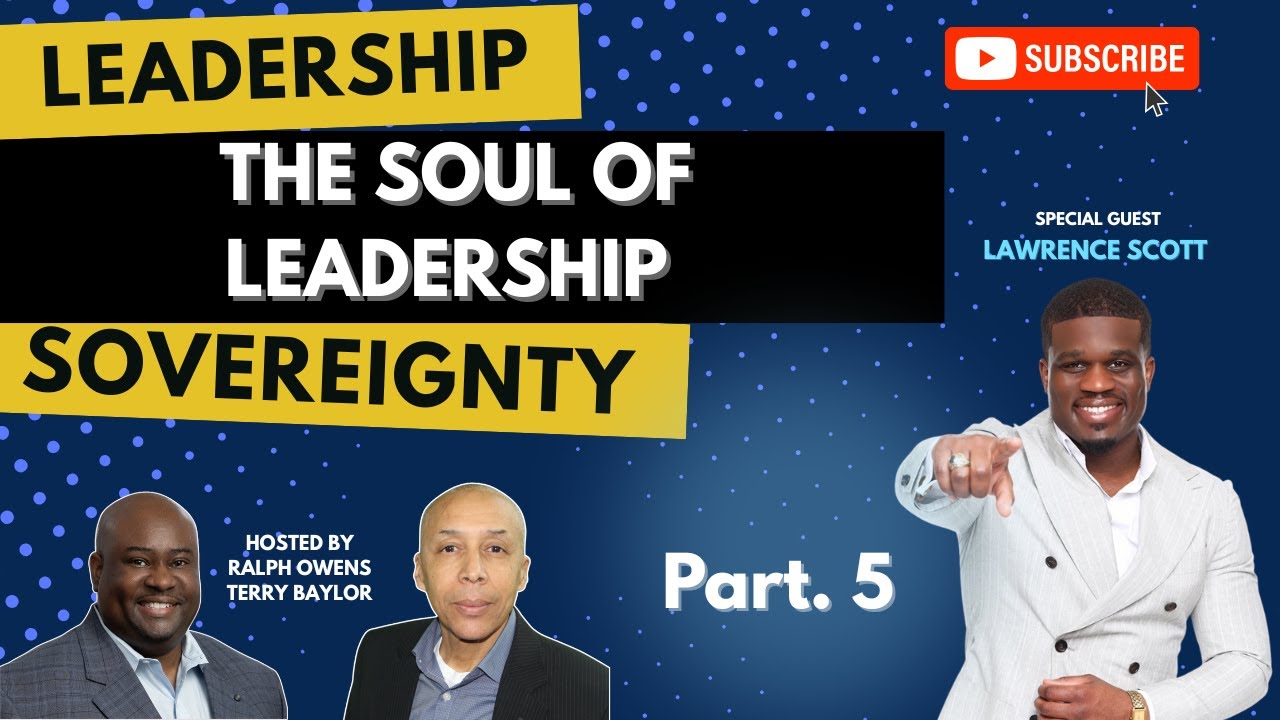
In this engaging conversation, Ralph Owens, Terry Baylor, and Lawrence "LoSco" Scott explore themes of resilience, leadership, and personal growth. They discuss the difference between being injured and being incapacitated, emphasizing the importance of understanding one's purpose and the need for resilience in the face of challenges. The conversation transitions into the soul of leadership, highlighting the significance of investing in the emotional and mental well-being of individuals within organizations.
Key Takeaways
- Resilience is essential for personal growth and overcoming challenges.
- Understanding the difference between injury and incapacitation is crucial.
- Bleeding metaphorically represents the healing process after setbacks.
- Resilience requires a deep sense of purpose and identity.
- Humans tend to follow the path of least resistance unless motivated otherwise.
- Investing in the soul of individuals leads to greater fulfillment and productivity.
- Leadership should focus on the emotional and mental well-being of team members.
- Organizations that neglect the soul of their employees miss out on potential.
- Every individual has a unique significance that needs to be recognized.
- True leadership involves understanding and nurturing the soul of the team.
Subscribe to The Leadership Sovereignty Podcast 👇
https://youtube.com/@leadershipsovereignty?si=wCyTjU64Tr4XvYYj
Connect with The Leadership Sovereignty Podcast! 👇
Twitter (X): @LdrSovereignty 🐦
Facebook: The Leadership Sovereignty Podcast
Instagram: @leadershipsovereignty 📸
LinkedIn: https://www.linkedin.com/company/the-leadership-sovereignty-podcast/ 💼
TikTok: leadershipsovereignty 🎶
Threads: @leadershipsovereignty
Connect with Lawrence! 👇
Instagram: @lawrencescottig 📸
TikTok: @lawrencescotttt 🎶
X: @lawrencescotttw 🐦
LinkedIn: https://www.linkedin.com/in/loscospeaks/ 💼
Speaker 1:
And most souls in America need surgery because they are waking up day after day going into lifeless existences at work where they spend most of their day, by the way, where they don't enjoy It is not it is not fulfilling to them. They're wondering why they're even there.
Speaker 2:
Welcome to the Leadership Sovereignty Podcast. I'm your host, Ralph Owens, along with Terry Baylor. In the soul of leadership part five, Lawrence dives into the concept of bleed a while. He talks about the power of resilience, and he digs deeper into the concept of the soul of leadership. Let's go.
Speaker 1:
-RODNEY: -It might Yes. It might have hurt me. It might have See, there's a difference between you being injured -RODNEY: Mhmm. And you being incapacitated.
Speaker 2:
So true. So true.
Speaker 1:
Injury might hurt. I might walk with a limp for a while, but I'm still moving.
Speaker 2:
That's right.
Speaker 1:
But sometimes we can treat an injury as an incapacitation where we can't move. And sometimes there are certain hurts and betrayals where maybe you don't move for a while. You heal. Right? So the, the book, the book, that I wrote for some of my athletes, because when I was working with them, they, they were dealing with so much.
Speaker 1:
Right? I called it bleed a while. And the reason I called it bleed a while is because it comes from this, this chant that from a from an admiral speech that says, hey, listen, I'm gonna fight until I can't fight. He's like motivating his his troops. This is a naval, guy.
Speaker 1:
He's motivating his troops. And he's saying, We will fight until we can't fight anymore. And when, and he's like, Not if, but when we can't fight anymore, we're gonna lie down. We're gonna bleed a while. Then we're gonna get up and fight some more.
Speaker 1:
So he's like, I'm gonna fight till I can't fight anymore. And when I can't fight anymore, I'm gonna lie down. I'm gonna bleed a while. I'm gonna get up and I'm gonna fight some more. In life, you will get knocked down.
Speaker 1:
You will bleed. Yes sir. But are you willing to do what it takes to lie down and That's bleed a right. Everybody will have to bleed a while. Yeah.
Speaker 1:
But what happens while you bleed? You can either let yourself bleed out and die right where that injury took place, or you can allow the bleeding to do what it's supposed to do. Because bleeding is supposed to provide clots to stop the bleeding. Bleeding is supposed to help to place scars
Speaker 2:
where
Speaker 1:
cuts That's good.
Speaker 2:
That's good.
Speaker 1:
So that you can get up and fight some more. A lot of people will allow the cuts of life the injuries from life, from people that they trusted or from leaders that they thought would help them move ahead in life to keep them incapacitated. But what helps you to move forward into your areas of influence and authority that you've been created to occupy in this earth is your ability to get up and fight some more. So what do you have to do? You have to bleed a while.
Speaker 1:
So we get that. All right. But you have to remember why. I remember there was a, there was a, a group in Nigeria. They wanted me to talk to their students about resilience.
Speaker 1:
And I remember in my prep, I was talking, I was doing all of this prep, to do this speech on resilience. And then I just paused, Ralph. I said, this doesn't make sense. Why would I teach someone on how to be resilient? Who's been?
Speaker 1:
Well, not only that, Terry, but I won't teach you on how to be resilient without first giving you a reason to be resilient. To be resilient. -That's powerful. Resilience requires a reason.
Speaker 2:
-ROM: Yes, A why?
Speaker 3:
Yes, Why should I get back up?
Speaker 1:
-ROM: Yeah. Especially if I'm gonna go back out into a world that's gonna continue to try to put me down, especially if I'm gonna go back into the world and experience more of those same professors who try to tell me that I'm not good at something that I am good at, especially if I'm gonna go back into a world that doesn't wanna see me be successful, especially if I have to go back into a workplace with a leader who I know is only using me for what I can do for them and not what I'm actually good at.
Speaker 3:
You preach it now, bro. I preach
Speaker 1:
Why preach world would I go back into a world like, why would I be resilient if I know I'm gonna go back into that? Well, the the reason that you become resilient is when you have a deep sense of who you are Yes.
Speaker 2:
That there's a child on
Speaker 1:
the inside of you and why you exist. There's no reason, like, why? It's illogical. Humans are like water. We follow the path of least resistance unless we have a reason not to.
Speaker 1:
So we have to get well acquainted with the reason to be resilient. So I'm not gonna teach you to be resilient I haven't first given you a And reason you to why? Do
Speaker 3:
So so I think this is a great transition into your topic of the soul of leadership, right? Yeah. Because ultimately, that why is connecting to our God given dream, our God given purpose. And ultimately, that is the only why that has enough power, essence, vigor to, after bleeding a while, you know what? I got a God given dream.
Speaker 1:
I gotta get up. I gotta get up. So my mentor says it like this. Sometimes you have to learn yourself well enough to hack yourself. You don't have some things you don't need to change.
Speaker 1:
You just need to alter. And what he means by that is you might be afraid of quitting that job because it's the pay is so good, but maybe we don't get rid of that fear of quitting the job. Maybe we replace the fear with a greater one. It's not what happens if I quit. It's what happens if I don't.
Speaker 1:
I said, I shared this with a friend of mine and I said, I'm afraid of who I become if I know I need to do.
Speaker 2:
That's good.
Speaker 1:
I'm gonna become resentful. I'm gonna become offended, bitter. I'm gonna like, I don't wanna, I don't wanna become that.
Speaker 3:
So because
Speaker 1:
I don't wanna become that and I don't wanna know what the world looks like through those kinds of eyes, then I must do what's on the inside of me to do. Now, and this is, this is, this is where I believe leaders get the most out of people. And this is, the, the concept of my next book is on leading the soul. So I've been in, I've been in so many leadership organizations. I mean, Terry, you know, right?
Speaker 1:
Growing up, I watched it happen as a child.
Speaker 3:
And I wanna hit on that. That is
Speaker 1:
I watched it happen as a child. So like,
Speaker 3:
Several generations of it too.
Speaker 1:
Yeah. Like I watched it as a child. So I was around leaders. I was around leadership and, and don't let me forget to bring this back around. Just because you grow up around something doesn't mean you know how to do what you saw, but we can come back to, we can come back to that.
Speaker 3:
I'm, I'm already looking at booking the second show, bro. Don't even wait.
Speaker 1:
We got two. We come back to that. But, but, I grew up around it. Right? So I grew up around leadership organizations and then I go into what is the absolute most prestigious leadership development institution in the world.
Speaker 1:
I mean, you talk about, I'm sitting there in class and one of my friends in class is the son of the president of Chad. I'm sitting there with, with a baron son from Slovakia or something like that. Don't know. I forget what country, no, like Lithuania or some some country over there. Right?
Speaker 1:
So everybody else in the world recognizes that if they want to send people to become the most elite, they send them there. And I'm sitting in class with these people. I mean, not not just like, like kind of royalty. I mean, actual royalty. They send their children here.
Speaker 1:
And I'm sitting in those classrooms getting this same leadership development that everybody else in that in that organization is getting. And then I go out into a a military that that is a leadership organization as a leader in this organization. And then I leave there, go back as a football team leading a group of about 170 young men. And then I'm leaving there and going to seminary. While I'm in seminary, I was also working as a campus pastor, leading a volunteer organization of over 400 people with a campus that was doing 3,000 on the weekend, plus doing, doing other work where I'm still coaching and consulting also.
Speaker 1:
So I've been around this my whole life and, and these, these areas collided for me where, where the intense theological study helped me to kind of do some research and work on what is like the makeup of the soul and like a person's life, what they're really truly after. And then look at some of our leadership sciences and see those gaps. Most folks don't understand that you're not like most leadership, but when it comes to trying to get more productivity, doesn't go past inspiration and motivation. Right. It's like bring in a motivational speaker to motivate your troop, motivate your team or incentivize them with pay.
Speaker 1:
Right. It's like, okay. But if you do that, you're gonna have to continue to do that. But I believe that there's something that is better than that, that helps to yield an even higher return on the investment. And it is the investment into the soul of your team.
Speaker 1:
Now the soul is the mind, the will, and the emotions. Now the mind, will, and the emotions are these things that come together that help to influence the way in which the people on your team go about the world. Their mind and the will and emotions are making decisions about whether or they're going to call in sick. Mind, the will and the emotions are making decisions about how much effort they're going to give at work that day. The mind, the will, and the emotions are making determinations about whether or not they're gonna stay with your organization or they're gonna go someplace else.
Speaker 1:
The mind, the will, and the emotions are the thing that is driving all of this. And if and if you as a leader don't understand that or invest anything in that, then what you're going to do is always put band aids over things that need surgery. And most, most souls in America need surgery because they are waking up day after day going into lifeless existences at work where they spend most of their day, by the way, where they don't enjoy it. It is not fulfilling to them. They're wondering why they're even there.
Speaker 1:
Now they might have gained a certain level of competence and proficiency to get so that you get your product. Right. But you don't even know the opportunity cost that you're losing out on by not investing in the soul of this individual.
Speaker 2:
Yes, yes.
Speaker 1:
This is why certain corporations now are even like hiring chaplains, which I think is decent. But I think that there's something even better than this. And this is what I mean by like the soul. Every soul has something that it's searching for. And this is what I call its own, like the soul's own sense of significance and fulfillment.
Speaker 1:
Meaning that there's something unique and special about this individual, this person that the soul wants to live out. It's searching for it. Where do I find it? And it's made up of a few different components, and this is where I I liken it to companies and organizations.
Speaker 2:
Thank you for listening to the Leadership Sovereignty Podcast. If this content blessed or helped you in any kind of way, support us today by subscribing to our YouTube channel, clicking the like button for this episode, and sharing this content with others that you think it will help. Until next time, stay safe, peace, and blessings.