
 Apple Podcasts
 Spotify
 YouTube
 The Soul of Leadership. Part. 6
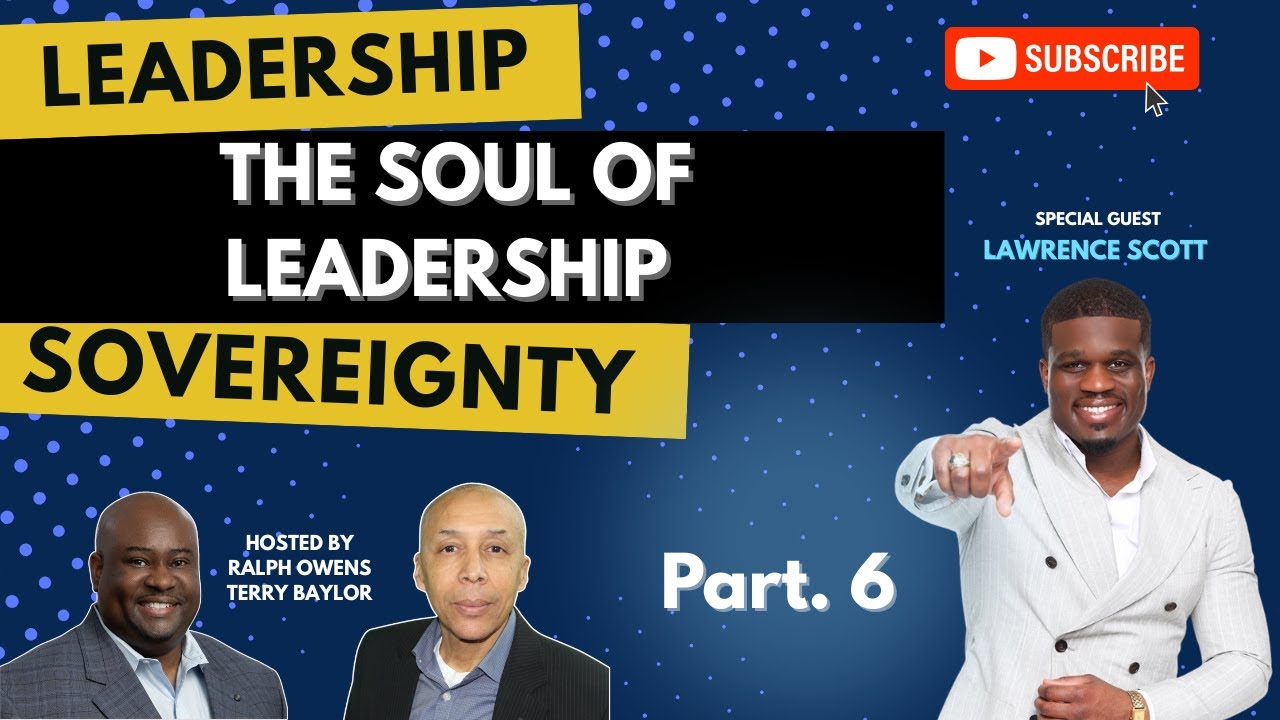
In this engaging conversation, Ralph Owens, Terry Baylor, and Lawrence "LoSco" Scott explore the intricate relationship between corporate alignment and individual fulfillment. They discuss the importance of understanding aspirations, burdens, and competencies in fostering a motivated workforce, particularly in the context of millennials. The dialogue emphasizes the role of leaders in guiding individuals towards their purpose while maintaining organizational goals, ultimately highlighting the need for a deeper connection between personal significance and corporate objectives.takeaways
- Every soul needs purpose, which offers significance and fulfillment.
- Organizations should tap into individuals' aspirations to retain them longer.
- Attention is not enough; organizations must capture affection.
- Fulfillment is often confused with corporate alignment.
- Leaders must help individuals pursue their own fulfillment.
- Millennials prioritize personal significance over brand loyalty.
- Leaders should understand what motivates individuals in their workforce.
- Influence in leadership should guide individuals towards their best selves.
- Corporate alignment is essential to prevent drift in organizations.
- The best leaders appeal to the soul of individuals, not just their skills.
Speaker 1:
I have to think about this differently. I have to go beyond just thinking about what I need. I need to think about what does the person I need need? And then look for those kinds of people.
Speaker 2:
Welcome to Leadership Sovereignty the Podcast. Today Lawrence explores the intricate relationship between corporate alignment and individual fulfillment understanding the importance of aspirations, burdens and competencies in both organizational and personal context. Enjoy the show.
Speaker 1:
It's like what I call the ABCs. Every soul needs purpose. That's what it's searching for, because purpose offers its significance and fulfillment. And I call them the ABCs, aspirations, burdens, and competencies. If you if you have if you, as an organization, can tap an aspiration of mine you'll have me longer than the than the organization that doesn't.
Speaker 1:
-Yeah. So true. If you, as an organization, speak to a burden of mine, then you will have my affection longer than you might have my attention. See, most organizations, they want your attention, but they haven't captured your affection. If I speak to if I speak to your burden, I've got your affection now because I'm I'm helping to solve a problem in the earth that you're passionate about.
Speaker 1:
Right? Why why are so many 501c3s able to operate with such high volunteerism? Because they're able to speak to the burdens that exist in certain people's hearts. Right. Right.
Speaker 1:
Right. Right. Then in order to live out the ultimate expression of your purpose, like the soul's deepest desire for its own significance and fulfillment, there are certain things that you have to be good at. Right? So you have to have competencies, right?
Speaker 1:
Like you have to be competent at certain things. And if I, as an organization, whether it's for profit or nonprofit can help you to develop your competence in those areas that you need in order to fulfill why you exist here on Earth -Mm then I'll have you far longer than the organization that does not do that. Now, sometimes these things might seem foreign, but they're not foreign. Because if you if I as if I'm leading an organization, I already am intimately aware of these ABCs. Because my organization has aspiration.
Speaker 1:
We call that our vision statement. Our organization has burden. We call that the problem that we solve. Our organization has competencies. These are the products and services that we provide.
Speaker 1:
Starbucks knows very well what its aspiration is. They know what they're trying to create. And it goes far beyond just a profit and loss statement. -Right? -Mm We we understand very well that they're not solving the problem of not having coffee.
Speaker 1:
-No. -Mm -They're solving the problem of not having community. So they'll create their environments and spaces in a way that solves that problem because that's the actual product and service that they're selling. So they're intimately aware of these things. These corporations are intimately aware of aspirations, burdens and competencies.
Speaker 1:
And when they when all of those things collide, right, and they they use different language for them, but when all those things collide for a corporation, this is where we call it, like, corporate alignment. So your corporate alignment is where all of those things are in sync. It's where the aspiration of your company, the problem that this company exists to solve, and the way in which it contributes to the solution of that problem is very specific. We don't do everything. This is what we do.
Speaker 1:
Right? That is when a corporation or an organization experiences what we call alignment. Corporations and organizations have to be aligned. And when they're not aligned, you experience corporate drift, you experience all of these things, right? And people have talked about these things over the years.
Speaker 1:
But what they haven't necessarily talked about
Speaker 2:
Listen is up. Listen up, leaders. Listen up, leaders. He finna drop it now. Listen up.
Speaker 1:
What they have They they talk about corporate drift and and how to help the organization maintain alignment. But what they haven't talked about is helping the individuals who contribute to corporate alignment maintain their own alignment. That's good. But we don't call that alignment for individuals. You know what the individual calls it?
Speaker 1:
I don't call it alignment. That seems too corporate for me. You know what I call it? I call it fulfillment. So people will come into your office and they'll say, You know what?
Speaker 1:
I think I need a change. I just don't feel fulfilled. Right, right. Well, don't you feel fulfilled? It's because your a's, your b's, and your c's are all over the place.
Speaker 1:
Mhmm. And this place that I'm spending most of my time is not helping me maintain alignment in my purpose. Right? Alignment where I feel fulfilled when I wake up. When when I wake up in the morning, I should be excited to come to your organization or to do the thing that I've been created to do because I recognize that whatever it is that I'm doing with you Mhmm.
Speaker 1:
Is helping to contribute with the thing that is unique and special about me.
Speaker 2:
Yes. Sure. Sure.
Speaker 1:
So leaders are responsible for doing two things. They have to help maintain corporate alignment while helping people pursue their individual fulfillment. And most leaders will tell you that they don't have time to do this, but they're lying. And they don't know that they're lying, they just don't know that they have plenty of time to do this.
Speaker 2:
So, Laurence, let me ask you a question on that, right? Because what I see the connection there is in that adaptive change,
Speaker 1:
Yes.
Speaker 2:
Right? Because you're right in the throes of with, you know, gosh, are you considered the millennial? You considered Yeah. A So that's perfect. Right?
Speaker 2:
So let's talk about the adaptive change as it relates to, you know, this new workforce idea. Right? And I believe only a millennial could speak to what you're speaking to with such a complete narrative around it. Right? Because I don't think someone in my generation could speak to it in its authenticity the way you are because you're you have how many?
Speaker 2:
You have thousands of peers. Mhmm. Right? Which has helped drive you to these conclusions. So what Yeah.
Speaker 2:
What's happening out there? What's happening?
Speaker 1:
Alright. So you remember one of the biggest topics before COVID was this idea around silent quitting. Right? Remember that? Like, people were talking about people are there, but they're not there.
Speaker 2:
Right?
Speaker 1:
What they were getting at is this. This is the same thing, but we just had different words for it. Right? So, you whereas you might have said in one generation, you might have said, you know, I got to get motivated workforce. Right?
Speaker 1:
People who actually want to be here. It's like, well, you have to leave the soul for them to want to be there. Right? When you would talk about silent quitting, it's like, Hey, I'm here. I'm just collecting the paycheck because we have a disconnected workforce.
Speaker 1:
Right? It's like, Okay, well, you have to leave the soul for people to, like, stay there, not just physically, but mentally, right? And and emotionally. Not tied to the work that I'm doing. Right.
Speaker 1:
Now, because you have a gener my generation, which, you know anyway, there's Enough saying. About 15 thoughts that just happened in two seconds.
Speaker 2:
He was like, this is being recorded. Right?
Speaker 1:
There's there's so much about about my own generation where I'm just like, all right, y'all. Like, it's too much. But the millennial generation was the generation that had applications in technology that it was a little more, intimately connected with that gave them access to certain things like therapy and counseling. And they became very, very aware Very aware, yes. Of their emotions and themselves.
Speaker 1:
And, there's also simultaneously a messaging that's happening in the culture that they're part of via social media and entertainment channels that make them very, very self focused. Not very focused about, like so it's like, whereas one generation, you could have sold them the dream of being connected to something bigger than themselves by joining your company. You can't do that to millennials Because the most important thing to them is not your brand. Is it's not them. It's them.
Speaker 1:
That's right. It's themselves. Now, I would argue, I would posit, because of not only my faith and my belief, but also the study that we've done on the soul of individuals, that this has always been the case. But, where they where they were willing to search for that fulfillment of their soul was because they said, hey, I can be significant if I've got your name attached to me. Right?
Speaker 1:
Like, if and we saw this happening, especially in the '90s, where if you said, hey, I work for Apple, it's like, okay, now I get it. Right? It's like, oh, you're important, you know? Yeah. So we were all searching for that sense of significance and fulfillment by with the things that are inside of us.
Speaker 1:
I think that's always been the case, but we didn't always have language for it. Well, millennials have language for it. So what what has to happen now is leaders have to be intimately connected with what motivates individuals and helping them to pursue that while maintaining corporate alignment. And this gets you closer to your your avatar, right? The per the What kind of person thrives in your organization?
Speaker 1:
What kind of person thrives in these sorts of positions? And you need to understand that the person that thrives goes well beyond characteristics and competencies, but it goes into their own sense of significance and purpose. So what does the person who thrives in your organization in that particular role want for themselves? I remember when I was, looking to hire, my first personal assistant, I said, I need to do two things. I need to recognize what types of skills that they have.
Speaker 1:
They need to be highly administrative. They need to be highly executive. They need to be able to represent me in conversations that I can't represent myself in. But at the same time, I have to recognize what this person wants. I don't want somebody who just wants this position.
Speaker 1:
I want somebody who eventually wants to be a COO. Now And the reason I want that is because I wanna provide a space wherein they can be fulfilled because they're they're chasing what they want.
Speaker 2:
-Right.
Speaker 1:
-But also, I am provided for it, and I'm still aligned because that is the kind of person who will thrive in those sorts of positions in the progression of their career. So you we have to be able to think think these it's a it's a paradigmatic shift in the mind of leaders that says, I have to think about this differently. I have to go beyond just thinking about what I need. I need to think about what does the person I need need and then look for those kinds of people. Right?
Speaker 1:
So this this message is great for, like, people who are in HR. This message is great for people who are looking to build teams and high capacity. Like, and I tell people all the time, like the, I, I, I do this teaching on how to build teams and it's like these Cs. So people have to be, competent. You need people who, who know what they're doing.
Speaker 1:
Right? People, but people have to be capacious. Right? Meaning, you need to have capacity. Yes.
Speaker 1:
But capacity goes beyond how much you can carry. It goes into how much you're willing to carry for me. -Because sometimes we'll look at people and they're, like, highly capacious individuals. They can do a whole lot, but it's like, Hey, yeah, but they're not really they're not really willing to share all of that capacity with you. -Right?
Speaker 1:
-Mm And then they have to be compelled. And this is where I think sometimes we miss it. Compulsion is not convincing. And and for us, as leaders, sometimes we we believe so strongly in what we do. We believe so strongly in our organizations that we convince people to be part of our teams.
Speaker 1:
That's a mistake.
Speaker 2:
And
Speaker 1:
the reason it's a mistake is because you'll only have their attention for as long as they remain convinced. -Mm. -But people who are compelled -Mm You're not going and, like, trying to convince them to be part of the team. -Mm -But they were compelled towards the team, right? -Mm -Um, and one of the best Like, objectively, regardless of what your belief system is, the best leader of all time that ever lived on this earth is Jesus when you are dead for over two thousand years and people still follow you.
Speaker 1:
You're an amazing leader. -That's -That's -That's true. -Now watch this. -That's true. Watch this.
Speaker 1:
When we read, like, the the testimonies of how Jesus led through, like, the writings of Matthew, Mark, and Luke Mhmm. Jesus never convinced anybody. He literally said, I'm a let you see what I'm doing. Right? So he would have his he would have his activity that he was doing in the in the public square, and then he would make his speech and then say, Follow me.
Speaker 1:
Oh.
Speaker 2:
Oh, man.
Speaker 1:
And and they would say, Okay. So much And it was so strong, Terry. It was so strong that it said immediately they dropped what they were doing and they followed him. Where, like, James and John, the sons of Zebedee, like the sons of Thunder, they they left their father's fishing boat to go to go and and follow this man who who literally just showed up on the scene. So because he had proof, right?
Speaker 2:
-Mm
Speaker 1:
-He had proof of concept. He was able to prove that he's effective at what he does. And he was able to show them that they could do it, too. They would have this sense of significance, that they would be important. -Mm -Right?
Speaker 1:
So this is this is the point I'm making, right? You have to be able to appeal to the soul of the individual if you hope to, one, lead them well and not use them. Right. Because I'm a leader, I'm an influencer. Right?
Speaker 1:
Leadership is influence. Yep. But if I'm influencing you, it's in a particular direction. That's right. Influence is not non dynamic.
Speaker 1:
It's not stagnant. If it's in if it's true influence, I can't I can't push put my hand on this glass and push and and if I'm not pushing it, I'm not influencing it. It's staying exactly where it is. -Right, right. -So influence is dynamic.
Speaker 1:
-Mm So if influence is dynamic, the question then becomes, if I'm an influencer, if I'm a leader, what am I influencing you toward? -Mm. -And if I'm not influencing you toward your best self and toward the thing that you've been put on Earth to do, the thing that provides you with significance and fulfillment, then I'm actually not leading you. I'm using you. That's good.
Speaker 2:
That's good.
Speaker 1:
I'm using your skills. I'm using your I'm using your talent in order to contribute to corporate purpose. But individual purpose is the thing that you've put on earth to. So you'll stay with me for ten years, Terry. And then when it's time when it's time for you to go, or when I decide it's time for you to go because I'm done, or or the particular technology that you spent ten years being an expert on is is obsolete, and I no longer need you, and I get rid of you, you'll sit there wondering and asking yourself, what did I just spend the last ten years of my life doing?
Speaker 1:
Doing.
Speaker 2:
So you know what? That's that's awesome. Thank you for joining Leadership Sovereignty, the podcast. We hope you obtain something of value as you walk out your journey. Connect and grow with the community of LS pioneers on X, Instagram, and LinkedIn under the handle Leadership Sovereignty.
Speaker 2:
Thank you and God bless.