

 Apple Podcasts
 Spotify
 YouTube
 The Soul of Leadership Part. 7
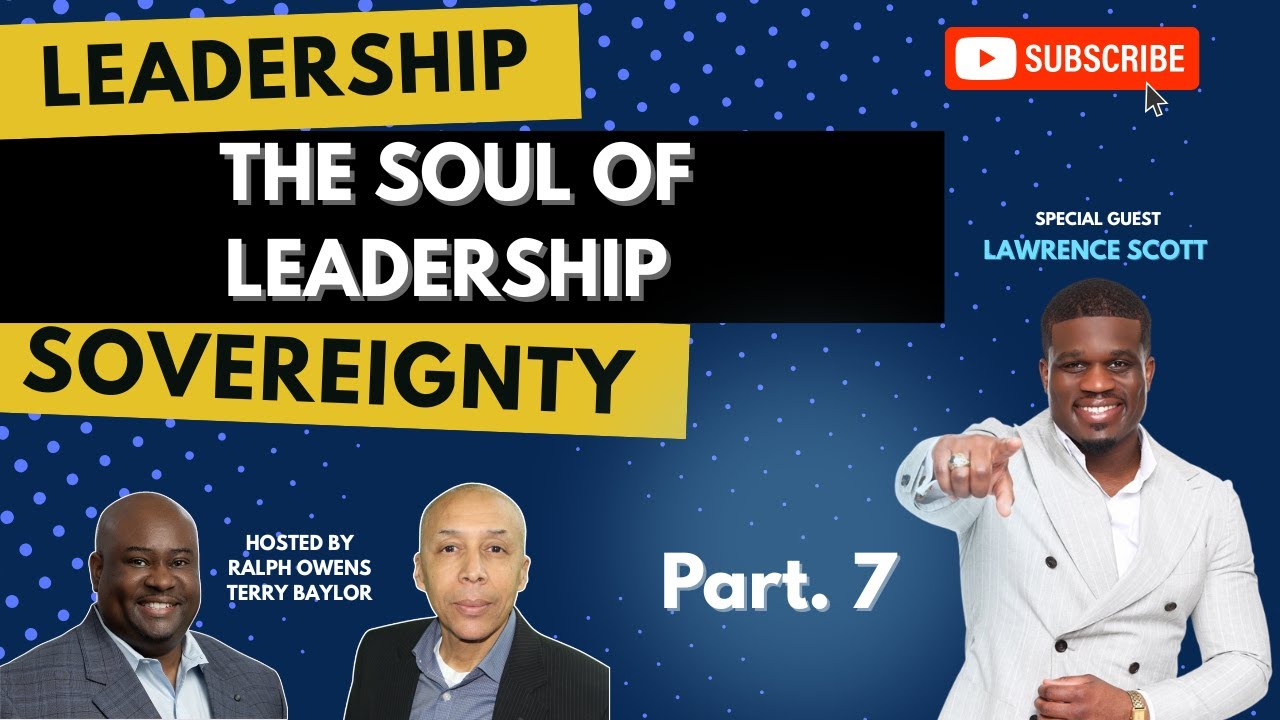
In this engaging conversation, Ralph Owens and Terry Baylor explore the themes of leadership, influence, and the importance of legacy. They discuss how personal stories and family histories shape perceptions of leadership and the impact of mentorship. The dialogue transitions into the complexities of succession planning, emphasizing the need for leaders to have a clear vision for the future while honoring the legacies of their predecessors. The conversation is rich with insights on personal growth, community service, and the responsibilities that come with leadership.
Key Takeaways
- Every moment can be a memorable one in leadership.
- Influence is often tied to personal stories and experiences.
- Leadership is about serving the needs of others.
- Some lessons in leadership are taught, while others are caught.
- A leader's vision is crucial for successful succession planning.
- You are not responsible for fixing the past mistakes of predecessors.
- Successful succession planning requires foresight and preparation.
- Honoring a legacy means striving to do better than those before you.
- Leadership involves recognizing the limitations of past leaders.
- Progression in leadership should be seen as a collective growth rather than a personal failure.
Speaker 1:
I believe this is also a great marker of influence in leadership as well. Not just being able to say the things that you've done, but when people can tell stories about experiences from the things that you've done.
Speaker 2:
Welcome to the Leadership Sovereignty Podcast. I'm your host, Ralph Owens, along with Terry Baylor. In the soul of leadership part seven, Lawrence dives into the impact of true leadership, why some things in leadership must be taught, and how we're to honor those who come before us by the way we live.
Speaker 3:
So you know what? That's that's awesome because, you know, one of the things that I wrote down this morning as I was thinking about this show, and I think this is a great segue into that, you you can answer it how you choose. With the legacy of leadership that you've seen, right, this kinda goes back into your previous point about just because you've been around it doesn't mean you can do it. How has that framed your perception of influence? Right?
Speaker 3:
Because ultimately, leadership is about your like you said, Jesus did whatever he did to influence those guys in a moment to say yes. So what all the you know, from you know, you probably have just in your family over a hundred years of leadership.
Speaker 1:
Yeah. Oh, yeah. Yeah. Absolutely. And even to this day, Terry, it's it's so amazing.
Speaker 1:
You can tell you can tell when people got introduced to my family based off of who they reference. If I if I'm I mean, honestly, there's a there's a guy out here in in LA. And he said, when we first met, he was like, Lawrence from he said, from St. Louis? Man, I know Scott's in St.
Speaker 1:
Louis. You wouldn't have and this was like a meeting of a bunch of pastors. He's like, you wouldn't be, like, related to P. L. Scott, would you?
Speaker 1:
I said, yeah, that's that's my great grandfather. He's like, ain't no way. That's your great grandfather? It's like, man, we used to, like you know what I mean? So he's like, he telling the stories.
Speaker 1:
Right?
Speaker 3:
Right. Yep.
Speaker 1:
Which I believe this is also a great marker of influence and leadership as well. Not just being able to say the things that you've done, but when people can tell stories about experiences from the things that you've done, that's big. I don't I don't just say like, man. So for instance, right, one of the things that happened in St. Louis was my great grandfather had two church buildings right on the E in opposite corners of each other, and he built a a crosswalk, a skywalk in between.
Speaker 3:
That was huge.
Speaker 1:
It was huge. Right? Had people traveling to St. Louis to see the chapel in the sky. Right?
Speaker 1:
Like it was, it was this thing. Right? And it wasn't just people being able to say, like, I, I hardly ever hear those stories, Terry. So I don't hear stories about what he built. I hear stories about who he was.
Speaker 1:
There was one guy who came up to me. He didn't tell me the story about and he was a guy who helped get the chapel built in the sky. Right? He he didn't tell me those stories. He said, Man, I used to pick your grandfather up from his house, and we would drive him around St.
Speaker 1:
Louis. He would leave the house with it, dollars 5,000 in his pocket. And by the time we got home, it was all Wow. And I used to he said and I told him, I said, Why, Bishop, you don't need that much money. Why would you carry that much money around the city?
Speaker 1:
That's dangerous. And his response to me was, The needs are great. He went out he went out into the city to serve people. Right? Like, that's the marker of great leadership in service, is.
Speaker 3:
It is.
Speaker 1:
-It is. Go back to your question, right? These are the stories of influence and leadership that people are telling about him, and I can always tell what part of my family you've encountered with, right? It's like, I never met my great grandfather. He died five years before I was born.
Speaker 1:
But I would go to school in like middle school and high school. This is when like my grandfather was on TV. And people would be like, man, I saw your grandpa on TV. I was there. I'm like, okay, that's cool.
Speaker 1:
You know what I mean? Like, so it was, I was always surrounded by this. Now watch this though. There were certain things that my great grandfather did that my grandfather saw, but was not taught. There were certain things that my grandfather did that my father saw, but was not taught.
Speaker 1:
There were certain things that my father does that I see, but I'm not taught. So some things are taught, other things are caught, but there's certain things about leadership and influence that must be taught. This is how you do this. This is why you do it. Now, understanding this, when you deal with legacies, you have to understand that these are My great grandfather was a giant, but he wasn't God.
Speaker 1:
He made mistakes. He's good, bro. And certain things that he built were built on shaky foundations, right? Because he was limited in his capacity and his exposure. So, I tell people this all the time.
Speaker 1:
If you're gonna stand on the shoulders of giants, you better make sure that whatever part of that shoulder you stepped on is solid. -MICHAEL: Wow. Because this is the giant, and they they not they not perfect.
Speaker 3:
So I I love what you're saying, man, because here's and partly this is, I'm gleaning from what you're saying, bro, for on a on a serious note. My my follow-up question to that was, in succession planning, right? Because that's that's what we all have to do as leaders. And now there there's also corporate aspects. Right?
Speaker 3:
Corporate leaders, although we're talking in spiritual concepts and things of that nature, it's still the same. Right? Because Lawrence has already laid the groundwork or the groundwork that corporations have a soul too. So it's still all the concepts apply. Yes.
Speaker 3:
And so in this succession planning, my follow-up question was, as you become exposed, right, we're in these opportunities, West Point, you start to learn different aspects of leadership. You went to theological seminary, learning a deeper depth on the understanding of the word of God. When you find the gaps, how does that frame your leadership and how do we still move forward and can still honoring the legacy of what we were built on and the shoulders that we're standing on. And or let me let me change the let me change some of the terminology. Our mentors or our sponsors in corporate America, and maybe they've done something at some point that wasn't the best decision or the best way to handle people, but they helped you.
Speaker 3:
They helped you grow. So how do in that secession, right, now you're the guy in charge. You're the guy with the influence now.
Speaker 1:
Yeah. Think the first thing is to realize that you're not responsible for fixing what they broke. Whenever you take on that disposition, you come in often far too harsh and far too critical, and you don't intend to do this. But in that disposition, you actually dishonor them. So I think that's important to recognize.
Speaker 1:
You're not responsible, unless you are, right? Like, if you were like the CEO that just got hired because the last one just broke it, you know what I mean? So it was like, distance yourself as much as possible. But, I don't think that's what you're asking. I think you're asking about, like, actual succession.
Speaker 1:
Right? It's like Correct. Is important. So the first thing is, before it successful succession happens before it happens. Does the current one, does the current leader know where they're going or are they just stopping?
Speaker 1:
And this is important. In the exception of death, leaders have to have a next thing to do. If they don't, then you won't have the level of freedom that you think you'll need in order to really accomplish what you need to accomplish.
Speaker 3:
So let me make sure I'm hearing what I'm hearing. That leader has to be going somewhere. If they've planted their stake and they're saying, This is it, I'm dying in this post. You're done, basically.
Speaker 1:
You're done. Yeah, It won't work. And the reason it won't work is because, and this is, something that did not happen between my great grandfather and my grandfather because my great grandfather died. And then my grandfather took over right now they had in the succession planning, you know, they had the documents that said in the event of death, this is now the next leader. Right?
Speaker 1:
It was different though, from my father and his father. My grandfather gave it to him and said, you got it. Right? And my father took it, but my grandfather didn't have like the next thing. He was still very much involved and my father wasn't as free.
Speaker 1:
Well, I won't say that he was as free as he needed to be. He didn't feel as free as he needed to feel in order to really do some of the things that he wanted to do then. And I've seen this happen even in organizations. Whenever you in the military, there's actually a rule, right? If you are leaving a particular post, they move you out of the entire unit.
Speaker 1:
Like, you go get assigned someplace else because what they don't want to happen is for people's affections to remain to you. Where it's like, instead of going to the person they need to go to, instead of following the systems that you've implemented, people are still following because they feel like, and this is, this is normal, right? We all have our ways in which we connect to folks. Yeah. It's normal for us to say, man, isn't this so wrong that like, you know, they have to watch things go differently.
Speaker 1:
Right. So we, we feel a way about that leader. So we want to honor them, but in so doing what we're actually doing is holding back the built upon legacy of that leader. I tell people all the time, if you, especially, people who are like me, right? So I'm a fifth generation PK.
Speaker 1:
I tell PKs all the time. I say, Hey, listen, if you're not doing better than your parent or your grandparent, then you're not honoring their legacy. That, like, you should be doing better. Not as a value statement to say that they're not as good as you, but because of all that they've been able to sow into you, you should be able to go a little bit higher. So in succession planning, we have to know, okay, what's the vision ahead and understand that there are some people who have the mind and the resources and the exposures to be able to accomplish that.
Speaker 1:
Now, because we are human and we're giants and we're not gods, sometimes we can allow the progression to, even after we've spent so many years building something, so much time has been invested in something, it would not be where it is without us. However, we can get that complex that says, now that I see that it's going to an even higher level, maybe I wasn't as good. And that's just not true.
Speaker 3:
No, So we have
Speaker 1:
no, to have something that we're going on too so that it can it can continue to give us life and fulfillment.
Speaker 2:
Thank you for listening to the Leadership Sovereignty Podcast. If this content blessed or helped you in any kind of way, support us today by subscribing to our YouTube channel, clicking the like button for this episode, and sharing this content with others that you think it will help. Until next time, stay safe, peace, and blessings.