
 Apple Podcasts
 Spotify
 YouTube
 The Soul of Leadership Part. 8
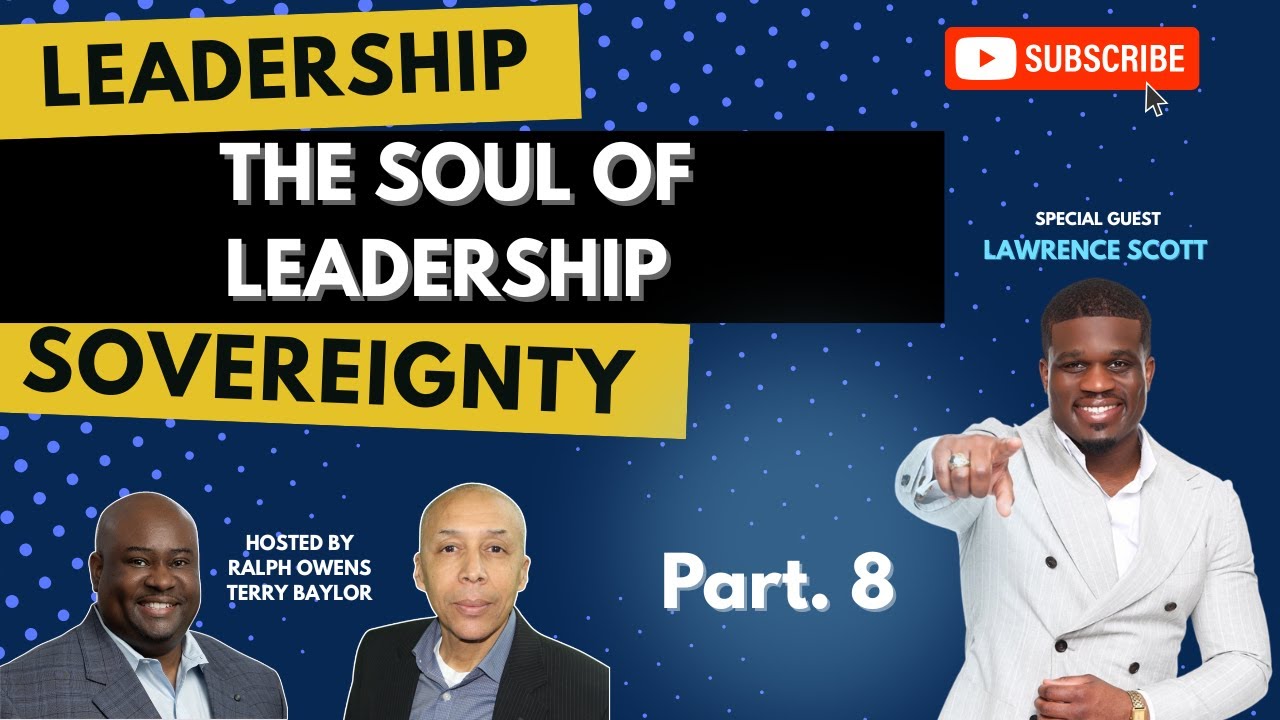
In this engaging conversation, Lawrence "LoSco" Scott shares his unique perspective on leadership, drawing from his experiences in the military, corporate America, and spiritual realms. He emphasizes the importance of authenticity and honesty in leadership roles, the challenges faced by different generations, and the need for organizations to adapt to the evolving workforce. The discussion also touches on the significance of personal connections and legacy in leadership.takeaways
- The military and corporate sectors can learn from each other.
- Authenticity is crucial in leadership roles.
- Generational differences impact leadership styles and effectiveness.
- A sense of purpose is essential for employee retention.
- COVID-19 has shifted perspectives on work and fulfillment.
- Leaders must engage in internal work for personal growth.
- Care for employees can enhance productivity and customer service.
- Legacy and personal connections shape leadership journeys.
- Honesty in leadership fosters trust and effectiveness.
- Leadership is about developing people, not just using them.
Speaker 1:
Conversely, how impactful could a corporation be if they because a lot of corporations, they have their systems and SOPs and all sorts of things, but they they kind of lack on the care part often. Mhmm. Mhmm. How much more impactful could they be? How much more productive could they be?
Speaker 1:
Right? How much how much better could your P and L statement be if you actually care for the people who are working for you?
Speaker 2:
Right? Welcome to Leadership Sovereignty, Sovereignty the Podcast. I'm your host Terry Baylor along with Ralph Owens. In this last episode Lawrence shares the importance of authenticity, care and understanding generational differences in leadership styles and why leaders need to find meaning beyond mere success. Enjoy the show.
Speaker 2:
So you said something, I and I wanna kind of because first of all, man, I appreciate the level of honestly, I wasn't expecting you to go in that level of depth and candor. So that is like, but here's the beauty and the richness of that. And you said in our pre show interview that there are some great things that the military does that that religious organizations could benefit from. Mhmm. And then you said there are some things that the religious organizations do that the military can benefit from.
Speaker 2:
And then there are some great things that corporate America does that those entities, religious and military, and just that whole circular thing. Right? Because you've been highly influenced and influenced and has you've been influenced by them and have influenced those areas. Right? I think you have a very unique perspective that a lot of people can't really operate from really as it and the depth of the spiritual aspect that you bring into that.
Speaker 2:
Right? Corporate military, you know, as well as the spiritual aspect. So can you kind of hit on that just a little bit? How did you morph all of that into what you have today?
Speaker 1:
And I have to go back to what we were just talking about just about my upbringing. I think as a result of being in that space, I shared this with a group, not too long ago about, and this is all goes back to the significance of the soul and fulfillment. Watching my grandfather on TV didn't make me feel important. It just made him look important. Seeing my dad on TV didn't make me feel important.
Speaker 1:
It just didn't. So I was always even at a young age. I remember being so young, and sitting, you know, we had broadcasts, right, at night. And I would sit in there, watching my grandfather up on this, this big old it was massive to me then, like, a child. I'm looking at this, like, massive this pulpit, just watching him do his thing.
Speaker 1:
And then I'd have to go into school and watch people tell me that they saw him on TV and stuff. And I remember as a child looking up at him saying, I know that's my grandfather, but I don't know that man.
Speaker 2:
Mhmm.
Speaker 1:
Like
Speaker 2:
Not the guy that you were seeing there. It was a Yeah. Yeah. Yeah. Yeah.
Speaker 2:
Yeah.
Speaker 1:
I noticed him
Speaker 2:
-That's heavy.
Speaker 1:
But I don't know him. Fast forward to now, I'm having to start to figure out who I am. -Mm -Right? So it's like, all of this was I say this to say that all of these worlds collided for me because I was I was at a young age, at a in a desperate search for who I was.
Speaker 3:
Right, right.
Speaker 1:
And I recognized that I was not able to live that out without an abundance of honesty. So with that being said, I made the commitment to discover and develop my own sense of self in all spaces. Which means that when I walk in, all of me walks in. The the leader walks in, the theologian walks in, the military officer walks in, all of
Speaker 2:
that's good.
Speaker 1:
That's good. So I I've I made the commitment to be honest in every space that I walk in. Now, with that being said, I've been exposed to so many different spaces that many people haven't been exposed to. Because one of the other spaces, Terry, that I've been exposed to is the professional sports space, too, where, like, I'm seeing there's a whole another way of operating over here. Right?
Speaker 1:
And what I watched happen in many of these spaces, like the military does this and sports spaces do this, they want you to almost forget who you are in order to fit into what's happening right now. And some of it is necessary for those spaces because I don't need you second guessing things when it's time for us to make this movement or to hit this mission. I need you on. Right? So I so part of it is purposeful.
Speaker 1:
However, there were these things that I was seeing that, like, religious spaces did very well, which is it caters or at least it tries to cater to to individuals until you, get really -Yeah. Deep then it becomes more about the organization itself, because that's a whole separate conversation. But, that's what was happening. So it was me saying, I need to be honest in all spaces that I'm in. And I believe that there are things that I gained from the military in terms of disciplines and regiments that, man, this would you you add there's nothing that motivates a person more than their sense of connectivity to God.
Speaker 1:
Right? It's like, if you want to motivate somebody, find a way to make them believe that there's God attached to what you want them to do. Right? Like, that's the way that's the way to motivate. Like, I mean, there's nothing that's gonna motivate somebody more than So if you attach some of those disciplines and some of those regiments to this faith space, man, how impactful could you be in your city?
Speaker 1:
Conversely, how impactful could a corporation be if they because a lot of corporations, they have their systems and SOPs and all sorts of things, but they they kind of lack on the care part often. -Mm -How much more impactful could they be? How much more productive could they be? Right? How much better could your P and L statement be if you actually care for the people who are working for you?
Speaker 1:
Right? Like, I mean, it could be much better would your customer service experience be if you treated your employees like the first customer? Right? Like, how much better could you be in this care part? Now, sometimes we we've, I think, diluted care, where now care has become more about compensation and incentivization, external incentivization, rather than internal incentivization, which is what I'm calling leading the soul.
Speaker 1:
So all of these all of these spaces collided for me, and I always wanted to be honest in all these spaces. So I'm always seeing the gaps. I'm always saying, Man, they do this really well, but they could be so much better if they incorporated this. And then you see, Okay, contextually, I don't think they could do this, But they could do a variation -TATIVE: of it in order to help care for these people, Sure. So all of these worlds collided.
Speaker 1:
I wanted to be honest in all these spaces. And then I and here's a big thing for me. Because I I do care about leadership and I care about seeing leaders be successful. I mean, you know, like from my background, I grew up watching it and having a deep affection for watching leaders in these spaces. And I always tell people, you can never criticize a seat you don't sit in because, when you do that, you're doing it with limited information.
Speaker 1:
You
Speaker 2:
don't Right. Right.
Speaker 1:
If you don't sit in their seat, you don't see what they see.
Speaker 3:
So true.
Speaker 1:
And sometimes we criticize decisions that leaders make because we think that all they see is what we do.
Speaker 2:
Yeah. This is
Speaker 1:
not true.
Speaker 2:
It's not true. Just to make sure I'm sorry. Go ahead. Go ahead.
Speaker 1:
I'm sorry. I'll say I tell people they have be careful about that, but I'm just saying that I have a deep affection for leaders and leadership. So what I wanted to do is go into these spaces and help them do it all well. This is why, like, our tagline for our development is we wanna help leaders live their best lives and lead their best teams. And we believe that you cannot do one without the other.
Speaker 1:
You have to live your best life. And when you do that, you'll want to help them live their And best in so doing, you'll help lead your best team.
Speaker 2:
No, that's awesome. So so make sure, right? So you're pulling from the domain of, your theological background, the domain of high performance athletics, The domain of the military and also the domain of just corporate America. You basically said, look, I have to fuse all of that into it's got to fit in the room when I walk in the room.
Speaker 1:
It has to. Because it won't it wouldn't be on it would be dishonest of me to show up and to put e any one of those down. Now, I've sat in spaces where, like, they would say, Hey, like, we have to be ecumenical in these spaces. Like, Okay, cool, we could do that, but the principles still stand. -Right.
Speaker 1:
So that post that you were talking about, I think I think I was talking about standards. And I was Hey, standards are non negotiable. So when you have a standard about a thing, it's like, Hey, how I operate, if this is a standard for me, I don't I don't bend on it. -Mm -Some things are preferences. -Mm -And I know the difference between the two.
Speaker 2:
-Mm -Right.
Speaker 1:
-My principles are the things that help me to make decisions in real time, quickly enough, in a way that I can impact you or impact myself. So I need to know the difference between those if I'm gonna be successful in these spaces, but all of me is still showing up.
Speaker 3:
Sure. Sure.
Speaker 2:
No. That is great. That is great. Ralph, I know you got something, man.
Speaker 3:
No. I I was just gonna say, so, you know, being in that corporate space, we know that the majority of those who are, I'll just call it in power or who are leading corporations are generally in the baby boomer stage. Right. And then you have all of this workforce is coming in as, you know, Gen X, Gen Z. Right.
Speaker 3:
And like you said, you beautifully articulated the, the, the disparity and the gap there. But what I hear in your solution is competitive advantage because the reality is this, you have to get people to work for you. Period. You can't get away from that. Not if you want to be successful.
Speaker 3:
Right. And if, and to your point, it's a competitive advantage. Yes. It is the competitive advantage. And I think you want
Speaker 1:
to win. Do you want to be successful?
Speaker 3:
Do you
Speaker 1:
want to increase your productivity? Like this is, this is the, You don't have I care about people's purpose. Right? So, like, I have this this deep sense of conviction about people are not to be used for your benefit, but they are to be developed for the benefit of the world. I truly believe that.
Speaker 1:
But I don't believe that in order for you to employ those tactics that you have to believe that. But I do believe that you'll see the productivity on the back end. Like, if you care about that, then you'll care about this.
Speaker 3:
Yes. Yes. Yes. I think I think the hardest thing for a person who's in that leadership role from that generation specifically from the baby boomers generations, because their example of leadership coming up is completely different from what they need to be today. Right.
Speaker 3:
And the, and the, the wherewithal and the awareness to be able to say, Oh my God, the way that I've learned to be successful, maybe the thing that even got me successful is not the thing that's going to make me successful moving forward. And I have to change the way, you know, because that generation, a lot of them, and I can't speak for everybody. A lot of them got a problem with the younger generation because it's so different from what they are accustomed to and what they've used to be successful and how they learn. But to your point, it is the competitive advantage because the young folks, they will not stay with you.
Speaker 1:
No.
Speaker 3:
If they don't feel a sense of purpose.
Speaker 2:
Money does not matter, bro. The best salary, they like, bitch.
Speaker 1:
Now watch this.
Speaker 2:
I'll Uber on you.
Speaker 1:
100%. Now watch this. From that generation that you were talking about, about Ralph, It's the same thing for them. And some of and some of their reticence is because they genuinely believe that in America, this capitalistic consumeristic society, that this is the way of success and growth.
Speaker 3:
Right.
Speaker 1:
Because it was the way that they had to come through.
Speaker 3:
Right.
Speaker 1:
But I would argue that it's deeper than that. I would argue that they've pushed down so far their own individual soul's fulfillment and significance. Wow. That the search for it in other people offends them. -That's right.
Speaker 1:
Like, if I had to let go of myself for this Right. Then you do too. Right. This is this is why this is why I had a gentleman who's part of that generation
Speaker 3:
Mhmm.
Speaker 1:
Who had worked so many years to develop his own company. Had an oil company in Texas. Sold it for a couple $100,000,000. Got a copy of my book, Bleed A Wild, and read the chapter on peace. Came to me in tears.
Speaker 1:
I'm a 20 year old guy at the time. He's he was he's part of the boomer generation. Right? He was in his sixties or whatever. But he comes to me in tears saying, I have more money than I've ever had in my life.
Speaker 1:
My family is good. Everybody relies on me, we're good. We're we're taken care of. I've got money. And then he points to that chapter on peace and says, but I don't have that.
Speaker 3:
Wow.
Speaker 1:
And this is why I believe that the competitive advantage that they seek can be accomplished, but they must be willing to first look at themselves and say, I need to do some internal work to discover what's going to not bring me money but bring me meaning -Yes. So that I can help others pursue that, because that's all they care about anyway. In so doing, we can actually increase our productivity. It's the it's the Chick fil A model, right? People think they're foolish for closing on Sunday, and yet, they are still able to pull in profits Yeah.
Speaker 1:
That are that are open on seven days. So it's like, you have to And why? Because there's meaning, right? When you go there and There's a difference between the Chick fil A worker who says, My pleasure, and the Chick fil A worker who says it and means it. Is it really it's like, you go to somebody and they say, my pleasure.
Speaker 1:
It's like,
Speaker 2:
you
Speaker 3:
didn't Right. Mean Right. That's right. That's right. You don't mean it.
Speaker 3:
Now,
Speaker 1:
attach that to the work that we that many people in that generation have done in order to attain profits and money and wealth. Right? It's like, yeah, you have it, but it don't mean anything.
Speaker 3:
-Mm -Right.
Speaker 1:
And some of their reticence, I believe, is because they've they've had to neglect that side of themselves to to be successful in this country. And I and I believe that COVID changed the game. Remember, you had silent quitting happening before, but COVID changed the game. Now, you mean to tell me? Like, people got intimately even people in part of that generation, they got intimately acquainted with what they've been missing.
Speaker 1:
They got intimately acquainted at what they've given up. They got intimately acquainted at some of the opportunity costs of life. Yes. Yes. They said, hey, listen.
Speaker 1:
Yeah. I've been so deeply interested in this, I didn't even know that there was this other world out here that I've been missing. Right. And as a result of that, we see now that they're not coming back. Yeah.
Speaker 1:
They don't want Yes. Yeah. It's like, I don't I would I would rather get in an RV and live life with my wife and kids
Speaker 3:
Yep.
Speaker 1:
Than to come back into this into this environment where the only thing that we care about is the corporation's name, its brand, and it doesn't care about me.
Speaker 3:
Man, it's yeah, Terry, we gotta do another show.
Speaker 2:
Yeah, do. Do. So we I think we're at about time, look, I wanna leave us with this last thing, Lawrence. So my mom visited me over this last Christmas and she shared a story with me that she hadn't shared and it goes back to your great grandfather.
Speaker 1:
Oh wow.
Speaker 2:
So your great grandfather was a bridge for my dad to aspire to his God given goal. And I'll just keep it short, right? So my dad basically had a third grade education, man. Your great grandfather basically was a bridge for him in that, you know, all the protocols you got to go through to be ordained and all of that. Your great grandfather was a bridge for my dad to get his ordination through a non standard process.
Speaker 2:
And again, right, there's so many things that are not in place today, right? Because the church that my dad founded, now some almost fifty years later, is still standing. Right?
Speaker 1:
It's
Speaker 2:
producing and helping people. So yes, man, the legacy of leadership that you are connected to continues to go on and I see it adapting through you and your brothers man and I just counted a extreme extreme pleasure that this thing has come full circle Something that started with your great grandfather and my dad, a friendship that was super kindled. Know my mom is super close with your grandmother and just all of that, man. She, a matter of fact, she calls you, have you talked to Lee? You need to call Lee.
Speaker 2:
I'm like, mom, I'm a call him. I just love your family, man. The Baylors, we love the Scotts. Amen. And just have appreciated just every engagement, every step along that I see this as another evolution of that.
Speaker 2:
And man, I am just so excited for the person you are. And I just can't wait to see where this goes and blossom to. Leaders, leaders. Lawrence's information is going to be on the podcast. If you want to transform your organization, You want to transform it?
Speaker 2:
Here's a transformative agent right here.
Speaker 3:
Yeah. That's right. That's right. Reach out to them. Right?
Speaker 3:
Hey. Don't don't hesitate to reach out to them. Right? This is the whole reason why we're doing what we're doing so that we can help each other. Yes.
Speaker 3:
Absolutely. Alright.
Speaker 2:
Alright. Man, amazing show.
Speaker 3:
Amazing show.
Speaker 1:
Yeah, man. This is great. I love the conversation. Thank y'all. Thank y'all for having me.
Speaker 2:
Alright. Appreciate it. God bless. Thanks, everybody, for joining.
Speaker 1:
Y'all take care.
Speaker 3:
Take care.
Speaker 2:
Alright. Bye. Thanks for tuning into Leadership Sovereignty. If you found value in today's episode, be sure to follow, like, and share. Your support helps us keep the conversation going.
Speaker 2:
Until next time, lead with purpose and God bless.