
 Apple Podcasts
 Spotify
 YouTube
 What is leadership? Pt.1
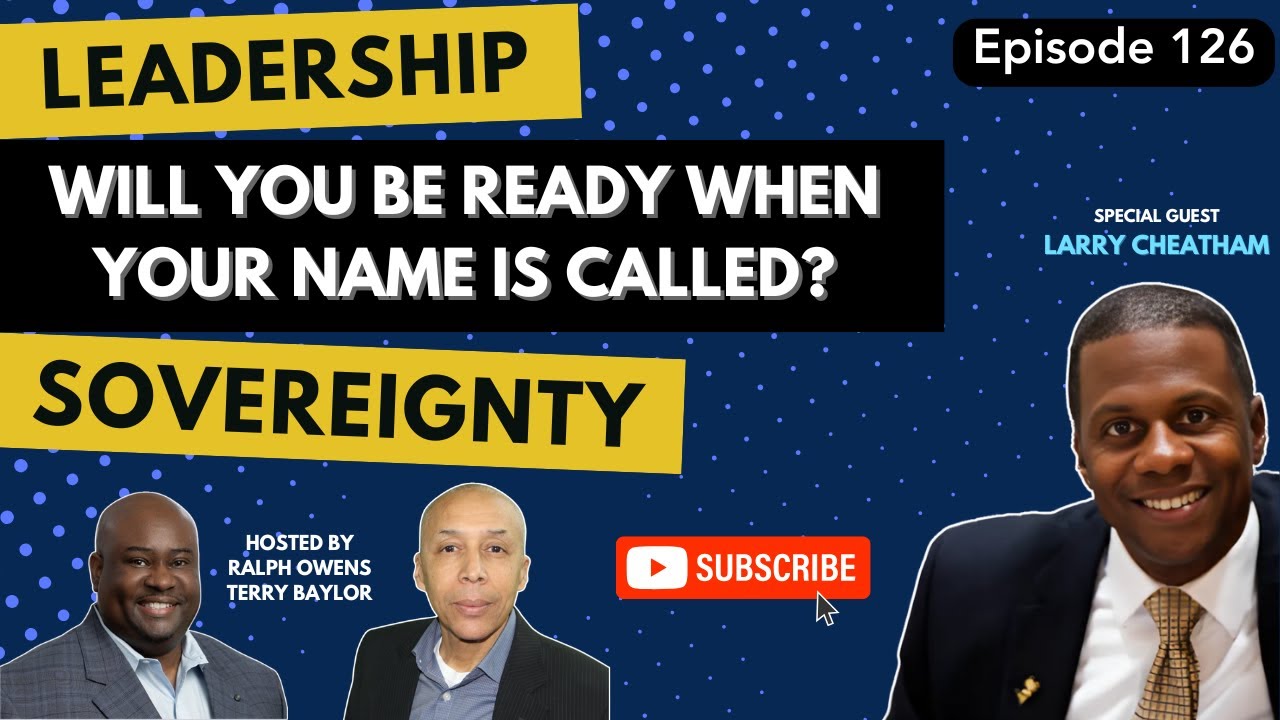
Today’s episode will cover topics traditional forms of leadership, ideologies supported by theology, the message behind the message and how you can’t change your persons mind, but you can influence their actions. ★ Support this podcast ★
Welcome, and thank you for tuning into the Leadership Sovereignty Podcast. I'm your host, Ralph Owens, along with Terry Beller. In today's episode, we'll cover topics such as traditional forms of leadership, ideology supported by theology, the message behind the message, and how you can't change a person's mind but you can influence their actions. Enjoy the show.
Speaker 2:Of the framework of which we have come to understand what leadership looks like, we really don't know what leadership is because the framework was or is based on an ideology that is in and of itself flawed. Meaning that those who are leaders were predestined to be leaders based on very subjective criteria and over the centuries, right? Over the centuries, this ideology has continued to prevail in its thought. Like things like this, right? A person is a great speaker, they're charismatic, right?
Speaker 2:They look a certain way. Oh, you've been chosen to be a leader because you have these tangible, very visually identifiable traits, right? So historically people that look like you and like me, we have no chance because we don't identify with those traits that have been throughout time Yeah. Stated as the characteristics for the chosen ones to be leaders. Now here's the irony of that.
Speaker 2:We've been chosen for something.
Speaker 1:Yeah right exactly.
Speaker 2:You see what I mean?
Speaker 1:Yeah yeah yeah just not that.
Speaker 2:Just We say it all the time right? Hey if you don't have a plan for yourself, someone has a plan for you.
Speaker 1:Absolutely. Absolutely. Yes, sir. Yes, sir.
Speaker 2:And so and so what was so great about, you know, and and studying this and and listening to and I'll just state who it was, you know, Doctor. Miles Monroe. I'm listening and I have a few of his books and things like that. Matter of fact, I've bought books for my son, you know, that he's been teaching on, you know, what, you know, manhood and purpose and those kinds of things. And the guy is just such an amazing teacher.
Speaker 2:He's just so inspirational. So but in this lesson that I'm studying, he was talking about that and how, you know, from man countries, you know, have grafted to this ideology. And it's, you know, adopted in Western society. And it's to the demise of honestly, our system of how we run politics, how we run government, right? These characteristics are how we're choosing our leaders.
Speaker 2:And he's basically stating that this is not leadership at all. Right? It's an ideology and a framework that was used to justify, you know, that particular entity's existence and them taking the actions and doing the things that they've done. Right? So they've they've created an ideology and here's one of the most heavy things that he said, man.
Speaker 2:Is gonna I think you're gonna love this. Every ideology requires a theology to make it legal.
Speaker 1:Okay, you gotta break that one down.
Speaker 2:So what he's saying is this, me just, let's just bring it home for you and I, right? How it's impacted us, our ancestors, right? How do you justify treating human beings a certain way? You have to first identify or create a ideology that's supported by your theology that says these folks here were created to be the lesser or they were created to serve us, right? So their theology had to support treating African Americans or Africans at the time the way they treated them.
Speaker 2:How do you do that saying that you are quote unquote a follower of Christ. Your theology has to support your ideology, right? It has to make it legal. It's a Man, this is a pretty heavy concept, right, when you start getting into that. And so when understanding that, right, this where, is man, this is like really heavy.
Speaker 2:So with all the things that we are getting, right, and what I'm talking about is our education, our certificates, our businesses, all the things that we're doing, right? But if your ideology about who I am, right? The fundamental premise behind how you see me, that ideology will never allow me or someone that looks like me or identifies as an African, right? To really be at the same playing level. Because all I am is a, I'm just a, I'm an educated whatever it is you've called me to be.
Speaker 2:Right? Not just, I'm not an educated man. Right? That's operating at the same level that you're operating at. I'm an educated whatever this ideology that you framing in.
Speaker 2:So in our case, right? Our ancestors case is just, you know, oh, that's like for instance, right? There were slaves who could read. So in essence it would be, hey I have a slave who can read. It's not that hey man this man's taught himself to read.
Speaker 1:My
Speaker 2:mom tells me this story. She says about her dad and she says this all the time. She say, you remind me of my dad all the time because when you make up your mind on something, you're not turning back. If you said it is, that's what you gonna do. She said, but she tells me this, she said, Terry, my dad taught himself to read.
Speaker 2:She says, my dad taught us the alphabet. I can say the alphabet backwards and forwards and she does it right now. I'm like, wow, mom, that's amazing. I've never, you know, practiced the alphabet backwards and forwards. But what I'm saying is that even with what my granddad was, right?
Speaker 2:He was just a slave who could say the alphabet backwards and forwards. It wasn't that, man, this is a smart intelligent man. What I'm saying is these ideologies and these frameworks. Now let's say, right, when we get into our workplaces, right? So let's bring it to the twenty first century.
Speaker 2:Now those messages aren't as deliberate, right? They aren't as, what do we call them now? Now they're cloaked. Right? They're subtle, right?
Speaker 2:You know, we talk about it a lot. I'll tell you this. My wife and I talk about it all the time. And you know, when you know, when our kids were younger, it would baffle us why would people outside of our community say, man your kids are so well behaved. We was like, oh, thank you.
Speaker 2:Then we started getting this so much we were like, do you not expect our kids to be well behaved? What do you mean? I mean it was, so we started seeing the message behind the message, right? Like for instance, We'll hear stuff like, man, you are so articulate. We're like, oh, that's the code.
Speaker 2:You see what I'm saying? But in studying this and really listening to this lesson that doctor Monroe is teaching, it's helping understand from a philosophical standpoint, there is a base premise on who you are, who I am. And that base premise quite honestly has nothing to do with our At this point, come on man. What haven't we done? What haven't come on.
Speaker 2:We got a dude who's a astrophysicist, I forget his name, but he's always on PBS. The dude is brilliant. You know, he's breaking down black holes, like no one loves this dude. Noah be telling me stuff about black holes and you know, I'm like, Noah, that's fascinating. So he loves that kind of stuff.
Speaker 2:So it's not a matter of, you know, intellect, smart, you know, we've we've done just about everything you could do.
Speaker 1:Yeah. Yeah. Yeah. Yeah. You can't I I think it goes back to the the original point that you made.
Speaker 1:You cannot change a person's mind. They're gonna think what they wanna think.
Speaker 2:Right.
Speaker 1:Right. Once you understand that, you understand that my purpose in life is not to change this person's mind. My purpose in life is to get from a to b. Right? What is that destination?
Speaker 1:What's the goal? What's that destiny that God has called for me? And how do I get there? Thank you for listening to the Leadership Sovereignty Podcast. We hope that you not only enjoyed the content, but gained something to help you on your personal leadership journey.
Speaker 1:Feel free to reach out to us on x and Instagram under the handles leadership sovereignty. Until next time, stay safe, peace, and blessings.