

 Apple Podcasts
 Spotify
 YouTube
 Why Leadership Sovereignty? Pt.1
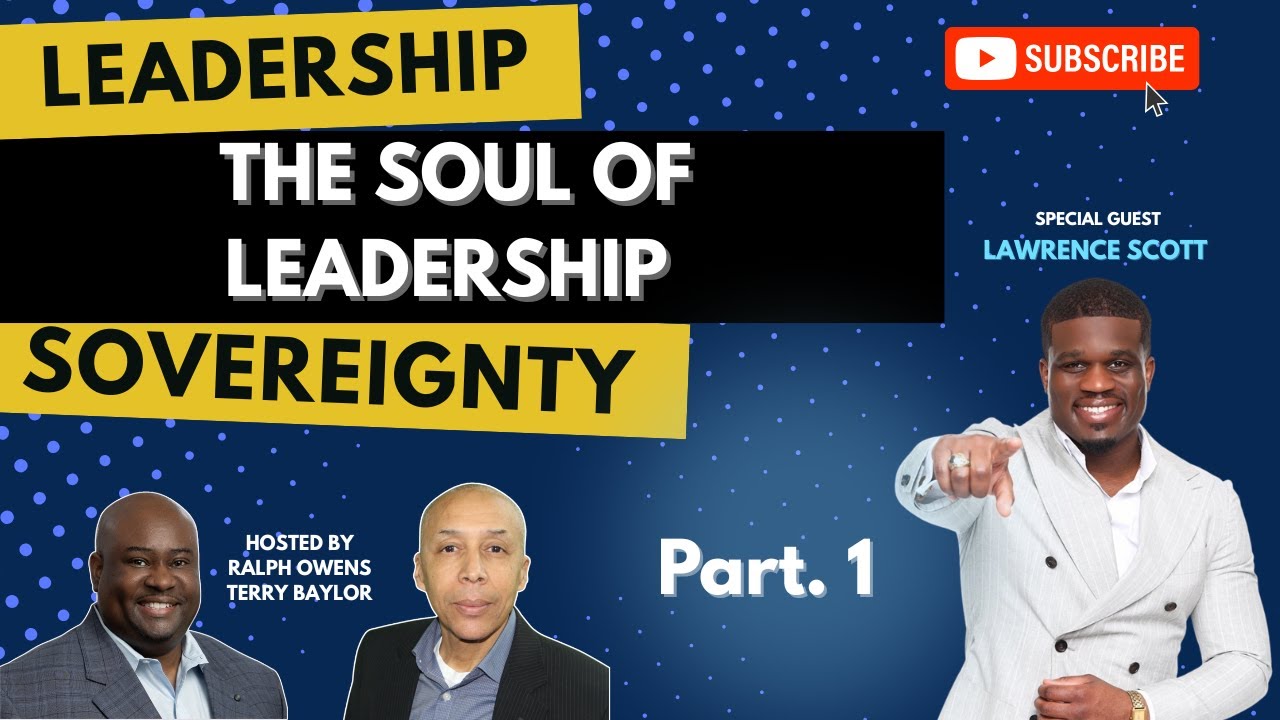
In the first episode of Leadership Sovereignty, Ralph Owens, Chief Information Officer (CIO), and Terry Baylor, IT Executive, delve into the reasons behind launching the podcast. They share insightful details about their life stories, exploring the key factors that have shaped their leadership journeys. ★ Support this podcast ★
Thank you for tuning into the first episode of Leadership Sovereignty with Ralph and me. In this inaugural podcast, we dive into the purpose behind the show and identify our intended audience explaining the reasons behind our choices. Additionally, we share snippets of our origin story passionately expressing our belief in leadership as a powerful equalizer. Enjoy the show. I agree totally in terms of what our focus is and that we're going to have all men of color because there are different experiences that they're having.
Speaker 1:My only challenge is that I definitely would want to call out the African American male explicitly because in our careers, we just haven't experienced a lot of guys like us in these roles. Now I would tell you this, being here in Houston, I've experienced more of us. We have tons of other men of color who've actually mentored us. I just don't believe or see that they have the same challenge in the industry that we have. Do I think it's valuable to say African American and men of color?
Speaker 1:My vote is to go in that direction. But, again, whatever we do, I wanna you know, of course, we're gonna be on the on the same page with it. I just think we need a clarion call for us.
Speaker 2:Yeah.
Speaker 1:So that's kinda where how I how I feel about it.
Speaker 2:I I agree with that. I agree with that because we can only speak from the context in which we've experienced. We do know that there's there are similar challenges in other races as well, but we can only speak from our own context. So calling that out, I think, is good, you know, and then tying in all men of color, I think, will be great because you got Hispanics, right, who are the majority of this country at this point. And a lot of them are disenfranchised.
Speaker 2:Right? You know, they don't get the same opportunities or they don't know how to get same opportunity because they all the one thing we all have in common is that we're battling the same thing. Right now, our experience may be different from their experience. They didn't come over here and change, but they still run it up against the same wall. Right?
Speaker 2:And that's the thing that we're talking about how to get past. So yeah. No. I'm I'm in agreement with that.
Speaker 1:Yeah, I agree and we have that the beauty here's what I love about the environment that we live in today, which is we have so many friends and we've been blessed to have friends in all these different aisles, right? I mean, matter of fact, we have friends in these different aisles who've actually mentored us, who've actually supported us, who've seen when the injustice was done, right? And they were, you know, this is not right and they stood with us for us and so again, we don't want to alienate anyone but the goal is to be, you know, we can invite those friends of ours to speak specifically right to the challenges that they have and to your point, we know our challenges so we can speak pretty, pretty you know definite and precise and target exactly what those challenges have been and how honestly those challenges made us better. We could have had a mentality that this is stopping us, but I believe in our dialogue and exchange that we've had, to the point that we've actually said, if I see the person, I'm a thank them.
Speaker 2:Yeah. Yeah. Yeah. Yeah. Very, very, very contrary to what the norm would be, you know, in these situations.
Speaker 2:But yeah. No. No. I I think, again, we can only speak from our context. Right?
Speaker 2:I can't speak from the context of someone who's Indian and what they face. But we do know that we all run up against the same brick wall and this is where leadership is allowing us all to get past it. Right? You know, from there from our individual context. But yeah, we can passionately talk about ours because we had to live it.
Speaker 1:Correct. So that kind of brings us to where we are from a branding standpoint. Right? And I think we're landing as leadership sovereignty. How did you land there?
Speaker 1:I kind of recall some of our conversations but how you wanna you know, let's just kind of talk a little bit about leadership sovereignty and what that you know, we'll I think, know, so we have a little definition about it, but let's just kinda talk about what that means.
Speaker 2:Yeah. Yeah. So growing up in a predominantly African American environment where opportunities were not as plentiful, seeing a lot of oppression, both mentally, spiritually, and economically, I was able to join the military and go away from that environment and start to see something I had never seen before. And that was successful African Americans living in big houses, driving nice cars, things that I I just wasn't used to seeing when I was growing up. And as I got closer and closer to success, I started noticing something that was similar in every single situation, which was leadership.
Speaker 2:And then I was introduced to a company that focused on nothing but leadership. And that's when I started to learn and understand that leadership basically allows you to overcome all the obstacles that you have in your professional career. So when we say leadership and then we say sovereignty, I was actually looking this up and there's a a quick definition that says sovereignty can generally be defined as supreme authority. So you take leadership, which is the one thing that allows you to overcome almost every obstacle that you'll face. And then you said that it is the supreme authority.
Speaker 2:So to me that that comes out to be leadership is the supreme authority to allow you to unlock your potential and get to where you wanna be in life. And it doesn't matter what race you are. It doesn't matter if you're a man or woman. Leadership is a principle driven, ideal that comes with a lot of features that anybody can apply to their lives and overcome a lot of the obstacles that they face. But what about you?
Speaker 2:What are your thoughts on it? Like, how did you help come to that topic? So
Speaker 1:the sovereignty aspect of it is what really resonates with me. Being a preacher's kid, we hear all the time God is sovereign. So what that meant to me is, you know what? Growing up, our experiences were someone else owned that in some way, form, shape, or fashion. You were having to acquiesce to climb.
Speaker 1:You know my personality. I'm like, oh no, it's a fight today. Let's go get it. But I also had to learn that approaching life with that we want to make sure that we have the go get it ness to overcome challenges But what we want to avoid rather is presenting in a way that's going to invoke hostility. Right?
Speaker 1:And so sovereignty has you don't have to fight for it. If you got it, you see what I'm saying? So God is not fighting to be sovereign. He is.
Speaker 2:So
Speaker 1:in that regard, I have to start looking at myself like that. I'm not going to fight to be sovereign. I'm just going to be sovereign, meaning that it has nothing to do with the other person or the other entity. It has totally to do with how I view and see myself. So I'm making my decisions in a method, a way that's sovereign.
Speaker 1:I've heard someone say in a lesson or my growth in my journey of becoming a better person, unless you learn to master yourself or unless you become a self starter, self motivator, someone will always be commanding your time and how you use it. So if you operate in a sovereign way, that means you are being very prescriptive with your life, very prescriptive with your time, very prescriptive in what motivates you and what's driving you versus being reactive. Thank you for being with us today on Leadership Sovereignty. Stay connected with us on X, formerly known as Twitter, and on Instagram by searching for Leadership Sovereignty. And just like this podcast, let's all collectively grow as we go.
Speaker 1:God bless.