
 Apple Podcasts

 Spotify

 YouTube
I Spent 90 Minutes Building One Prompt — Now It Saves Me 2 Hours Every Time: The Power of Prompt Engineering (Part 3 of 8)
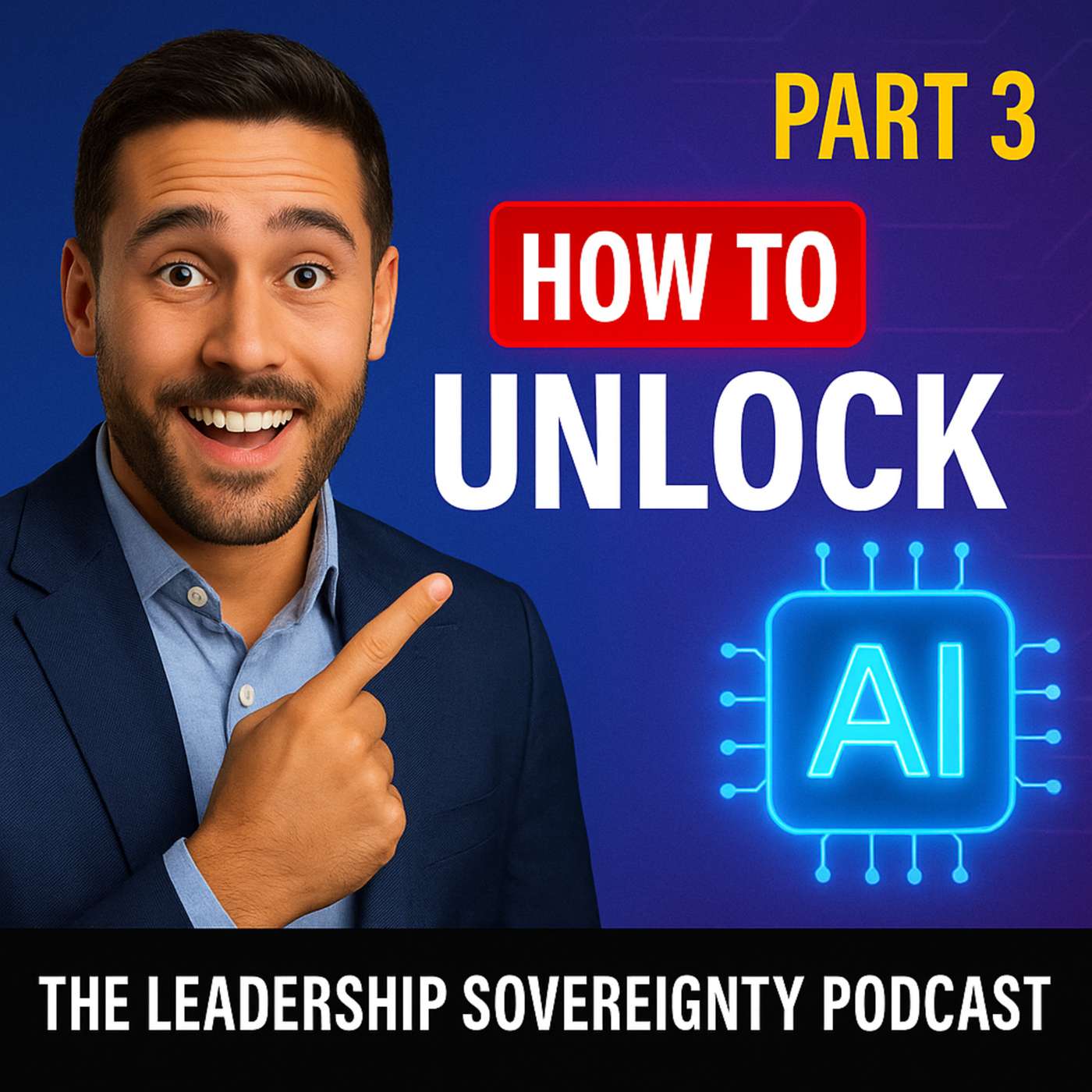
Ralph spent 90 minutes building one prompt — now it does in two minutes what used to take two hours. He and Terry break down prompt engineering, saved prompts, ChatGPT memory, and how AI is the engine powering Leadership Sovereignty itself — and how any p
Ralph spent 90 minutes building one prompt. Now it does in two minutes what used to take him two hours. That is the return on investment of prompt engineering — and most people are still typing one-line questions.
In Part 3 of the Leadership Sovereignty Podcast's eight-part GenAI series, host Ralph Owens and co-host Terry Baylor go deep on prompt engineering — the skill that separates casual AI users from professionals getting real results. Ralph walks through exactly how a YouTube video about podcast chapters changed the way he uses AI forever, how he now uses saved prompts to create newsletters, analyze transcripts for viral clips, and produce content that would take hours to do manually. Terry draws a brilliant parallel — prompt engineering is the new programming language, except anyone can do it in plain English.
They also cover how AI is the engine powering Leadership Sovereignty itself — allowing two full-time professionals to produce the content of a dedicated team — and why the box-packing peach example is the clearest illustration of how AI helps any professional in any role understand and articulate their value to the organization.
In Part 4 you will learn the risks no one warned you about — including the one that could cost you your job.
What you will learn in this episode:
- Why one well-built prompt can save you hours every single time you use it
- How to structure a prompt with role, context, instructions, and output format
- How to use ChatGPT memory and saved prompts to stop starting from scratch
- Why prompt engineering is the new programming language — available to everyone in plain English
- How AI helped Ralph and Terry build a newsletter, analyze transcripts, and produce at scale
This episode is for you if:
- You are using AI but only asking one-line questions
- You want to start building prompts that work the same way every time
- You are a content creator, entrepreneur, or professional who needs to produce more with less time
- You are ready to treat AI like an investment — not just a search engine
***********************************
🎧 Get your free AI Toolkit: https://www.leadershipsovereignty.com/ai
Chapters
00:00 – Welcome & Why Prompt Engineering Matters
02:45 – Terry Asks for Real-Life Examples
03:17 – Discovering Better Prompts for Chapters
05:20 – How Prompt Engineering Changed Everything
06:15 – Using GenAI to Create Shorts & Engagement
07:12 – The Power of Context in Prompts
08:14 – From COBOL to Natural Language Prompts
08:46 – Automating Newsletters with GenAI
11:08 – GenAI as a Lifeline for Limited Manpower
12:32 – Why We Share Leadership Strategies With You
13:10 – Expanding the Podcast’s Reach with AI
15:02 – GenAI as Your Career Co-Creator
15:22 – Applying AI to Any Job (Peach Boxes Example)
17:55 – Using GenAI Metrics to Stand Out at Work
18:25 – The Risks of Hallucinations in AI
19:59 – Trust But Verify: Avoiding Blind Acceptance
20:59 – The Knife Analogy: Why Words Matter
***********************************
LinkedIn Learning on AI Prompt Engineering:
https://www.linkedin.com/learning/prompt-engineering-how-to-talk-to-the-ais/talking-to-the-ais
How To Add Chapters To YouTube Videos With AI - Using Just One Prompt
https://youtu.be/gUdYIrCb4uU?si=D_p_3wv0VycWNhnb
***********************************
📺 Watch This Episode on YouTube
Click here to watch the full video of this episode.
***********************************
🌐 Visit the Leadership Sovereignty Hub
Everything you need to lead with clarity, confidence, and strategy — in one place.
https://www.leadershipsovereignty.com
- Listen to or watch our full episode library
- Download free leadership frameworks, guides, and tools
- Read in-depth show notes and guest takeaways
- Submit your leadership questions or episode topic suggestions
***********************************
📩 Get Every Episode Delivered to Your Inbox
Join the Leadership Sovereignty newsletter and get new episodes, leadership insights, and exclusive resources — plus get instant access to our free AI Toolkit: the practical guide smart professionals use to think clearer, communicate better, and make smarter decisions at work.
***********************************
⭐ Help a Leader Find This Show
If this episode added value to your leadership journey, take 60 seconds to leave a rating or review. Every review puts this content in front of another professional who needs it.
🟣 Leave a Review on Apple Podcasts
🟢 Leave a Rating on Spotify
✍️ Leave a written Review
***********************************
🔁 Know Someone Who Needs to Hear This?
Share this episode with a colleague, mentor, or team member who would benefit from this conversation. Leadership grows when we invest in the people around us.
***********************************
📲 Follow the Conversation
Stay connected and join the leadership conversation on social media.
▶️ YouTube
🔗 LinkedIn
📸 Instagram
🎵 TikTok
🧵 Threads
🐦 X
📘 Facebook
***********************************
🎤 Work With Ralph & Terry
Looking for dynamic speakers for your next event or leadership summit? Ralph and Terry bring executive-level insight, real-world leadership strategy, and an engaging presence that moves audiences to action.
*Connect with us*
***********************************
💰 Support Independent Leadership Media
This show is independently produced to keep the content unfiltered and audience-first. If these conversations are helping you lead better, your support directly funds the next conversation.
★ Support this podcast ★
***********************************
0:00 This is how it, this is how it happened for me. I was trying to create chapters for one of our podcast show. The tool we, we use to record with it, It gives you some chapters, but it's very limited. So I searched the, I searched YouTube like everybody else on, you know, how, how do I get chapters, You know, for a podcast transcript. I found a guy's video and he, he basically walked you through how he does it. He had this prompt that he created for ChatGPT that spits out perfect chapters for your video. And I said, OK, well let me check this out. And I opened up the prompt and I looked at it and I was like, Oh my God, there was so much in this. It wasn't just a one line question. And that's when it hit me that OK, this too can do way more than respond to A1 line question. But if you wanted to come out a certain way, a certain format, repeatedly, you have to be able to understand how to engineer the prompt, the question correctly. So the way you framed your prompt, it's going to depend on the response that you actually get and how efficient it is and how well it is and on point it
1:32 is. So, and another thing, like at least in ChatGPT, you can enable memory. So what does that mean? That means the ability for ChatGPT to remember your conversations in the past so that everything you do in the future, it can always refer back to it so that it's not starting over from scratch again, right? You know, But these are settings that you have to set. I don't think that automatically comes turned on, right? And then, you know, you can create your saved prompts. So again, the way we question ChatGPT, you know, the questions that we put in is called a prompt. So you probably need to understand that you can save your prompts, you know, for things that you have to do that are repetitive, right? So I have, and I probably have like 20 different prompts for different things that I need to get done because I took some time to really like.
2:22 I mean, I remember one time I spent an hour and a half perfecting a prompt to get the outcome that I wanted it to be. But now, you know that investment, that hour and a half, and that's not for everything, right? So I don't want to choose anybody to think that oh man, I'm gonna have to put all this time in it. Now I was trying to get a very complex outcome and in order for me to do that, it took me an hour and a half to finish the prompt. But now every time I use the prompt I'm done in like 2 minutes or used to take me. Can you dig into that? Can you dig into that man? Because honestly, that's something that I haven't since you've been sharing that with me and I've been trying to analyze, OK, what do I do on a daily basis that I can, that I can create a prompt for? Can you give us a use case, something that, that, that you can share around what, what you've done? And I, because I would love to hear a little bit more about that because you're a little bit, you're a little bit more advanced in that area than I am.
3:17 So I, I, and I'm sure other folks are like, man, really? So yeah, yeah, let's dig into that. Sure, sure, sure. So, so this is how it, this is how it happened for me. I was trying to create chapters for one of our podcast show, right? So the two we, we use to record with it, it gives you some chapters, but it's very limited. So I searched the, I searched YouTube like everybody else, you know, on, you know, how, how do I get chapters, you know, for a podcast transcript. And I found a guy's video and I, and I'll link it in the show notes. And he had, he basically walked you through how he does it. He basically goes to this one website, he puts in the URL of the video and then it creates A transcript from that. And then you download the transcript. And then he had this prompt that he created for ChatGPT that spits out perfect chapters, right? You know, for your, you know, for your video. And I said, OK, well, let me check this out. And I opened up the prompt and I looked at it and I was like, Oh my God, there was so much in this. It wasn't just a one line question, right? He had a role, he had context, he had instructions, he had exactly how he wanted the output to look. And that's when it hit me that OK, this too can do way more than respond to A1 line question. But if you wanted to come out a
4:50 certain way, a certain format repeatedly, you have to be able to understand how to engineer the prompt the question correctly, right? So then I took it upon myself to go to LinkedIn learning and I decided to take a prompt engineering course, which we will let. We'll also LinkedIn the show notes for anybody who wants to take it. And when I did that, it changed forever how I will ever use Gen. AI because the power in Gen. AI is your ability to ask it the right question, right? You can give it a one line question, just like Google, right and get a very generic answer, or you can give it a detailed prompt and it can create something amazing, you know, for you, right? So, so now you know, even for our our episodes now I use that same, I use the same process, right? The show is done, I get the transcript, I use it in that prompt and ChatGPT gives me perfect chapter numbers. And what does that do for us?
5:47 That enhances you, the listeners ability to interact with this video. Maybe you don't want to listen to the whole video. We understand that. Maybe you just want to get to a certain place in the video. Now, because we have these detailed chapters, because I think the platform we use it, Terry only gave us about 3 or 4 chapters. Now I got 10 right, So we got 10 well crafted chapters that you can click on and get to any point in the in the video that you want to make the experience better for you, right. I've gone as far as to create prompts to do things like analyze the transcript itself and tell me where the the most engaging points are in the show. So we can use those for our shorts videos, right?
6:30 You know, so it, it'll look through it and use his own intelligence to figure out these are the points that you want to go ahead and pull out, right. And make those in the shorts. And these are the reasons why you want to do it, right? You know, that's awesome. Yeah. It's it, it's, it's, it's unlimited, right? That the, the, the capability is unlimited, just depending on which it what it is that you want to do. So I think what you do is you first understand prompt engineering, right? You know, so that's the difference between saying, you know, write me a report on Q2 versus write me a one page executive summary on Q2 performance, highlights, wins, challenges, next steps in a confident but concise tone, right? You see the difference between those two?
7:11 You give it a lot more context, right? You tell it exactly how you wanted the outcome to be, the output to be. It accelerates your ability to get things done. And then the greatest, the greatest part about it is you can save it, right? Put it in a note somewhere. So the next time you need to do this, all you got to do is just copy and paste and put it in and bam, you get exactly what you want. You don't have to come up with this idea all over again, if that, So what? Happens. Yeah, it does. It does so so Ralph, you know this coming out of school many, many years ago for me, I came out of school of programmer, right. And So what I hear in that is this is what's amazing and this is back in the days in COBOL, man, you have to have SYNTEX. It was COBOL and and FORTRAN. What else that I called in C++ me just it's and the reason I'm bringing these terms up is because it was a special language.
8:04 You guys get to actually create a program using natural language. Yes, yes, yes. That is a made look if I had a period or semi colon out of space. I didn't define a variable right man that that that program was bombing out. Took hours to hours to just find out Man I missed the period. You got. To be kidding me but the fact that you can do this now with natural language, you can start your prompt off with good morning if you want to that's. Right, that's right. That's. Right, say good morning. How's your day going?
8:46 Yeah, yeah, right. So the fact that you can use natural, natural language to do that is, is, is just amazing, man. No, thank you for sharing that. I'll tell you another example, right? So here's something we, we recently launched with the podcast is if you go to our website, leadershipsovereignty.com and you sign up for our newsletter, right? If it's your first time going to the website, it'll pop up in the window and you can just enter your information or you can just Scroll down to the bottom of the website and enter your, your e-mail information. If you sign up there, you will, we will send you a e-mail, a newsletter each week after we release a new episode, right?
9:27 And that newsletter contains, you know, all the pertinent information about the show. This is what we know. We know that most of you all who are consuming this content typically are doing it when you're in transit, right? You're in the road, you're on your way to work or your way home, you working out all of these different things. One of the things that, you know, that really kind of struck me was because I listen to a lot of podcasts too, is that man, he, he, he mentioned the website, but I don't have time to write it down. I'm, I'm, I'm, I'm driving, right? Or he mentioned this book or he mentioned this tool or anything like that. And you can, and you always got to go back to the website, to the podcast later to go try to extrapolate that information, right? So what we decided to do was create a newsletter each week, if you sign up for it, that's free, that actually summarizes all of that stuff for you, right? It gives you, you know, summary of the show the the key, the key points a link to where you can click on to get to the show if you need to go access it again later. It includes any book references.
10:28 It includes any people references, any tool references with links that you can go ahead and click on just to really, you know, make it a lot easier for you right? Well, how am I doing that? I'm doing that with a prompt, right? I'm able to put the the transcript in ChatGPT along with this custom prompt that I just created, right? Give it a few variables, right? This is the, the, the URL to the, to the show website, I mean, to the, to the show episode. This is the guest, right? You know, this is their name, right? You know, to make sure they all match up and it'll go through that transcript and create a beautiful newsletter that I'll, all I have to do is just copy and paste and send it out to all of our subscribers, right?
11:08 You know, which would take me probably 2 hours to write on my own, right? And I get it done in a second. Yeah, yes, yes, I'll tell you. I'll tell you right here's what's happening, right. And I appreciate this, our ability to engage you guys, a lot of it is driven by Gen. AI. Even the platform that we leverage right there are things that inside the platform, platform, sorry that we are leveraging Gen. AI to do where when we first started doing this, we were like, bro, are we going to better keep this up? Not bad. Look. How we're going to keep this up? Well, we started embracing greater Gen. AI and are the platform that we leverage start leveraging Gen. AI right?
11:55 And it it was perfect timing for us and our ability to keep this going because we are limited manpower. So feel free to donate. That's a, you know. And thank you feel. Free to donate because we have limited manpower, but with that limited manpower, we are leveraging the technologies and tools that are at our disposal so we can bring you this valuable content. Because again, this was all driven by the fact that when we were coming up through the ranks, there was no one to really share this kind of information with us. No, no, no, nobody. And, and, and the blessing was Terry and I had each other, right?
12:39 Because that is true. As we were going through this stuff, we were talking to each other about it. And it's like, Mandy, Can you believe this? I can't believe I just had to go do this. Yeah, yeah. OK. We, we, we, we got, we got to figure this one out. And we just go from the, the, you know, one topic to the other. But to Terry's point, we brought this show together just so we can give this information to you to save you time, right. So that you can use these leadership principles to level up on your career, right? To lead with power and authority, right, which ultimately leads to promotion, which ultimately leads to more compensation, right? You know, so that's that's the whole reason why we're breaking this to you. But and so and so raffle what you're doing, right? I'm so glad that you've taken that plunge because what, what, what really what's happening here is our ability to touch you at different modalities has increased right now we can we can get to you on YouTube, right?
13:35 Well, first we started off at just, you know, it was Spotify and and and Apple, yeah, iTunes, right. Well, with the, with the advent of and our exposure to these AI tools, now we're able to do, you know, there's a website out there, right? There's, there's a newsletter and there's just better engagement with the podcast. And So what it's done to to to our earlier point is supercharged that's. It that's. Supercharged leadership, sovereignty, so. That's and just just a quick plug, you know, based on what Terry said, right, For those who don't know, you know, there are a lot of podcast creators out there who that's all they do full time. Terry and I got full time jobs, right? I have a full time job.
14:19 Terry is the CEO of business keeps them, you know, constantly busy, right? We are able to produce this content only because of the use of these tools, right? You know, to Terry's point, when we first started to do this and everything was manual, we questioned whether or not we could even continue to move forward, right, because it was taking so much of A strain. Because remember when we first started, we were posting shows twice a week. Yes, Oh my gosh, that was. It was a grind it. Was a grind. It was a grind. So so you know, real case scenarios on how we're using AI to enhance and super and supercharge what we do, right?
15:00 So we're trying to give you some examples, right? You can fit that into whatever it is that you do, right? But it definitely, if you are interested in becoming a content creator, this is going to be the your, your your Co creator, so to speak. You know that that that piece that can help you create faster. And but here's The thing is though, RAF, everybody's a content creator. Yeah, in their own right. Everybody is right in your own right. It just depends on what you know. Everybody's got a report, everybody. And here's the other thing right now, rap we, we haven't gotten into this, but remember we talk about those metrics, your number, this right here can supercharge your numbers. Oh, you know what?
15:43 So yeah, let's just dive into that for a second, right? Let's let's, because we always talk about, let's give an example that's not in a technical field. You may, let's just say you have to pack boxes for a living and you have to pack boxes of Peaches. OK, so you know, your job is just to come in there and pack your boxes of Peaches. Your boss may say, hey, I need you to get, you know, X number of boxes done today. OK, so you come in and you only focus on that one thing, packing those boxes of Peaches for that day to hit that number, right? You know, but what if you can take a tool that says, OK, this is what I do. I pack Peaches in this box for this manufacturing company. Help me to track, you know, the metrics to show exactly the value that I bring to the organization. And then help me understand how what I do exactly. You know, it helps this company to make money. It will start to explain to you that, OK, by packing this many boxes of Peaches everyday, you pack this many per week, which is this many per month, which means the organization can sell so many Peaches, right?
16:56 Which increases its profit by this. Now you understand from the from the, from the dollar that the company made all the way back to what you do, you know exactly how important it is. Now you can start to ask it, OK, so I'm actually packing the five boxes a day. What would happen if I packed seven boxes a day? And it will tell you in real time, you would increase the company's profit by this right now imagine being able to go back to your boss to say, Hey, I think I found a way to go from packing five boxes a day to 7. And it would increase the ROI, you know, on these Peaches by 12%. They're going to look at you and say what? And, and, and think about thinking, now think about this. I'm, I'm going to keep going back to this.
17:38 Think about how that boss is going to look at you versus the person who's not doing right, the one who just want to make five boxes in a day. Just I just want to put that that weird pause there so you can think about that for a second because a pause can be really loud sometimes. We know that, don't we? See yes. Yes, silence is powerful. Silence is powerful, But now I want you to think about who on your job is using Gen. AI to come up with these kind of metrics, and are you doing anything for yourself, right? It's a very, very powerful tool and the barrier to entry is is 0.
18:19 Anybody can start using these tools for free. You can go to Gemini, you can go to ChatGPT and sign up for a free account. But let's let's talk about some of the dangers that come along with using Jen I because we've talked about a lot of the benefits, right? A lot of benefits there. The first one is called hallucinations, right? So you know, hallucinations are confident answers, but they are false answers. So what I what I mean by that again, Gen. AI is not intelligent in itself. All it does is try to predict what the next word should be in a response. This is why every response that it gives you, you have to read it. You cannot ask it to produce something for you and just blindly accept it as being accurate and being true and then pass that off as your work.
19:11 Gen. AI goes through this, this condition called hallucinations from time to time. It doesn't do it every time, right? You know, a lot of actually, in my experience, until you speak on this too, Most of the time it's pretty accurate. But every now and then, every now and then, it'll do a hallucination where the prediction of the next word was wrong, right? And what it says doesn't make any sense. So This is why it is mandatory. All right, Please, please, please, listeners, listen to this. When you ask Gen. AI to create something, you have to review it and make sure it's accurate. And, and here's the thing about that. Let's say it's 98% accurate. It's only 2% off, OK? You change to 2% and you're done. And versus you having to figure out 100% of that on your own brainpower, right?
20:00 Yeah. Terry, you want to talk about that a little bit? Yeah, I think again, right. We've talked about it earlier. It is trust but verify, right? You do. So I'm listening to this guy. His name is Chris. I don't remember his last name, but it's a a podcast I like to listen to. And honestly, he kind of changed my life with this statement. He said, I don't believe what anyone says is true. Now, let me let me let me frame the context of that right? And so the context of that is this. We use words and we will believe that my understanding and definition of that word is the same meaning and definition that you have for the word. And so he gave an analogy.
20:46 He said, I'm going to ask everybody in the room to draw a knife. And, you know, we would think that, OK, everyone knows what a knife is, right? He said, well, based on where you are in your life or what you do, you're going to draw a different knife. He said. So someone with kids, they're probably going to draw like a butter knife, right? Because they're not going to have something that's danger in the house, right? Someone who's a hunter, they're going to draw like a machete. Someone who is into fishing, they may draw like a Swiss Army knife. So meaning that you have to ask the questions to get down, to drive down to, to unify everyone on the same page, right?
21:28 Thank you for listening to the Leadership Sovereignty Podcast. If this content blessed or helped you in any kind of way, support us today by subscribing to our YouTube channel, clicking the like button for this episode, and sharing this content with others that you think it will help. Until next time, stay safe, peace and blessings.

Host, The Leadership Sovereignty Podcast | CIO | 2x Houston CIO of the Year Finalist | US Navy Veteran
Ralph E. Owens II is the host and executive producer of The Leadership Sovereignty Podcast, which he co-hosts with Terry Baylor. Together they have built a career acceleration platform for professionals who want to increase their influence, navigate workplace politics with integrity, and position themselves for promotion.
Ralph is a Chief Information Officer in financial services and a two-time Houston CIO of the Year finalist. His career spans financial services and energy generation, where he has secured critical infrastructure, navigated complex regulatory environments, and built high-performing teams that consistently deliver under pressure.
He is also a United States Navy veteran. Much of what he teaches about leading under pressure, and about the difference between authority and influence, started there.
He built this show for a specific reason. Most professionals are never actually taught the things that determine whether they advance. Every episode is designed to close that gap with real-world strategy rather than theory, so listeners move from overlooked to promoted.

Co-Host, The Leadership Sovereignty Podcast | CEO, Lift Life Technology | Digital Transformation Leader
Terry Baylor is the co-host of The Leadership Sovereignty Podcast, which he hosts alongside Ralph E. Owens II. Together they have built a career acceleration platform for professionals who want to grow their influence, navigate workplace politics with integrity, and position themselves for promotion.
Terry is the CEO of Lift Life Technology, a healthcare technology company delivering secure connectivity and cybersecurity to private practices and direct primary care organizations. His career spans strategic IT leadership and large-scale digital transformation, where he has guided teams through Agile adoption, complex modernization, and the kind of organizational change most companies underestimate.
He is a mentor, speaker, and longtime advocate for keeping technology human. He has delivered insights at events including Cisco Live, and he coaches high-performing teams on leading with authenticity and agility. His conviction is straightforward. The most powerful connections still happen in person, and old fashioned is not outdated.
On the show, Terry brings the operator's perspective. He asks the questions listeners are actually living with and pushes every conversation toward something a professional can use on Monday morning. Listeners leave each episode with language for what they are experiencing and a clear next move.