Smart vs. Wise: The Crucial Difference for Leaders Under Pressure
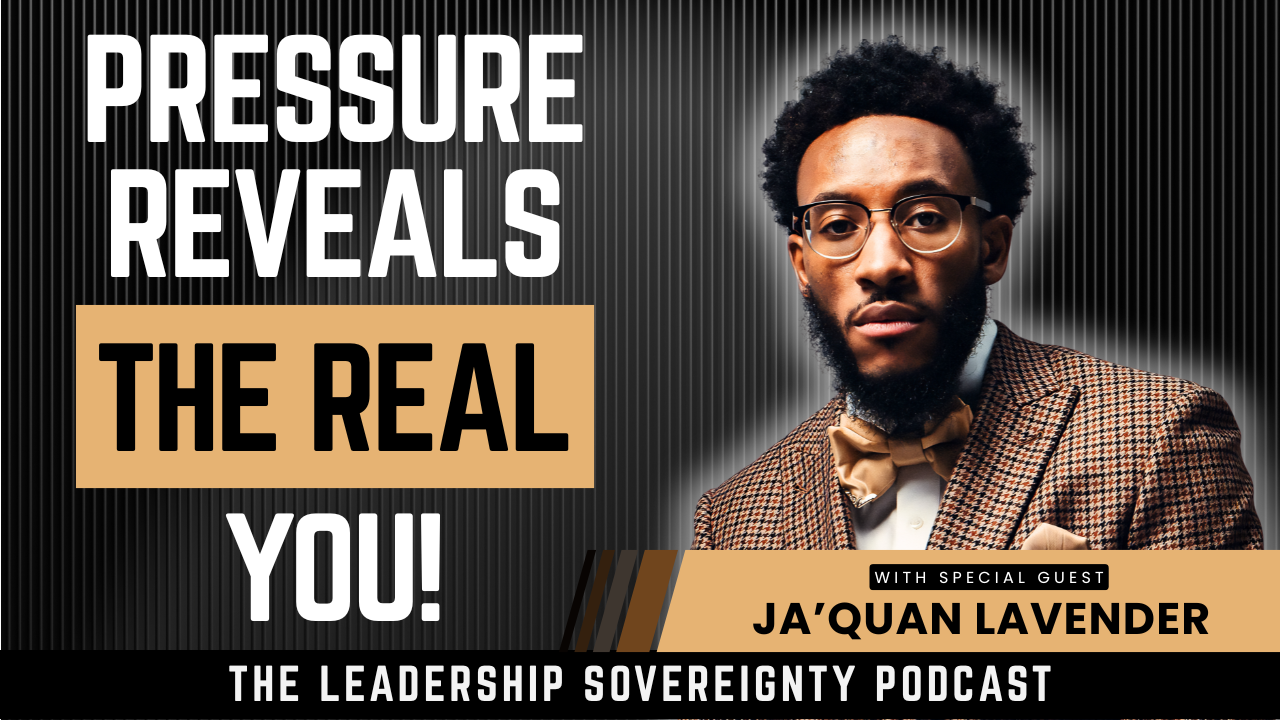
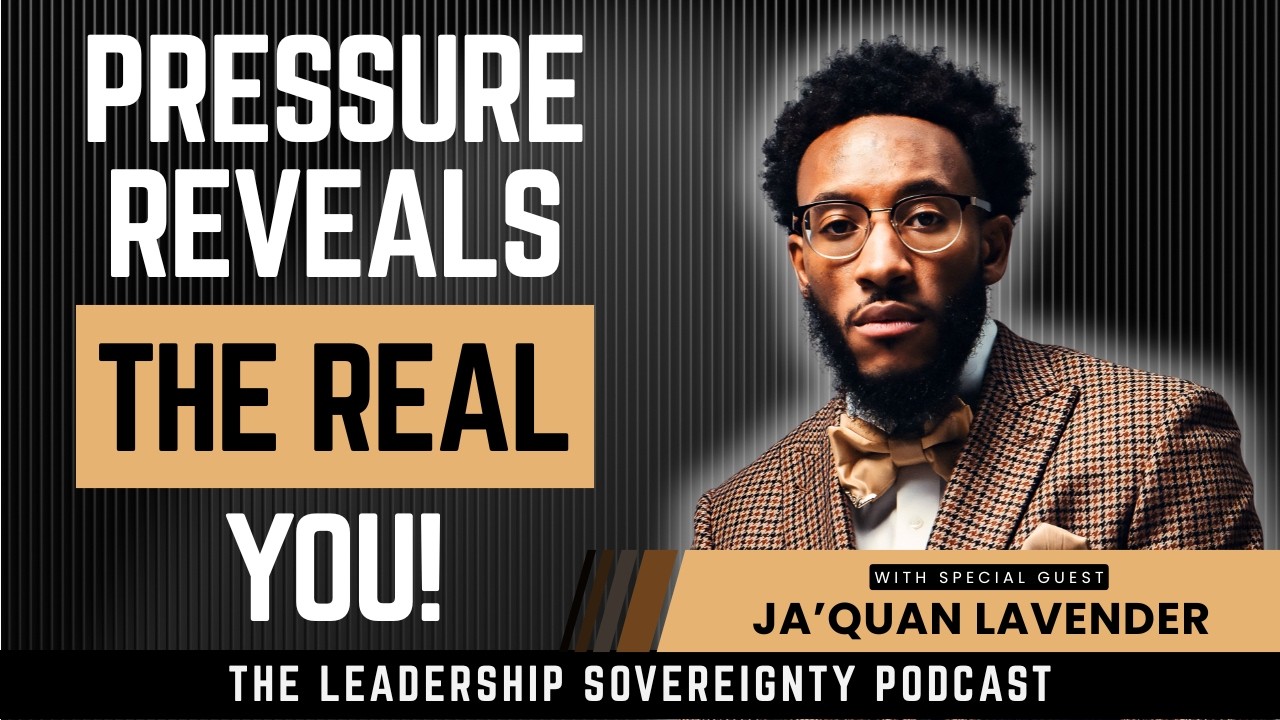
Welcome back to the blog, where we dive deeper into the conversations that shape effective leadership. In our latest episode of The Leadership Sovereignty Podcast, we tackled a topic that is absolutely critical for anyone aspiring to lead or currently in a leadership role: the profound difference between being smart vs wise, especially when the heat is on. This distinction, as highlighted by our guest Ja'Quan Lavender, founder of The Prudent Man Leadership Academy, is not merely semantic; it's the bedrock upon which sustainable and impactful leadership is built. If you haven't had a chance to listen yet, I highly recommend you check out the episode titled The Prudent Leader: How to Make Wise Decisions Under Pressure Before Your Career Pays the Price. Today, we're going to unpack the key concepts from that discussion and explore why cultivating wisdom is paramount for navigating the inevitable challenges of leadership.
What Being 'Smart' Means in a Leadership Context
Let's start by defining what we often mean when we refer to a leader as 'smart.' In the traditional sense, intelligence manifests in several ways. It's the ability to quickly grasp complex information, to analyze data, to devise strategic plans, and to solve intricate problems. Smart leaders are often highly educated, possess impressive credentials, and demonstrate a strong command of their field. They can articulate sophisticated ideas, come up with innovative solutions, and excel in logical reasoning and pattern recognition. In many environments, especially early in a career, these intellectual abilities are highly valued and often the primary drivers of promotion. They allow individuals to excel in technical roles, to manage projects efficiently, and to make sound, data-driven decisions in stable or predictable circumstances. This is the kind of intelligence that gets you noticed, that earns you accolades, and that can propel you up the organizational ladder. It's the ability to ace the exam, to crack the code, to win the argument through sheer intellect.
When things are going well, when the path ahead is clear, or when the challenges are within a predictable framework, a 'smart' approach often suffices. The ability to process information rapidly and apply learned frameworks can lead to effective outcomes. Think of a brilliant engineer who can design a groundbreaking new product, or a financial analyst who can forecast market trends with uncanny accuracy. These are individuals who leverage their cognitive power to achieve remarkable results. They are adept at understanding the 'what' and the 'how' of a situation, often with a keen eye for detail and efficiency. This intellectual horsepower is undeniably a valuable asset in any professional setting. It allows leaders to set ambitious goals, to develop intricate strategies, and to guide teams through complex operational landscapes. The emphasis here is on cognitive ability, on the capacity to learn, adapt, and apply knowledge in a way that produces tangible results. It's about processing power, analytical depth, and the capacity for complex thought. In essence, being 'smart' means having a high capacity for intellectual performance.
The Limitations of Intelligence Under Pressure
However, the episode and our discussion today highlight a crucial flaw in solely relying on intelligence: its limitations when faced with true, high-stakes pressure. Intelligence, while powerful, is primarily a cognitive function. It operates best in environments where there is time for deliberation, where emotions are managed, and where the variables are, to some extent, controllable. When pressure mounts – and by pressure, we mean situations where the stakes are high, the consequences are significant, and the decision-making window is narrow – raw intelligence can begin to falter. Why? Because pressure often triggers emotional responses that can override logical thought processes. Fear, anxiety, frustration, or even overconfidence can cloud judgment. A leader who is brilliant but lacks emotional regulation might become defensive, lash out, or make impulsive decisions based on immediate emotional reactions rather than reasoned analysis.
In these critical moments, the finely tuned intellect that served them so well can become a liability if not tempered by other qualities. The ability to process information can be overwhelmed by the surge of adrenaline. Analytical skills can be skewed by the need to protect oneself or one's reputation. Strategic thinking can devolve into tactical, short-sighted maneuvers. We've all witnessed it: the brilliant executive who crumbles under media scrutiny, the highly intelligent manager who alienates their team during a crisis due to a lack of empathy, or the technically gifted leader who makes a catastrophic error in judgment because they failed to consider the human element. These are not necessarily failures of intelligence; they are often failures of wisdom. The 'smart' approach, when unmoored from deeper understanding and self-awareness, can lead to brittle decision-making. It can lead to outcomes that are logically sound in isolation but disastrous in their broader impact. The intelligence that can build a complex model might not be the intelligence that can navigate the delicate political currents of a failing project. Under pressure, intelligence alone can be insufficient, even counterproductive, if it's not accompanied by the qualities that define wisdom.
Defining True Wisdom: Beyond IQ and Credentials
So, if intelligence is not the whole story, what is wisdom? True wisdom, as explored in our episode, transcends mere intellect. It's not about having the highest IQ or the most impressive degrees. Wisdom is a deeper, more integrated quality that encompasses understanding, judgment, experience, and a profound sense of perspective. It's the ability to see the bigger picture, to understand the nuances of a situation, and to make decisions that are not just effective in the short term but also sound and ethical in the long term. Wisdom involves understanding not just the mechanics of a problem, but its implications for people, for relationships, and for the future. It's about discernment – the ability to distinguish between what is truly important and what is merely urgent, to separate the signal from the noise.
Wisdom is cultivated, not simply acquired. It's a process of learning from experience, reflecting on mistakes (both our own and others'), and developing a profound understanding of human nature and the interconnectedness of systems. It involves empathy, the capacity to understand and share the feelings of others, which is crucial for effective leadership, especially when dealing with people under stress. Wisdom also includes humility – recognizing the limits of one's own knowledge and being open to learning from diverse perspectives. It's the quiet understanding that comes from years of observation, introspection, and a commitment to growth. In the context of leadership, wisdom manifests as the ability to inspire trust, to guide with integrity, and to make decisions that serve not just the immediate objective but the greater good of the organization and its people. It's the difference between knowing the rules of chess and understanding the psychology of the opponent. It's about foresight, not just hindsight. Wisdom allows a leader to navigate ambiguity, to foster resilience, and to lead with a steady hand when others are panicking. It’s the quiet confidence that comes from knowing why you're doing what you're doing, and understanding the potential ripple effects of your actions.
How Pressure Reveals Character, It Doesn't Build It
One of the most powerful insights from our conversation with Ja'Quan Lavender is the notion that pressure doesn't build character; it reveals it. This is a critical distinction. Many people operate under the illusion that challenging situations will forge them into stronger, more resilient individuals. While adversity can certainly be a catalyst for growth, the initial reaction under extreme pressure is usually an excavation of pre-existing traits, not the creation of new ones. If a leader's character is not well-formed before the crisis hits, the pressure will likely expose their underlying weaknesses, not magically imbue them with strength. Think of it like a stress test on a bridge. The bridge's design and materials are put to the ultimate test, and if there are inherent flaws, the stress will reveal them, potentially leading to collapse, rather than strengthening those weak points in the moment.
This is why investing in character development and wisdom cultivation is not a secondary concern for leaders; it's foundational. When a crisis strikes, the quick, often unconscious, decisions a leader makes are dictated by the character they have already built. Are they inclined to be accountable, or do they deflect blame? Are they courageous, or do they shrink from responsibility? Are they empathetic, or do they prioritize expediency over people? These are not qualities that can be conjured out of thin air when the stakes are highest. They are the result of consistent practice, self-awareness, and a commitment to principles. This episode emphasizes that the 'smart' leader might have all the answers, but the 'wise' leader knows how to apply them with integrity and foresight, especially when it's difficult. The pressure cooker environment of a crisis will magnify what's already there. If integrity, humility, and a commitment to the greater good are present, they will shine through. If selfishness, arrogance, or a lack of self-control are present, they will also be amplified, often with devastating consequences for the leader and their team.
The Prudent Man Standard: A Framework for Wisdom
To address this gap, Ja'Quan Lavender introduces the "Prudent Man Standard," a framework designed to cultivate the kind of wisdom that is essential for effective leadership under pressure. This standard is not about being cautious to the point of inaction; it's about acting with discernment, foresight, and a deep understanding of consequences. It's rooted in the idea that leadership is not just about making decisions, but about making the *right* decisions, especially when the path is unclear and the stakes are high. The Prudent Man Standard encourages leaders to move beyond reactive decision-making and to embrace a proactive, character-driven approach. It's a call to build the inner fortitude and the insightful judgment necessary to navigate complex challenges with grace and effectiveness.
This standard is particularly relevant because it shifts the focus from innate intelligence to cultivated character. It recognizes that while intelligence can be a powerful tool, it is wisdom, born from character, that provides the essential guidance in moments of crisis. The Prudent Man Standard offers a tangible approach to developing this wisdom, moving it from an abstract concept to a practical application in daily leadership. It's about developing the habit of thinking before acting, of considering the long-term implications, and of acting with integrity even when it's difficult. It’s about developing a robust internal compass that can guide you through the storm, regardless of external pressures. This standard serves as a benchmark, a constant reminder of the qualities we should strive to embody as leaders, ensuring that our actions are guided by wisdom and integrity, not just by intellect or ambition. It provides a clear path for those who want to move beyond merely being smart, and to become truly wise leaders.
Consequence-Aware Thinking and Emotional Self-Control
At the heart of the Prudent Man Standard lie two critical components: consequence-aware thinking and emotional self-control. Consequence-aware thinking is the ability to anticipate the ripple effects of decisions and actions. It means looking beyond the immediate outcome and considering the broader, often unforeseen, implications for individuals, teams, the organization, and even stakeholders. It's about asking, "What could happen next?" and "Who might be impacted?" This requires a level of foresight that goes beyond simple problem-solving. It involves understanding the interconnectedness of systems and the long-term impact of choices. A leader who thinks only about short-term gains might make a decision that boosts quarterly profits but devastates employee morale or damages the company's reputation, leading to greater losses down the line.
Coupled with this is emotional self-control. As we discussed, pressure can trigger intense emotional responses. Emotional self-control is the ability to manage these emotions, to prevent them from hijacking judgment and leading to impulsive, damaging actions. It doesn't mean suppressing emotions, but rather understanding them, acknowledging them, and choosing how to respond rather than reacting. This allows for clear-headed decision-making even when faced with fear, anger, or stress. The wise leader can remain calm amidst chaos, can listen objectively, and can respond thoughtfully rather than defensively. These two elements, consequence-aware thinking and emotional self-control, work in tandem. Emotional self-control creates the mental space for consequence-aware thinking to flourish. Without the ability to regulate one's own emotional state, the capacity to rationally consider future outcomes is severely diminished. Together, they form a powerful defense against the pitfalls of high-pressure leadership, allowing for decisions that are both effective and ethical.
The Power of Daily Self-Reflection for Cultivating Wisdom
Beyond the immediate application of consequence-aware thinking and emotional self-control during crises, this episode also highlights a fundamental practice for cultivating wisdom: daily self-reflection. This is not a one-time workshop or a periodic retreat; it's a consistent, daily habit. It's the act of intentionally stepping back to review one's actions, decisions, and interactions. What went well today? What could have been done better? What assumptions did I make? How did I react to challenges? This ongoing introspection allows leaders to learn from their experiences, to identify patterns in their behavior, and to make incremental improvements. Without this deliberate pause, it's easy to get caught in the whirlwind of daily demands and never truly grow or adapt.
Self-reflection is the engine of wisdom. It's how we process information, integrate feedback, and deepen our understanding of ourselves and the world around us. It’s the difference between simply going through the motions and actively learning and evolving. This practice helps leaders to connect their actions to their underlying beliefs and values, to uncover blind spots, and to make conscious choices about the kind of leader they want to be. It allows for course correction, for refining strategies, and for developing a more nuanced and effective approach to leadership. It's the humble acknowledgment that we don't have all the answers and that continuous learning is essential. By dedicating even a few minutes each day to honest self-assessment, leaders can build the foundation for greater wisdom, resilience, and effectiveness, not just for themselves, but for their teams and organizations.
Connecting Blind Spots to Root Causes: The Heart Defect Diagnosis
Finally, this episode introduces a powerful concept: the "Heart Defect Diagnosis" as a way to connect observable blind spots to their underlying root causes. We all have blind spots – areas where our perception is limited, where we misinterpret situations, or where our actions have unintended negative consequences. These blind spots often manifest as recurring patterns of behavior or problematic outcomes. The Heart Defect Diagnosis framework encourages leaders to look beyond the surface-level manifestation of a blind spot and to dig deeper to understand its origin. This often involves examining core beliefs, past experiences, unresolved emotional issues, or deeply ingrained habits of thought.
For example, a leader who consistently alienates team members might exhibit a blind spot in their communication style. The superficial diagnosis might be "poor communication skills." However, the Heart Defect Diagnosis would prompt a deeper inquiry: Is this rooted in a fear of vulnerability? Is it a result of past negative feedback that has created defensiveness? Is it a belief that toughness is the only way to earn respect? By identifying these root causes, which are often metaphorically referred to as "heart defects," leaders can begin to address the fundamental issues rather than just treating the symptoms. This is where true transformation occurs. It requires courage and honesty to confront these deeper issues, but it is essential for lasting change and for cultivating genuine wisdom. It’s about addressing the "why" behind the "what," ensuring that the leadership foundation is sound and resilient, capable of withstanding the pressures that will inevitably arise.
Conclusion: Leading Prudently for Long-Term Career Success
As we wrap up this blog post, it's clear that the distinction between being smart and being wise is not just an academic exercise; it's a critical determinant of leadership effectiveness and long-term career success. Our latest episode, The Prudent Leader: How to Make Wise Decisions Under Pressure Before Your Career Pays the Price, offered invaluable insights into how to cultivate the latter. While intelligence can open doors and achieve short-term victories, it is wisdom – forged through consequence-aware thinking, emotional self-control, daily self-reflection, and a willingness to diagnose the root causes of our blind spots – that builds trust, fosters resilience, and ensures sustained impact. In the demanding landscape of leadership, where pressure is a constant companion, it is wisdom, not just intellect, that will ultimately define our legacy and secure our future. Thank you for joining me today as we unpacked these essential concepts. Until next time, keep leading with wisdom and integrity.

Host, The Leadership Sovereignty Podcast | CIO | 2x Houston CIO of the Year Finalist | US Navy Veteran
Ralph E. Owens II is the host and executive producer of The Leadership Sovereignty Podcast, which he co-hosts with Terry Baylor. Together they have built a career acceleration platform for professionals who want to increase their influence, navigate workplace politics with integrity, and position themselves for promotion.
Ralph is a Chief Information Officer in financial services and a two-time Houston CIO of the Year finalist. His career spans financial services and energy generation, where he has secured critical infrastructure, navigated complex regulatory environments, and built high-performing teams that consistently deliver under pressure.
He is also a United States Navy veteran. Much of what he teaches about leading under pressure, and about the difference between authority and influence, started there.
He built this show for a specific reason. Most professionals are never actually taught the things that determine whether they advance. Every episode is designed to close that gap with real-world strategy rather than theory, so listeners move from overlooked to promoted.
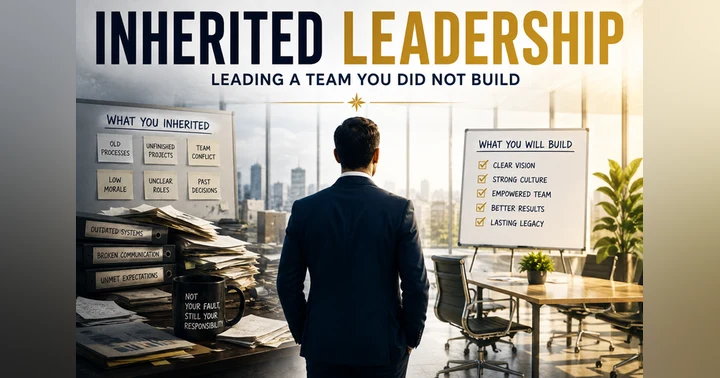
How to Lead a Team You Inherited Without Repeating What Broke It