


 Apple Podcasts
 Spotify
 YouTube
 He Studied AI in 1996: What Non-Technical Leaders Get Wrong About What AI Can Do
Sai Prakash was studying artificial intelligence in 1996, on a 175 megahertz machine, during the years the field went quiet. Now the CTO and co-founder of MindStaq, he tells Ralph E. Owens II and Terry Baylor what actually changed, what did not, and why most non-technical leaders are measuring AI against the wrong thing. This is the first conversation in an ongoing series with Sai Prakash.
Key Takeaways
- Non-technical leaders must look beyond monopolistic software definitions like Word, PowerPoint, and Excel to truly understand the capabilities of modern AI.
- The AI winter of the 1990s and 2000s was primarily driven by expensive and limited hardware, rather than a lack of sound foundational algorithms.
- Drawing inspiration from Isaac Asimov's science fiction helps technologists anchor their AI developments in a human-centric vision that prioritizes societal benefit.
- Platforms like MindStaq move away from traditional files and folders, using AI to mimic a stream of consciousness and create a digital footprint of an individual's work.
- Executives need to develop strategic thinking around how AI is positioned and utilized rather than just chasing faster infrastructure.
What does someone who was studying artificial intelligence in 1996 see that the rest of us are missing?
Meet Sai Prakash, CTO and co-founder of MindStaq, six years at Microsoft, and a Master of Science in Mathematics and Computer Science from Sri Sathya Sai Institute of Higher Learning. Host Ralph E. Owens II and co-host Terry Baylor open a series of conversations with him here, starting with his story.
It begins in a small, free university in India, in an AI lab that existed only because a grant required it, on machines that would not, in his words, "hold a candle to your iPhone." His class of 24 went on to Intel, Nvidia, Google, and DeepMind. Sai's read on the AI winter that followed: the ideas were sound, the hardware was too expensive, and when hardware finally caught up, software did not. "We're stuck in these monopolistic definitions of Word, PowerPoint, Excel. I'm like, can we do better?"
He grew up on Isaac Asimov and still carries two things from those books: that people were "always central to that thesis," and a 1970s warning about "a cult of anti intellectualism in America where one person's ignorance is as good as another's knowledge." His concern today: "we've got this powerful technology, but we're not thinking hard enough about how it's used, how it's positioned."
That thinking became MindStaq. It started with a question, "where's the Star Trek computer?", a scene from The Matrix, and a Sanskrit word for consciousness. How those connect closes this episode and opens the next one.
******************************
🎯 WHAT YOU'LL LEARN IN THIS EPISODE
- What an AI lab in India in 1996 looked like, and why it existed at all
- Why the AI winter was a hardware and cost problem, not a failure of ideas
- Where the 24 people in Sai's class ended up, and what that says about latent expertise
- How Isaac Asimov's fiction shaped a working technologist's view of what AI is for
- The Asimov warning about expertise that describes most meetings you sit in today
- The Star Trek question that started MindStaq
- Why Sai says "there is no document, there is no file"
- What "citta" means and why a company was named for it
******************************
👥 WHO THIS EPISODE IS FOR
- Directors and VPs asked to sponsor or approve AI without an engineering background
- Leaders who have sat through a vendor demo and could not tell staged output from real capability
- Executives deciding whether an initiative failed on merit or on cost
- Technology leaders who keep buying faster infrastructure and never ask what runs on top of it
- Anyone who will be asked this week what they think about AI
******************************
🎧 THE REST OF THIS CONVERSATION
This is the first of an ongoing series with Sai Prakash. If you are new here, these three recent conversations are worth your time.
EP187: Lead Your Leader: How to Master Leading Up and Build Influence That Gets You Promoted
EP188: You're Not Responsible For What They Broke: How to Lead a Team You Inherited And Thrive
EP189: Leading the Soul: How to Retain Young Talent When Compensation Has Stopped Working
******************************
🎤 MORE FROM SAI PRAKASH
His full bio, his links, and every one of his appearances on the show:
Sai Prakash on The Leadership Sovereignty Podcast
******************************
📖 ABOUT SAI PRAKASH
Sai Prakash is the CTO and co-founder of MindStaq, an AI-native work management platform built to unify scattered tools and give teams a system that knows their work. He has spent more than 25 years in technology and product leadership at the intersection of enterprise systems, AI, and user-centric design, including six years at Microsoft and roles at Thomson Reuters and Agility. He holds a Master of Science in Mathematics and Computer Science from Sri Sathya Sai Institute of Higher Learning, where he studied artificial intelligence in 1996, and completed entrepreneurship study at The Wharton School.
******************************
🧾 Chapters
- (00:00) -
- (00:04) - AI’s Early Promise
- (00:49) - Meeting the Guest
- (02:17) - Studying AI Before the Boom
- (06:50) - Classmates Who Saw It Coming
- (08:32) - Asimov and the Future
- (11:38) - AI’s Human Purpose
- (14:35) - Trends and Anti-Intellectualism
- (16:44) - The Mindstack Origin
- (19:52) - Digital Selves and Memory
- (22:58) - Closing the Episode
******************************
📺 Watch This Episode on YouTube
Click here to watch the full video of this episode.
******************************
📩 Get Every Episode Delivered to Your Inbox
Join the Leadership Sovereignty newsletter for new episodes, leadership insights, and exclusive resources, plus instant access to our free AI Toolkit: the practical guide smart professionals use to think clearer, communicate better, and make smarter decisions at work.
******************************
⭐ Help a Leader Find This Show
Sixty seconds and a review puts this in front of another professional who needs it.
******************************
🌐 More From Us
Full episode library, free leadership frameworks, and show notes: leadershipsovereignty.com
Follow the conversation: YouTube, LinkedIn, Instagram, TikTok, X, Facebook
Book Ralph and Terry to speak: Connect with us
Support the show: ★ Support this podcast ★
******************************
📄 Full Episode Transcript
Click here to view the episode transcript.
Frequently Asked Questions
Who is Sai Prakash?
Sai Prakash is the CTO and co-founder of MindStaq, an AI-native work management platform. He has over 25 years of technology experience, including six years at Microsoft, and studied artificial intelligence in 1996.
What caused the AI winter?
The AI winter was primarily caused by high hardware costs and limited computing power rather than a failure of ideas or algorithms. When hardware capabilities and cost-efficiency eventually caught up, the software side of AI was able to flourish.
What is MindStaq?
MindStaq is an AI-native work management platform designed to unify scattered tools and give teams a system that understands their work. The company's name is derived from the Sanskrit word 'citta,' meaning awareness or consciousness.
How did Isaac Asimov influence modern AI technology?
Isaac Asimov's science fiction works, such as the Foundation series and stories featuring the positronic brain, shaped how technologists perceive robotics and AI by emphasizing a human-centric approach where technology elevates society.
00:00 -
00:04 - AI’s Early Promise
00:49 - Meeting the Guest
02:17 - Studying AI Before the Boom
06:50 - Classmates Who Saw It Coming
08:32 - Asimov and the Future
11:38 - AI’s Human Purpose
14:35 - Trends and Anti-Intellectualism
16:44 - The Mindstack Origin
19:52 - Digital Selves and Memory
22:58 - Closing the Episode
Sai Prakash:
And you look at our computers and, you know you know, typing in a Word document, it it has no idea who you are. And so we got the, you know, the famous Deck Alpha machines. Those those were the the machines of the day, you know, at that time, a 175 megahertz processor. Because I think we've got this, you know, powerful technology, but we're not thinking hard enough about how it's used, how it's positioned. And I think that's a big a big issue at the moment.
Ralph Owens:
Hello, world. We are back again for another exciting episode of Leadership Sovereignty Podcast. Yeah. We have a very, very special guest that that we're going to introduce and have a great conversation with today. Terry, checking in.
Ralph Owens:
How are you feeling today?
Terry Baylor:
I am feeling great, man. I was up early this moment interacting with the assistant.
Ralph Owens:
Okay.
Terry Baylor:
So I'm ready to go. We all know who the assistant is, so we're ready to go.
Ralph Owens:
That's right. That's right.
Sai Prakash:
Our new best friends.
Ralph Owens:
Exactly. Exactly. Exactly. Well, without further ado, we want to introduce mister Sai Prakash, really good friend of of mine. Terry knew him in an indirect way.
Ralph Owens:
Didn't know who he was, but used something that he created. We had a great conversation in preparation for this podcast for you today. Sai, why you go ahead and introduce yourself to the people?
Sai Prakash:
Sure. Thanks, Ralph, Terry. Great to be here today and get to have this conversation with you guys. I'm a CTO and co founder of a company called Mindstack. We've been around for about ten years or so, and five years in the work management space.
Sai Prakash:
And before that, I was at Microsoft for six years, and I was at Thomson Reuters and Wall Street, as well as with large supply chain logistics companies with worldwide footprints like Agility. And I am a math computer science major focused on AI, as it turns out. And I've been pretty much programming all my life. So that's sort of my quick background.
Ralph Owens:
Awesome. Awesome. Awesome. Awesome. Well, let's just jump into it because we got a lot of good things to cover.
Ralph Owens:
So, Sai, you studied AI in India in 1996 when nobody was talking about it. What did you see back then that made it worth you actually pursuing a degree for?
Sai Prakash:
Well, for one thing, it was interesting to to have this exposure in India because the university I went to, Sri Satsang University, is a small organization. So three colleges and very high quality in terms of education. So the top, I think, 0.01% country. But very small, very quiet place. And actually a charitable one.
Sai Prakash:
So the education was free there. So it's quite amazing. So I got both my undergraduate and postgraduate degrees at the Sai Institute. At that time, the Indian market wasn't really open the way The US markets were. It was difficult to get equipment and things like that into in in the country because of the way the customs and other things work.
Sai Prakash:
So it wasn't very common to see advanced labs. It really took some time for things to catch up. And so we were it was sort of good fortune, you know, and serendipity maybe, but the grant that we that the the university got from the UGC, which is the university grants commission in India, was focused on this topic of AI, and it had to be an AI lab. And so we got the, you know, the famous Deck Alpha machines. Those those were the the machines of the day, you know, at that time, a 175 megahertz processor.
Ralph Owens:
Wow.
Sai Prakash:
And that was super powerful, of course, back then. Of course, today, that doesn't hold a candle to your iPhone. But, you know, that was the state of the art, and then they set up the lab. And that's how I got the chance to learn about AI and study things like neural networks,
Ralph Owens:
Mhmm.
Sai Prakash:
Pattern recognition and voice recognition. They're all all aspects of AI, whether it's speech or vision and things like that.
Ralph Owens:
Mhmm. That's that's interesting. That's interesting. Just to even think about what you said about the hardware and what its capability was back then. Right?
Ralph Owens:
I mean, what what was it like to to basically study that and just kinda watch that whole industry go silent for so many years, and then all of a sudden, boom, it's on everybody's mind.
Sai Prakash:
So the AI winter was really around the time that I was studying it. Because we were we were a little behind in in in in India in some in some areas. Right? So other than the the top institutions in India, like the IITs, other institutions were generally lagging a little bit. So we were kind of already delayed.
Sai Prakash:
In in The US, the AI winter was already happening. And it was really not due to a lack of interesting algorithms and, you know, certain design breakthroughs. AI so you've you've seen AI was always touted as, you know, playing games and things like chess, challenging chess masters, that sort of thing. And it was used in in gaming. I remember, I'm a I'm a gamer as well, and I used to play Counter Strike, back then.
Sai Prakash:
I remember the bots used to come. And initially, I mean, none of that really used any anything interesting from an AI standpoint, simply because most of the hardware and the cost of running such things was very expensive. And so if you were trying to be cost sensitive, it wasn't really an option. So that that was a big factor, I think, and availability of hardware. And then you sort of start you started seeing the hardware explosion that kept happening, you know.
Sai Prakash:
Processors got smaller and storage got cheaper and the amount of RAM they could handle got bigger and everything just kept multiplying the hardware side. And software really didn't do anything for a while. Mhmm. Right. And I think, you know, so pretty much night the nineties and the two thousands was AI winter, more or less.
Sai Prakash:
Mhmm. Yeah. And then maybe around 2012, I'd say that was when the deep learning started really hitting. And that's when you started seeing, you know, IBM Watson and the or, you know, deep deep blue plays chess or whatever, you know, that that sort of news started to make the waves, and AI started becoming a little bit more fashionable again.
Ralph Owens:
Gotcha.
Sai Prakash:
But, of course, the as you both know, the big boom was when we had the, the singularity that that, you know, was identified by the the LLM, the arrival of the LLM. So that was when AI became, you know, a begin thing.
Ralph Owens:
Yeah. Sure.
Terry Baylor:
Sure. So, Sai Sai, quick question on that. How many of the folks that were in your class back then are still, you know, still hung on? Right? Are they, you know, any of your former classmates?
Terry Baylor:
Are they, yeah, excited that, man, we've been waiting for this day. Right? You know? It's kinda like, we've been waiting. It's here.
Sai Prakash:
100%. I I remember it because we had 24 people in my postgraduate class, and they're all in tech or science slash tech or research. At least 60% of them have PhDs. And, you know, so we were fortunate that, they kind of spread spread out across the world. We have a whole bunch of them in in in in America and and, Germany and Switzerland.
Sai Prakash:
And so they all ended up in companies like Intel and Nvidia and Google. Wow. So some of them lead one of them is one of the members of the Google DeepMind team, the one the AlphaFold the AlphaFold work. He's a member of that. So it turned out that that arc was very fortunate for for everyone.
Sai Prakash:
And and honestly, it's I think it's it's great to see everyone benefit from that that latent knowledge that sat there There. In us for years that, you know, we we we always I was always excited about it because I grew up with Asimov, you know, Isaac Asimov and the foundation series, iRobot, and this other famous pieces that inspired the imagination. You know, the positronic brain was what was the thing that powered that was the kind of like the LLM of Asimov stories was the positronic brain. And it was it was it was cool to see it actually come to life. So for me, it's like childhood dreams Sure.
Sai Prakash:
Come
Terry Baylor:
For those who don't understand what you're saying, records, we're like, we are we are in the stratosphere. You mind giving a quick synopsis on who he is and what his his contribution to where we are today? Can you just give a little, you know, kind of a quick story about about who he is?
Sai Prakash:
Absolutely. One of the most brilliant writers of the sci fi generation, very well known, Isaac Asimov. And and he was from right here, right here in Brooklyn, New York, which, you know, I'm proud of the fact that I live in Brooklyn too just because Asimo was here. It's like and he wrote some amazing work that shaped how we perceive robotics and AI because he he understood psychology, and he was a scientist himself in a PhD. And so he had the he had the background to to write about this and theorize about it.
Sai Prakash:
And so he's famous for the three laws of robotics, which are widely quoted both in real robotics as well as in movies and the movie culture. And on top of that, the way he described society where robots and humans so basically AI and humans were living together, you know, in a enhanced way where it the AIs and the robots basically made human life better. So he in his vision of the future, all of our scientific advances, things like traveling to other planets, colonizing the moon, and things like that, were all aided by the existence of robots. Right? So in other words, until that happened in his timeline and his history of the future, it was something only until robots are widely available and could, you know, help humans in a big way that space travel took a leap, you know, that colonization took a leap.
Sai Prakash:
So it he connected it with the availability of these of AI resources. Mhmm. And so that's an exciting thing to think about and say, hey, that's happening to us right now. Yeah. And, you know, does that mean, you know, every I know there's a number of people that postulate about the fact that humanity has to look to the stars.
Ralph Owens:
Mhmm.
Sai Prakash:
And, you know, missions to Mars and moon moon settlements, and and there's serious talk of NASA actually looking to establish a moon base. Mhmm. So, you know, it's a very exciting time on on multiple frontiers. And the fact that AI has arrived, the AI that Asimov predicted would be required, it'd be a requirement to allow us to advance. And you wonder how much of that was things like, well, is it also that scientific accomplishments got accelerated because AI was there?
Sai Prakash:
In other words, you know, the the pace at which technological breakthroughs came accelerated. And without that, you wouldn't be able to get quickly to that level where you can sort of imagine us going out into space and living somewhere other than Earth. Mhmm. So pretty lofty aims, but it seems like people feel that they're starting to get within reach.
Ralph Owens:
Mhmm. How much of learning that from him aided in your positioning on AI being something that actually contributes to humanity and not destroys humanity as we've been hearing here?
Sai Prakash:
That's a great question. That's a great question. And I think you've hit the key point is that I grew up with the Asimovian version. And in the Asimovian version, there was the drama of, you know, the what happens when if the AI start thinking for themselves and looking out for themselves. There was a little bit of that.
Sai Prakash:
Yeah. But it was always with this higher goal of making, you know, humanity better or making humanity more aware. So I always saw AI in a positive light. I Mhmm. I really didn't see it.
Sai Prakash:
And even in Assimovian fiction, the human a lot of humans resist it. You know, there's a lot of distrust and and, you know, derogatory remarks, you know, calling AIs toasters and stuff like that, know, robots toasters and sort of treating them like a person that can function or or or, you know, interact. So he he he correctly understood the human reaction to it. Not everyone's gonna embrace things, and that's understandable. People have different views and different backgrounds.
Sai Prakash:
But the AI was even the administration of the cities and everything was always adopting AI to advance people's benefits.
Ralph Owens:
Mhmm.
Sai Prakash:
You know, people were always central to that that thesis. And that's something I think we need more of in at at the at the present moment in real life. Mhmm. Because I think we've got this, you know, powerful technology, but we're not thinking hard enough about how it's used, how it's positioned. And I think that's a big a big issue at the moment.
Terry Baylor:
So so I'm looking you know, of course, right, we, you know, we did a little research on who he is and and, you know, when was he born and what time frame. So, you know, do you believe a lot of the time frame that he was born in? Right? He was born in 1920. So there's a stark difference on opinion and philosophy of that generation based on where we are today and our generation.
Terry Baylor:
And, you know, I've I've often heard that, man, that was the greatest generation. Right? People talk about that generation. You know, I think AI brings a huge philosophical debate. Right?
Terry Baylor:
I think, you know, technology does that, you know, naturally, but this may be one of the greatest philosophical dilemmas that we're facing to, you know, in, I think, in in the history of mankind. Right? I mean, this almost mar I think it trumps probably, you know, is the earth flat around? Right? That's another philosophical conversation that was based on tech.
Terry Baylor:
Right? Cause the ship was tech in the day.
Sai Prakash:
Back in the day. I think I
Terry Baylor:
think we're there again.
Sai Prakash:
Yeah. That's a very that's a very astute observation. And I think there's also the fact that whether you looked at it, you know, in Asimov's time, and he he was very far far thinking. He really saw trends. He understood trends very well.
Sai Prakash:
He predicted to some extent the trend we have today of the impact of social media and the fact that influencers and that whole the rise of the influencer culture Mhmm. And the fact that information sources have become so diverse. Right? And not the official kind of media as a source of information, and that trust model on that has all changed, you know, to some extent, eroded in some places, evolved in some places. And part of that is this notion of who's an expert, you know?
Sai Prakash:
Does everyone's opinion count? Can you know? And, you know, the Internet as an amplifier of opinion. And he saw that coming decades ago. He said he commented on a thing a cultural phenomenon that was happening in America at the time.
Sai Prakash:
And this was, I think, in the nineteen seventies, if I'm not mistaken, where he said, there is a cult of anti intellectualism in America where one person's ignorance is as good as another's knowledge.
Terry Baylor:
Wow. Wow. Wow.
Sai Prakash:
And it was Yeah.
Terry Baylor:
With that's definitely playing out.
Ralph Owens:
Yeah. See it amplified with social media.
Terry Baylor:
Yeah. And I'm gonna leave it right there.
Ralph Owens:
Wow. Wow. Wow. That's good.
Sai Prakash:
Yeah. So even though he was from that previous time, like you pointed out, Terry, I think he saw the writing on the wall in terms of the way, you know, there will be technological advancements. There will be these moments where we leap really high as humanity in in tech, but we have to balance that with some notion of policy. What is this for? Who does it benefit?
Sai Prakash:
And make sure that, you know, you're always looking at humanity first in the way things are adopted.
Ralph Owens:
I love that. I love that. I love that. So as we as you mentioned that you're the CTO and and and cofounder of Mindstack, where did that name come from? It's very, very unique.
Ralph Owens:
You you kinda told a story about that. Can can you review that with everybody?
Sai Prakash:
Absolutely. So it's kind of an interesting history. So we started thinking about it really started from this notion of, you know, where's the Star Trek computer? The one you've seen this in in shows like Star Trek where wherever they are in the ship, the computer knows who they are, and you can just talk. You know?
Sai Prakash:
The computer always knows who you are. Mhmm. And anyone can speak and has instant acknowledgment of their authority, who they are, what they're talking about. Is it private? Is it public?
Sai Prakash:
Should it be broadcast? It seems like all the context of those conversations is always well known. And you look at our computers and, you know, you know, typing in a word document, it has no idea who you are. It's, you know, it's your your knowledge that you're capturing here, putting it into this computer and and still typing, you know, we're not like speaking freely and and evolving our and researching in a natural way. And these computers, the hardware is so capable.
Sai Prakash:
And we always felt like, why is the software logging so far behind? You know, we're stuck in these monopolistic definitions of Word, PowerPoint, Excel. Those are very narrow definitions that have been around for, like, thirty, forty years. I'm like, can we do better? Surely, there's a a different way of thinking.
Sai Prakash:
And now we're seeing that happen now because, honestly, you know, you see people give a presentation today and it's just pulled out of a a chat in Clod or a similar tool. It's not setting you a file even sometimes. It's just a browser window. Mhmm. Right?
Sai Prakash:
And that shows you the way people are getting freed from the files and folders things. And that was our that was our theme in thinking. So we're and it's initially, the thought process I had was that, you know, it's like that scene from The Matrix where Neo, you know, the first Matrix movie, the best one.
Ralph Owens:
Right.
Sai Prakash:
Where Neo is is going to see the Oracle for the first time, you know, Tiana Reeves' character, and he goes and there's a little kid who is bending a spoon Yes. Just by looking at it.
Terry Baylor:
Yeah.
Sai Prakash:
And he asks him about how he's doing that, and he just says, well, the the reality is there is no spoon. Mhmm. Right? And so that scene inspired me to think about, what if you just think outside of files, folders, the traditional documents. There is no document.
Sai Prakash:
There is no file. And you just remove those constraints, and then you start to get content flowing freely from people, like almost like a stream of consciousness. And that's why the mind stack came in. And in fact, the company name that we registered was actually the Sanskrit word, citta. We spelled it as c I t t a.
Sai Prakash:
Mhmm. But actually, it's the Sanskrit word, citta, which means awareness or consciousness.
Ralph Owens:
Wow. I did not know That was the
Sai Prakash:
story behind the whole mind stack thought process.
Ralph Owens:
That's powerful, man. That's powerful. You you even talked about a digital projection of a a person's self. You know, just can you touch on that?
Sai Prakash:
So, you know, Matrix inspired, and it's we were just thinking, you know, we we put so much stuff into our our computers, but in different computers over different times. Right? So it's like and I'm sure all of you are familiar with the whole USB drives and, you know, copying of your files and various old drives and maybe even, you know, who knows, you know, a couple of those DVDs burned with, like, backups of stuff.
Ralph Owens:
That's right.
Sai Prakash:
But it's basically just a a there's a a digital footprint of stuff that represents your intellectual property, your work that you've done over the years, the things you've studied and collected. And it's not convenient. Like, in the Star Trek version of that, everything is somehow in one place. And you can access anything at any time of your whole history just by talking to And the that is so powerful because nothing's ever forgotten about yourself. It's like your whole
Ralph Owens:
self of
Sai Prakash:
what you've done is in the computer as a digital version. Yeah. And that's what that's what the digital projection of your physical self is in in our vision was, why can't I have the entirety of everything I've done available to me in the computer? It can do it. It has the capability to do it.
Sai Prakash:
Mhmm. Of course, we were missing a couple of of key breakthroughs, I think, to really enable that when we started this, you know, ten years, ten plus years ago. Mhmm. Wrote the first couple of patents just to really not to enforce anything, but just to quant to quantify these ideas.
Ralph Owens:
Yeah. Yeah. Yeah. Yeah. No.
Ralph Owens:
That's fantastic. That's fantastic.
Terry Baylor:
It is. It is. So so so, Ralph, what comes to mind for me on that is, man, all those OneNotes that we have. My god, we we have OneNotes from twenty years ago still. Remember that?
Terry Baylor:
We kept everything. So Ralph and I go way back, like, infrastructure and all these. I mean, we can we can pull up programs that we were managing notes from I mean, we kept everything in a OneNote.
Ralph Owens:
We did. We did. We did. And and we thought we we were technologically advanced because with OneNote, you could search.
Terry Baylor:
Yes. Right? Yes.
Ralph Owens:
Before that, it was out. At least
Sai Prakash:
at least you were consistent. You were putting
Ralph Owens:
it in
Sai Prakash:
the same kind of container.
Ralph Owens:
Yes. The container
Sai Prakash:
will scale with all
Terry Baylor:
your Yes. And and it could go right. We so we had it on our iPads. We had it on our phones and on our computers. That that we we could answer a question at any moment.
Terry Baylor:
Yeah. And it was great. Yeah. We didn't know we just you know, today, what AI is doing is taking you really from a power user to somewhat of a you know, you you hit on this a little bit too around the content creation, and that whole there's a evolution of that today. Right?
Terry Baylor:
Yes. And and so, yeah, maybe we can hit I don't know, Rafael, am I jumping ahead a little bit too much on that on that segment there? I think it's
Ralph Owens:
I think it's coming. Yeah. It's coming. It's coming. It's coming.
Terry Baylor:
So we'll we'll I'll stick a pen right there.
Ralph Owens:
Sure. Sure. Sure. Sure. But but but you know what?
Ralph Owens:
To end this segment, though, ten years of developing Mindstack Yeah. Which was already a step ahead of its game into creating something that you have today, which is incredible. That's a wrap on this episode of the Leadership Sovereignty Podcast. If today's conversation added value, I want you to do three things right now. Number one, subscribe so you never miss an episode.
Ralph Owens:
Number two, leave a rating and a review on Apple Podcast or Spotify. It only takes sixty seconds, but it really helps more leaders find the show. And number three, share this episode with someone who's on the rise in their career. Don't forget to connect with us on LinkedIn and visit leadershipsovereignty.com for show notes and the full episode back catalog. Until the next time, continue to lead boldly, lead with purpose, and walk in sovereignty.
Ralph Owens:
Take care.
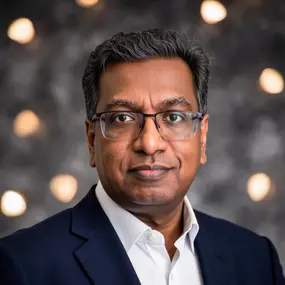
CTO and Co-Founder, MindStaq | AI and Enterprise Systems | Studying AI Since 1996
Sai Prakash is the CTO and co-founder of MindStaq, an AI-native work management platform built to unify scattered tools and give teams a system that actually knows their work.
He has spent more than 25 years in technology and product leadership, building and scaling platforms at the intersection of enterprise systems, AI, and user-centric design. He spent six years at Microsoft and held roles at Thomson Reuters and Agility.
He holds a Master of Science in Mathematics and Computer Science from Sri Sathya Sai Institute of Higher Learning, where he studied artificial intelligence in 1996, during the years the field had gone quiet. He later completed entrepreneurship study at The Wharton School.
On the show, Sai brings the long view. He was inside this technology three decades before it became fashionable, which makes him unusually useful at separating what is real from what is being sold.