


 Apple Podcasts

 Spotify

 YouTube
Please Save Our Jobs: How to Stay Relevant When AI Layoffs Reach Your Company
Key Takeaways
- Preemptive AI layoffs at profitable companies are irresponsible and unethical, as they sacrifice valuable human institutional knowledge for a technology hype cycle.
- Simply handing employees a generative AI license does not change company strategy or drive real results; workers just do existing tasks faster without guidance.
- Non-technical leaders must understand the broader AI landscape beyond large language models to design effective multi-model technology solutions.
- True AI adoption requires building a company-wide harness that honors human expertise rather than treating artificial intelligence as a magic box to replace personnel.
- Professionals who understand AI carry a responsibility to teach and uplift their communities instead of using their skills solely to eliminate workforce roles.
Is your job next, and what are you supposed to do about it?
AI is now the most cited reason for layoffs in the United States, and the people being cut rarely get a vote. Most of the advice on offer is either panic or platitude. This episode is neither.
Sai Prakash, CTO and co-founder of MindStaq, returns to The Leadership Sovereignty Podcast with host Ralph E. Owens II and co-host Terry Baylor, and this episode closes our series of conversations with Sai Prakash. He has studied artificial intelligence since 1996 and he builds it for a living, which makes his view of the current layoff wave worth hearing. He calls preemptive layoffs at profitable companies "incredibly irresponsible and unethical," and he points to the companies now "hiring people back after laying them off."
His central argument is that the mistake is a leadership mistake, not a technology outcome: "one of the worst things you can do is treat AI like it's a magic box and stop listening to the humans who are sitting in front of you."
Then he tells the story that proves it. In 1980s Bahrain, where his father was the chief engineer of the Ministry of Electricity and Water, computers arrived at work and "people were just being shipped out if they weren't able to use computers." Neighbors came to the house. "There were so many people basically saying, Please save our jobs, and my father just said, I can't ignore this." The family home became a ten-computer lab running classes in batches of twelve, for years, with an eleven-year-old Sai as the teaching assistant.
He closes on the choice that is still yours: "it's not about knowledge. it's about deciding what to use that knowledge for."
******************************
🎯 WHAT YOU'LL LEARN IN THIS EPISODE
- Why handing every employee an AI license leaves a company "just doing things faster" and nothing more
- What Sai means by the harness, and why the harness for a company is where the real work sits
- Why Sai calls preemptive layoffs at profitable companies irresponsible, and what the rehiring reversals reveal
- What the 1980s computerization wave did to workers who were never trained
- How one engineer turned a living room into a classroom that retrained a community
- Why a next-token predictor is not a physician, and what that says about expertise
- The three moves that protect your relevance: learn the language, decide what the freed time is for, teach others
- Why Sai refuses consulting work built to cut workforces, and how he frames that choice
******************************
👥 WHO THIS EPISODE IS FOR
- Corporate professionals reading the AI layoff headlines and wondering whether their role is next
- Managers who were handed AI licenses for their team and no strategy to go with them
- Technical professionals who understand AI and are deciding what responsibility that carries
- Executives weighing an AI efficiency cut against the expertise that produced the revenue
******************************
🎧 THE REST OF THIS CONVERSATION
This episode closes our series of conversations with Sai Prakash. If you are new here, the three episodes before it are where the story starts.
EP192: What If AI Gets Turned Off: How to Lead AI Adoption Without Relying on a Single Vendor
EP191: Hero of Their Role: How to Get Team Buy-In on Project Management Without Chasing Updates
EP190: He Studied AI in 1996: What Non-Technical Leaders Get Wrong About What AI Can Do
******************************
🎤 MORE FROM SAI PRAKASH
His full bio, his links, and every one of his appearances on the show:
Sai Prakash on The Leadership Sovereignty Podcast
******************************
📖 ABOUT SAI PRAKASH
Sai Prakash is the CTO and co-founder of MindStaq, an AI-native work management platform built to unify scattered tools and give teams a system that knows their work. He has spent more than 25 years in technology and product leadership, including six years at Microsoft, and holds a Master of Science in Mathematics and Computer Science from Sri Sathya Sai Institute of Higher Learning, where he studied artificial intelligence in 1996.
******************************
🧾 Chapters
- (00:00) - Intro
- (00:03) - AI Layoffs and Human Responsibility
- (01:17) - Why AI Licenses Don’t Guarantee Results
- (04:39) - What Leaders Should Know About AI Adoption
- (08:30) - A Childhood Shaped by Technology
- (13:06) - Helping Workers Adapt Instead of Laying Them Off
- (17:25) - Teaching AI to Physicians
- (19:29) - AI, Medical Advice, and Trust
- (23:49) - The Responsibility to Help Others Learn AI
- (25:45) - People First in an AI-Powered World
- (29:23) - Human Connection in the Age of AI
- (30:55) - Where to Find Cy and Mindstack
- (34:21) - Closing Remarks
******************************
📺 Watch This Episode on YouTube
Click here to watch the full video of this episode.
******************************
📩 Get Every Episode Delivered to Your Inbox
Join the Leadership Sovereignty newsletter for new episodes, leadership insights, and exclusive resources, plus instant access to our free AI Toolkit: the practical guide smart professionals use to think clearer, communicate better, and make smarter decisions at work.
******************************
⭐ Help a Co-Worker Find This Show
Sixty seconds and a review puts this in front of another professional who needs it.
******************************
🌐 More From Us
Full episode library, free leadership frameworks, and show notes: leadershipsovereignty.com
Follow the conversation: YouTube, LinkedIn, Instagram, TikTok, X, Facebook
Book Ralph and Terry to speak: Connect with us
Support the show: ★ Support this podcast ★
******************************
📄 Full Episode Transcript
Click here to view the episode transcript.
Frequently Asked Questions
Who is Sai Prakash on the Leadership Sovereignty Podcast?
Sai Prakash is the CTO and co-founder of MindStaq, a technologist with over 25 years of experience who has studied artificial intelligence since 1996.
Why do AI layoffs happen at profitable companies?
Preemptive AI layoffs often stem from tech leaders making macro-level decisions driven by hype and FOMO, overstating artificial intelligence capabilities while ignoring the value of human intellectual property.
What is the biggest fallacy of giving every employee an AI license?
Organizations assume that providing generative AI access automatically improves business performance, but without strategic training and alignment, employees simply perform old tasks faster rather than transforming company output.
How can professionals protect their relevance when AI enters the workplace?
Professionals can protect their relevance by learning the language of artificial intelligence, deciding how to strategically invest their newly freed time, and actively helping others adapt to the technology.
00:00 - Intro
00:03 - AI Layoffs and Human Responsibility
01:17 - Why AI Licenses Don’t Guarantee Results
04:39 - What Leaders Should Know About AI Adoption
08:30 - A Childhood Shaped by Technology
13:06 - Helping Workers Adapt Instead of Laying Them Off
17:25 - Teaching AI to Physicians
19:29 - AI, Medical Advice, and Trust
23:49 - The Responsibility to Help Others Learn AI
25:45 - People First in an AI-Powered World
29:23 - Human Connection in the Age of AI
30:55 - Where to Find Cy and Mindstack
34:21 - Closing Remarks
Sai Prakash:
There were so many people basically saying, please save our jobs. And my father just said, I can't ignore this. I can't just turn a blind eye and say, can't help you. Doing layoffs, especially doing them preemptively, you know, saying your your profit line is great. And then you're laying off a bunch of people saying, well, I'm probably gonna lay them off the next two or three years anyway.
Sai Parkash:
This is incredibly irresponsible and unethical in my mind.
Ralph Owens:
Alright. Welcome back to Leadership Sovereignty Podcast, the final episode with Si. This has been a fantastic conversation. We've talked about up to now has pretty pretty much been about the technology, but we really wanna focus in on you and, your thoughts about how AI can help other people, things of that nature. But we'll start here.
Ralph Owens:
Companies buy AI licenses all the time. Right? We we talked about that. Who who was it? Uber, you said, Terry?
Ralph Owens:
Yeah. 300,000,000, man. Yeah. Like, crazy amount of money on AI. What what are organizations missing?
Ralph Owens:
Like, what what are they doing wrong as it pertains to that approach?
Sai Prakash:
So there's always been the issue of hype versus reality when it comes to adoption. Right? So leaders in companies that may not fully understand how the technology works and all that stuff, which is a fair statement because... The fair position to have because, you know, technology can be very complex as in the case of AI. They see the hype and they realize that, you know, there's a fear of missing out FOMO.
Sai Prakash:
And Right. People feel like I know I've gotta empower my users with this so that we can compete, to stay competitive against the landscape, all of which are reasonable reactions to the availability of technology. But let's look at some of the sim... Simple fallacies here around adoption. Right?
Sai Parkash:
Mhmm. So this is the sort of silver bullet framing that a lot of people talk about when we talk about technology. Just having it doesn't automatically mean anything. And AI is probably, you know, even more dangerous in that regard because you can get started with it very quickly. Mhmm.
Sai Parkash:
Right? It doesn't take much to get that instant gratification, you know. You... The tool's in front of you. You ask you to do something.
Sai Parkash:
It starts doing things. It's immediate.
Ralph Owens:
Right.
Sai Parkash:
There's no training even. I mean, training is is really necessary to to get leverage the most out of AI for things that people understand things about prompting Mhmm. And risks associated with the outputs, and how we evaluate them, and things like skills, the use of skills and connectors. Mhmm. There's there's a whole class of knowledge there, but you could really get started very quickly.
Ralph Owens:
Mhmm.
Sai Parkash:
The fallacy here is that if I empower everyone in my company with a license to a chat GPT or a Claude, you know, shouldn't everything just be better? Shouldn't my company do better? And unfortunately, very often the answer is no. Right. What goes wrong there?
Sai Parkash:
What went wrong Mhmm. With that assumption Mhmm. Is that when you just put AI tools, gen AI, so these are generative AI tools, tools that generate text, essentially. Right? Like chat GPT and others.
Sai Parkash:
You haven't given any other thought to it other than I need to make these tools available to my individual users. Mhmm. Well, they're just going to do the things they were already doing faster. Yeah. Right?
Sai Parkash:
Does that have some effect? Sure. Maybe. You know, but they're not necessarily changing the strategy of what they're doing. Mhmm.
Sai Parkash:
Their empowerment AI is not necessarily connected to a different value chain or market strategy at the company level that's gonna change your output. The things that they were doing before, writing emails, doing... Creating reports, analyzing things, they might do it faster.
Ralph Owens:
Mhmm.
Sai Parkash:
But you've given them more free time now, maybe. Right? Mhmm. Right. What did they invest that free time in?
Sai Parkash:
Right? With the AI, for example, if they had a way to invest that time and and do more, what more is it that they should be doing? Where where is that extra capacity used? And if you aren't designing your adoption to shape that and to guide it Yeah. Then magic doesn't happen.
Ralph Owens:
Right. Right.
Sai Parkash:
Because they're just doing things faster, they have more free time.
Ralph Owens:
That's good. Diving into that, what should the non technical leaders be thinking about when it comes to that AI adoption and the costs related to it?
Sai Parkash:
Well, I think the most important thing is to understand that you need to be conversant with the language to some extent. Right? Mhmm. People talk about AI like there's only one size for everything, which is LLMs. But actually AI is pretty vast.
Sai Parkash:
Mhmm. If you look at Hugging Face right now, you know, there's probably more than 3,000,000 models out there.
Ralph Owens:
Wow.
Sai Parkash:
And and so we're only familiar with, like, a handful Mhmm. That are hitting the, you know, part of the hype cycles and the leaderboards. But the truth is there's millions of different models. There's things that do specific classes of work, you know, audio processing, video, image analysis, classifications, all of which technically come under the word AI, but aren't LLMs.
Ralph Owens:
Mhmm. Got
Sai Parkash:
you. So being conversant about the fact that you can design solutions that involve multiple multiple pieces, pieces. You you you don't don't you you don't don't have have to to only only go go for, for, you you know, know, Claude or Tactipedia. That's not the only solutions out there. Mhmm.
Sai Parkash:
Being aware about the open weight versus proprietary situation, that's really important. Understanding whether you can host things or not. I heard of one CEO who decided that he was all in on local inference. And so he just bought Mac minis for every single person in this company. Wow.
Sai Parkash:
Just everyone got a Mac mini and said, you can run local inference. Now, I mean, I think there's more to it than that to really drive that, but you can see the sort of thinking there and the commitment to, you know, empowering your users with AI tools. The second half of that though is, the models are there, you can run the inference, what's your harness? Right? The harness concept here isn't just thinking in terms of the harness for a chat tool, which is the tool that might be sitting in front of an individual.
Sai Parkash:
But it's the harness, what is your harness for the company? Right? And this is an area that the frontier companies have not fully penetrated yet, because enterprise is very complex. There's a lot of domain expertise, there's years and years of knowledge in humans, some of which isn't maybe available for training those models. Hopefully, I think that's a good thing.
Sai Parkash:
One of the worst things you can do is treat AI like it's a magic box and stop listening to the humans who are sitting in front of you.
Ralph Owens:
That's good.
Sai Parkash:
Right? It's not... Don't don't lose the expertise that you've built in your company with the people. Right. Just with this blind assumption based on hype and marketing, that AI is like a magic thing that'll just swap people out.
Sai Parkash:
So I've heard there are definitely instances of companies hiring people back after laying them off. Right? How many times have you heard that reversal? They're hiring managers They're hiring this, they're hiring that. Most of those are based on...
Sai Parkash:
Most of those kinds of large scale decisions that make the news. I'm sure it happens in smaller levels that aren't reported. But the large scale ones are typically signs of, you know, technology leaders who should know better, making decisions about layoffs without understanding the value of human IP. Yeah. And over overstating the value of AI.
Sai Parkash:
Right? On its
Terry Baylor:
own. Sure.
Ralph Owens:
Yeah. No, that's good, man. That's So go
Sai Parkash:
ahead, sir.
Terry Baylor:
No. So so so... And Ralph, you can help me keep me on on track here. But so, Sy, you told a a story about your dad and, you know, your introduction into, you know, the IT and and and more importantly, what framed your... You know, because you mentioned several times in each section that we've been talking about the relationship between humans and technology.
Terry Baylor:
And so you had been exposed to that at an early young age, where, you know, compute was coming in and being a disruptor, very similar to what we're experiencing now. Right? There is no... Nothing new. Right?
Terry Baylor:
Tech... You know, in a sense. Right? But seems like this experience in the world kinda keeps happening. You know, I guess maybe the same thing happened when the assembly line came on.
Terry Baylor:
Right? Again, that was a tech kind of innovation kind of space. So do you mind digging into that a little bit, share a little bit about your dad and, you know, how that experience came about in terms of that intersection between humanity and technology? Because I think that's a very important aspect of this conversation.
Sai Parkash:
Absolutely. I think that's very key, way you framed it around the relationship. I think that's what we're talking about with Rules earlier question about AI coming into the company. And for non technical people, because they're looking at it as black boxes, and they're trying to assess this at a macro level. Right?
Sai Parkash:
And so we have to go back a little bit in history and see how that's impacted us. Right? So I grew up with technology because my father was a computer engineer himself. He was the chief engineer of the Ministry of Electricity and Water in Bahrain, which is a small Middle Eastern country. For those who aren't familiar with it, it's right off the the the...
Sai Parkash:
Right off the coast of... Near Saudi Arabia. And it's a... But it's a small island, an island nation of its own. And so I grew up there in the eighties, and because my dad was obviously in computers, we had computers coming in early on.
Sai Parkash:
So I I had access to... I started, you know, playing pong and other games, I think, on a Sinclair back in the day. Then after that, it was a Commodore 64, and we had all these... Started to get better two d graphics and games. And eventually, we started seeing, you know, the PC, IBM PC XD and AT.
Sai Parkash:
Mhmm. You know, and the hardware evolution was always, like, funny. I was just thinking, I remember those processors and that, you know, the AT having a 10 megabyte hard drive and it was like, oh my god, that's so much.
Terry Baylor:
That was revolutionary.
Sai Parkash:
Revolutionary in this five and a quarter inch floppies where you had the the operating system on one floppy and the program on another floppy. So you needed two disk drives. Yes. Yes. Twin drives computer.
Sai Parkash:
That was better than the single one. Because the single one, have to load it, pull it out, and put the other one in. Exactly.
Ralph Owens:
Oh my goodness.
Sai Parkash:
So, I mean, I've seen this sort of evolve. I've seen this history. And so so I grew up with these machines. And, you know, my dad in his work obviously was dealing with mainframe computers that can control systems, you know, the Siemens and other sort of large mainframe computers, or real time systems. Mhmm.
Sai Parkash:
But as gay... You know, we were getting beyond beyond just using monitors and monitors and other things for gaming, and PCs came and they started becoming, you know, more than just a a hobbyist tool. They started becoming part of the professional work... The workplace. Mhmm.
Sai Parkash:
I observed something at that time that was really surprising to me, was people started complaining about the workplace and the fact that, you know, computers are coming, now if you don't have computer skills, you might lose your job.
Ralph Owens:
Right.
Sai Parkash:
And I remember that really hitting home because a family friend... Friends of ours had shown up. And I remember, I think, you know, I hadn't seen it too often, but I I I suddenly saw, you know, a grown up, you know, was sitting in our living room talking to my dad and my mom and crying. And I was like, what, you know, what went wrong? And, you know, for this grown up to cry, you know, how bad is it?
Sai Parkash:
Because, you know, they're not like kids. You just expect grown ups are just dealing with whatever it is that's happening. Yeah.
Ralph Owens:
That's right.
Sai Parkash:
And and it was about, you know, computerization in... At the workplace, and the fact that it was happening, and it was happening at scale, and people were just being shipped out if they weren't able to use computers.
Ralph Owens:
Wow.
Sai Parkash:
And and looking back now at that, I kinda think about, you know, the fact that if you weren't investing in training your people on computers, instead of just getting rid of them, I mean, that's very similar to some of the issues we have with the way AI is being looked at and getting adopted. Right? Doing layoffs, especially doing them preemptively, you know, saying your your profit line is great, and then you're laying off a bunch of people saying, well, I'm probably gonna lay them off the next two or three years anyway. This is incredibly irresponsible and unethical in my mind. Right?
Sai Parkash:
So it's like, these are people that made you achieve the revenues you have today. Mhmm. And you're profitable. It's not like you're running at a
Ralph Owens:
loss. Right. Right.
Sai Parkash:
You know? So it's... This attitude's even worse. And the equivalent of that is back in the day, in the eighties, was people just getting laid off if they did not use a computer. Mhmm.
Sai Parkash:
And the employer making zero effort on allowing them to adopt it, and seeing where them adopting it would take them, and being part of that journey. Sure. And so what my dad did was, people were coming to him because he's a computer expert. And they said, can you teach us? And at first it was, you know, one or two people.
Sai Parkash:
So he just said, okay, we've got a bunch of machines at home, and having access to computers home was another thing, right? So we had a couple of PCs and my dad was programming things at home on it. I learned programming at the age of 10. Started working with dBase three plus and basic and stuff Mhmm. On these computers.
Sai Parkash:
Yeah. And so first with a couple of people, and then next thing you know, there were so many people basically saying, please save our jobs. And my father just said, I can't ignore this. I can't just turn a blind eye and say, I can't help you. Right.
Sai Parkash:
So since we had the computers at home, we added a couple more so that we had about 10 computers, I think. And then we repurposed my sis... My sister had the larger room, I would say to herself, and she was pretty pretty small at that time. She was spent like four or five years old. And her room was repurposed with...
Sai Parkash:
As a computer lab as well. There's occasionally some toys and, you know, the Barbie doll stuff thrown in, but it was mostly a computer lab all around the edge, just computers and tables and chairs. And he started doing batches of people. He'd have to do it in batches. He's like, he's...
Sai Parkash:
I can't teach you all immediately, but I can try to do it. And he... It it got so full that it was like batches of 12. Mhmm. You know?
Sai Parkash:
And it was continuously like that for some years. Wow. It's just like nonstop. That's amazing. Running for like four or five weeks, six weeks, or eight weeks of training.
Terry Baylor:
That's
Sai Parkash:
so I would occasionally help him as a teaching assistant Mhmm. With, you know, people not knowing how to, like, load the programs. And I'd be like, how does a grown up not know that the OS goes in first? How do you not know DOS? You know?
Sai Parkash:
Like, so I was pretty pretty cocky as 11 year olds telling, you know, I'm a 40 professional, you know, how to operate the computer and load up a spreadsheet program or something. Mhmm. It was something that stayed with me. And because I I was like, you know, if you can help, I mean, it's Yes. It behooves us to to try and help out people, especially with this whole technology thing.
Sai Parkash:
So I ended up doing something similar for my classmates through WhatsApp, know, I I asked my classmate, I have a a number of classmates from BSc, the bachelor's and school and everything, and ended up doing weekend classes for about, you know, 20 or 30 of them Mhmm. At a time, saying, you know, if you feel uncomfortable about AI, you don't understand how it works or how it's to be leveraged or you just feel uncomfortable about it in your workplace, I could do a class to to help you learn about AI instead of, you know, trying to give back in the same way.
Terry Baylor:
That's awesome.
Sai Parkash:
And I'm still doing that. And then my wife saw this happening and said, she's a physician at the VA. She's in pulmonary critical care. And she's... I was surprised when she said, you know, the truth is there's a lot of very curious physicians as well who really aren't very comfortable with that.
Sai Parkash:
Mhmm. And so I ended up doing a grand round session for about 70, 75 attending physicians. And it was a very engaged audience. I mean, every single person was there the whole session, and I got a lot of feedback afterwards. And I could see that understanding things like the fact that the LLM is a token, is a next sentence, a next token predictor, and things was like, you know, lights on.
Sai Parkash:
Oh, wait a minute. That is... Because these are positions, they're they're really nerds. I mean, they're very smart. Mhmm.
Sai Parkash:
So they quickly extrapolated and said, oh, I can see now why this behaves this way or that, you know. Yeah. Yeah. And I think it helped open up, you know, a little bit in terms of saying how should we trust this, you know, in the context of jobs, which are very high, you know, high pressure, high impact, high risk jobs. Right?
Sai Parkash:
Sure. Treating people, saving lives kind of stuff. So it's Sure. Interesting.
Terry Baylor:
Yeah. Yeah. So that's actually where Ralph and I really met. We we both worked at Washington University School of Medicine. And so so so we're quite familiar with the physician.
Terry Baylor:
We spent... I spent about eight, fifteen years there. I think Ralph had another seven or eight himself.
Sai Parkash:
So yeah, we actually managed
Terry Baylor:
the EMR and the practice management system. That's what we did.
Sai Parkash:
Oh yeah, yeah, yeah. Yeah, an area with with, you know, the whole... How AI is impacting your Mars. That's
Terry Baylor:
a whole discussion know. Of it know. Who's writing that note?
Sai Parkash:
Who's it?
Ralph Owens:
It's... I still go back to the fact that you talked about is that this thing is guessing the next right word. Now that's one thing when you write in a blog post, it's a whole another thing when you're talking about giving someone medicine, right? You're looking at the other medications that they have to make sure that they don't collide or, you know, have an adverse reaction. That is just...
Ralph Owens:
It does not have reasoning. I keep going back
Sai Parkash:
to that. I I I... So I think the problem with people who think in terms of statistical approaches, right, because this is all probabilities. It's... To some extent, it's statistical in some ways.
Sai Parkash:
Not the math, but just the success rates and things. Right? And if someone was being very simplistic about this and and didn't respect the years of training that goes into being a physician, right, which is what we talked about much earlier when we talked about Isaac Asimov's, you know, anti intellectualism debate. It's, you know, it's like if you were walking down the street and some person, a stranger, suddenly started shouting medical advice at you, would you take it? I mean, you don't know anything about...
Sai Parkash:
So why is it okay on the Internet when someone puts a TikTok video or a what app or whatever, no one verifies anything about the credentials and they're like, maybe I should try that remedy or whatever, or I should try this. And it's like, on what basis are you making this decision? Right? So if you're thinking now, going back to the AI in medicine situation, and some of the things, the position that people like Sam Altman and others have taken where they're like, oh, you should ask, you know, when GPT-five came out, he famously said, oh, you can ask medical advice to GPT now. And then he sort of walked that back.
Sai Parkash:
He kind of refined that statement a bit and said something slightly different. But the attitude there is that, well, people are doing it anyway. They're going to WebMD. Mhmm. They're going...
Sai Parkash:
They're looking these things up, which is true. People do look these things up. I mean, anyone going to a doctor's visit or or having something concerning on a lab, I would do the same thing. I would start researching. I would inform myself about it so I understand things.
Sai Parkash:
But I wouldn't make the assumption that that's equivalent to having years and years of training and and... Because that's that's a false assumption. Yeah. Yeah. And it's the same...
Sai Parkash:
It's... But it's it's this kind of thinking that, well, people go to WebMD and stuff, and they go to Google and they look this stuff up. I mean, it's better doing it through an AI. It'll give you even better information. On the surface, that's not mechanically wrong.
Ralph Owens:
Right.
Sai Parkash:
Right? Right. Yes. There's a lot of the same information is available to the AIs. AIs can do web searches and integrate search results in a better way, and probably explain it better than if you were just interpreting it yourself, and you can ask the AI questions.
Sai Parkash:
All of this is true. Mhmm. Doesn't change that the first situation itself, the WebMD situation isn't necessarily a good thing. Meaning, people can really misinform themselves, panic, do things they don't need to do, take decisions they shouldn't if they don't listen to a qualified physician.
Ralph Owens:
Right.
Sai Parkash:
Right?
Ralph Owens:
Right.
Sai Parkash:
And I mean, in terms of pure scientific, you know, research studies and actual results, listening to the physician, in my opinion, is still the right way.
Ralph Owens:
Yeah.
Sai Parkash:
Right? And so that's I think the problem with that aspect of it, of the way people push the use of AI Sure. Without, you know, about, and just comparing it very superficially the fact that there are already trends in the way people behave, and this is slightly better.
Terry Baylor:
Yeah, no, you're exactly right there. Because, you know, so I have a client in the mental health space, and she's saying, yeah, Terry, I have clients who are using chat GBT or Claude as a supplement to their mental health. And I have to instruct them, hey, there's some guardrails you need around that topic. You know, and it's not like talking to me, basically. Right.
Terry Baylor:
Yeah, so, you know, it may feel, may give you the same, you know, sensation in some sense, but it's not the same. It is not the same.
Ralph Owens:
Mhmm. Yeah. Yeah. Yeah. That is incredible.
Ralph Owens:
I do wanna go back to the conversation about what your father did. There are some people in this world who could have made a decision to, well, that's good for me and my family, it's too bad for you. Right? But he didn't make that decision. He made a decision to help his community by first helping himself, right?
Ralph Owens:
Because he had to learn it in order to be able to teach it to somebody else.
Sai Parkash:
Right.
Ralph Owens:
Talk about the importance of that now in our society for those who do understand AI, the responsibility that we may have to our own communities to help. Because I told the story about how I saw in the nineties, I have some relatives, very, very smart individuals, who chose not to embrace the whole computer technology as it was being pushed, you know, in the workplace. Right? At home, it was a very optional thing, but in the workplace, you had to kinda start using it. Didn't really embrace that.
Ralph Owens:
Right? So fast forward to now, very, very simple things that we would do in technology, they're just completely clueless. Right? Doesn't make them a bad person, but they chose not to dive in in a moment where they needed to. Now, for me, it's how I built my whole career.
Ralph Owens:
Literally used to be a welder and I wanted to get into IT. And I was studying IT at a community college right around the nineties, right, when Windows NT first went into corporate businesses.
Sai Parkash:
I remember And
Ralph Owens:
I saw the future, and I was like, I'm going after that. Thank God it blessed me, and I'm here, right? But I think that there's two things in that conversation. There's one, the responsibility for us who are a little bit more technically savvy to learn it ourselves because it's not going away, Right? Then number two It's
Sai Parkash:
here to stay.
Ralph Owens:
Yeah. And number two, our responsibility to help those who are beside us to come along. You know, you wanna talk about your thoughts on that? Because you've you've demonstrated that yourself.
Sai Parkash:
Yeah. I I mean, I... I'm a big believer because when I see statements from leaders like, you know, your frontier company AI CEOs and stuff saying things like, oh, we're a couple of years away from the 10 person unicorn, you know, billion dollar startups and things. And of course, I see a whole bunch of people right now are very much in the solo entrepreneur space, which I think is a... It's an exciting thing to see that.
Sai Parkash:
I think it's wonderful. I mean, imagine that these are solo entrepreneurs from so many different countries that historically didn't have the resources to be able to take their ideas to any level. Right? And they're not able to try and build something on their own. That's that's wonderful.
Sai Parkash:
I think that's AI doing its job in terms of commoditizing access to the resources necessary so that you can have a chance to build a business or take an idea to market. So I think that's wonderful. Mhmm. But when I think... When I hear things like, well, the 10 person company that's gonna be a startup, I'm always interested in the fact that it's not the AIs that I'm interested in.
Sai Parkash:
It's the 10 people who who made that company. They're the ones that we should be focusing on. Mhmm. You know, in in that equation. It's the people that are doing this.
Sai Parkash:
And as long as we remember that, that it's... That we... That the people matter more, and the AI was just a tool in their journey. Right. Then we can use that lens to prioritize all of our decisions.
Sai Parkash:
Right? So training other people is just, you know, for AI, for example, is just saying that, you know, I prioritize people using AI to move forward Mhmm. Over businesses using AI to get rid of people. Right? That's it's where my focus is.
Sai Parkash:
I'm not interested in doing consulting work for businesses looking to automate Mhmm. You know, processes to the... So that they can cut their workforce. I'm not... It's something I have the skills for, I'm not gonna do it.
Sai Parkash:
Not interested. Mhmm. Or for building systems that are specifically designed, again, to replace a department, or replace a role. Wow. And so, and that's a choice.
Sai Parkash:
It's not about knowledge, it's about deciding what to use that knowledge for.
Ralph Owens:
Yeah, yeah, yeah, that's good, that's good.
Terry Baylor:
I think that's a pretty strong, I mean, in today's tech, in our landscape today, everybody's talking about animation. So I think that is a pretty strong philosophical stance. Now, we're not saying we're anti automation, we want it in the right places, Right? Where
Sai Parkash:
it That's right.
Terry Baylor:
Where it enhances and amplifies what you do Mhmm. Not at the not at the cost of human capital. So I think, man, that is... I have to applaud you. As Ralph stated earlier, I am a human first, people first.
Terry Baylor:
You know, it's all about it's all about that, you know, horizontal relationships. Right? And and it makes it makes everything happen. It makes life worth living. Right?
Sai Parkash:
Because
Terry Baylor:
we have the relationship.
Ralph Owens:
This is so Well,
Sai Parkash:
I... You know, one of the things I've observed is I've been to a lot of in person events in the last couple of weeks. Mhmm. And one of the things I noticed people were saying, especially the organizers of some of these events, that all the in person events are, like, extremely full these days. Like, you know, pandemic happened, so we didn't do in person for a while.
Sai Parkash:
So there's a lot of, you know, online events, and there still are a very large number. But I'm seeing that there's actually an increase in people looking for in person events. Yeah. And and I actually think that that's because, to some extent, that's also an impact of AI. Mhmm.
Sai Parkash:
Because, you know, people are hearing things, they're getting threatened, they're feeling, you know, the pressure, they're seeing layoffs, and they're looking for human connection. Know? Looking to... Are huddling together while AI grows in like a Mhmm. Almost like a cloud above us.
Sai Parkash:
They're like Yeah.
Ralph Owens:
Sort of
Sai Parkash:
huddling, you know? Yeah. Yeah. And that just shows you that we recognize that there's a need for humans to support each other here, to support other humans. And so...
Sai Parkash:
And and that comes in in various shapes and forms, whether it's in the community, you know, helping people by teaching them more about these things so they can stay relevant and and perform it in their jobs. Mhmm. Or at the business level where you decide what am I gonna build with AI since I have the skills, or what... How I'm gonna guide a company to adopt AI.
Ralph Owens:
Gotcha. Well, this has been fantastic, man. Thank you for taking the time to share with us and our audience. This is so rich. We're gonna eat on this for a long time.
Ralph Owens:
Where can people find you, Si, if they want to reach out?
Sai Parkash:
I'm in LinkedIn and blue sky even more so than Twitter, I would say. And I have a personal blog at robot monkey, that's munki.com. Mhmm. That's linked to my... That's just, you know, that's just sci fi humor.
Sai Parkash:
Mhmm. And I write on LinkedIn quite a bit about AI, and try to keep... Share whatever I'm learning quickly, and keep everyone up to date on things like what models have changed and things like that. Yeah. Yeah.
Sai Parkash:
That's my most active spot.
Ralph Owens:
And if you want to give a thirty second disclaimer on what Mindstack is, and what people could look forward to should they wanna try the product.
Sai Parkash:
Well, what's exciting is that we're coming out of private beta, and we just accelerated from 2,200,000 tokens a week to 32,000,000 tokens a week in four weeks. Wow. So it's very exciting to see people, same community growing, growing as connectors and things, you know, are stable. So now, Mindstack connects to about 1,500 different applications and systems. So Teams and Google and everything.
Sai Parkash:
Wow. And and we're excited to bring it public. So that's gonna be coming out soon, and it's a harness that solo users, so if you're a solo entrepreneur or a consultant, it works for you, or people with teams of users can use it as well. We've got both offerings. And we have a very exciting roadmap bringing all of our enterprise project management and performance management, strategy management into the product in an AI native way.
Sai Parkash:
So we start with AI, and we're model agnostic AI. So you can use different models like frontier models, as well as open weight models. And, and or sometimes if you don't know anything on models, you just let Mindstack pick it for you, and we route it. We do the routing for you automatically. So you just let you trust Mindstack to figure it out.
Terry Baylor:
Awesome. Hey hey, Sa, quick question. Is is... Do you got... Do you guys have CRM built into it as well or just PM?
Sai Parkash:
So we have multiple apps actually. So we're... We have an app concept where it's AI first. So you start with a chat interface that everyone likes, but Mhmm. Chat is not a great place to manage work, like figuring out what was I working on and things like that.
Sai Parkash:
And then we have this concept where we're building multiple apps. We already have several. We have, you know, one for messaging, one for meeting, which looks just like Slack. We have one for meetings, but they're tightly integrated so that the work management of what was I doing in the meeting, what was I doing in the messaging, what was I doing in CRM is integrated into this. So it could...
Sai Parkash:
We start with connecting to things like Instantly or HubSpot right now.
Terry Baylor:
I got you.
Sai Parkash:
But we bring it into a work flow in the AI that is easy to deal with, even if we don't know about things like skills or how we how to
Terry Baylor:
prompt or everything.
Sai Parkash:
That's Oh, kind of our
Terry Baylor:
okay. Can't wait. Yeah. I can't wait to take a look at that.
Ralph Owens:
Alright. Awesome. Awesome.
Sai Parkash:
Excited to Yeah, share it with you
Ralph Owens:
man. You know, I'm itching. I'm asking, when can I go? Absolutely. Absolutely.
Terry Baylor:
Yes. Fabulous. Top man, Sy, thank you for the time today. I just cannot thank you enough. And great stories.
Terry Baylor:
And thank you for sharing your personal stories, sharing about your family. All of that really help us understand the man. Thank So
Sai Parkash:
you so much for giving me the opportunity. Yes. Thank you so much for the opportunity. I appreciate it, guys. Absolutely.
Sai Parkash:
Pleasure talking to you. Cheers.
Ralph Owens:
That's a wrap on this episode of the Leadership Sovereignty Podcast. If today's conversation added value, I want you to do three things right now. Number one, subscribe so you never miss an episode. Number two, leave a rating and a review on Apple Podcast or Spotify. It only takes sixty seconds, but it really helps more leaders find the show.
Ralph Owens:
And number three, share this episode with someone who's on the rise in their career. Don't forget to connect with us on LinkedIn and visit leadershipsovereignty.com for show notes and the full episode back catalog. Until the next time, continue to lead boldly, lead with purpose, and walk in sovereignty.
Ralph Owens:
Take care.
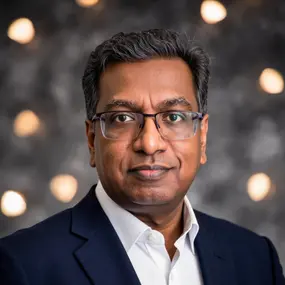
CTO and Co-Founder, MindStaq | AI and Enterprise Systems | Studying AI Since 1996
Sai Prakash is the CTO and co-founder of MindStaq, an AI-native work management platform built to unify scattered tools and give teams a system that actually knows their work.
He has spent more than 25 years in technology and product leadership, building and scaling platforms at the intersection of enterprise systems, AI, and user-centric design. He spent six years at Microsoft and held roles at Thomson Reuters and Agility.
He holds a Master of Science in Mathematics and Computer Science from Sri Sathya Sai Institute of Higher Learning, where he studied artificial intelligence in 1996, during the years the field had gone quiet. He later completed entrepreneurship study at The Wharton School.
On the show, Sai brings the long view. He was inside this technology three decades before it became fashionable, which makes him unusually useful at separating what is real from what is being sold.