What happens to your business if the AI it runs on gets turned off?
Ralph E. Owens II and Terry Baylor with Sai Prakash, CTO and Co-Founder of MindStaq: How to Lead AI Adoption Without Relying on a Single Vendor
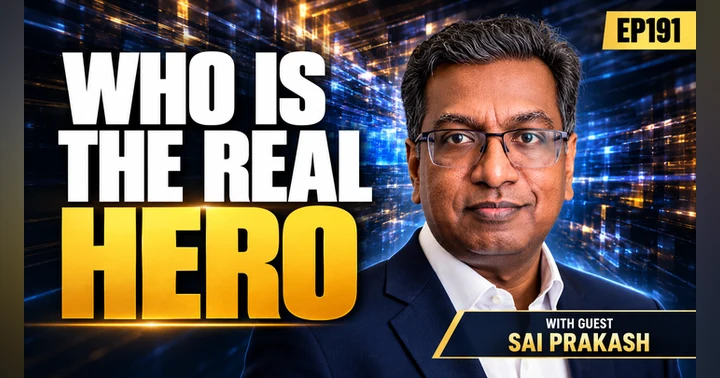
What happens to your business if the AI it runs on gets turned off? In episode 192 of The Leadership Sovereignty Podcast, hosts Ralph E. Owens II and Terry Baylor ask Sai Prakash, CTO and co-founder of MindStaq, that question. Many teams have built daily work on a single AI vendor, and few leaders have planned for the day that access changes. This post shows how to recognize that exposure and three moves to put you back in control.
Problem Recognition: When Your Business Runs on an AI You Do Not Control
Most leaders adopted AI one team at a time, so the dependency grew quietly.
A Zapier survey of 542 U.S. C-level executives, fielded January 30 to February 6, 2026, asked what would happen if their primary AI vendor's services ended tomorrow. Only 6 percent said they could stop using the vendor without interruption, and 47 percent said at least one key business function would stop working correctly.
An IBM Institute for Business Value study with Oxford Economics, covering 1,000 senior executives in 16 countries between February and April 2026, found that 81 percent say a seven-day vendor outage would still cause severe or critical disruption. It also found that 91 percent say they do not fully understand their organization's dependencies across AI vendors, models and infrastructure.
Sai ties the issue to something leaders recently watched happen. In June 2026, Anthropic suspended access to two of its newest models to comply with U.S. Department of Commerce export controls, then restored access on July 1, 2026, after those controls were lifted, according to Anthropic's own statement (https://www.anthropic.com/news/fable-mythos-access).
Sai had just started using one of those models when it went away, and he drew a leadership question from it: "what happens when the spigot just gets turned off and your business is running on it?" Ralph E. Owens II named the stakes as people "building industries off of the availability of this technology."
Strategy: Three Moves That Reduce Single-Vendor AI Risk
This episode of The Leadership Sovereignty Podcast, hosted by Ralph E. Owens II and Terry Baylor, turns that question into a short list of actions a leader can take.
- Know your dependency and keep an option. Start by listing which workflows depend on which vendor, and which of them would stop without it. Then ask whether a second route exists. Sai points to open-weight models that you can download and run yourself: "You don't have to pay anyone if you want to run it locally, and it can do a lot." He describes running one with no internet connection, using "my own CPU and battery and hardware and everything." He is candid about the limits. Local inference is not there yet, it is still expensive, and "the economics doesn't work if you're just running it for yourself." He says the economics start to work when a few people share hardware.
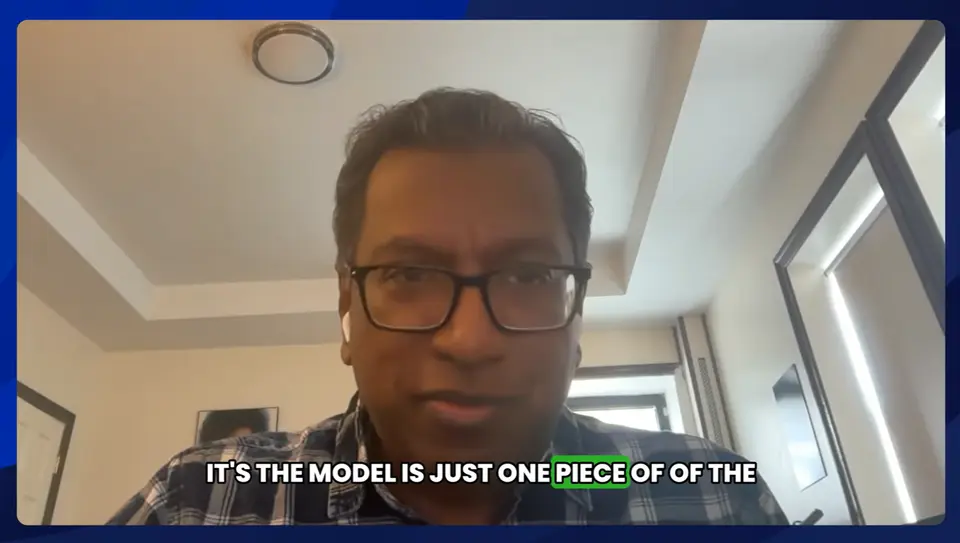
- Invest in the harness. The harness is the layer around the model: the instructions, memory, and tools that decide what the model sees and can do. Sai uses a car analogy. A Ferrari engine does not help if the tires are poor, because the tires are the only parts that touch the ground. His conclusion for leaders: "a really good harness can get beautiful output out of a much smaller or cheaper model."
- Keep a human in the loop. Sai says the risk he watches most sits with people, not machines: "right now I'm more concerned about the humans making decisions about how AI is used." For every task you hand to AI, he suggests asking a direct question: "is there a human in that loop?" His guardrail for every company and every startup entrepreneur: "just because you can do it doesn't mean you should."
Ownership: Take Ownership of Your AI Dependency This Week
Owning your AI dependency does not require owning the hardware. It starts with knowing what you rely on and keeping an option open. Answer three questions with your team. Which of our workflows would stop if our primary AI vendor went dark tomorrow? Which of them already have a second route? Who is the named person deciding where AI acts and where a human stays involved?
Leaders who can answer those questions make AI adoption durable, not fragile.
Listen to episode 192 of The Leadership Sovereignty Podcast (https://www.leadershipsovereignty.com/ep192) with hosts Ralph E. Owens II and Terry Baylor and guest Sai Prakash, CTO and co-founder of MindStaq, and learn more about Sai on his [guest profile page https://www.leadershipsovereignty.com/guests/sai-prakash/
Frequently Asked Questions
What is AI vendor lock-in?
AI vendor lock-in is what happens when daily work depends on one provider's AI models or services, so losing access or facing a change in terms interrupts operations. In the Zapier survey, only 6 percent of executives said they could stop using their primary AI vendor without interruption.
What happens to a business if its AI provider becomes unavailable?
It depends on how deeply the work is tied to that provider. In the Zapier survey, 47 percent of executives said at least one key business function would stop working correctly. In the IBM study, 81 percent said a seven-day vendor outage would cause severe or critical disruption.
Can a company run AI models on its own hardware instead of paying a vendor?
Yes, within limits. Sai Prakash explains that open weight models can be downloaded for free and run locally, even without an internet connection. He also says local inference is not there yet and is still expensive for one person, so the economics tend to work best when a small team shares the hardware.
What is an AI harness and why does it matter?
A harness is the software layer around an AI model: its instructions, memory and tools. Sai Prakash says a really good harness can get beautiful output out of a much smaller or cheaper model, so the harness often matters as much as the model.
How do leaders keep a human in the loop with AI?
Start with a direct question for every task you hand to AI: is there a human in that loop? Then name the person who decides where AI can act and where a leader stays involved. Sai Prakash adds that just because you can do something with AI does not mean you should.
SOURCES
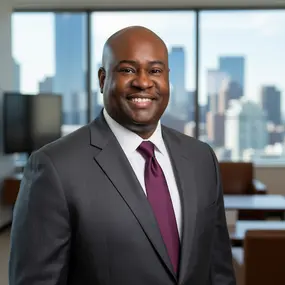
Host, The Leadership Sovereignty Podcast | CIO | 2x Houston CIO of the Year Finalist | US Navy Veteran
Ralph E. Owens II is the host and executive producer of The Leadership Sovereignty Podcast, which he co-hosts with Terry Baylor. Together they have built a career acceleration platform for professionals who want to increase their influence, navigate workplace politics with integrity, and position themselves for promotion.
Ralph is a Chief Information Officer in financial services and a two-time Houston CIO of the Year finalist. His career spans financial services and energy generation, where he has secured critical infrastructure, navigated complex regulatory environments, and built high-performing teams that consistently deliver under pressure.
He is also a United States Navy veteran. Much of what he teaches about leading under pressure, and about the difference between authority and influence, started there.
He built this show for a specific reason. Most professionals are never actually taught the things that determine whether they advance. Every episode is designed to close that gap with real-world strategy rather than theory, so listeners move from overlooked to promoted.
Why Employees Hate Project Management Tools (And How to Fix It)