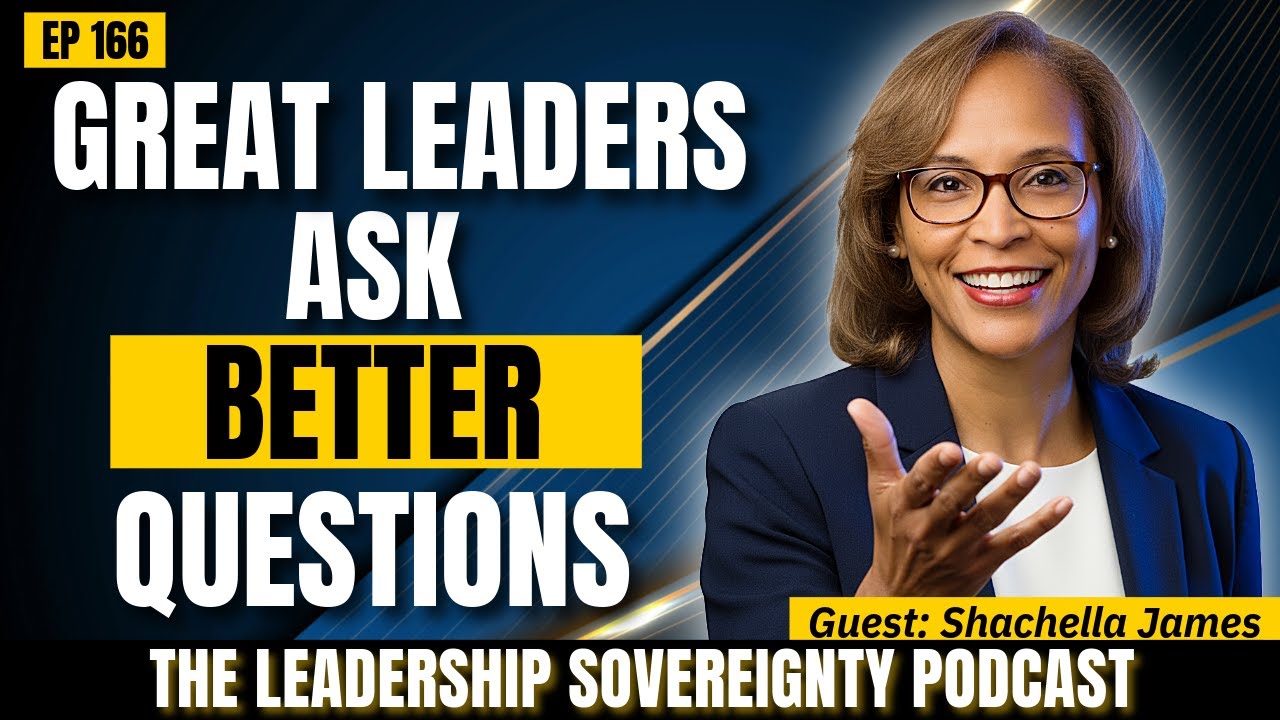
Beyond Knowing: Why Curiosity is a Leader's Secret Weapon
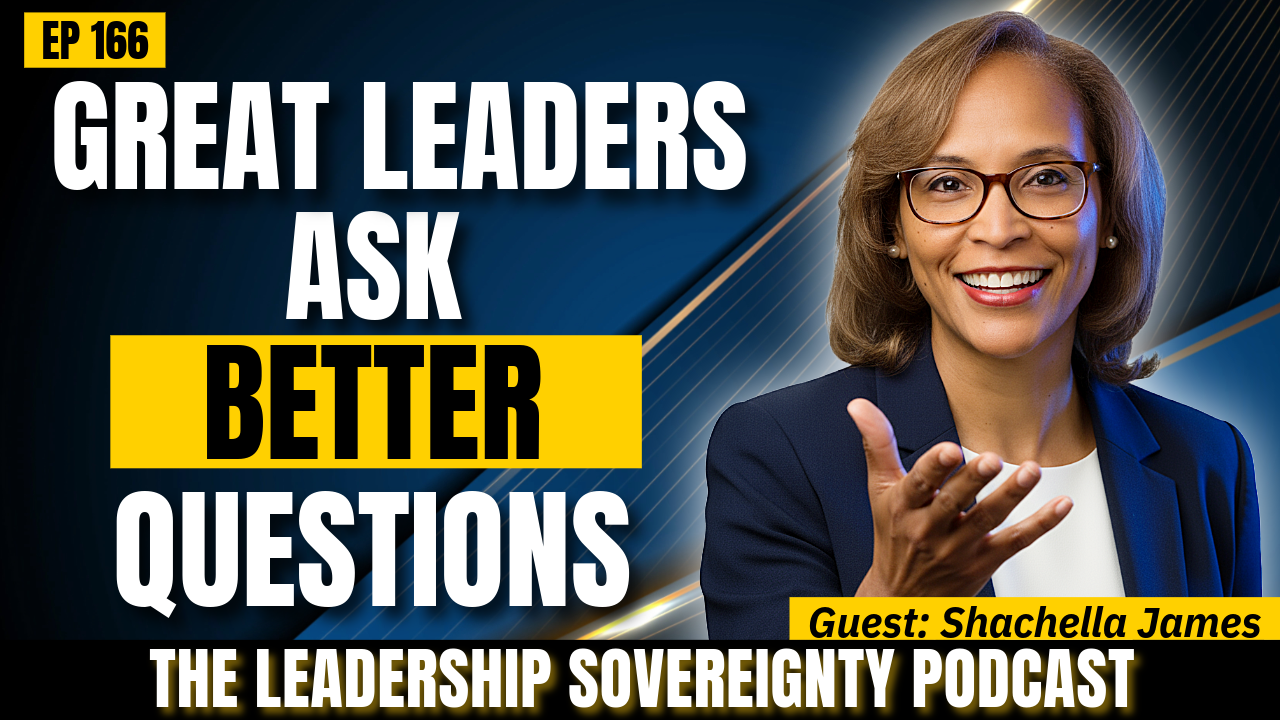
Welcome back to the blog, where we dive deeper into the topics that shape our conversations on the podcast. In our latest episode, "The Power of the Question: How Curiosity Becomes Your Greatest Leadership Weapon," we explored a fundamental shift that can transform your effectiveness as a leader. It’s not about having all the answers, but about mastering the art of asking powerful questions. This post will unpack that core idea, examining why this shift is so crucial, often counter-intuitive, and how you can begin to cultivate this essential leadership skill.
The Leader's Paradox - Answers vs. Questions
There's a pervasive image of a leader: someone who is decisive, knowledgeable, and always seems to possess the right answers. We're conditioned from early in our careers to strive for this ideal. We spend years acquiring knowledge, honing our expertise, and building a reputation for being the person who can solve problems. And, to be clear, having a strong foundation of knowledge and being able to make decisions is absolutely vital for leadership. However, the true mark of exceptional leadership, especially in today's complex and rapidly evolving world, lies not solely in the answers we possess, but in the quality of the questions we ask.
This is the leader's paradox. We are often rewarded for having answers, yet the most profound growth, innovation, and team empowerment stem from a place of inquiry. When we operate solely from a position of "knowing," we risk creating environments where others feel disempowered to contribute, where blind spots are missed, and where the team becomes dependent on a single source of truth. The real power lies in fostering an environment where the pursuit of understanding, driven by insightful questions, becomes the norm.
The Common Misconception: Curiosity as Ignorance
One of the biggest hurdles to embracing curiosity as a leadership tool is a deep-seated misconception: that asking questions signals a lack of knowledge or competence. Many leaders fear that if they don't have the answer immediately, they'll be perceived as unprepared or, worse, incompetent. This fear can lead to a defensive posture, where leaders might either pretend to know or quickly offer an answer that may not be the most informed, simply to maintain an illusion of omniscience. As our guest, Shachella James, highlights in the episode, this perception is entirely flawed and, with a strategic approach, can even be turned to your advantage.
The reality is that the most knowledgeable and effective leaders are often the most curious. They understand that true understanding comes from exploration, not just assertion. They recognize that the most effective way to uncover underlying issues, to foster innovation, and to develop their teams is by asking probing questions that encourage deeper thinking and more comprehensive answers. The fear of appearing ignorant is a self-imposed limitation that prevents leaders from tapping into one of their most potent developmental tools.
Shachella's Framework: The Three Types of Powerful Questions
In our podcast episode, Shachella James introduced a brilliant framework for categorizing powerful questions, offering a practical roadmap for leaders looking to enhance their inquiry skills. This framework isn't just about asking more questions; it's about asking the *right* questions, with intention and purpose.
Learn: Questions that Expand Understanding
The first category focuses on questions designed to deepen your own understanding and to gather information. These are often the most obvious types of questions, but their power lies in their intentionality and scope. They go beyond surface-level inquiries to uncover the 'why' behind the 'what.' Examples include:
- "Can you walk me through your thought process on that?"
- "What assumptions are we making here?"
- "What are the potential downstream impacts of this decision?"
- "What data points are most critical to understanding this situation?"
These questions are crucial for building a comprehensive picture, identifying potential risks, and ensuring that decisions are well-informed. They demonstrate a commitment to thoroughness and an unwillingness to operate on incomplete information. This type of questioning also models intellectual humility for your team, showing that learning is an ongoing process for everyone.
Elevate: Questions that Empower Others
The second category is about using questions to empower and develop others. Instead of providing solutions, leaders can use questions to guide individuals or teams toward discovering their own solutions. This fosters ownership, builds problem-solving muscles, and increases engagement. Examples include:
- "What do you think is the best way forward?"
- "What are the options we haven't considered yet?"
- "If you were in my position, what would be your priority?"
- "What support do you need from me to achieve this?"
These questions are transformative for team development. They shift the dynamic from a directive approach to a collaborative one, where team members feel trusted and capable. By asking these questions, leaders delegate not just tasks, but also the ownership of solutions, leading to more sustainable outcomes and a more capable team.
Build Culture: Questions that Foster a Learning Environment
The third and perhaps most profound category is focused on questions that intentionally build a culture of curiosity and continuous improvement. These questions create psychological safety and encourage a shared commitment to learning and growth. They are about making inquiry a fundamental part of how the team operates. Examples include:
- "What did we learn from this experience, both successes and challenges?"
- "How can we ensure we're always looking for opportunities to improve?"
- "What makes you curious about this project/topic?"
- "How can we create more space for thoughtful inquiry within our team?"
These questions are the bedrock of a high-performing, adaptable team. They signal that asking questions, seeking understanding, and embracing learning are not just tolerated, but actively encouraged and valued. This creates an environment where innovation can flourish and where the team is better equipped to navigate uncertainty.
The 'Two Clicks Down' Method: Digging Deeper for True Insight
A key takeaway from our conversation with Shachella is the "two clicks down" method. This refers to the practice of going beyond the surface-level data or information to uncover the underlying drivers and implications. In today's data-rich environment, it's easy to get lost in metrics and reports. However, true insight often lies deeper. This method encourages leaders to ask follow-up questions that probe the meaning and context behind the numbers.
For instance, if a report shows a dip in customer satisfaction, the initial question might be, "Why did customer satisfaction decrease?" The "two clicks down" approach would prompt further questions like:
- "What specific touchpoints or aspects of the customer journey are contributing most to this decline?"
- "What are the underlying operational or process issues that might be leading to these negative experiences?"
- "Are there any external factors or market shifts that could be influencing this trend?"
- "What is the qualitative feedback telling us that the quantitative data might be missing?"
By consistently digging two clicks deeper, leaders can move beyond simply identifying problems to understanding their root causes, enabling them to develop more effective and sustainable solutions. This approach also demonstrates a commitment to thoroughness and a desire to truly understand the intricacies of the business and its challenges.
The Power of Preparation: Transforming Presence and Authority
One of the most impactful insights shared in the episode, and something that resonates deeply with my own leadership journey, is the importance of preparing questions in advance. This isn't about having a rigid script, but about doing the strategic thinking beforehand to formulate thoughtful, context-specific questions. Ralph Owens shared a powerful anecdote about how taking just 15 minutes to prepare questions before a meeting can dramatically change your perceived presence and authority.
When you walk into a meeting with pre-prepared, insightful questions, you signal that you have invested time in understanding the context, that you are engaged, and that you are thinking critically. This transforms your presence from that of a passive observer or a question-asker-on-the-spot, to that of a strategic contributor. It demonstrates foresight and a genuine desire to drive the conversation forward constructively.
This preparation can include:
- Reviewing agendas and relevant pre-read materials thoroughly.
- Identifying key decision points or areas of potential ambiguity.
- Anticipating potential challenges or opportunities that might arise.
- Formulating questions that encourage deeper discussion and problem-solving.
- Even preparing questions you already know the answer to, but that will prompt others to think about a particular aspect.
This proactive approach not only enhances your credibility but also allows you to guide discussions more effectively, ensure critical topics are addressed, and foster a more productive meeting environment. It's a testament to the idea that effective leadership often requires thoughtful preparation, not just spontaneous brilliance.
Turning Curiosity Inward: Clarity, Discipline, and Career Focus
The conversation took a powerful turn when Terry Baylor asked about how curiosity turns inward. This is a profound aspect of leadership development that often gets overlooked. Our external curiosity helps us understand the world around us, but our internal curiosity can be a powerful catalyst for personal growth, self-awareness, and career clarity.
When leaders turn their curiosity inward, they begin to ask themselves questions like:
- "What truly motivates me?"
- "What are my core values, and how are they reflected in my leadership?"
- "What are my strengths, and where do I have opportunities for development?"
- "What kind of impact do I want to have?"
- "What is my 'why'?"
This introspective curiosity is directly linked to discipline. When you have a clear understanding of your purpose and values, it becomes far easier to maintain discipline and focus. Shachella's journey, from the boardroom to competitive bodybuilding, exemplifies this. Her internal curiosity about pushing her physical and mental limits fueled the discipline required to achieve extraordinary feats in both arenas. When your 'why' is clear, the 'how' – the daily effort, the sacrifices, the perseverance – becomes less of a chore and more of a natural extension of your purpose.
This inward-turning curiosity can lead to:
- Increased Self-Awareness: Understanding your motivations, biases, and blind spots.
- Enhanced Decision-Making: Aligning your choices with your core values and long-term goals.
- Greater Resilience: Bouncing back from setbacks with a clearer sense of purpose.
- Improved Career Trajectory: Making intentional choices that lead to fulfilling and impactful work.
- Effortless Discipline: Motivation driven by internal purpose rather than external pressure.
This aspect of leadership is not just about leading others; it's about leading yourself with intention and clarity. It’s the foundation upon which effective external leadership is built.
Conclusion: Embracing Curiosity as a Leadership Superpower
The shift from a mindset of having all the answers to one of asking powerful questions is not just a tactical adjustment; it’s a fundamental reorientation that unlocks a leader’s true potential. As we explored in this post, and as so powerfully articulated in our episode "The Power of the Question: How Curiosity Becomes Your Greatest Leadership Weapon," curiosity is not a sign of weakness, but a strategic advantage. By adopting Shachella James's framework of learning, elevating, and building culture through questions, embracing the "two clicks down" method for deeper insight, and recognizing the transformative power of preparation, leaders can significantly enhance their effectiveness.
Furthermore, turning curiosity inward allows for profound personal growth, fostering clarity, discipline, and a more focused career path. In a world that often celebrates the illusion of certainty, embracing the journey of inquiry – both externally and internally – is the true mark of a modern, agile, and impactful leader. Make the conscious choice to ask more, to listen more deeply, and to cultivate a culture where questions are not just welcomed, but celebrated. It’s a superpower waiting to be unleashed.

Host, The Leadership Sovereignty Podcast | CIO | 2x Houston CIO of the Year Finalist | US Navy Veteran
Ralph E. Owens II is the host and executive producer of The Leadership Sovereignty Podcast, which he co-hosts with Terry Baylor. Together they have built a career acceleration platform for professionals who want to increase their influence, navigate workplace politics with integrity, and position themselves for promotion.
Ralph is a Chief Information Officer in financial services and a two-time Houston CIO of the Year finalist. His career spans financial services and energy generation, where he has secured critical infrastructure, navigated complex regulatory environments, and built high-performing teams that consistently deliver under pressure.
He is also a United States Navy veteran. Much of what he teaches about leading under pressure, and about the difference between authority and influence, started there.
He built this show for a specific reason. Most professionals are never actually taught the things that determine whether they advance. Every episode is designed to close that gap with real-world strategy rather than theory, so listeners move from overlooked to promoted.

How to Lead a Team You Inherited Without Repeating What Broke It